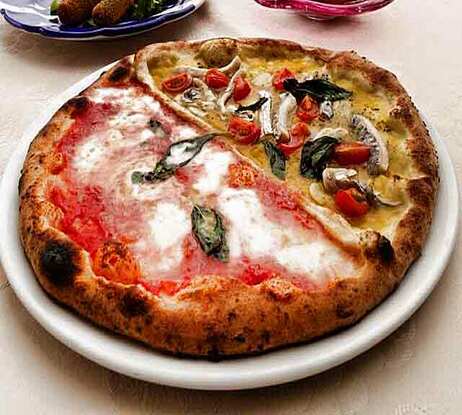
 In Italy, pizza toppings are not exactly limited, but there are a few rules. For example, only meats made with pork are acceptable on an authentic Italian pizza. Salami, prosciutto, ham, sausage – all are pork. Chicken and beef are not used. Beef is rarely seen on top of pizza. Even bresaola, a thin sliced (sliced paper thin, like proscuitto) is hard to find on a pizza. As far as vegetables and cheeses go, there seemingly is no limit to what Italians might find appetizing on top of their pizzas. 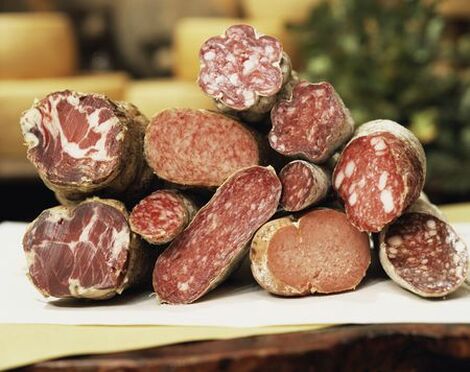 Common Meats - Sausages and Salumi
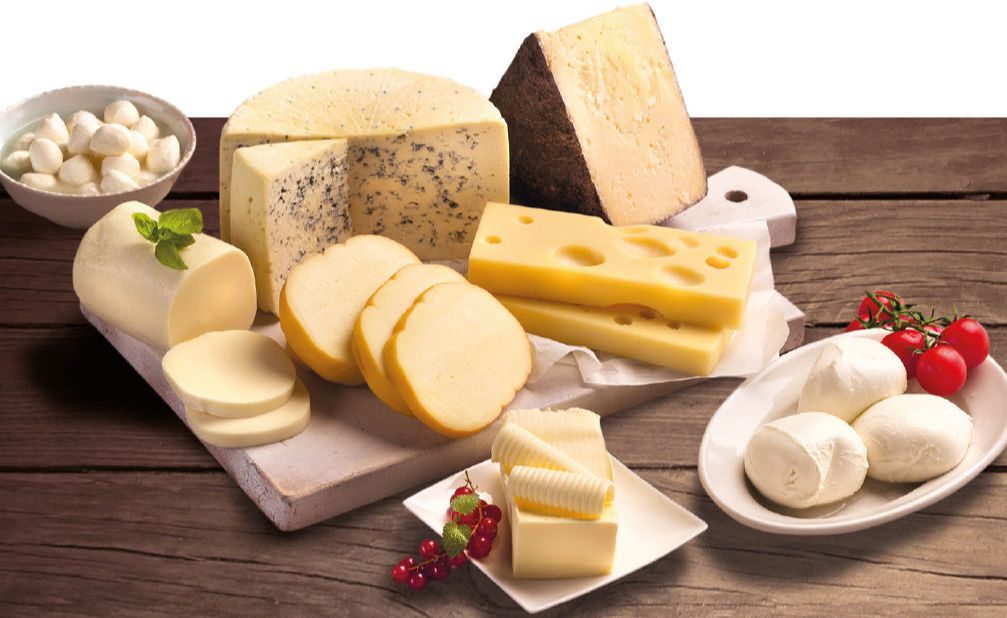 Cheeses/Dairy Products
 Vegetables
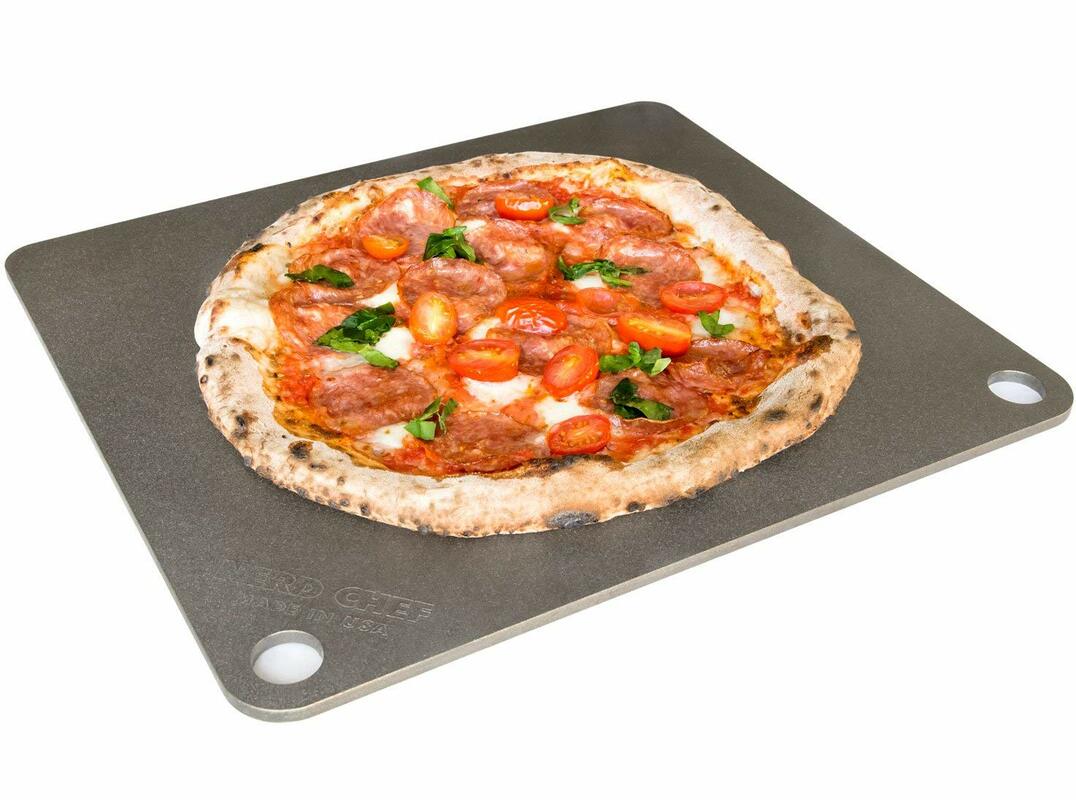
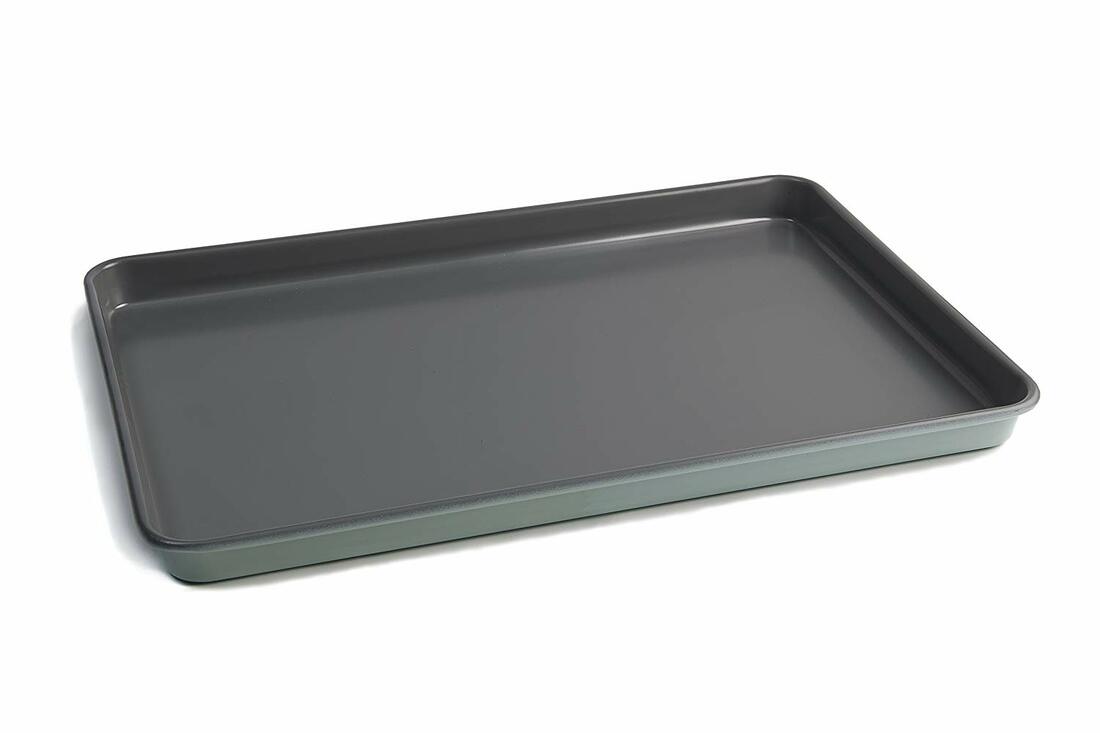
--Jerry Finzi  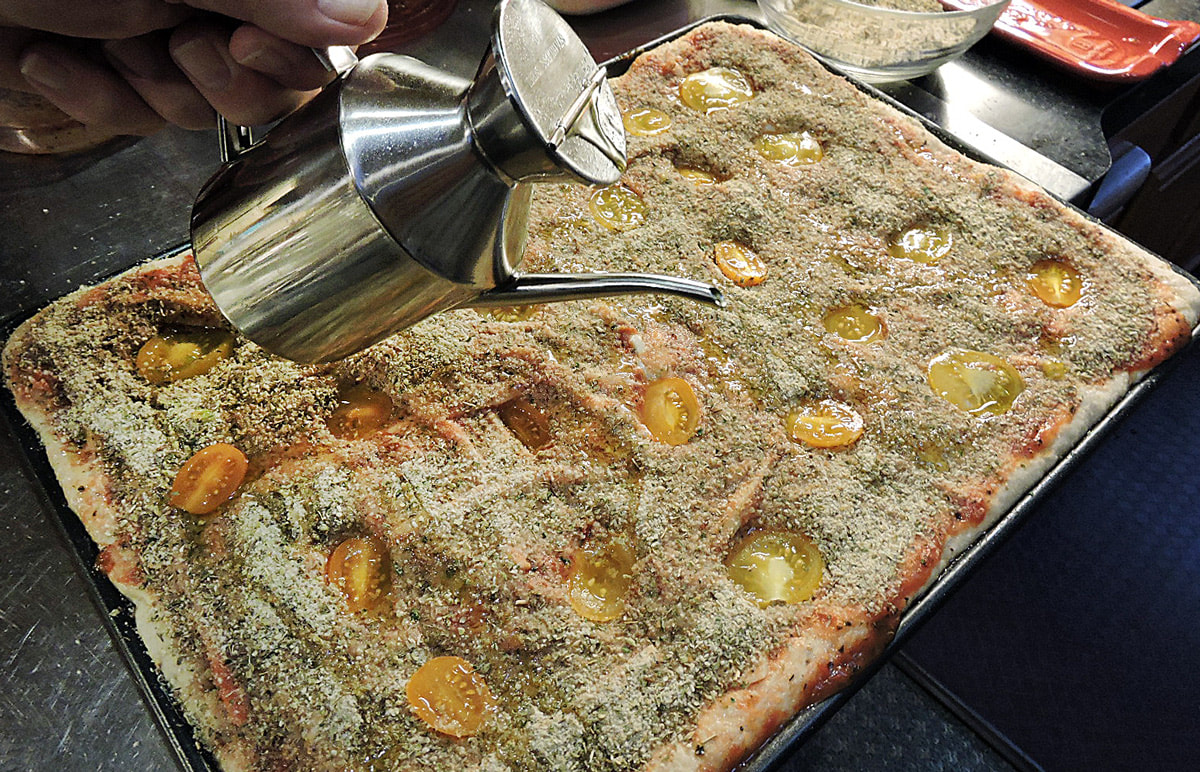 In Palermo there is a type of pizza that is similar to the thick, bready crust of focaccia, but unlike focaccia, it has tomato sauce on the top. Ingredients are usually put on in a reverse fashion--the mozzarella or caciocavallo cheese placed on the dough first with the sauce goes on top. What makes this pizza stand apart from others is the final topping: a healthy dusting of breadcrumbs, which turns this into a classic, Sicilian sfincione. There are derivatives of sfincione, like the tomato pies made around the Philadelphia and Trenton, New Jersey region. This cousin of sfincione is thick and bready, but has a solitary topping of thick tomato sauce with perhaps a sprinkling of grated parmesan cheese (if any) and is always served room temperature. Personally, the tomato pies I've had have been a bit too intense on tomato flavor. For my version of sfincione, I topped it with julienned slices of caciocavallo cheese and Italian style breadcrumbs. Of course, you can also put some stale ciabatta in a food processor and make a rough textured breadcrumb for the topping. I didn't overload my sfincione with breadcrumbs, but keep in mine, in Palermo they might put a fairly thick (1/4") topping of lightly toasted breadcrumbs on top. I made this during the late summer when I had an abundance of my Olivette Jaune heirloom tomatoes, so onto the top they went... Equipment Needed: 1-13x17" half sheet pan (dark colored to create a well baked crust) thin, cotton kitchen towel baking stone (better yet, a baking steel) Proofing the yeast 1 tablespoon active yeast 1 teaspoon sugar 1 - 1/2 cups water at 115F For the dough: 2-3 cups bread flour 1 teaspoon salt 1 tablespoon sugar 2 tablespoons extra virgin olive oil For the sauce: 28 ounce can crushed tomatoes (I recommend Tuttorosso brand) 4 small anchovies in oil 1 tablespoon sugar 2 tablespoons dry basil (or 8 large, fresh basil leaves, julienned) 2 tablespoons extra virgin olive oil Toppings: Thin slices of caciocavallo cheese (alternate, sharp provolone) 1-2 cups Italian style breadcrumbs (or 3 cups, rough chopped fresh breadcrumbs) 2 tablespoons Oregano (for mixing with bread crumbs) Yellow olive shaped tomatoes, halved Extra virgin olive oil Grated Parmigiano Reggiano or similar cheese Optional Toppings: caramelized onions, prosciutto, olives, pimentos, anchovies, fresh basil or oregano leaves. 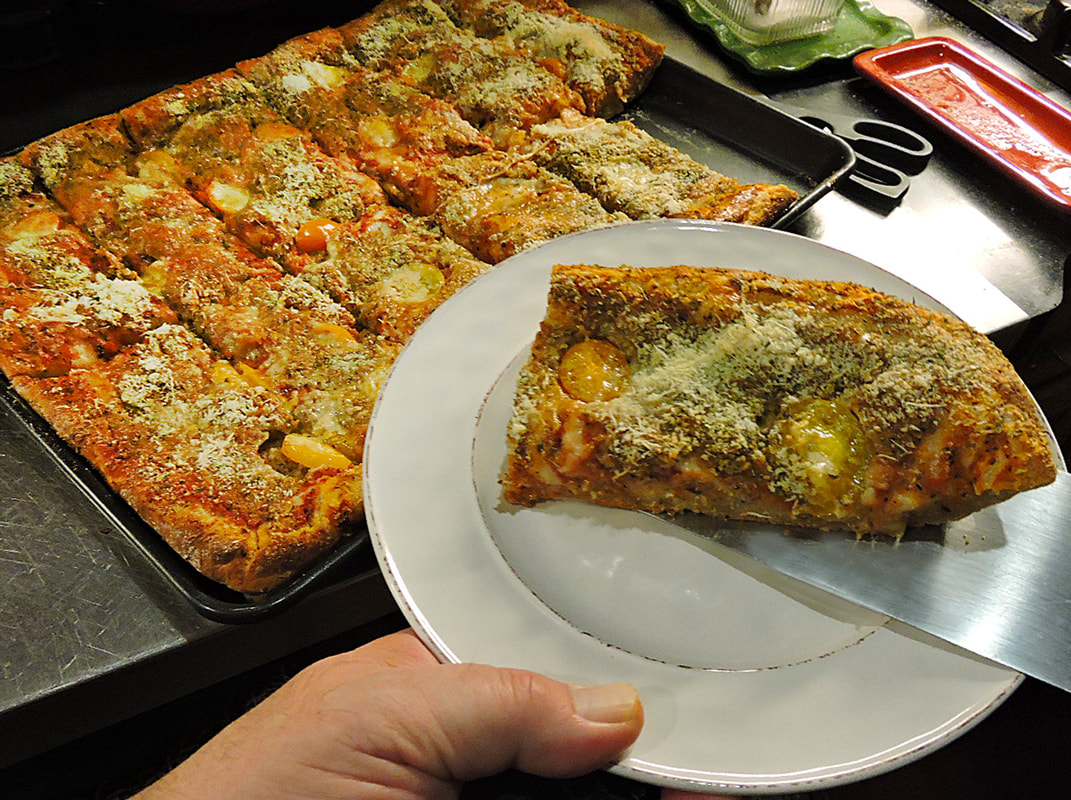 Making the Dough
To make the sauce:
 Putting together the Sfincione:
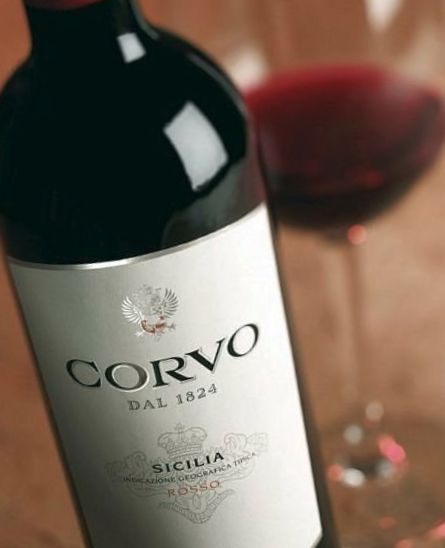
Slice your sfincione into squares or rectangles for serving with a simple salad and a glass of red Sicilian wine, such as Corvo Rosso. And don't forget, sfincione is traditionally served at Natale (Christmas) and the Italian father's day, la Festa di San Giuseppe on March 19th. Buon appetito! --Jerry Finzi You might also be interested in... How to Make a Great Pizza Crust Making the Best Pizza Sauce Our Double-Crust Pizza Rustica! My New Pizza Steel Our Deep Dish Pizza!
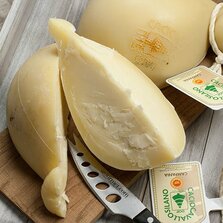 Caciocavallo Cheese 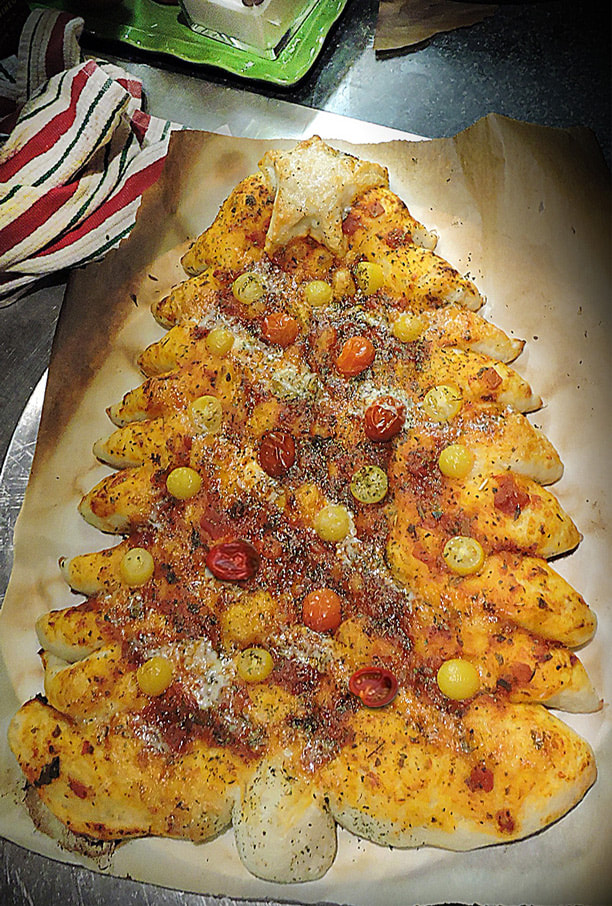 When friends come to visit during the holidays, it doesn't always mean making a formal meal. How about making a Christmas Tree Pizza?
It's easy to make your own fantastic pizza crust and pizza sauce... the toppings are easy: cherry tomatoes or olives for the ornaments and strips of mozzarella, provolone cheese or even sweet peppers. Rough out the pyramidal shape with your dough, then trim the sides with a pizza cutter or chef's scissors. The star is made from trimmings cut when making the tree shape and topped with provolone. Buon Natale! --GVI 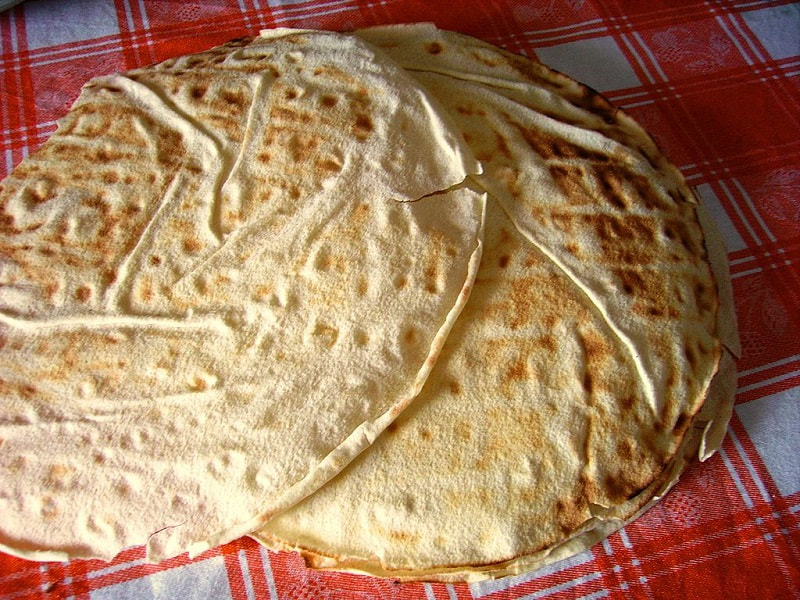
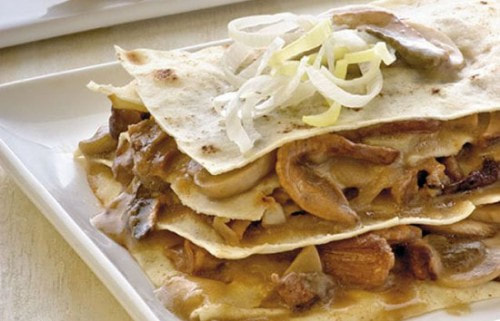
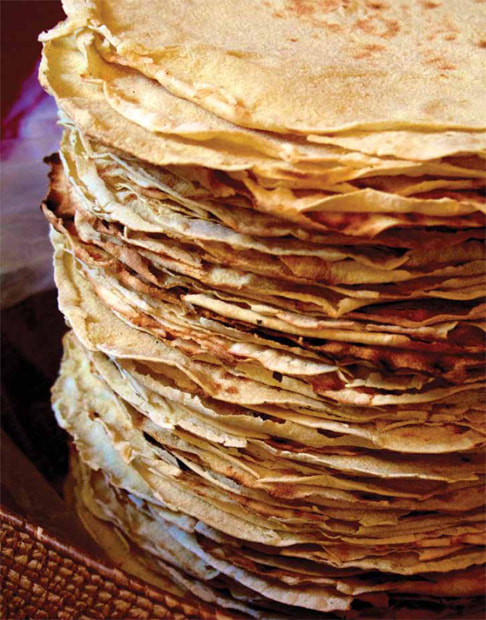
Ancient Sardinians had a saying: Chie hat pane, mai no morit (who has bread, will never die). This is true for most of the world. Pane Carasau is one of the ancient breads they were talking about. You can imagine the ancients making this bread because of its long storage capabilities and portability.
It is a a very thin flat bread--some might call a cracker--that was traditionally made for shepherds by the housewives to carry with them for long months on high pastures with their flocks. They can be eaten with sausage and cheese, or dipped in milk to re-hydrate for colazione and drizzled with honey or jam. Pane Frattau is a soup made with shards of Pane Carasau, meat, eggs, cheese and tomato. Modern Sardinian chefs are also using pane carasau in their recipes, for instance, carasau lasagna. The tedious method by which is is made creates a thin, crispy bread that will last literally for months, even if it happens to crack into shards along their travels. There are some who refer to this flatbread as carte della musica (music sheets) because of its thinness. The dough itself is fairly simple: durum wheat, yeast, water and salt. It's rolled into extremely thin rounds and baked in a wood oven until the bread puffs up like a balloon, then quickly (with dexterity, not to get steam-burned) cut into two halves, making it even thinner. They are then toasted again in the oven and dried completely. Nowadays, in Italy you might even come across packaged Pane Carasau in supermarkets.
Ingredients
Directions
 You know, I always thought I'd have a problem eating weird things if I ever traveled in the Orient. I'm a person with a fairly narrow palate... I admit it. Even my 14 year old, Lucas has a much broader palate than I do. I like what I like and won't try what I know I don't like. I'm old enough to say that I have tried lots of stuff--for instance, I hate caviar and cooked spinach makes me gag. I know what I can't stomach. In my research and travels about Italy, I've come across things that I wouldn't eat if you paid me. Some things I'll try--once--while others... well, you just sort of know to stay clear. Still, we have to respect the culinary traditions of our Italian heritage and try not to be so grossed out by it. Food is fuel--fuel is food. In Italy, nothing goes to waste--not beast or flora. So, I hope you pardon me as I poke a little fun at some of Italy's oddest culinary creations--even though I may tease a bit, I still want to honor the complexities if la Cucina Italiana... In ancient Rome peacock eggs, boiled ostrich and stewed parrots were common on menus. 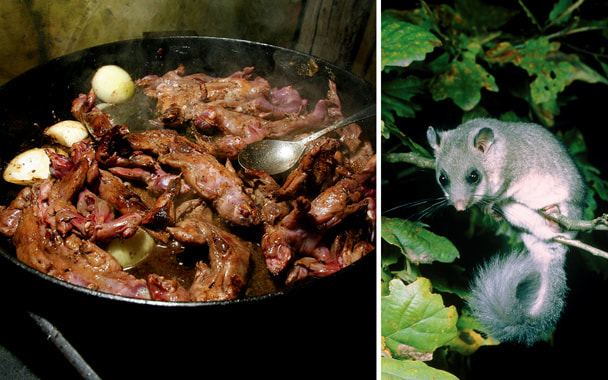 Stuffed Mice There is a protected, fluffy tailed species of dormice (Glis glis or Ghiro) that have been eaten since the days the Caesars ran things. Down in Calabria the rodents are still stuffed and chomped on. They are stuffed with meat, nuts, raisins, onions and spices. You can imagine little squeaks as you take a bite. I have no idea what they do with all those cute fluffy tails. Ghiri alla pizzaiola : Ingredients : . 2 Ghires, 50 g of lard, 50g of pancetta, gr 600 gr peeled tomatoes, 1 tablespoon of chopped parsley, 1 tablespoon of oregano, 1 tablespoon extra virgin olive oil, 1/2 teaspoon of salt Engage the dormice lengthwise, peel them, quickly remove the bladder without breaking it and leave it in running water for a few hours. Rinse them and blanch in boiling water for a couple of minutes. Chop the lard and the bacon and put the mince in the belly of the dormice. Place them in a large pan, pour the oil and cover with chopped tomatoes, parsley and minced garlic, oregano and salt. Cook over moderate heat, keeping the pan tightly closed with the lid. 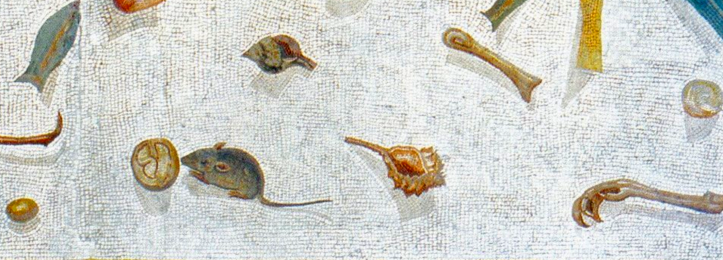 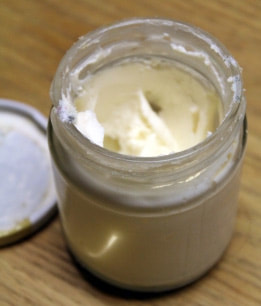 Riccota Forte (or Scanta) The Pugliese are a resourceful bunch. I know--mu Dad was from Puglia. Many of you may know that ricotta means twice cooked or re-cooked... basically, ricotta is a by-product of normal, everyday cheese making. You take the little bit of whey left over, add an acid, boil it and presto, you have ricotta cheese. It's a fresh cheese and should be eaten within a couple of days. When it dries out, the frugal Pugliese add salt, and let it dry even more into Ricotta Salada (one of my favorite cheeses). But some go even further. Some just let it go bad... and stinky... and acrid, turning it into a Apulian delicacy called Ricotta Forte, or Scanta. Many think this acrid, foul smelling cheese is worse than any other stinky cheese they've even eaten--but in a good way. We tried it during our stay in trullo B&B outside of Alberobello. Yes, it stinks, and our host told us how it's just kept in a dark, un-refrigerated place (under his sink) to grow more bacteria and even sometimes microscopic worms--but we actually liked it! (But it did burn my eyes a tad).  It's the kind of taste that shocks your eyes open, assaults your nose but somehow in the end pleases your palate. It's also a surprise when you are first introduced to it in a plain jar that looks like it's your Aunt's 1950s era home brew face cream. Enjoy. (Oh, just don't get it on anything sweet... I got it on some Nutella and bread by mistake and nearly got whiplash when I popped it in my mouth.) 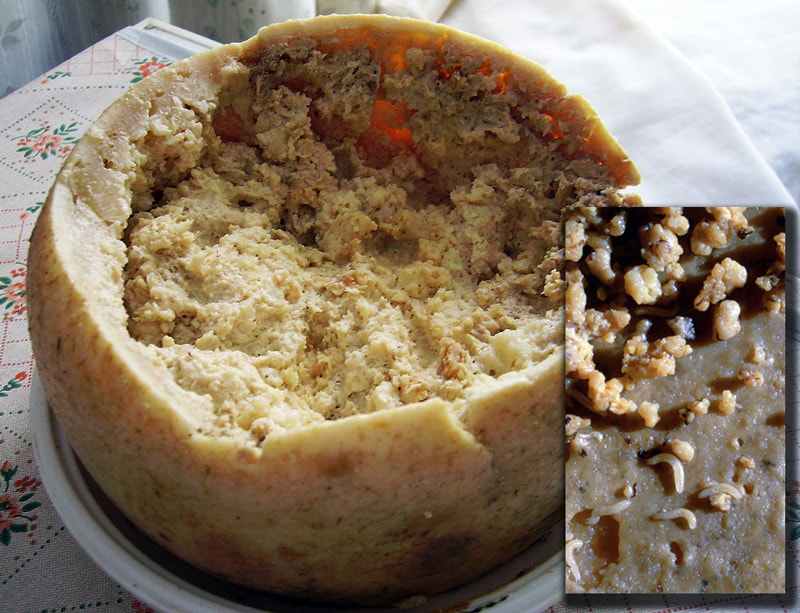 Casu Marzu or Formaggio Marcio (Rotten Cheese), with Maggots Casu Marzu is a sheeps' milk cheese from Sardinia and Corsica (they call it Casgio Merzu) that actually contains maggots--live ones. Most cheeses rely on fermentation and bacteria to develop their flavor, but this cheese relies on actual decomposition caused by the Cheese Fly larvae. The texture is an oozing, seeping liquid, essentially caused by... well... maggot poop. Some people eat this stuff with the larvae, some will tickle the cheese, causing the larvae to be disturbed enough to actually jump out... as much as 6 inches! The daring who have tasted it say this muck is so acidic that it leaves an after taste in your mouth for hours afterward. I recall a cheese like this in France years ago--I wouldn't go near that either! 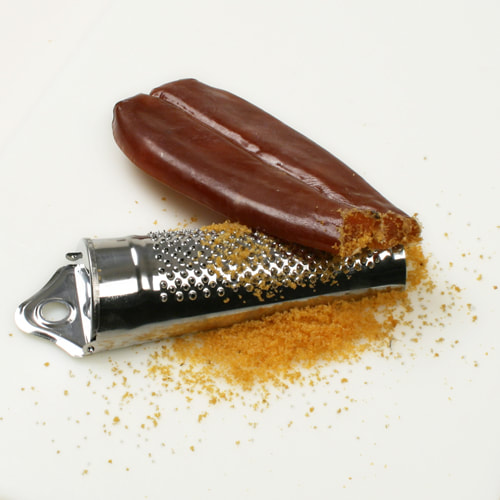 Batarga From what I hear, battarga is definitely an acquired taste that's at least a thousand years old and perhaps more ancient than that. It's made from the roe (fish egg) pouch of either grey mullet or Atlantic blue-fin tuna. The roe pouch is manipulated by hand to get rid of any air bubbles and then cured in sea salt for several weeks. After curing, the result is a hard, dried salty slab which is usually (but not always) coated in beeswax.  To use it, you grate some on top of pasta or on top of crostini (toasted bread) and drizzled with olive oil. It also can be used as a main ingredient along with garlic for tomato sauce. It has a tremendously long shelf life and is often smuggled out of Italy due to its high price--up to $140 a pound! You can actually order some on AMAZON.  Colatura di Alici, Fish Sauce In ancient Roman times there was a fishy concoction called garum, a clear sauce made from salting and compression of various types of fish. The clear garum on top was used by the upper classes, while the sludge left over, called allec, was used by the lower classes to add flavor to polenta, porridge or on bread. Today there is a modern version called Colatura di Alici made in one of my favorite villages on the Amalfi Coast, Cetera (click the photo to see it on Amazon). The first time I took a tour of Cetera at ground level on Google Earth I started seeing barrels and wondered why this village had so many. It's a fairly simple recipe... 
The golden liquid is prized in Italy and is used to flavor all sorts of dishes. Watch the video of Colatura being made... 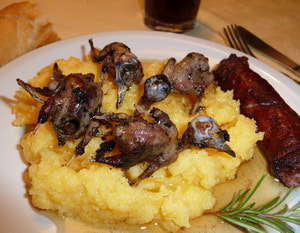 Polenta Uccelli (Polenta with Songbirds, or Polenta e Osei) Yes, the same song birds that will awaken you on a misty Tuscan morning are being shot or captured in hanging nets by hunters to supply their illegal bounty to select restaurants throughout Italy. Yes, it is illegal, but those doing it consider the practice as being furbo (crafty). They make a living while carrying on a tradition. In Tuscany the birds are flambéed, in Sardinia they are boiled and preserved, in the Veneto rolled in pork belly and fried. Perhaps the best known version is in Lombardy where they are grilled or fried. It seems this is an elite recipe item in Italy. Ladies and gents get dressed up in all their finery and make an event out of eating these little skylarks, goldfinches and other types of song birds. Our hot air balloon pilot, Stefano told us they shoot anything in Italy, especially song birds, so much so that some species are becoming endangered. Oddly, we flew directly over some "hunters" in their treetop blind, releasing pigeons only to shoot them a moment or two later. The little tweetys are usually stuffed with pork, beef, rabbit or even other birds. They are served with their heads and beaks on top of polenta, an attempt to mimic a bird's nest. 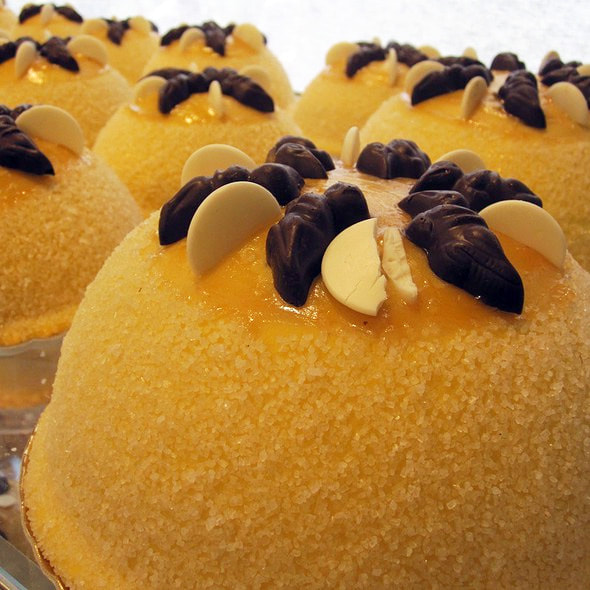 To illustrate how much Italians love this special dish, certain pasticcerie have created a legal version: a dessert called Polenta e Osei, made to look just like the real dish. It's made of a soft light sponge cake filled with hazelnut cream that is rolled in a yellow fondant. On top are little chocolate birds made from chocolate marzipan. You can find this in the town of Bergamo. As for the real song bird dish, the macho thing is to pick up the birdie by the beak and leave nothing... devouring bones, beak and all. At least they are not as ruthless as a similar dish I saw in France years ago--where they drown the birds in the local brandy, then when eating drape a napkin over their heads and the dish to inhale the fragrances and crunch down on the bird, apparently head hidden in shame. 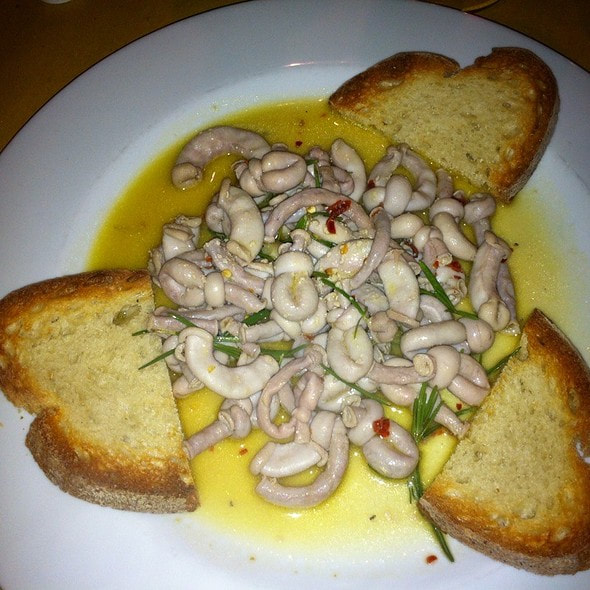 Pajata (Cheese from Cow's Intestines) This is either a Roman dish or what the Devil himself would order up. A young, milk fed (no grass feed) calf is slaughtered, and besides getting veal, brains and other delicacies from it, the intestines are used to make this delicacy--pajata. The intestines are washed, but not emptied. When cooked, the partially-digested milk inside turns into a thick, funky cheesy substance which is used as a pasta sauce, and often served on its own with crostata. No grazie! 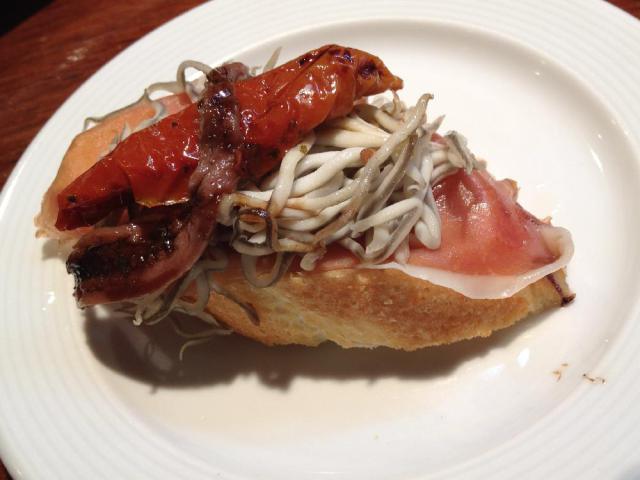 Cieche (Baby eels) Cieche are baby eels that migrate upriver after being born in the sea. The name, Cieche (cieco) literally means blind – these babies have no eyes. In coastal areas of Tuscany, cieche are usually fried or boiled alive. Just be careful they don't jump out when you're trying to dump them into the boiling water or saute pan. 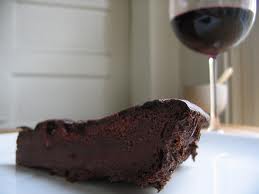 Tuscan Blood Torte Enough said. A torte or cake made from the blood of pigs? I've tried Argentinian blood sausage and British blood sausage, and if the flavor is anything close to what I experienced, I would never go near this stuff. But this recipe contains cocoa and has a chocolate taste, albeit a bit more... er... pungent because of the pig's blood it contains. The pudding used is similar to Sanguinaccio Dolce, a traditional recipe in the South made when a pig is slaughtered using the pig's blood, chocolate, raisins pignoli and sugar. This is an example of the Italian philosophy that nothing goes to waste, not even the last drops of blood. Watch the video below from the Two Greedy Italians series where Gennaro shows how they make the pudding (at 9:45).
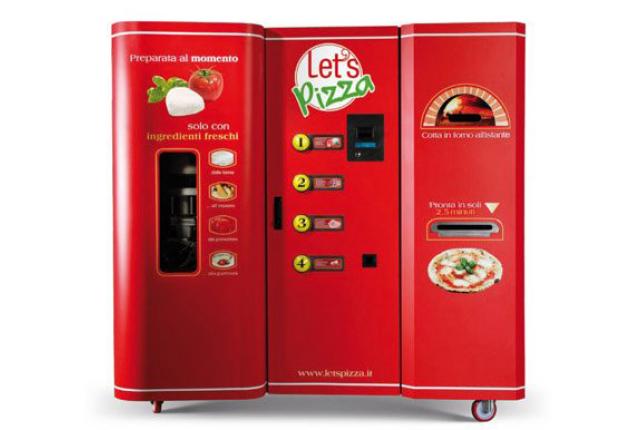 Vending Machine Pizza As all of the above proves, Italians will eat anything... even pizza made totally inside a robotic vending machine. Not THAT's a real crime! Let's Pizza machines were initially designed and manufactured in Northern Italy. It offers a choice of four kinds of pies, and makes the pizza while you watch the whole process through windows--adding water to flour, kneading the dough, placing the sauce and toppings, and baking the pizza via infrared oven in just 2.5 minutes. It can produce 90 to 100 pizzas before it needs to be refilled. Ugh. Just because you can, doesn't mean you should!  Ok, so vending machine pizza isn't such a big deal, but how about (suspenseful music...) Gatto in Umido? This translates as "Stewed Cat"!
Calmati, Betty White... "Gatto in Umido" is simply Stewed Cat-Fish. As I said, we all have to keep an open mind. I hope you enjoyed this look into the traditions of culinary Italy. Via la Cucina Italiana! --Jerry Finzi 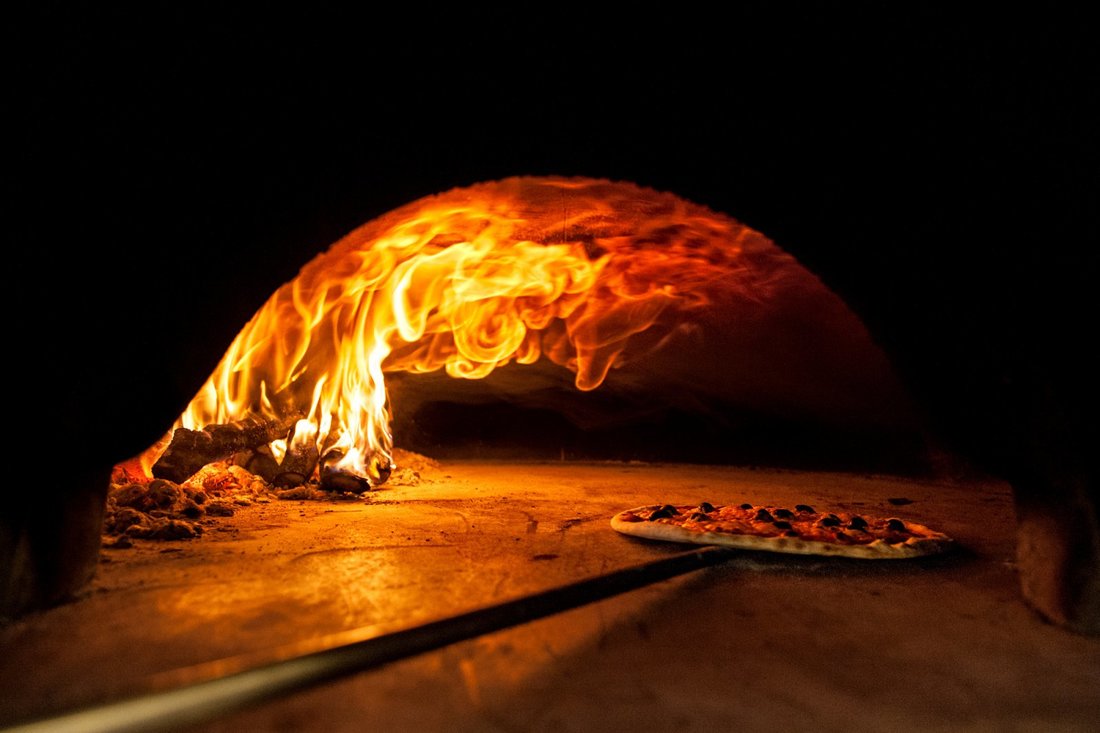  One of many ovens at Pompeii One of many ovens at Pompeii Excerpt from an article by Kristan Melia on Culinary Backstreets/Naples There is evidence that wood-fired ovens similar to the ones used in Naples today were employed by the Ancient Greeks, and some assume that Greek mariners brought this technology with them to the city. Thanks to Vesuvius’ explosive eruption in 79 AD, we can turn to Pompeii for gustatory evidence. Archeologists have unearthed 33 domed clay ovens, complete with chimneys, on the grounds of Pompeii. We know that bread was an important part of the Pompeian diet. The very volcano that would eventually lead to Pompeii’s demise actually contributed to her rise as an early producer of baked goods. The Greek geographer, philosopher and historian Strabo observed that the area around Pompeii and Naples as a result of the soil’s volcanic fecundity, was “the most blessed of all plains, and round about it lie fruitful hills.” It turns out the slopes of Vesuvius were ideal for the growth of cereal grains, and that bread was to become a symbol of Pompeii. An engraving on the entrance to the walled town reads matter-of-factly, “Traveler, you enjoy bread at Pompeii.” The process of grinding the grain to make the bread was arduous. However, the volcanic black lava rock of the region was ideal for shaping tools to grind the local cereals. The practice of crushing, grinding and pounding wheat through a mill was known as pistor and by 160 BC, as Cato documents, the tradesmen responsible for this grinding were known as pistore. When coupled with the ingenious design of the beehive clay oven with chimney, this gave rise to the baking of deceivingly simple, pliable, leavened breads called pinse, so named for the grinding and pounding required to produce them. The pinse would travel through the Roman Empire; years later, we would know its cousins as pissaladiere in Provence, pita in the Middle East and pizza in Naples. 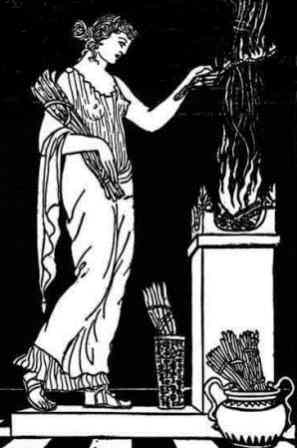 Vesta Vesta In the early days of bread baking in Pompeii, pistore worshiped the god Fornax, the ancient personification of the oven. It is from Fornax that we also derive the word forno (oven), as in forno a legna (wood oven). Every year on February 17, Pompeii’s guild of oven tenders celebrated Fornacalia, lighting and feeding fires in much the same way modern Neapolitans light fires in commemoration of Saint Anthony the Abbot’s day. Years later, Pompeii’s bakers would switch their pious devotions to the goddess Vesta, protector of the hearth – perhaps a testament to the reverence they harbored for the fire that fueled their precious ovens. For all the early success Vesuvius afforded Pompeii’s vibrant grain economy, the volcano would eventually become the town’s undoing. But the traditions of the pistore live on today in the ancient vicolos and back alleys that thread through Naples’ historic center. CLICK HERE TO READ MORE... 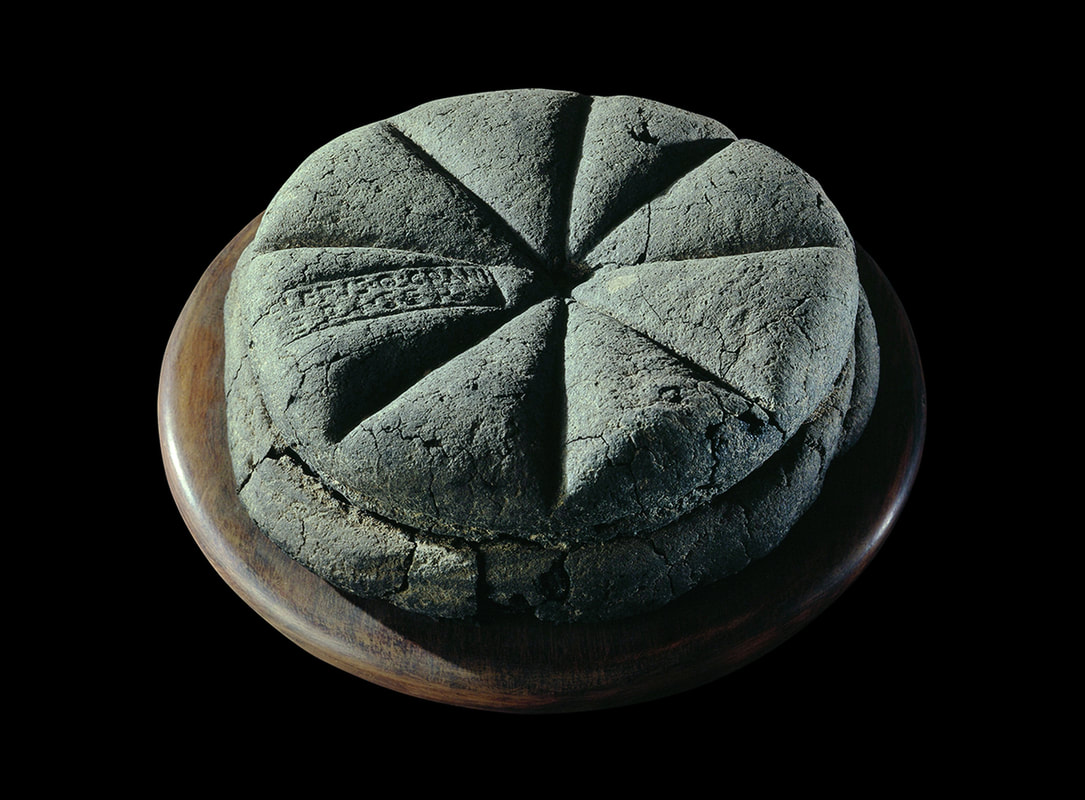 A carbonized loaf of bread with the stamp 'Property of Celer, Slave of Q. Granius Verus', Herculaneum (near Pompeii), 79 AD 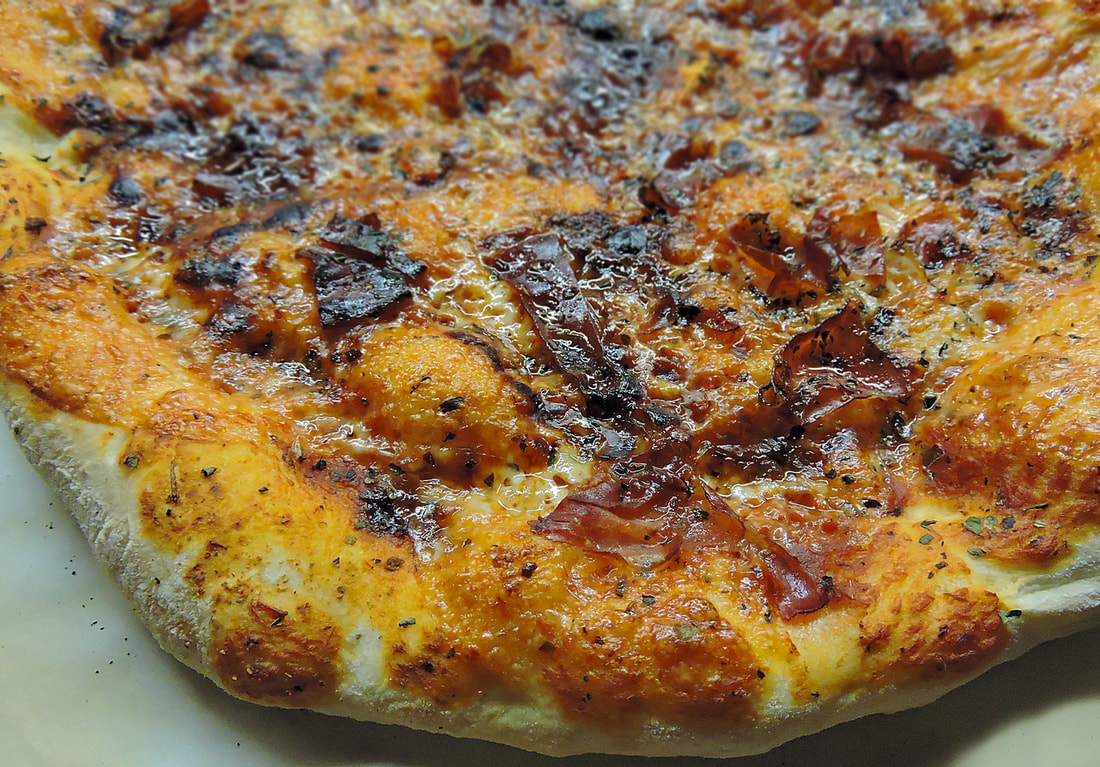 Pizza made with "00" flour, provolone and paper-thin speck 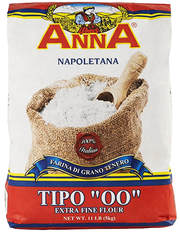 I make many types of pizza... Chicago deep dish, New York style, Neapolitan thin crust, traditional square Grandma's pizza and more. I will change up the flour I'm using depending on what type of crust I want to achieve. For most, I use a combination of all-purpose and bread flour in a ratio of about 1:3. But when I want a crispy, thin crust pizza--like we had throughout Italy--I use 100% Italian style "Tipo 00" flour. Tipo simply means "type". (Click the photo at right to see it on Amazon). An ideal Italian pizza is thinner in the middle, with a rim that puffs up to afford a crust that gives a second experience to eating pizza. It's like having pizza with the toppings along with an airy, bubble filled bread around the edges. Both should be foldable, but the bottom of the crust should make a drum sound when flicked with your forefinger. Many Italians actually fold a 12" pizza in half, and then again into quarters to eat like a panino. Flour designated as "00" is ideal for pizza for a couple of reasons. For one thing, it's very finely ground--almost like talcum powder. I can feel the grit of bread flour in between my fingers but "00" feels silky smooth. It also has a lower protein, and thus lower gluten content than other flours. There are even finer flours milled--"000" and "0000"--but these tend to be lower in gluten and thus are used more for cakes and pastry. But "00" flour has enough gluten support air bubbles in the dough, but not too much, which makes pizza dough much easier to handle. The rule is, the lower the protein, the lower the gluten, which means a dough that is much less elastic. For instance, at the other end of the spectrum, if you tried to make a pizza dough using 100% whole wheat flour, you would have a difficult time keeping your dough stretched out flat. The higher gluten makes it so elastic it would keep shrinking back smaller. (The reason why wheat pizzas are usually a mix of wheat and bread or all-purpose flours.) Using "00" flour is a dream when making pizza dough... the stuff is so supple and smooth and easy to handle. Take the pizza pictured above... I was able to make the center of the round paper thin while the crust was nice and thick. After baking, the center was stiff enough to hold out straight when held New York style--folded at the crust. But the perimeter crust was puffy and full of air, like a light focaccia. 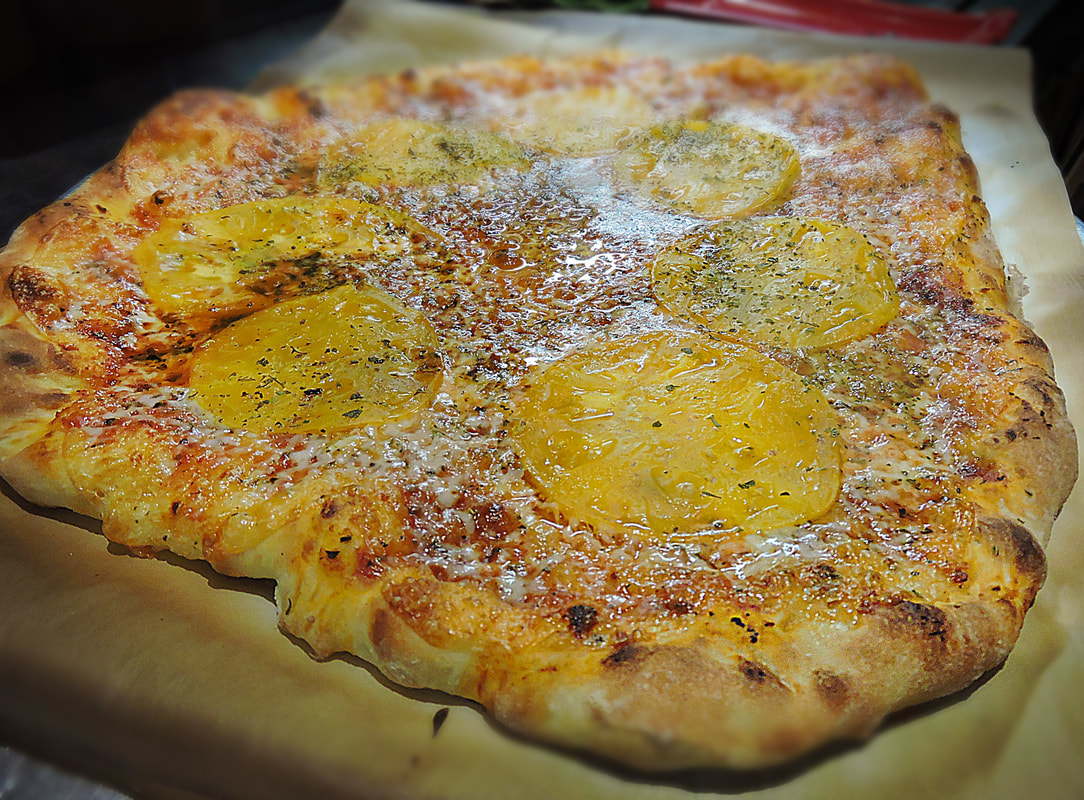 Another pizza made with "00" flour - Heirloom yellow tomatoes Another pizza made with "00" flour - Heirloom yellow tomatoes As for the pizza itself in this case... It was delicious. I made sure to keep the dough on the sticky side which adds to its tenderness. When shaping the pizza round on the board I simply dust the dough (and my hands) with only enough flour so I could handle it without sticking to my hands. I patted the middle very thin and used the heel of my palms to form a thick crust at the edges.
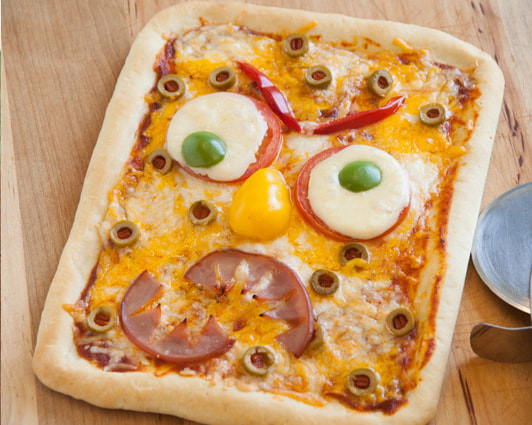
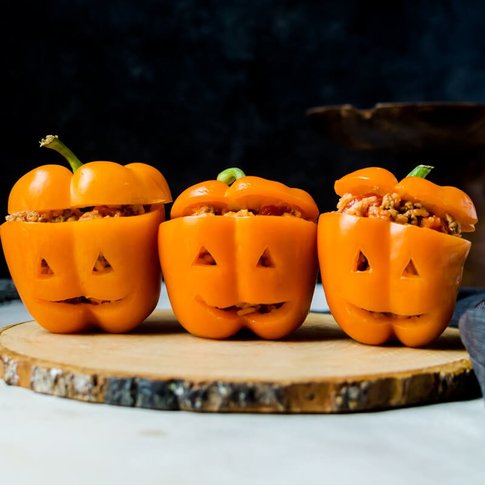
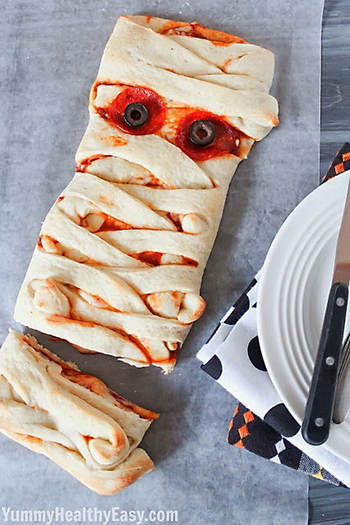
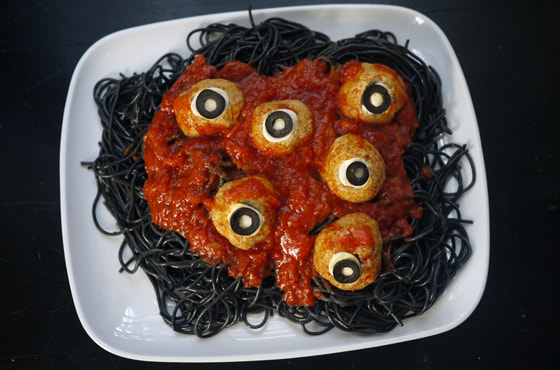
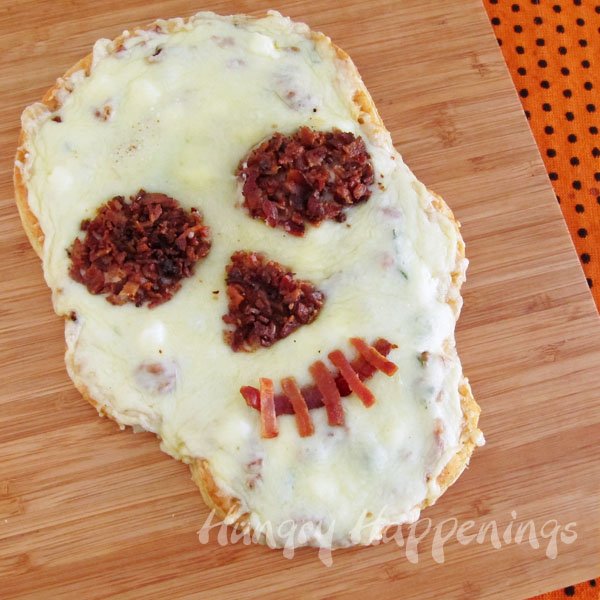
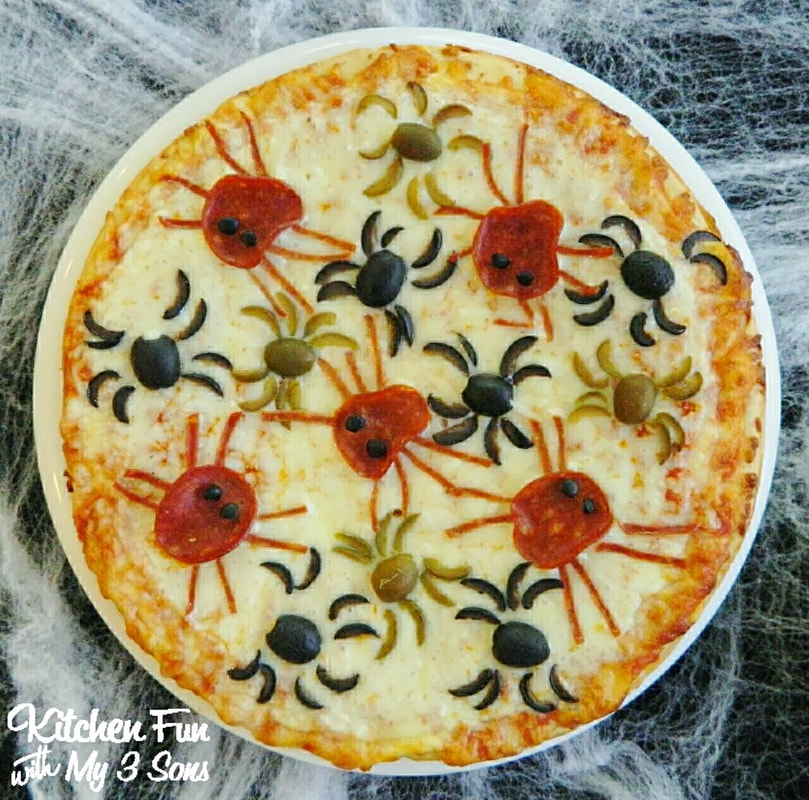
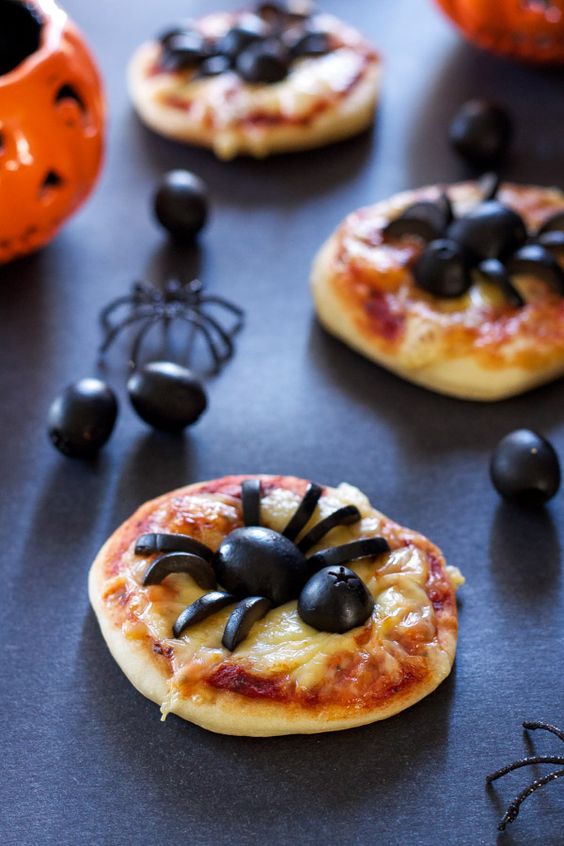
The sauce was simple: crushed tomatoes, red pepper flakes, basil, EVO and a tablespoon or so of sugar. The toppings were thin sliced provolone cheese, and thin-sliced Speck, a type of smoked prosciutto. The next time you're thinking of making pizza at home, get a bag of "00" flour and give it a try. Handling such a soft, supple sough is almost an erotic experience. (I said "almost".) --Jerry Finzi 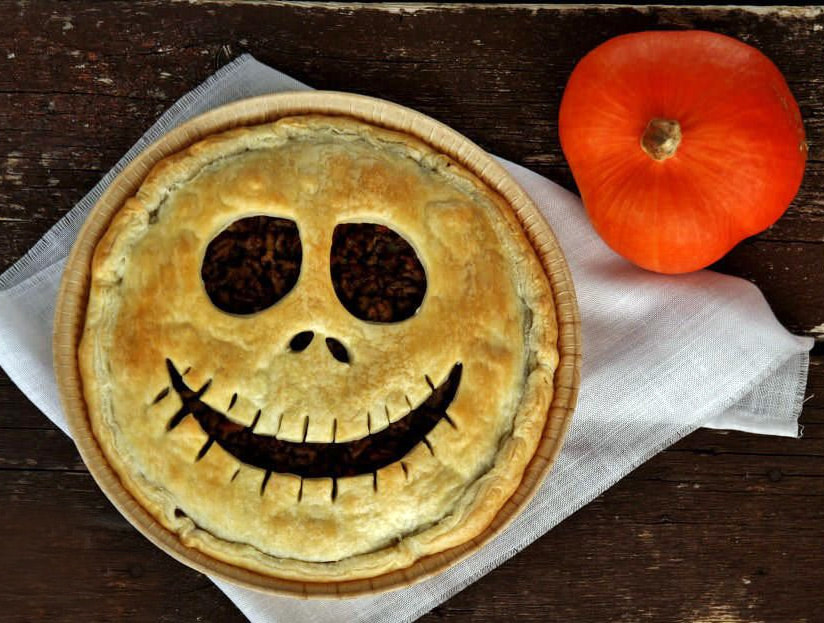 Here are some great recipe ideas for your Halloween parties... Italian style! Click on the photos to take you to each recipe. Enjoy! --Jerry Finzi 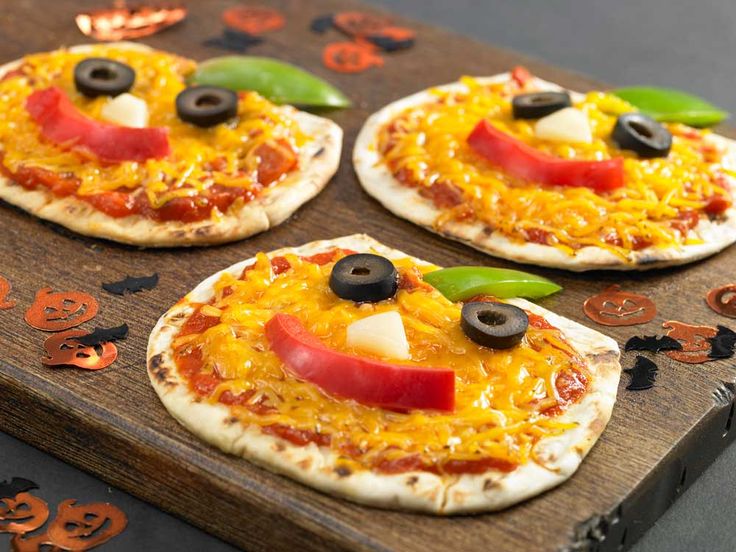
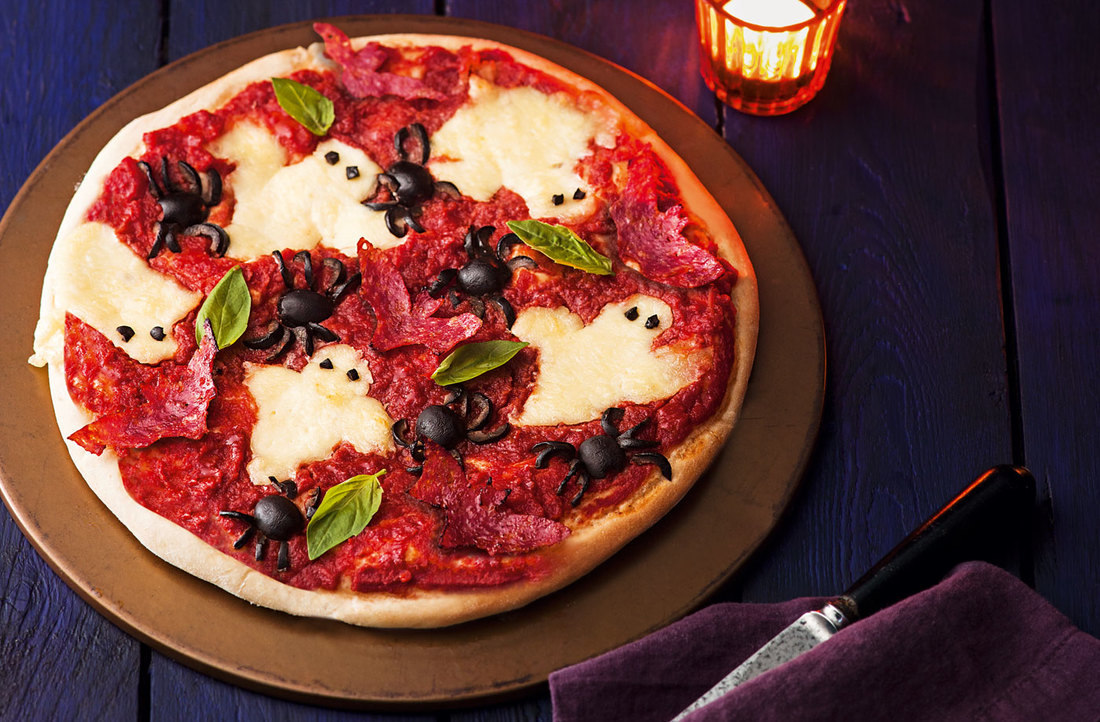
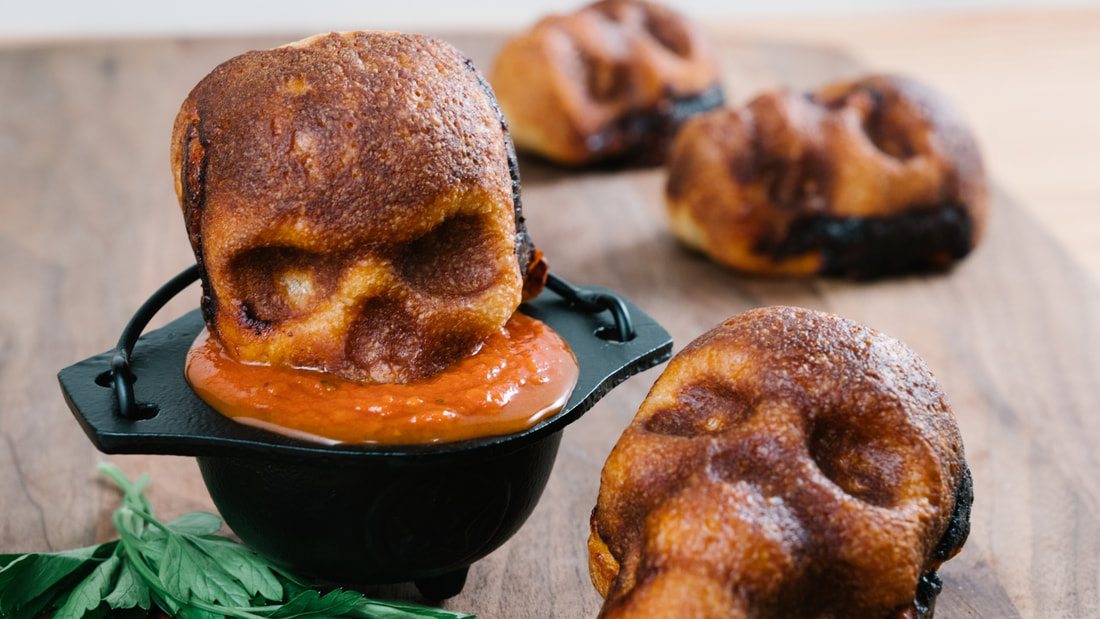 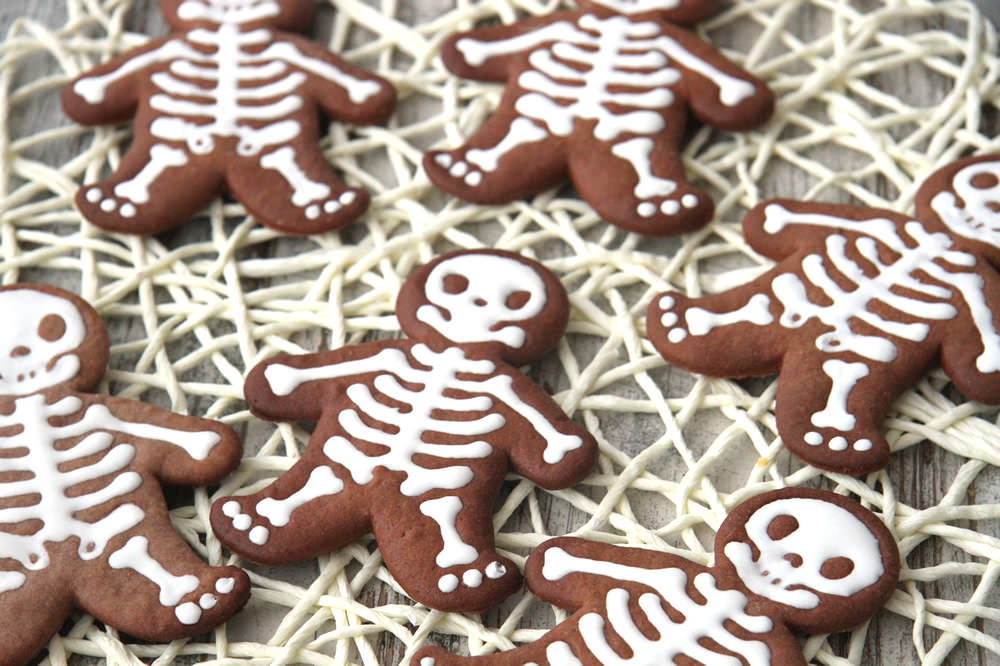 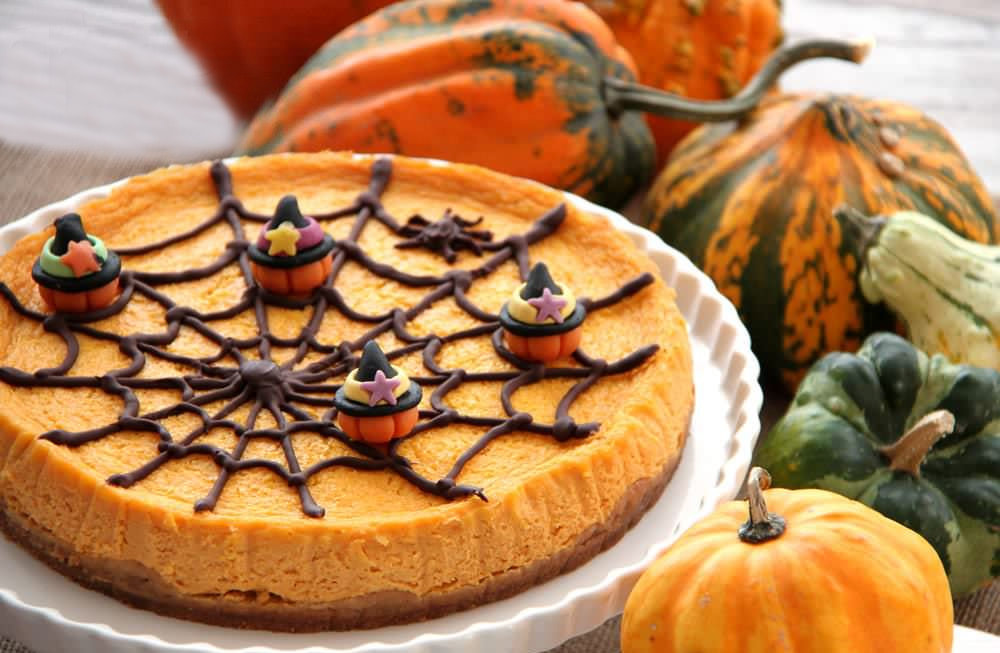 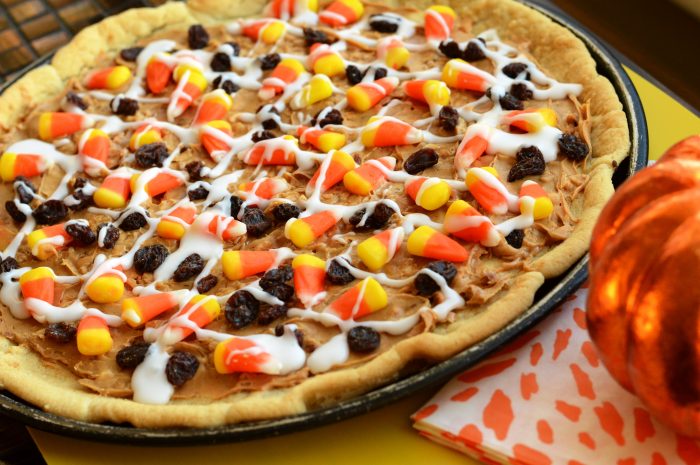 Using cookie dough as the crust 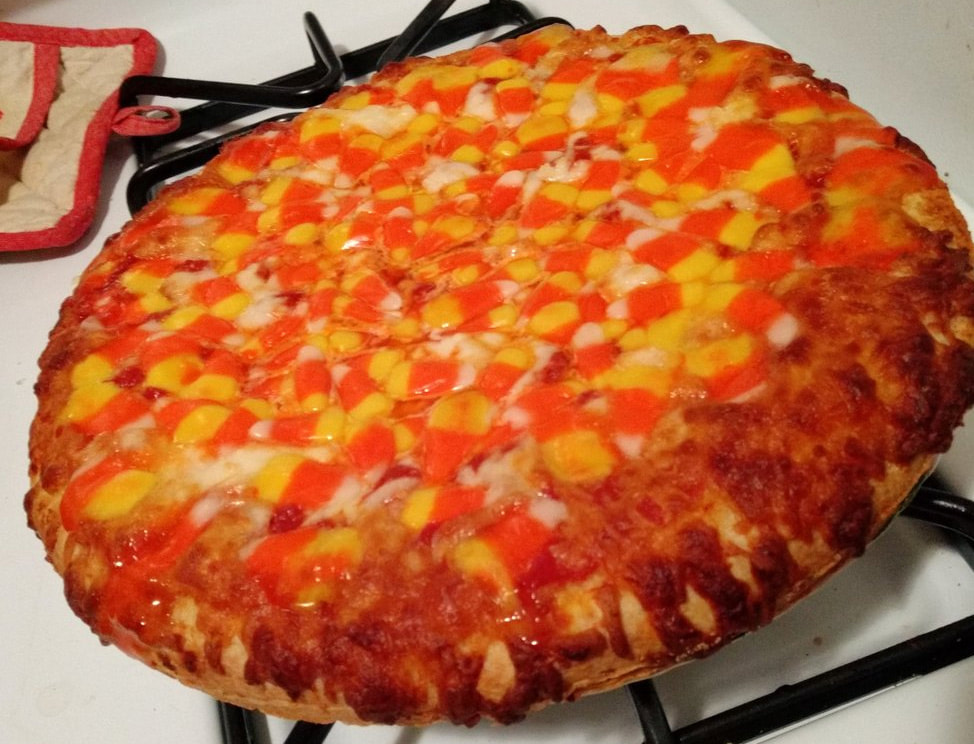 Baked on a real crust with mozzarella and tomato sauce Now, the Candy Corn Pizza shown below, I would recommend for a kid's party. The kids will get one giant "candy corn" slice each. It's actually a real pizza crust made with Alfredo sauce or ricotta (for the white) and cheddar cheese (for the yellow). You can brush the edges of the crust with a light tomato sauce to make the edges more red-orange if you'd like. In essence, this does qualify as a genuine pizza. The others? Not so much. 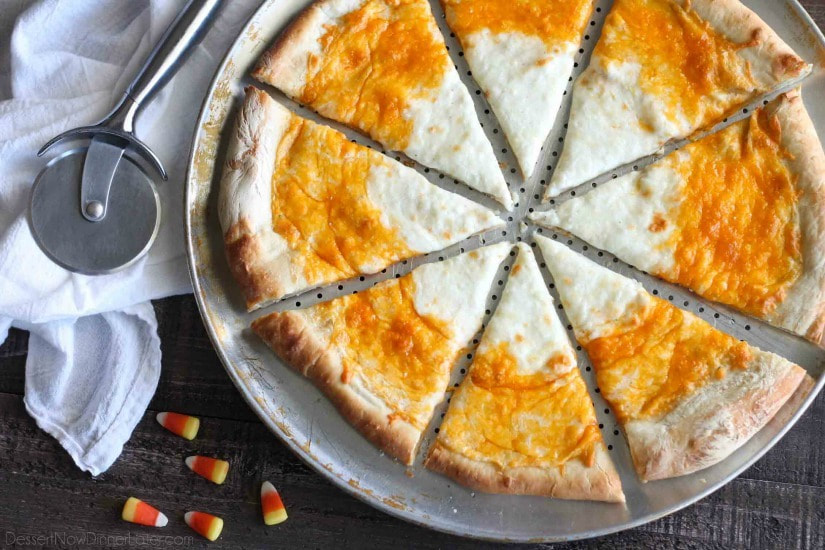 Recipe
My pizza crust recipe (use half to make smaller pizzas) 1/2 jar of white sauce (Alfredo or garlic parmesan, etc.) or ricotta cheese 1 1/2 cups shredded cheddar cheese 3/4 cup shredded mozzarella cheese 1/2 cup tomato sauce
--Jerry Finzi |

Archives
July 2023
Categories
All
|