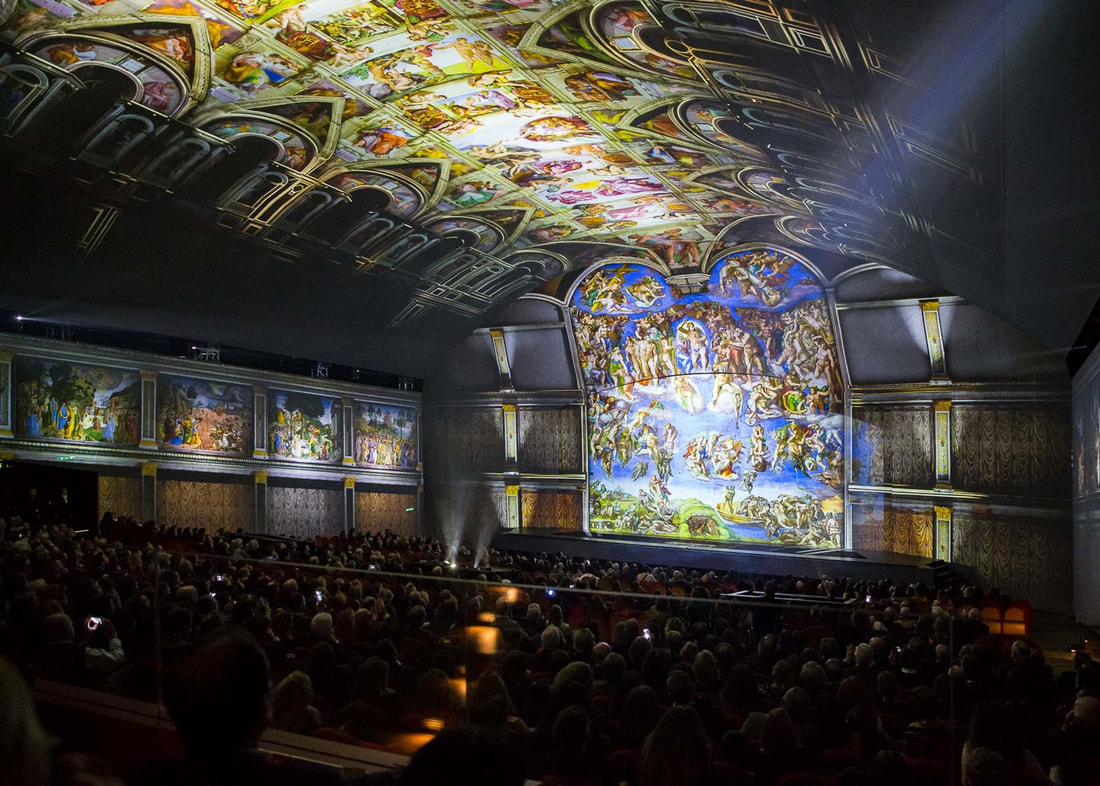
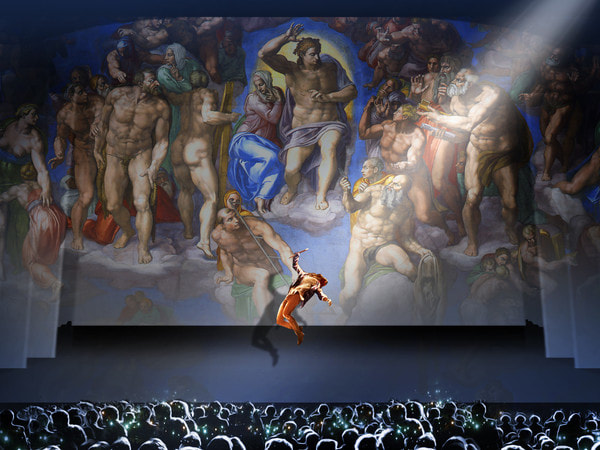
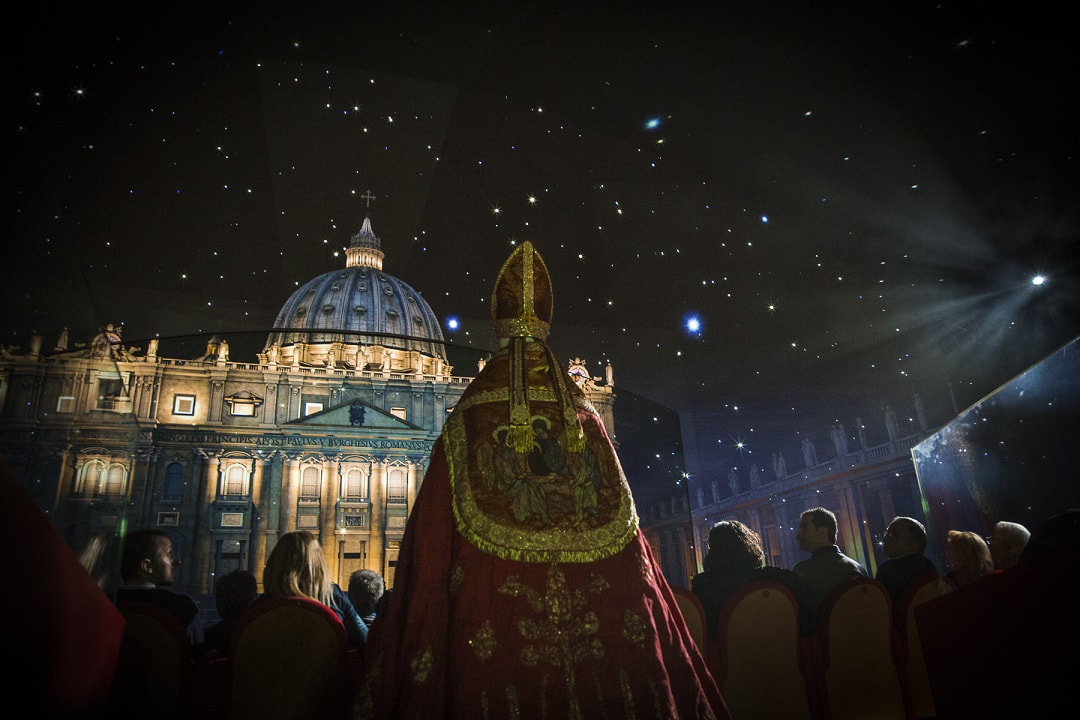
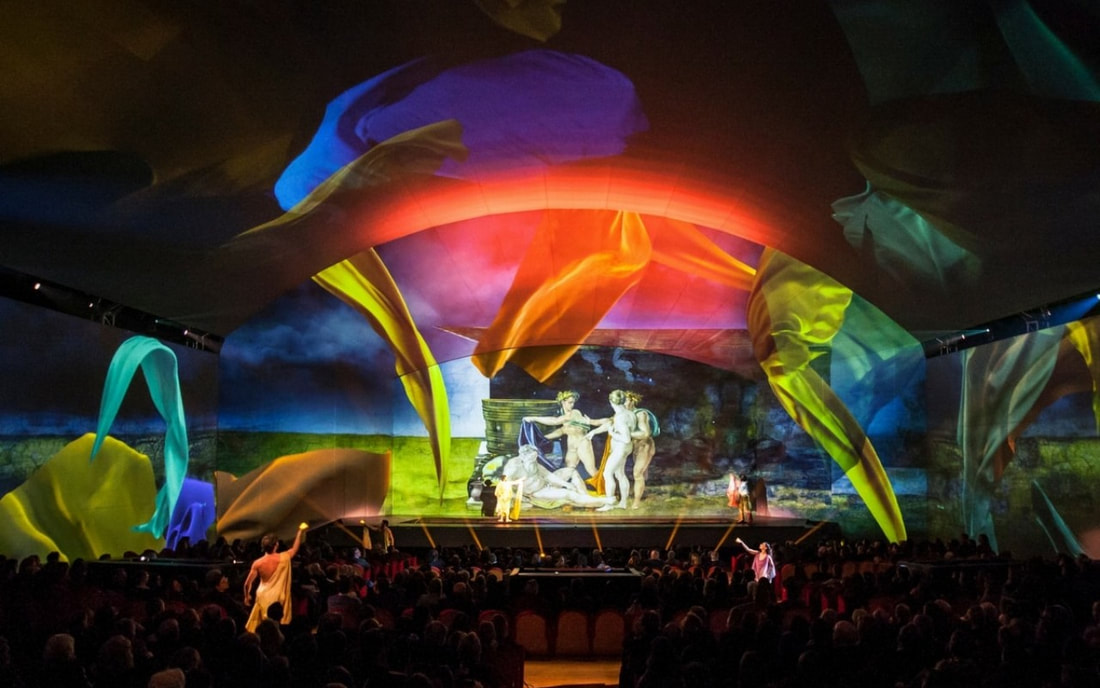
  When considering a visit to the Sistine Chapel and Vatican Museum tour, perhaps you've had doubts about the long lines, heat, the expense, hours on your feet slugging through the 5 miles of museum corridors, shoulder-to-shoulder with the cruise ship tour groups, trying to soak in all of the Sistine Chapel's majesty within the 10 minutes they allow... well, you may now have a serious option for enjoying the art of the Master in a unique and new way... Artainment Worldwide Shows, along with the expertise of the Vatican Museums, have produced Giudizio Universale's Michelangelo and the Secrets of the Sistine Chapel. The multimedia and live performance show aims to be an important event for art lovers and will be a must-see for the millions of Italian and international visitors who place Rome and the Vatican Museum at the top of their Must See List. Conceived by Marco Balich, the show is the first example of an innovative format that combines the narrative of the origin of a masterpiece with the most sophisticated and technologically advanced instruments of live entertainment. For this project, Marco Balich has collaborated with world-renowned musician Sting, who composed the original theme music. The other names of the cast are stunning: the voice of Michelangelo will be by Pier Francesco Favino (known for the Disney fantasy “The Chronicles of Narnia – Prince Caspian” and the collaboration with the Oscar-winning director Ron Howard’s “Rush” and “Angels and Demons”). Together with the original theme performed and arranged by Sting, there will be new music composed by John Metcalfe, a leading figure in the contemporary pop-rock scene and producer of artists such as Morrisey, Blur and Coldplay. The show explores more than just the Sistine Chapel, but the history and works of the Master himself--Michelangelo and the 16th century Renaissance. The show is a mix of art history, theatrical performance, both photographic and physical special effects, words, images, dance and music. 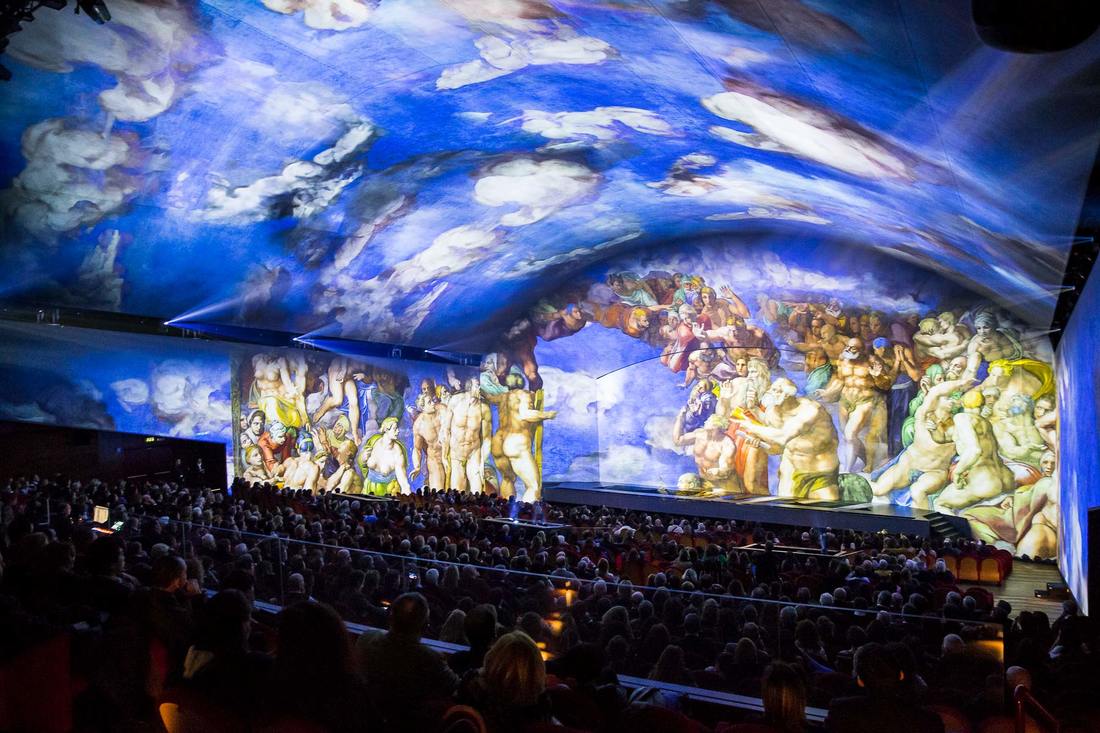 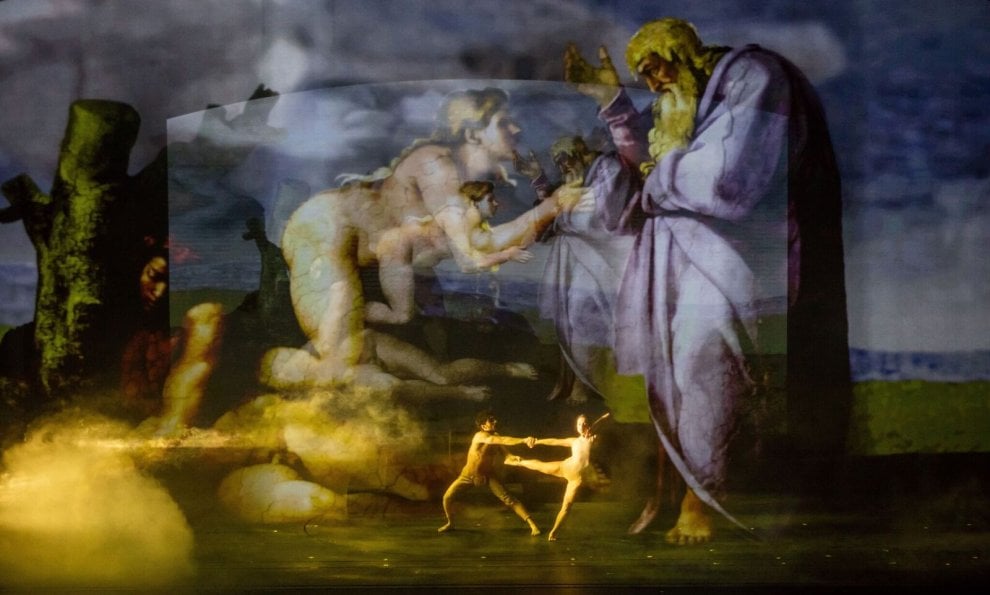 The most impressive thing about the production are its 270° immersive projections, together with larger-than-life stage effects and live performances similar to Cirque du Soleil acrobatics. During a 60-minute show, spectators will follow the story of the origin of Michelangelo’s masterpiece, from Giulio II‘s commission of frescoes of the vault to the realization of the Universal Judgment, through a reenactment of the Sistine Chapel as the place for the papal election. Through the storytelling about Michelangelo, modern special effects will animate the frescos of the Sistine Chapel to end with the wonderful Universal Judgment that will come to life throughout the space around the public. A new chapter of the Italian cultural offering, Giudizio Universale is a long-term project with a typical Italian style. It will run from March 15, 2018, at the Auditorium della Conciliazione in Rome. The audience will be able to choose to attend the show in Italian or in English (starting March 24). 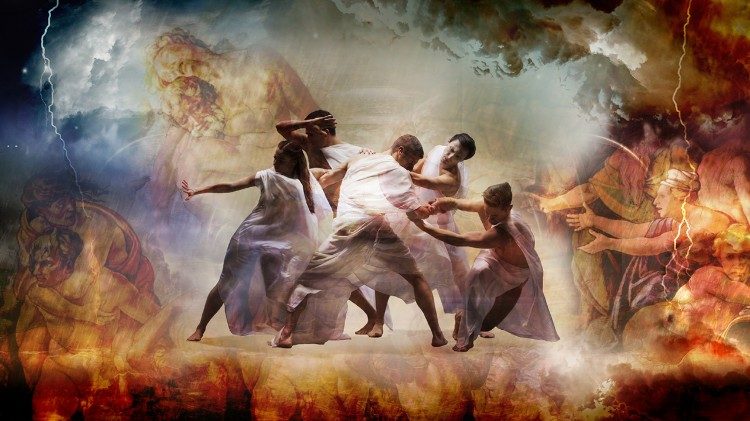
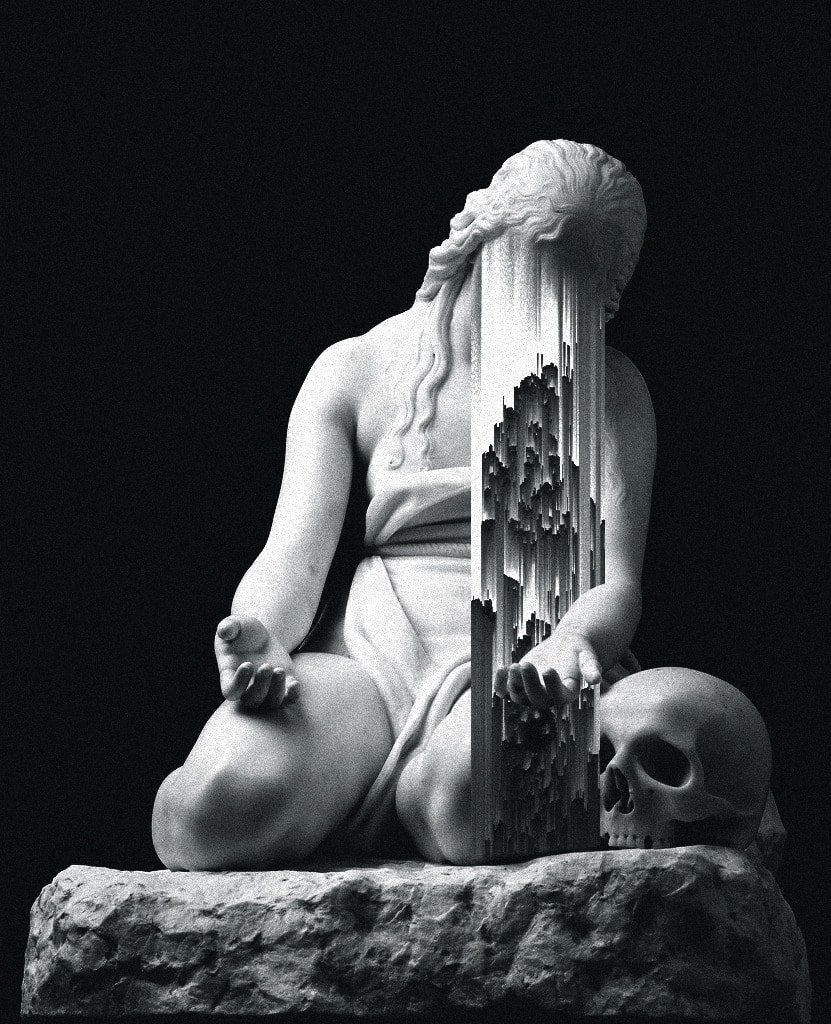
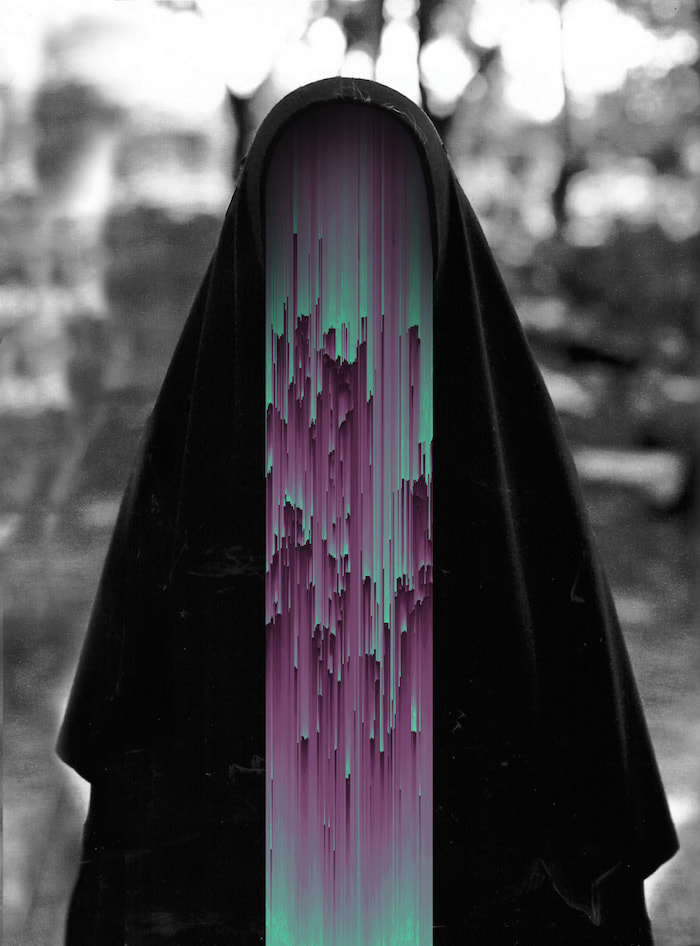
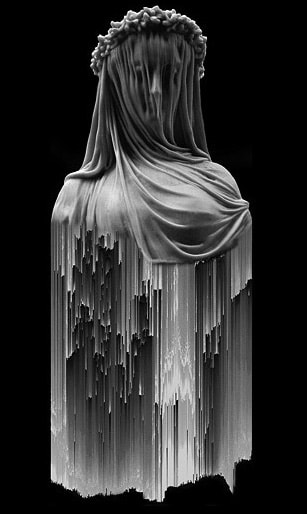
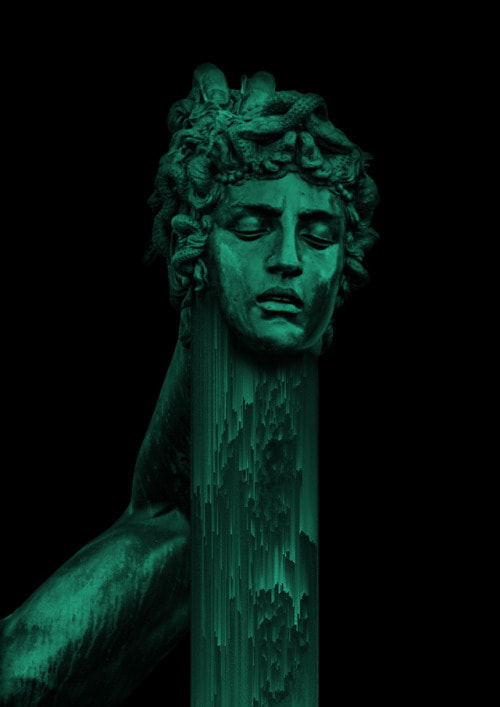
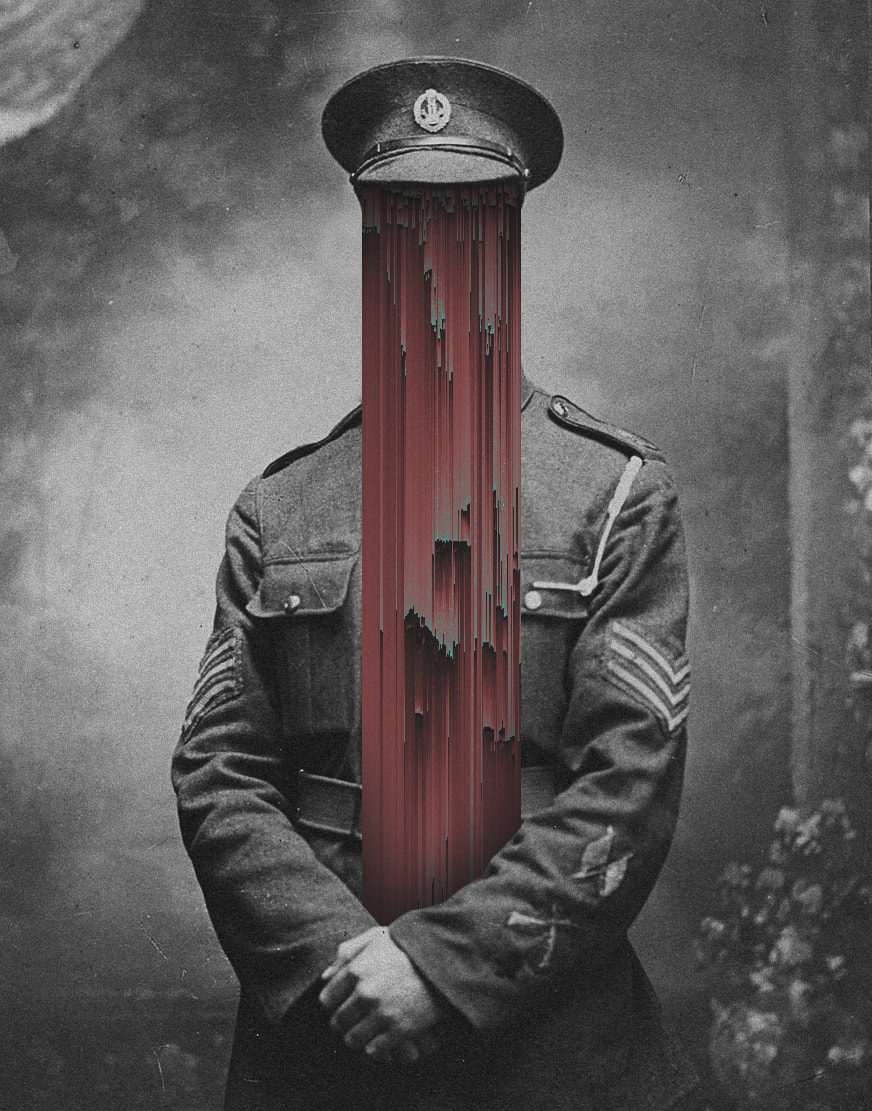
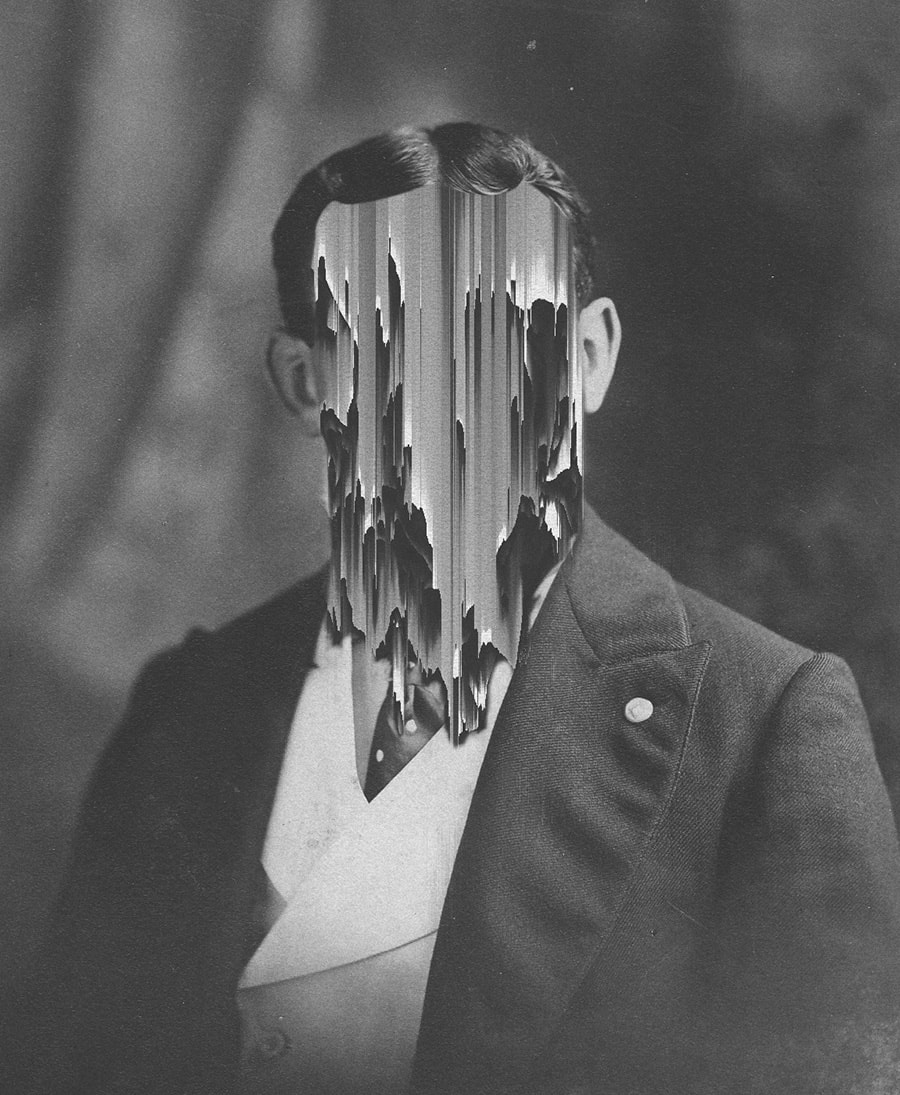
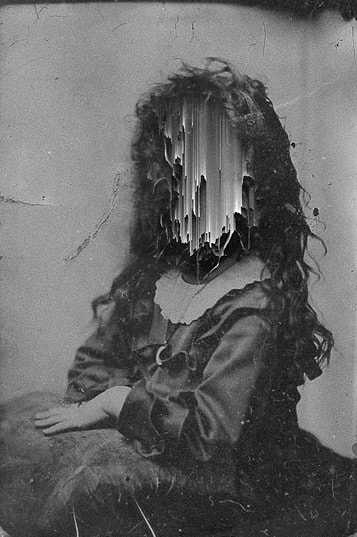
Let's hope that the production draws away some of the crowds that are overburdening the Vatican Museum itself... and that the Vatican helps to publicize the show. It's become obvious the Vatican has oversold both the Museum and St. Peters Basilica with a fear that they are destined to become a tourist destination with as little passion and meaning as a visit to Euro Disney. From the Mouth of the Bocca: This is a great option for people who normally would never spend an entire day in a hot, stuffy art museum and prefer lighter entertainment. --Jerry Finzi 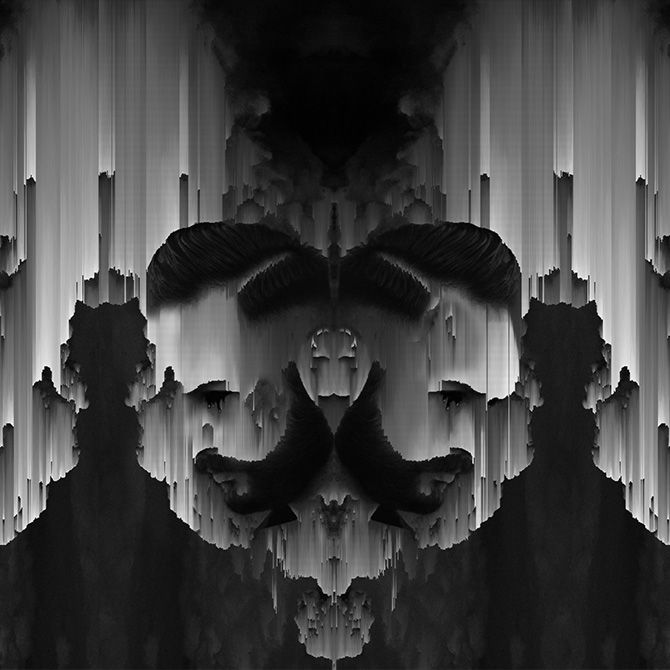 Giacomo Carmagnola is an Italian graphic designer who creations are classified as Glitch Art, a school of art that utilizes glitches in digital (or other) technologies as primary expressive elements in their creations. He often mixes vintage photographs with digital manipulation and techniques. His work is a mix of the occult, the sinister, emotions and abstractions, and raw psychological thrills. Adobe Photoshop and Processing Pixel sorting scripts are his medium.
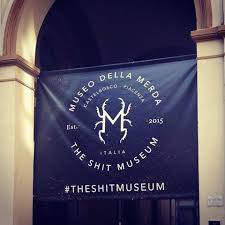
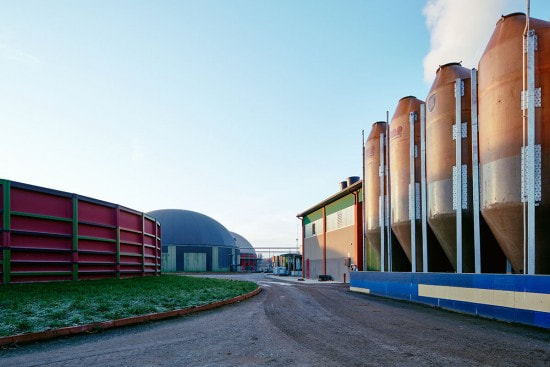
 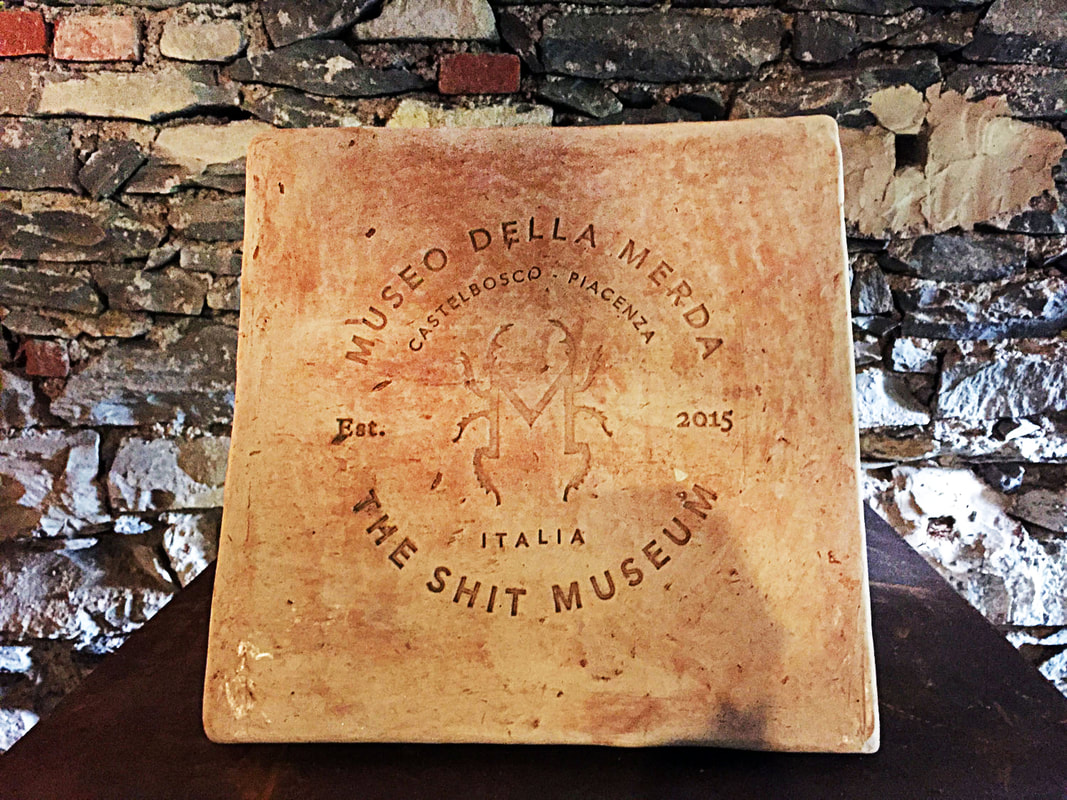 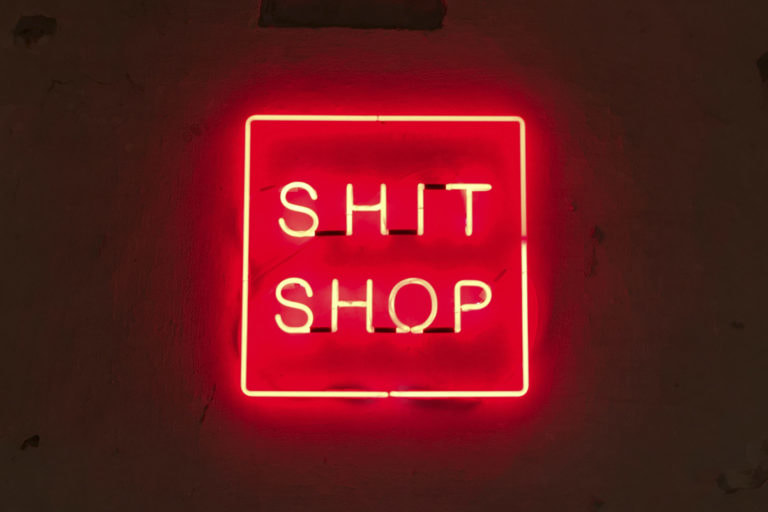 No shit! There really is a Shit Museum in Italy... the Museo della Merda. It was in 2015 that Gianantonio Locatelli founded the "museum" in Lombardy along with his associates: Luca Cipelletti, who manages its projects and products, Gaspare Luigi Marcone and Massimo Valsecchi. The idea came into being in Castelbosco, in the province of Piacenza (just south of Milan) on a farm which makes milk for Grana Padano cheese and includes seven production units. Here every day 3,500 specially selected cows produce around 50,000 litres of milk and 150,000 kilos of poop. 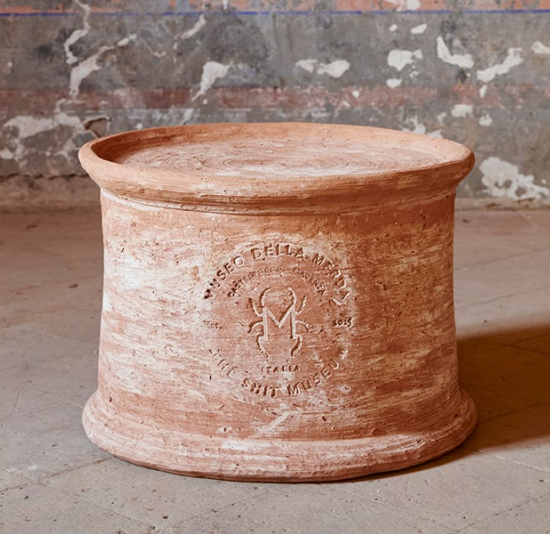 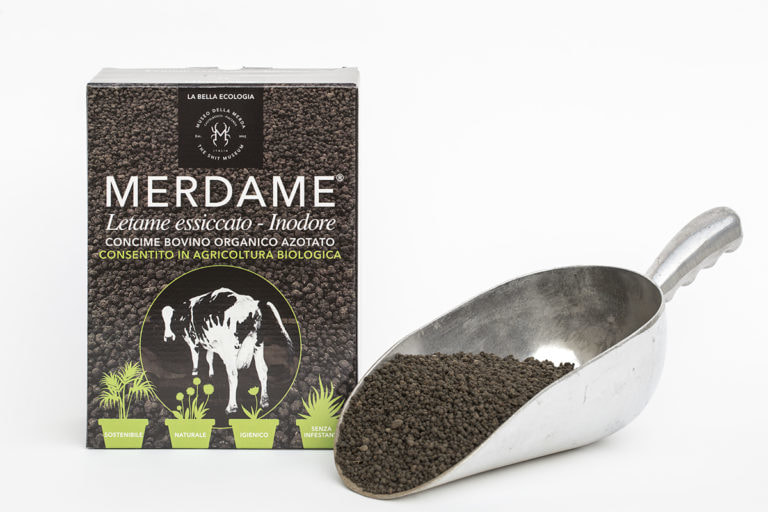 Letame Essciato - Dried Manure fertilizer Letame Essciato - Dried Manure fertilizer The future-thinking Locatelli wanted to turn all this excrement into something useful with his ecological, productive and cultural scheme. Using highly innovative systems, electrical energy started to be produced from the manure. Today the farm produces up to three megawatts per hour! The buildings and offices of the farm are heated exploiting the warmth given off by huge processing tanks called Digestori (digesters) turning the manure into energy. The process also produces fertilizer offered for sale under the name MerdaMe (Shit me). All these activities have drawn attention from various international institutions concerned with ecology and innovation, leading to widespread recognition and prizes, and making Castelbosco a point of reference.
 Locatelli began to gather together friends and artists, leading him to the idea of the Shit Museum. The Museum itself might be called a canvas onto which artists create... the Digesters themselves transformed into a bright colored landmark in the area. The idea for a new museum slowly took shape, emerging from manure to deal with the broader theme of transformation. The museum would be an agent of change which, through educational and research activities, the production of objects of everyday use and the gathering of artifacts and stories concerning excrement in the modern world and throughout history, was to dismantle cultural norms and prejudices. The first stage of the project was carried out in April 2015 with the inauguration of the exhibition spaces of the Museum, in the rooms on the ground floor of the company premises, located within the medieval castle of Castelbosco. The museum is a blend of aesthetic, scientific, human and animal experiences, both modern day and historic. The concept is that shit is a useful and living material. The symbol and mascot of the Museum is the dung beetle, considered divine by the Egyptians (and symbol of the Museum itself), to the use of dung in architecture, from ancient Italian civilizations to those in Africa, via historical-literary works such as Pliny’s Naturalis Historia. Right up to the latest scientific research and works of art drawing on the use and reuse of waste and discarded materials, the Museum is a contemporary cabinet of curiosities which finds its main guide in the science and art of transformation. 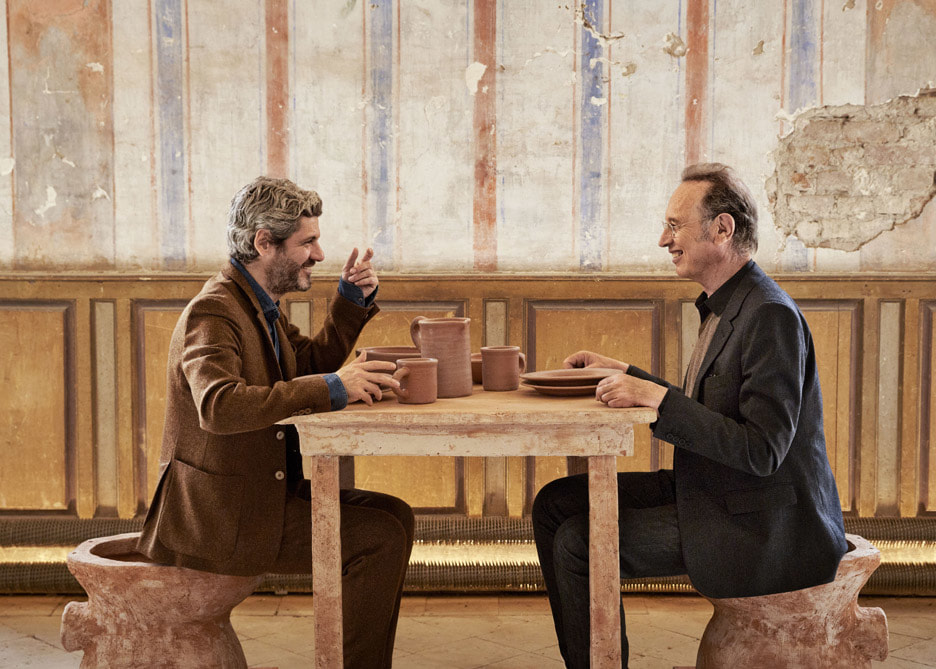
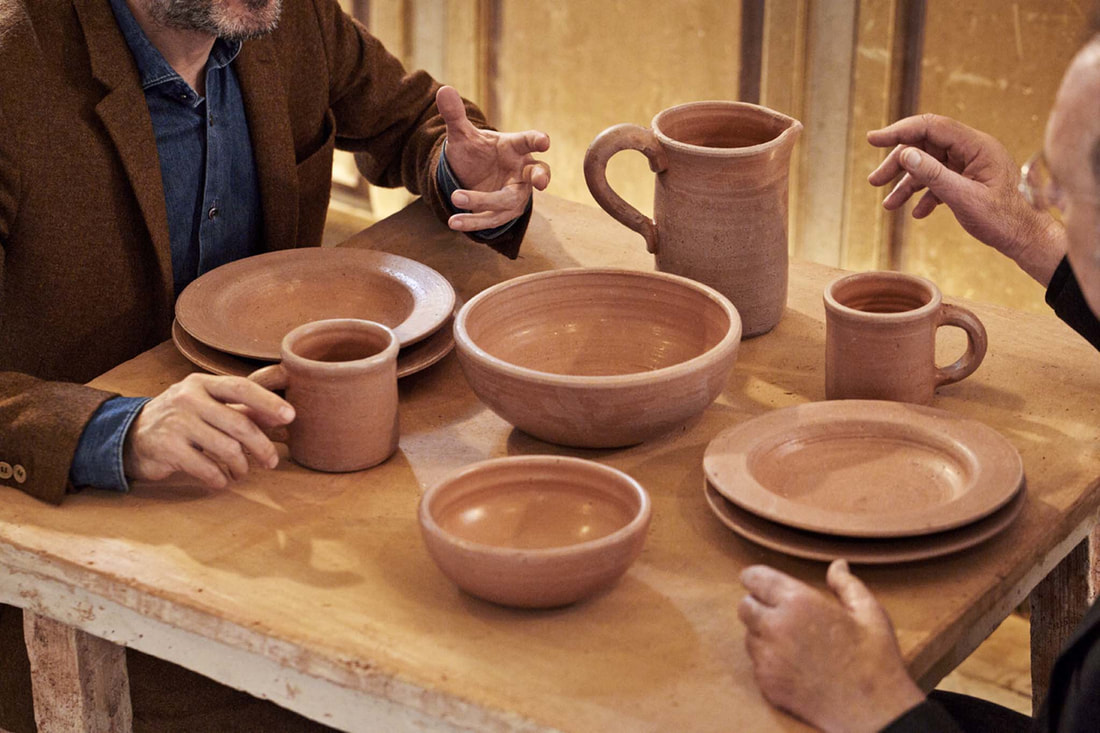
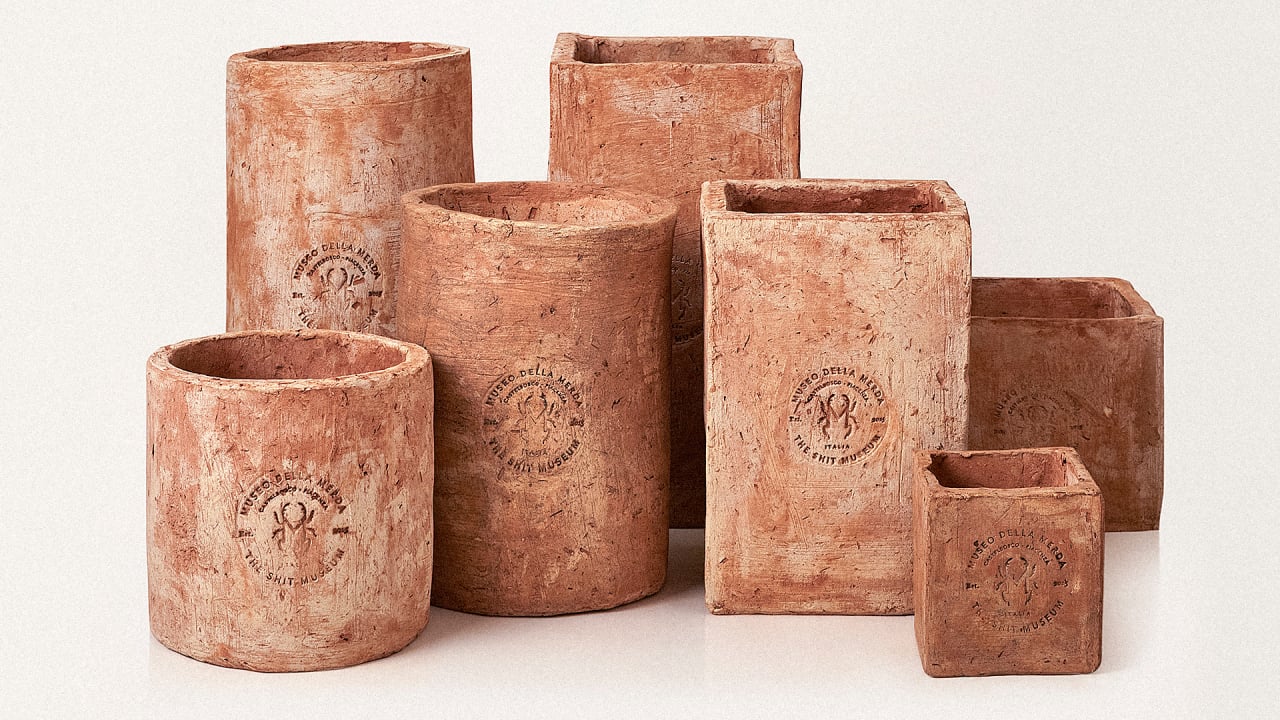
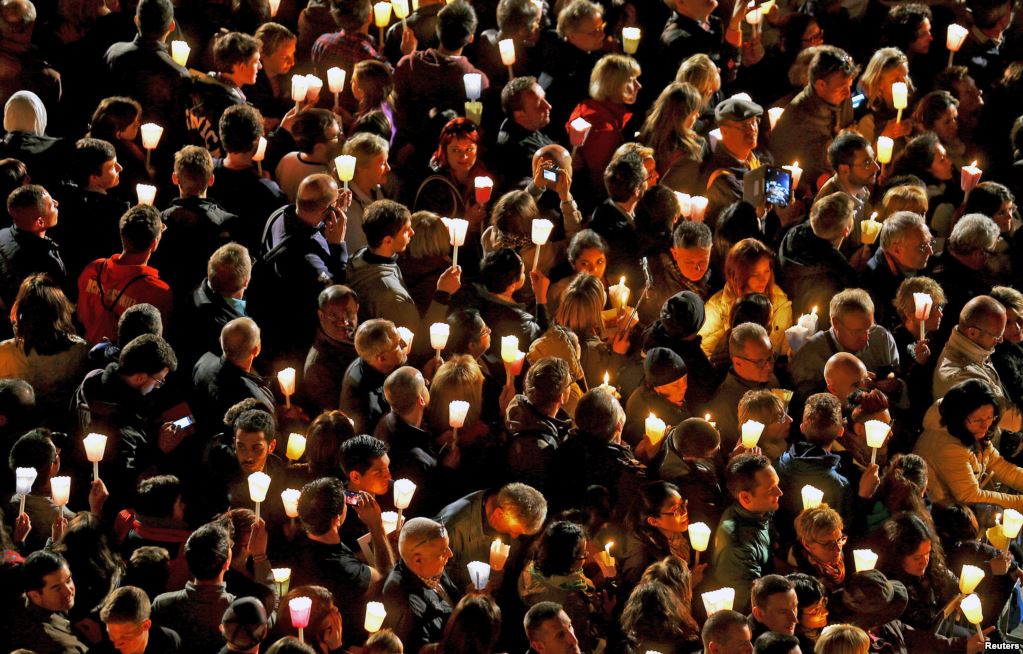
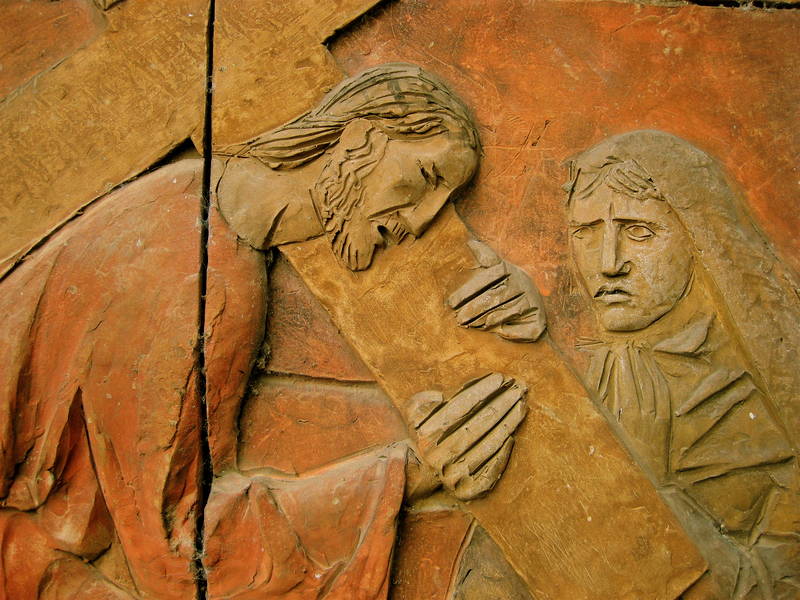
 Museum Activities Right from the start, the Shit Museum was designed to be a production center not only of ideas and exhibitions, but also of objects and projects. The implementation and patenting of the Merdacotta® brand sums up the principle of sustainability. The poo is mixed with clay and gives shape to the first products to bear the Museo della Merda brand: vases, flowerpots, tiles, plates, bowls, a jug and a mug in simple, clean, rustic shapes, harking back to ancient principles. The ‘primordial products’ of the Museum were presented for the first time during the 2016 Salone del Mobile, in an exhibition which won the promoters Cipelletti and Locatelli first prize in the Milano Design Award. The motivation given was as follows: “for the development of a process of great complexity and innovation, capable of destabilizing common perceptions. The educational itinerary breaks down all the commonplace stereotypes and offers a censorial experience, one which promotes a new vision of the culture of the project.” Museo della Merda Frazione Campremoldo Sopra Loc. Castelbosco 29010 Gragnano Trebbiense (PC), ITALY To Make an Appointment: booking@museodellamerda.org For information: info@museodellamerda.org 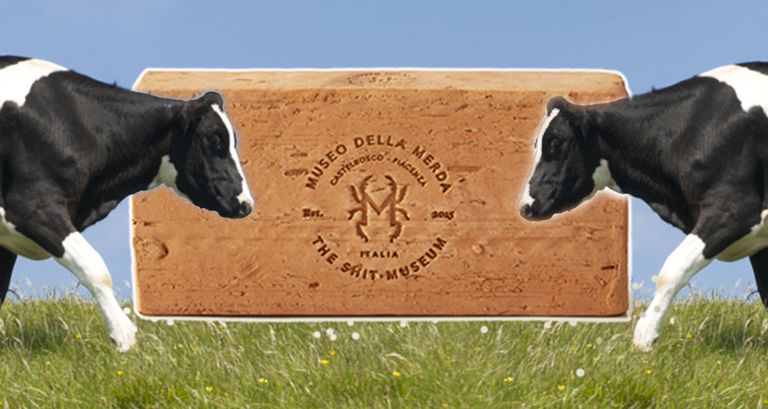 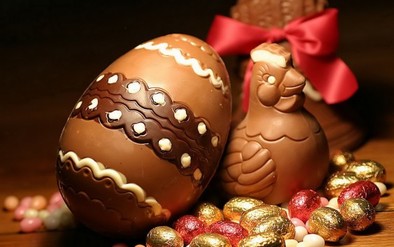 Typically, there are no Easter egg hunts in Italy, but nowadays you will find Il Coniglietto di Pasqua (the Easter Bunny) and hollow chocolate eggs with a surprise gift inside. There are also Pannetone and Colomba (dove shaped) breads given as presents when visiting relatives. Pasqua is the second biggest holiday, just behind Christmas. But the days leading up to Easter include solemn processions, masses, and celebrations in virtually every region of Italy, each having its own traditions. La Pasquetta, the Monday after Easter Sunday, although not a national holiday, is a public holiday throughout Italy where families stay home from work, enjoy good food and exchange gifts of chocolates. 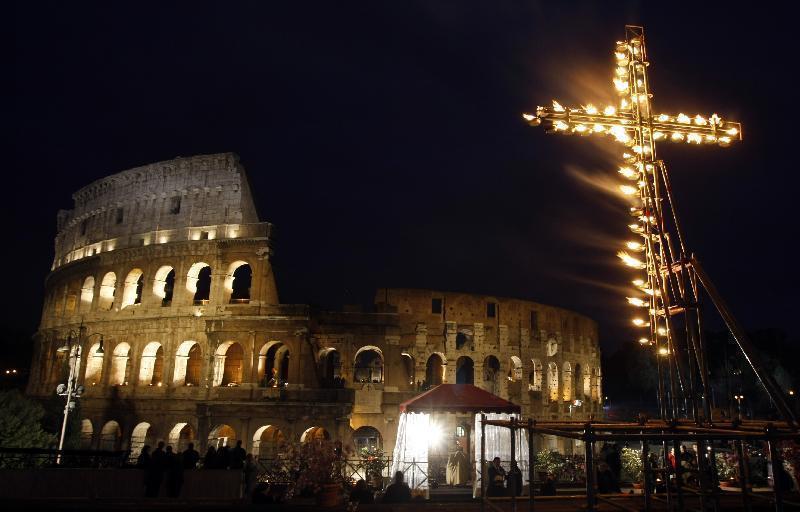 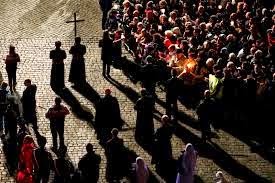 Good Friday and the Via Crucis with the Pope On Good Friday evening, the Pope celebrates the Via Crucis (Stations of the Cross) in Rome at the Colosseum. Mimicking the Passion of the Christ, a huge cross with burning torches lights the sky as the stations of the cross are described in several languages. At the end, the Pope gives his blessing. There have been younger Popes who have carried the cross during the procession.
 Easter Mass at St. Peter's Square In virtually every church in Italy an Easter mass is held. The Pope himself officiates at the Easter mass at Saint Peter's Basilica in Rome. Although tickets are free, people wanting to attend the mass at St. Peters Square need to order tickets to this mass 2-6 months in advance. 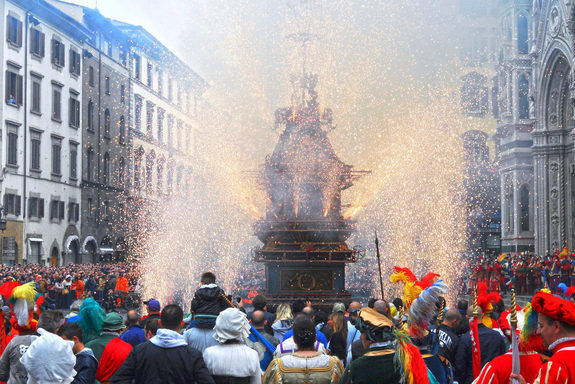 Florence and the Scoppio del Carro on Easter Sunday On Easter Sunday in Florence, the Scoppio del Carro (Explosion of the cart) is the event to attend. A tall, decorated cart is pulled by white oxen until it reaches the Basilica di Santa Maria del Fiore in Florence's historic center. Immediately after East Mass is completed, the Archbishop shoots a rocket into the fireworks-filled cart, creating a terrific pyrotechnics display. Afterwards there are displays with people dressed in medieval costumes. 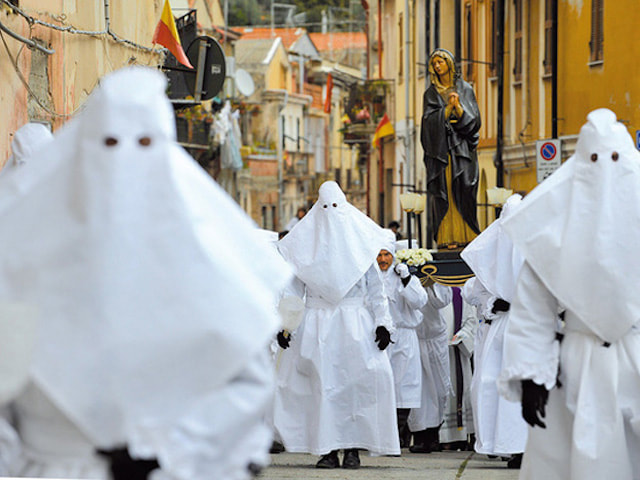 Easter Procession in Sardinia 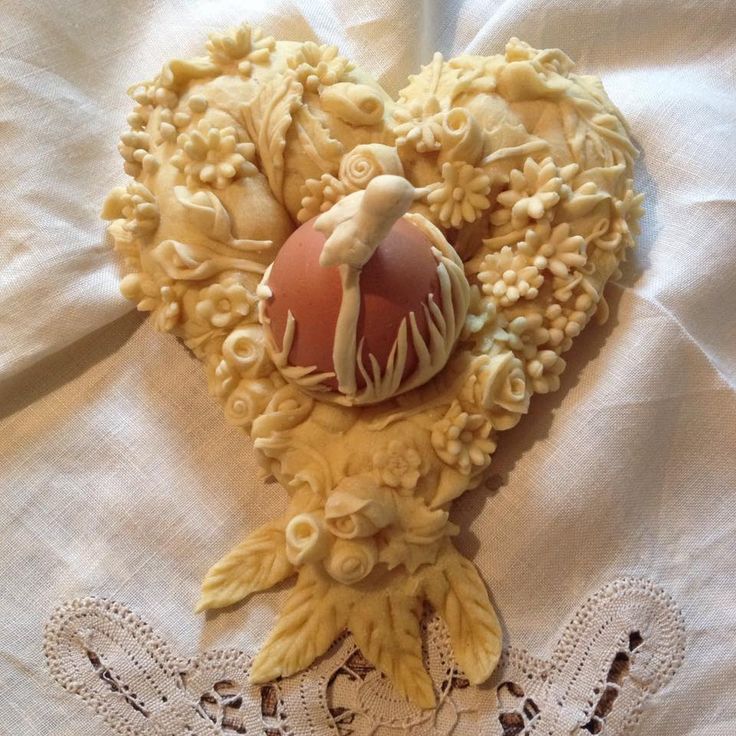 Sardinian celebration breads are amazing works of art Sardinian celebration breads are amazing works of art Sardinia's Holy Week The island of Sardinia is a part of Italy steeped in tradition and influences from other lands and cultures. Some of its Easter traditions have evolved from the Spanish Catalan, Semana Santa, such as the Riti della Settimana Santa in Alghero. The celebrations last for a week with different processions and festivities each day coming ending the final day with fireworks. If you're still in Sardinia the second Sunday after Easter, check out the Torrone (Nougat) Festival’ in Tonara--just done tell your dentist! 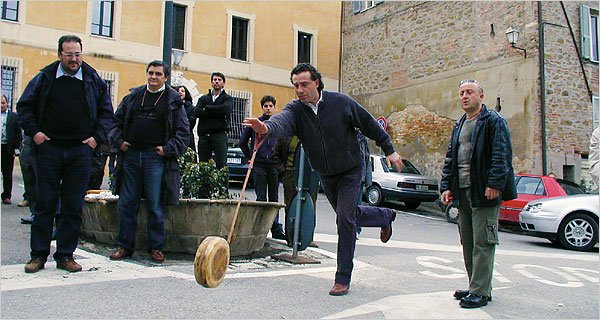 As an example of the uniqueness of celebrations in small towns, the Umbrian hill town of Panicale, celebrates with cheese on La Pasquetta. The game of Ruzzolone is a competition with elements of bocce, bowling and even yo-yo. This game has been played for over 2000 years. The giocattori (players) attach a large, leather strap around a nine pound wheel of pecorino cheese and in yo-yo or sling-shot fashion, launch the cheese wheel through the streets that wrap around the village walls. In the piazza afterwards, there is music, dancing, wine--and of course--cheese! 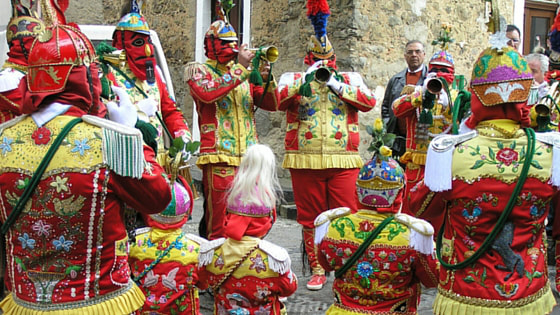 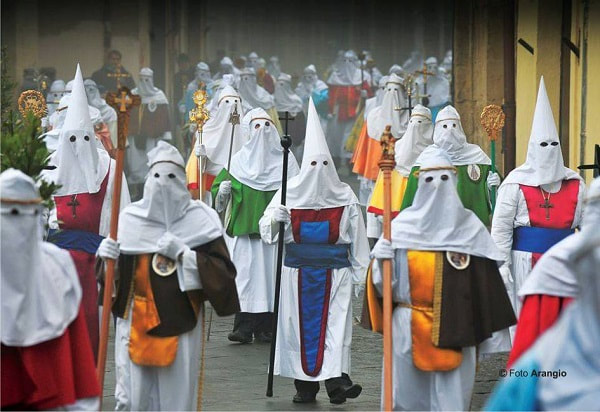 Enna, in Sicily, has a series of events and processions during the entire Easter season. On Palm Sunday, the brothers put on a live scene of Jesus’ arrival to Jerusalem on the Papardura Sanctuary, clinging to the side of the mountain, with olive branches and palms gracing the path. 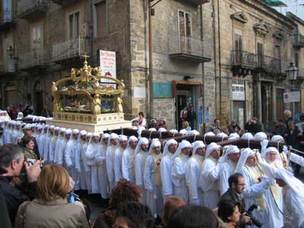 On Wednesday, a singing mass is held, while the members of the confraternities take over local taverns in the historic center, filling it a party atmosphere. On Holy Thursday, there is a foot washing ritual and pilgrimages that last into the night. On Good Friday, more than 2,000 friars dressed in ancient costumes walking through the streets of the city. The statue of the Holy Mary is carried by dozens to the Cathedral with the brotherhood entering the church to pay their respect to Christ. In the evening, the longest parade in Sicily starts, with all confraternities taking part, all wearing hoods of penitence and carrying torches.
--GVI 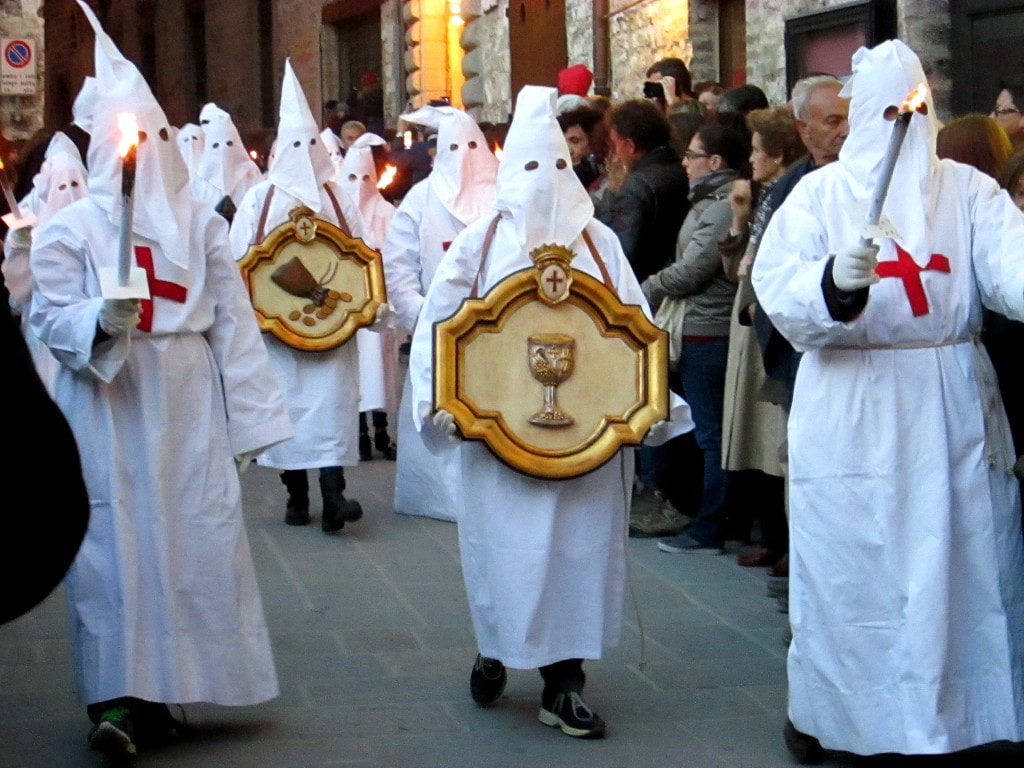 Good Friday penitent procession Confraternities of Penitents or Congrèe in Italian, are Roman Catholic religious groups, with bylaws prescribing various penitential works. Beginning in the mid 12th century, a members of these brotherhoods were referred to as converso, Church laymen who had made a "conversion of life" and were affiliated to a monastic order as lay brothers. 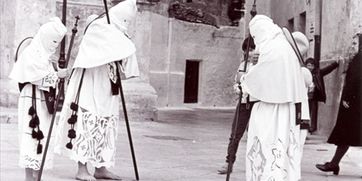 Penitents, also called Addolorati, are those who adopted asceticism, of which there are two types. "Natural asceticism" is a lifestyle with lessened material aspects, fasting, refraining from sexual relations without actually entering a monastery. "Unnatural asceticism" includes self infliction of pain or flagellation. These Penitents lived fairly normal lives, while adhering to rules against blasphemy, gambling, drunkenness, and womanizing. In 1227 Pope Gregory IX recognized his "Brothers and Sisters of Penance". As with today, most penitent confraternities were involved in charitable activity and considered benefactors to both Church and their local communities. 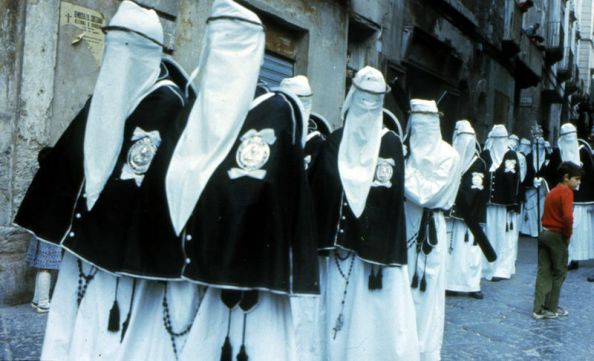 Taranto 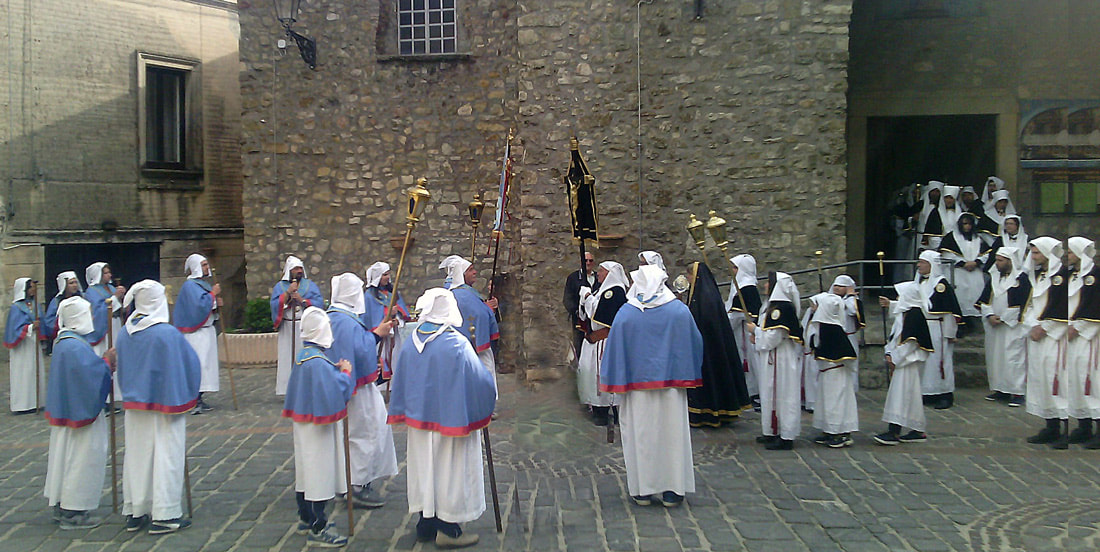 In the past as well as today, the penitent brothers are known for wearing robes and pointed hoods during public processions on Catholic holy days, such as Good Friday, to hide their identities, both for purposes of hiding their sinfulness and providing anonymity for their charitable works. I feel it must be pointed out (unintended pun here), that these are good-hearted, devout Catholics. Although their pointed caps and white robes (there are other sects throughout Europe with other colors: black, red, blue, etc.) repulse most Americans, the similar garb worn by the extreme racist members of the Ku Klux Klan and these pious Catholic brotherhoods have absolutely nothing in common with each other. The Klan sides with the Devil... the Penitents with God... --Jerry Finzi  Unnatural asceticism - Beating nail pads into their chests until they bleed - A representation of Christ's blood on Good Friday Enna, Sicily
 Known as Quarrelsome, or the 40th day, in Italian, Lent is the word Catholics use to describe the fast before Easter. Of course, one of the more well-known traditions during Lent are Meatless Fridays, on which Catholics refrain from eating meat. This Lenten fasting really begins on Ash Wednesday (Mercoledì delle Ceneri) and every Friday until Easter arrives. Ash Wednesday takes place 46 days before Easter Sunday, and is chiefly observed by Catholics, although many other Christians observe it too. Ash Wednesday is the day after Mardi Gras (Fat Tuesday or Martedì Grasso in Italian), the last day to party--essentially the end of the Carnivale season in Italy.  The most popular items being given up for Lent Ash Wednesday comes from the ancient Jewish tradition of penance and fasting. The practice includes the wearing of ashes on the head. The ashes symbolize the dust from which God made us. As the priest applies the ashes to a person's forehead, he speaks the words: "Remember that you are dust, and to dust you shall return.   Even though Italy is a strictly Catholic country--where most Catholic holidays are also National holidays--self-denial during Lent it is no longer a strict requirement but a matter of personal principle. In modern times, fasting during Lent in practice doesn't mean starving oneself, but professing a Lenten Promise, such as giving up foods that are seen as excesses... typically, dolce and chocolate. But giving up meat on Ash Wednesday and Fridays during Lent is still a popular notion, with fish becoming the main protein during this period.
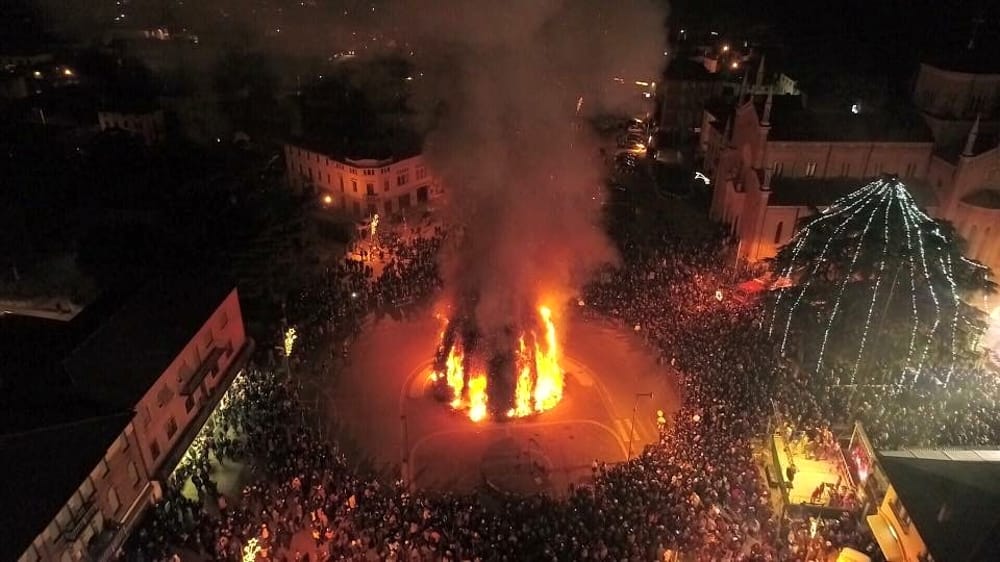 Panevin in Arcade, Veneto Fire has always been a mystical entity to Man. Even today, scientists have a difficult time explaining what fire is, while people around the planet stare into the flames and see things that dreams are made of. The glowing, dancing orange tongues of flame are hypnotizing. No wonder flames have found there way into ritual and traditions throughout the world, from modest candles to raging bonfires... In the Unites States, bonfires might be lit during homecoming for a local sports team, or in New England for the Fourth of July, or perhaps along the levees of the Mississippi in southern Louisiana to light the way of Papa Noel's return at Christmas. But in Italy, although often related to a particular saint's day, bonfires have more pagan roots and meanings. Some are burned in early January to signify the end of one year and the beginning of another, while others are burnt during Mardi Gras (for Carnevale season) or during lent. In Italy the ritual of flames are evident in the many Bonfire Festivals, or Festa dei Falò.
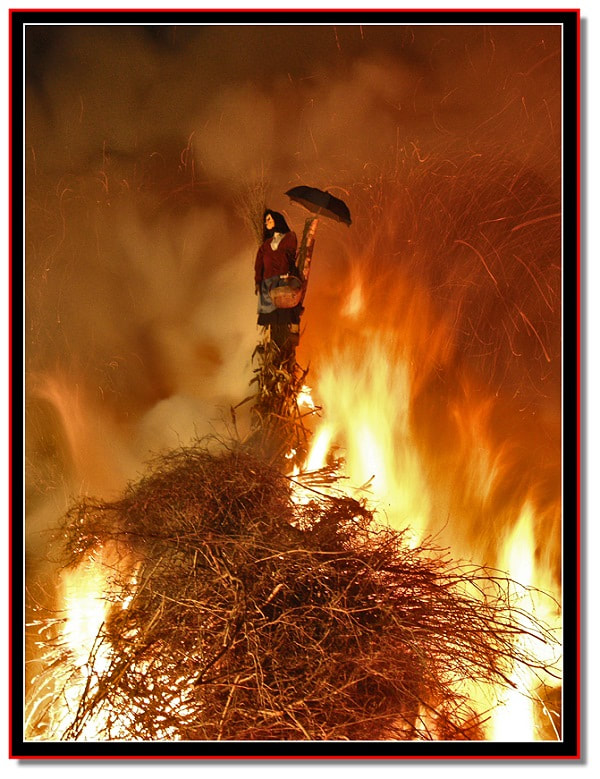
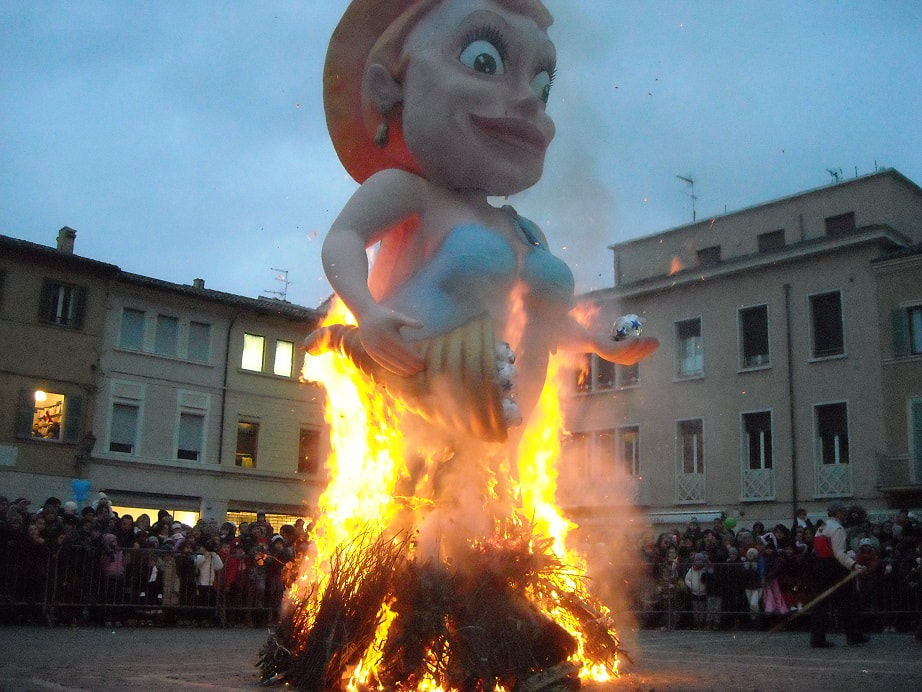
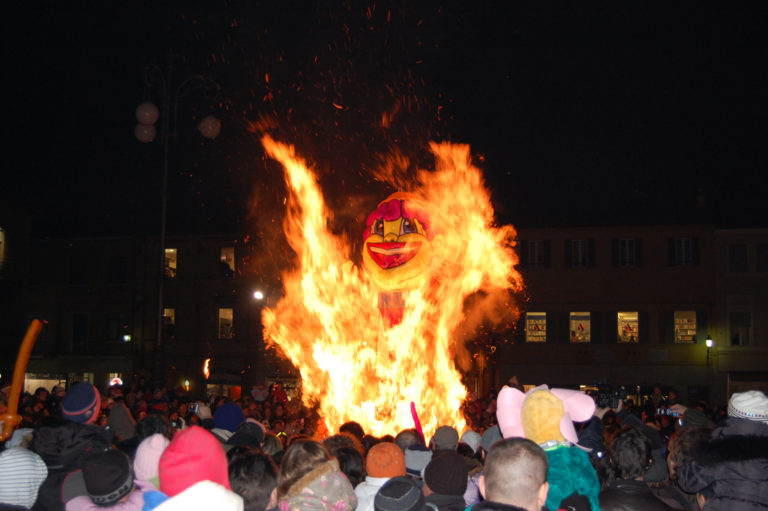
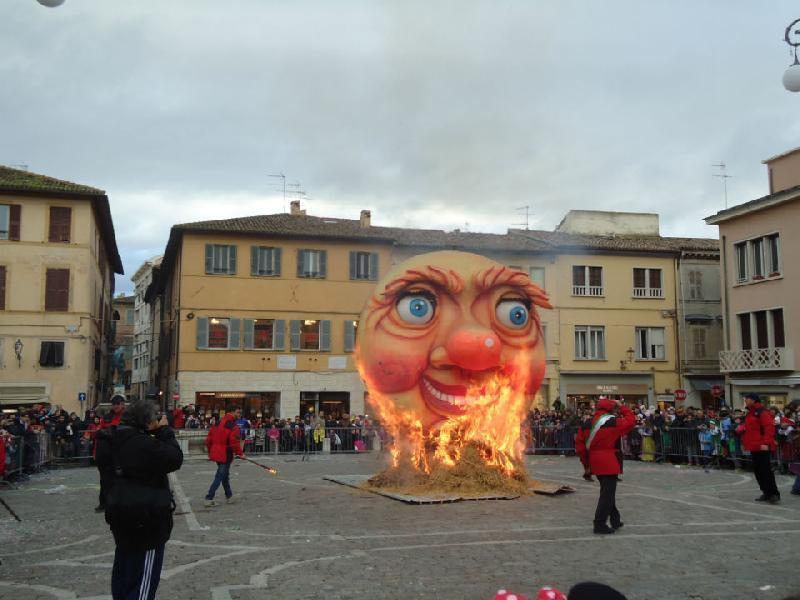
"Semel in anno licet insanire."--Ancient Roman Saying "Madness is permissible once a year."  Padova, January 6th to celebrate Befana Padova, January 6th to celebrate Befana In Northeast Italy, the celebrations of Panevin (in English "bread and wine"), Foghera or Pignarul are held on the evening of Epiphany's eve (5 January). A straw witch dressed with old clothes symbolizing the past year, is placed on a bonfire and burned to ashes. The direction of the smoke indicates whether the new year is going to be good or bad. In Northen Italy, La Vecchia ("the old woman") is a huge wicker-woman effigy built of wood and vines and burned once a year as part of town festivals. As depicted in the film Amarcord by Federico Fellini, it has a more pagan-Christian connotation and is burned on Mid-Lent Thursday. In Abbadia San Salvatore, a village in the south of Tuscany, bonfires called Fiaccole up to seven meters high are burned during Christmas Eve to warm up people around them waiting for the midnight. In Southern Italy, traditionally bonfires are lit on the nights of the 16th and 17th of January, thought to be the darkest and longest night of the year. The celebration is also linked to the cult of Saint Anthony The Great. 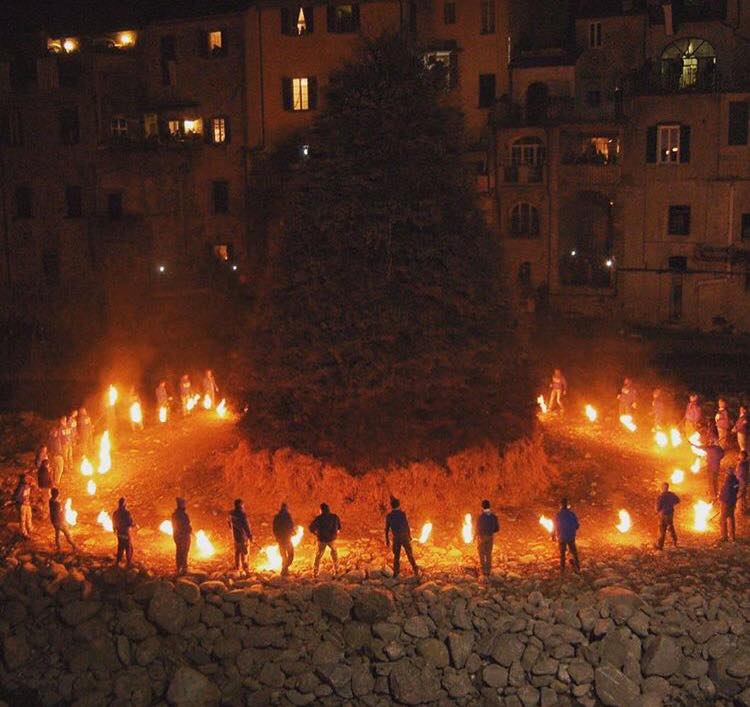 Falò A Pontremoli In Tuscany, there are many fire festivals during the winter months with ancient origins. These sagre and their fires are meant to draw attention from the “Sun God”, to conjure up its presence--and warmth--during the dark, cold months. As Christianity grew in ancient times, the pagan rituals were converted to celebrate various saints or holidays of the Catholic religion. In the town of Fano, Marches, from early February to Mardi Gras, they hold the Carnivale di Fano, one of the oldest--and sweetest--carnivals in Italy. During the festivities you can watch and take part in battle fought with chocolates and candy! Hundreds of pounds of sweets, caramels and chocolates are showered from parade floats onto the crowds of spectators, who then thrown them back or at each other. At the end of the month-long festival, there is the Rogo del Pupo, the Bonfire of the Baby Doll, a huge paper mache doll (a different one is designed and built each year).
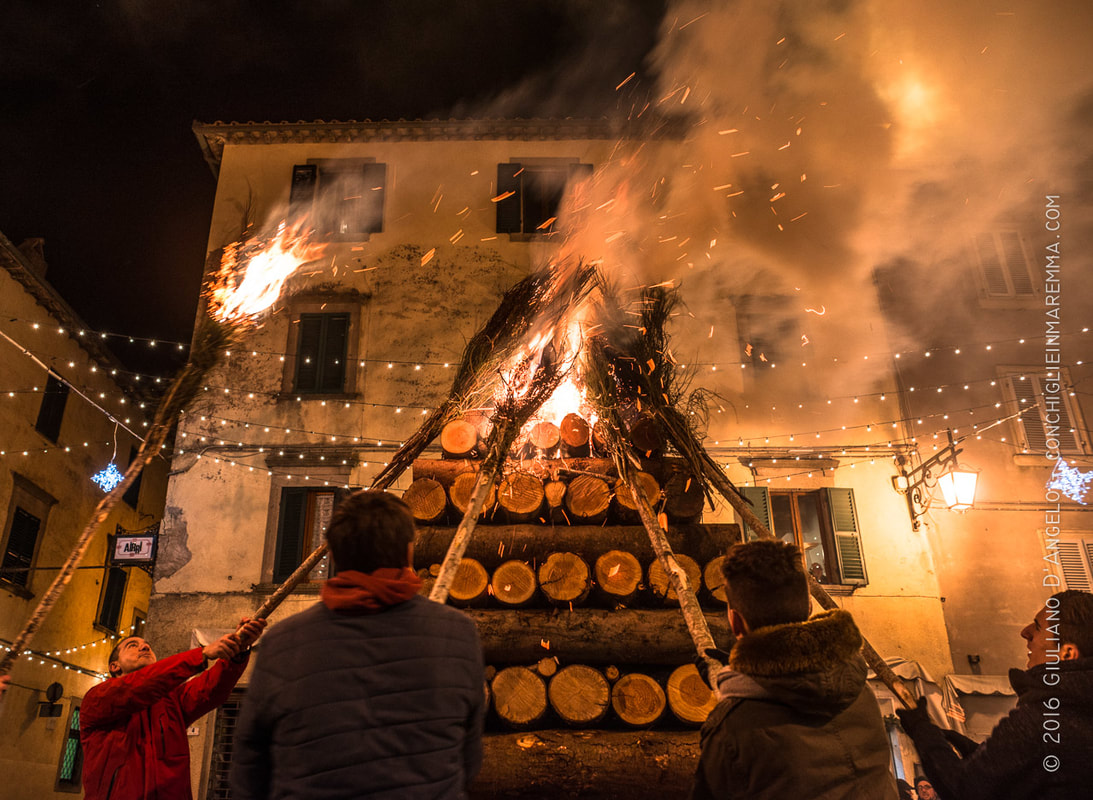 Fiaccolata di Santa Fiora Flaming Festivals in Tuscany
Enjoy the heat of the flames! --Jerry Finzi 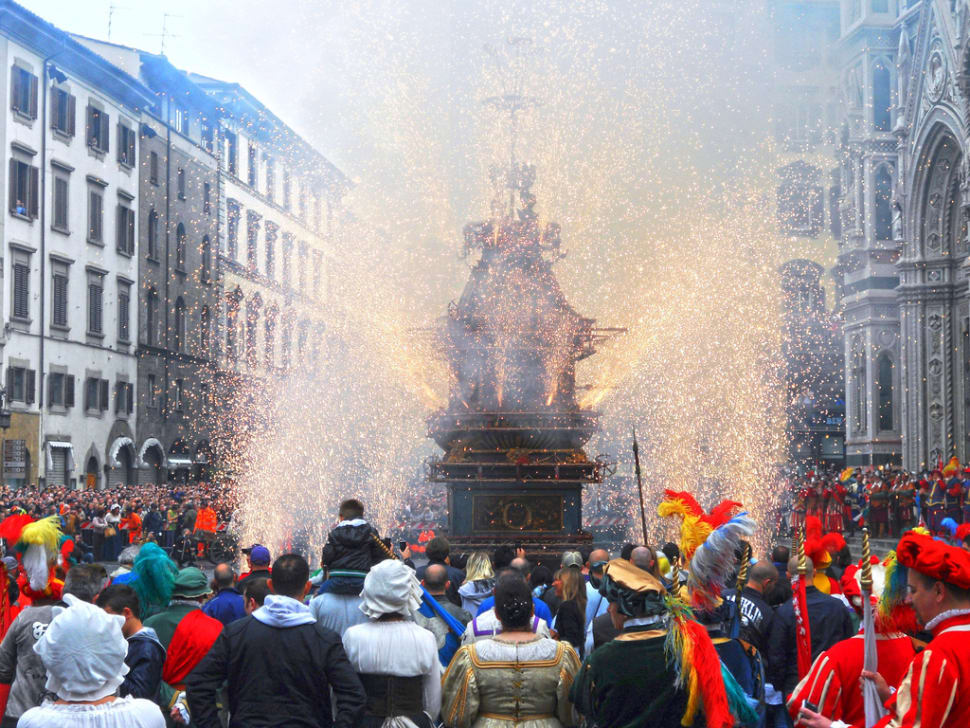 Explosion of the Cart in Florence 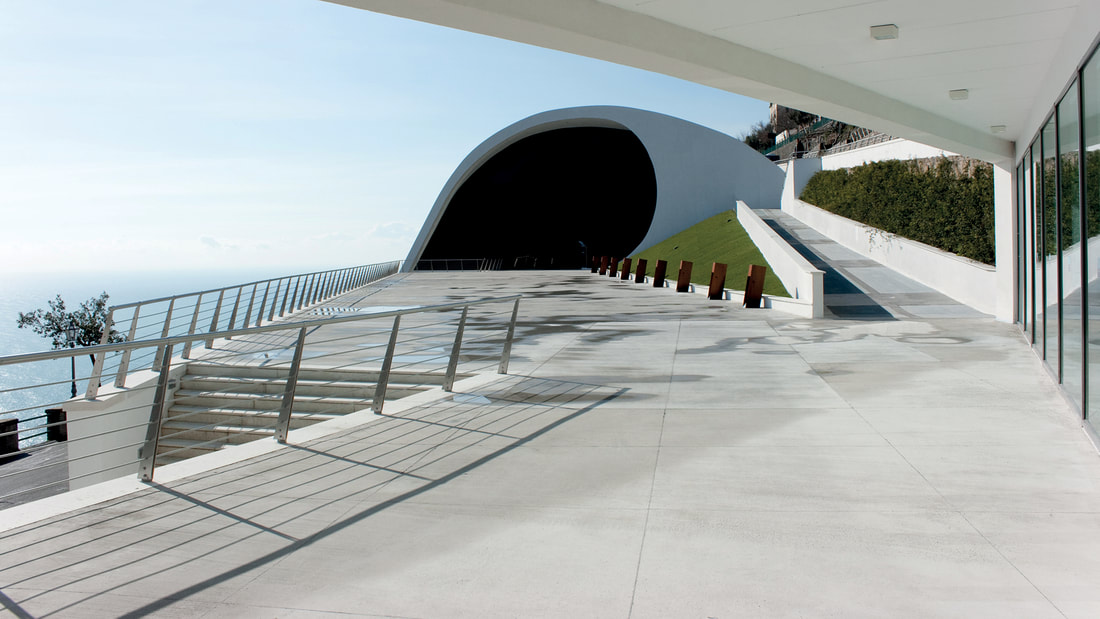 With a commanding view of the Amalfi Coastline, the Auditorium Oscar Niemeyer in Ravello is balanced on its perch at a height of 1200 feet above the sea below. Before it was built, the "City of Music" (as Ravello is called) featured several beautiful outdoor venues--but none with more than a hundred seat capacity. Villa Rufolo, Villa Cimbrone, Piazza Duomo and Piazza San Giovanni del Toro all offered concerts, dance performances and plays. But Ravello desired a new, dynamic structure, allowing it to extend the concert series all year round to a greater number of fans and admirers. 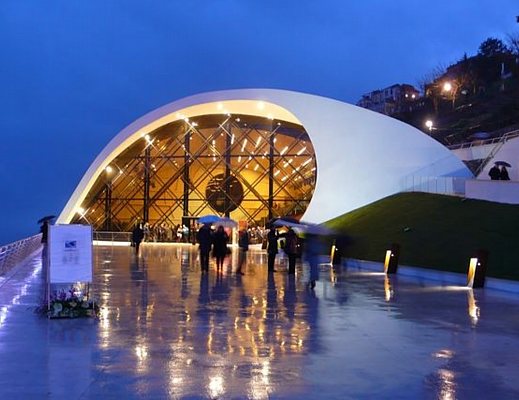 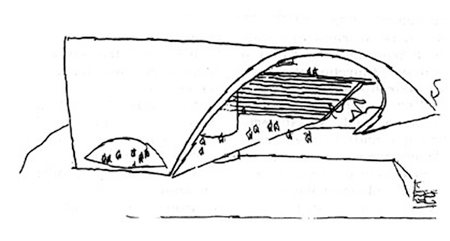 The project was assigned to the famous Brazilian architect Oscar Niemeyer who delivered his plans on September 23rd 2000, after only seventy days of work. From the outset the architect found himself in front of problems related to natural unevenness of the terrain: "... the uneven ground, narrow with a very strong transverse orientation. Hence the initiative to build a model." ... " I did not think an expensive operation involving an unnatural development of the land was necessary, so I took as a starting point the exact inclination of the parterre and the project started to take its present shape". Niemeyer died at 105 years old in 2011, one year before construction was completed. 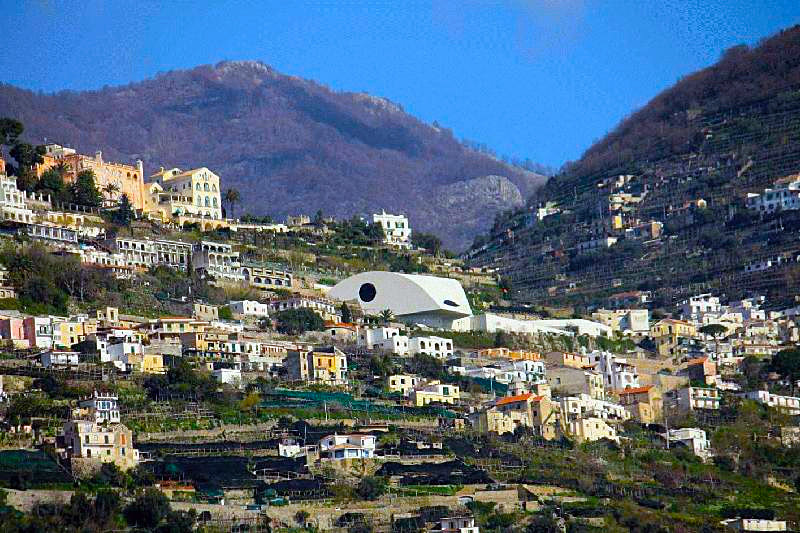 The architecture of Ravello has Roman and Medieval roots and is strongly characterized by architectural elements typical of such periods, such as vaulted ceilings, terraces, columns, classical statuary, arches, and formal gardens. One would think that the first obstacle to overcome was just to design a structure that was not in conflict with the architectural identity of Ravello and the Amalfi Coast. In reality, the Auditorium is an assault against the traditional lines of architecture. It is a cornerstone in aesthetic and cultural modernization of the countryside, jumping out of the surrounding environment with its curved lines and the blinding white color. The shape of the one side of the structure reminds one of the eyes painted on the prows of fishing vessels harking back to the time of the Greeks. Others might think the building looks like a large bird about to fly from its nest to soar the coastline below, or its shape like the wing of an obese jetliner. 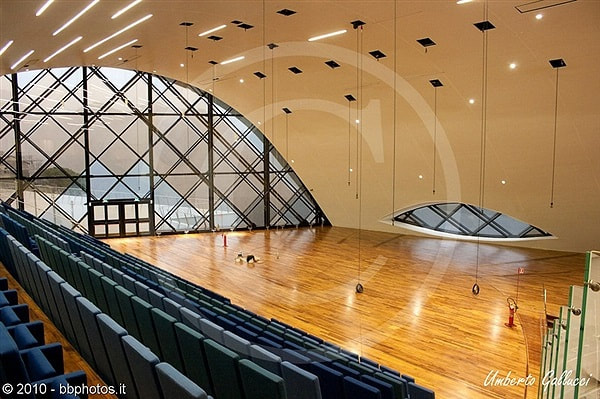 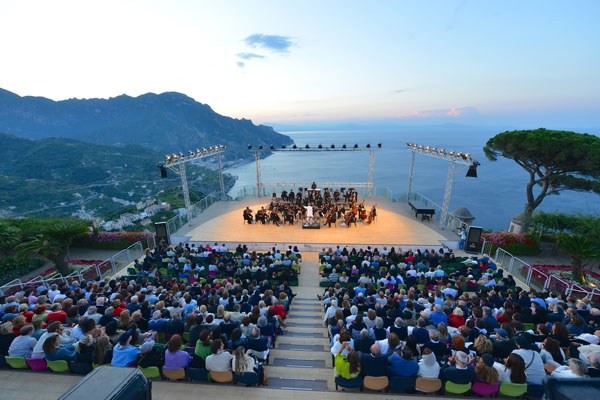 A competitor's view: A concert at Villa Rufalo A competitor's view: A concert at Villa Rufalo The Auditorium is accessed by an oblong square, which allows its visitors to enjoy, at the same time, the amazing landscape and view of the sea. From a vantage-point from above the large glass entrance, one can see the mountains' reflection. The main concert hall defies the natural slope of the land... the orchestra stand and the foyer are projecting over the cliff without a visible support. 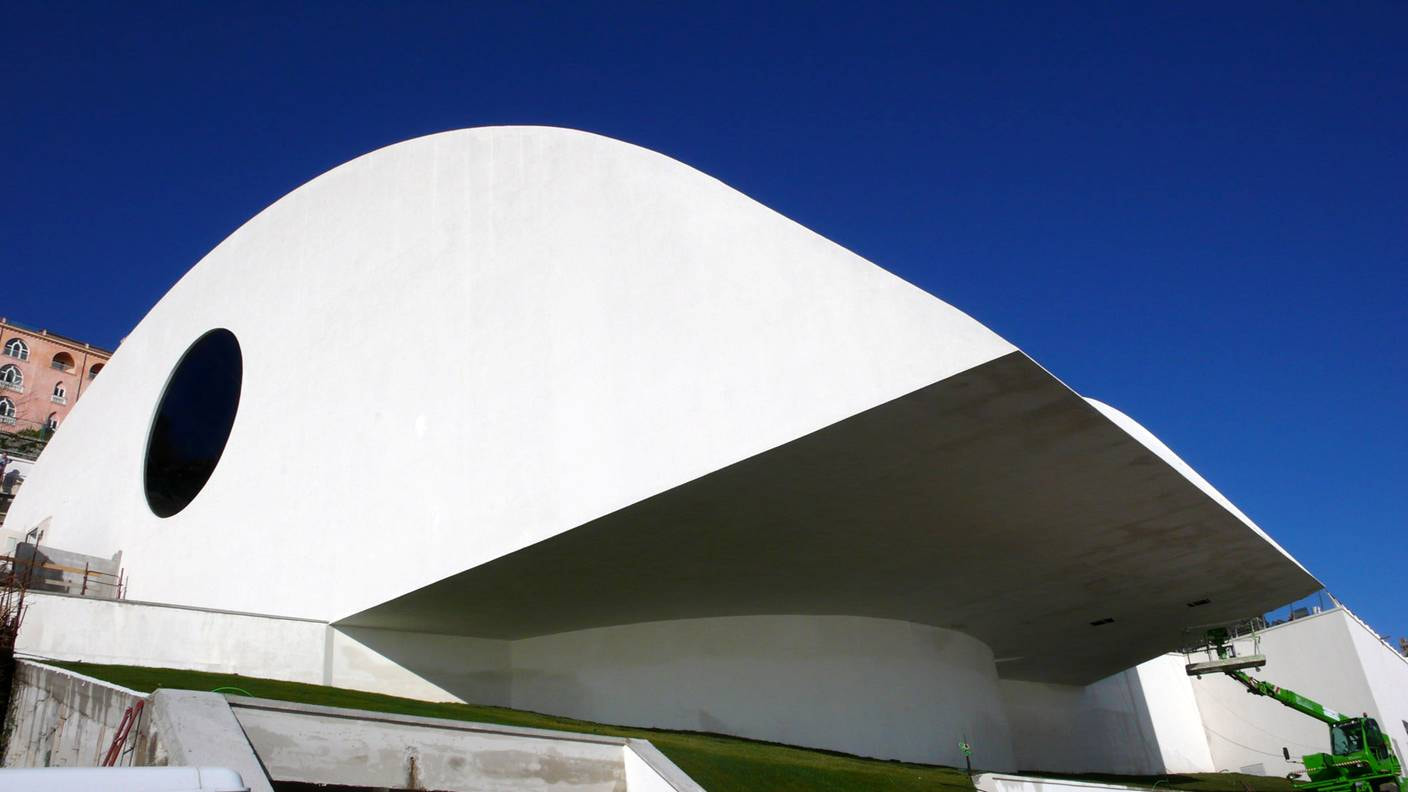 "It's not the perfect angle that attracts me, and not even the straight, hard, inflexible man-made one. What really attracts me is the free and sensual curve. The curve that represents the meeting of the mountains of my homeland, the figure of a beautiful woman, the clouds of the sky and the waves of the sea. The same curves which create the Universe. The curved Universe of Einstein. " (Oscar Niemeyer) 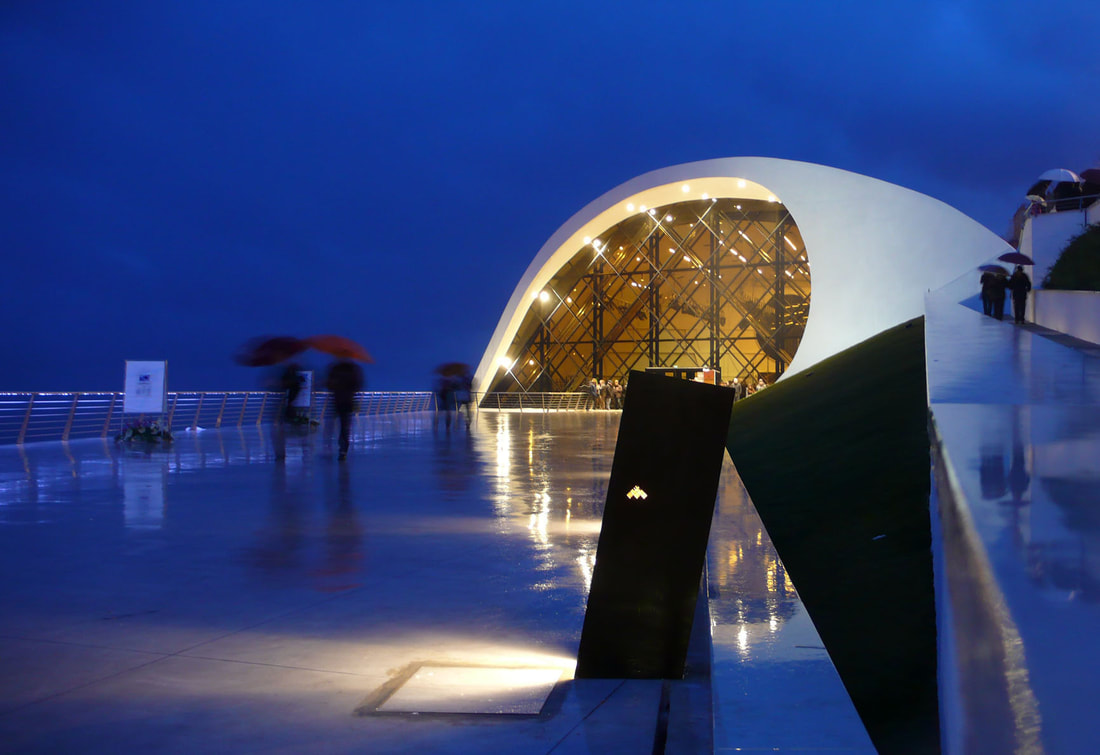 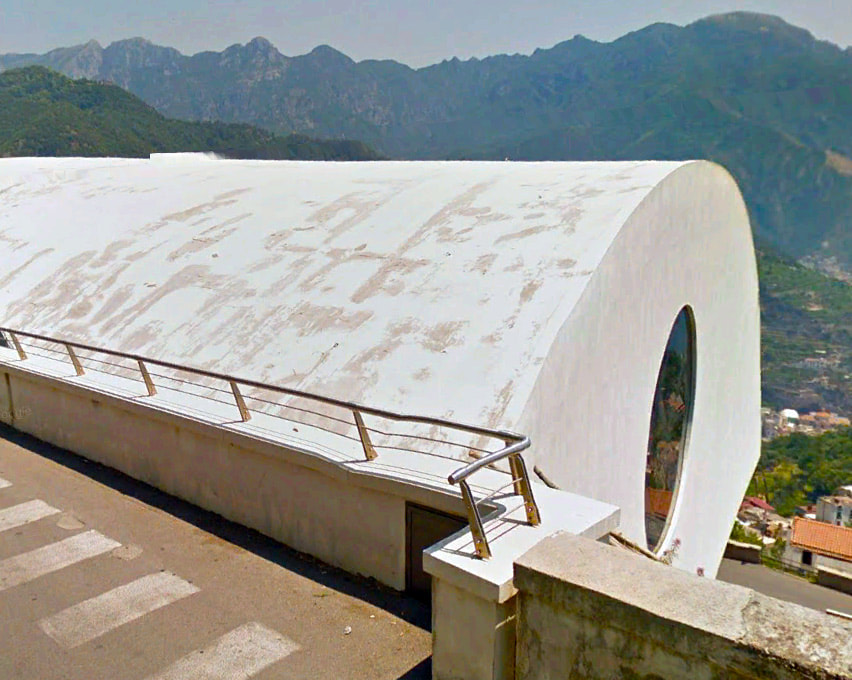 Really? This roof is only 5 years old Really? This roof is only 5 years old There has been--and still is--controversy about the design and placement of the Auditorium. For one thing, the architecture sticks out of the landscape and surrounding architecture like a sort, bright white thumb. Some complain that Neimeyer didn't design the structure to take full advantage of the amazing panoramic views of the coastline below, leaving only the large windows the the left of the audience, a rather low and narrow "eye" window situated right behind the performers, and a round window too high for anyone to see much of a view. The room--acoustically speaking--is a very difficult one, in terms of producing the best sound for the audience's pleasure. Some experts claim it is flawed, while audiences suggest the opposite. First of all, it's not symmetrical... the floor on the right side extends further from the audience than the left side. The sound is no distributes equally to all seats (the center seats are louder than the ones along the side). Another issue with its design is parking. Although it contains a lower level parking garage, there are only 107 parking spaces, some argue not enough for the 400 seat auditorium. There are also problems with the daily running of the venue... cafes being closed for no reason, people still entering the auditorium 20 minutes after a concert has started, etc. There are also some signs on the smooth, curved surface of the roof having many patches in it... surprising for such a young structure. One wonders if the building will last for a millennia as others have along the Amalfi Coast. And if you visit the Auditorium during the months when there are no concerts scheduled, you can still see a feature film there. Bigfoot Junior is showing this week. --Jerry Finzi  Is this what Neimeyer had in mind when he first envisioned his masterpiece? |

Categories
All
Archives
January 2024
|





 RSS Feed