|
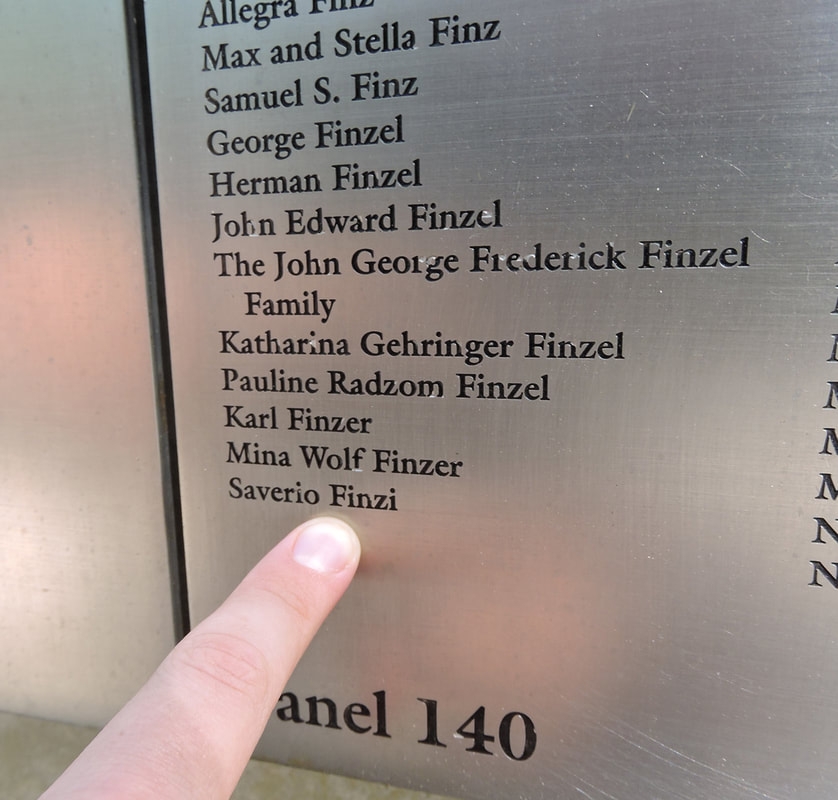
Being a second-generation Italian-American, I wasn't affected by the Italian naming conventions. I once asked my mother why we never spoke Italian and she answered, "When we got married, I wanted an 'All-American" household, so we only spoke English around you kids." I'm certain one reason for this was to lessen the impact of racial bias against her kids at the time. This might also be the reason why I was named "Jerry"--as my mother told me, "I thought of 'Jerry' after watching a Jerry Lewis movie while I was expecting you. It sounded very American." While my birth certificate says "Jerry", I had no idea my legal name was "Jerry" until at age 13, I got a copy of my birth certificate to get my working papers. "Jerry"? Well, that was a lot better than "Gerald", my baptism name, which I could barely pronounce properly when I was little. Even so, everyone in my family knew me as "Gerald" until I ordered them to stop calling me that. Still today, many won't call me "Jerry". (To add to my confusion, Saint Gerald was French!). 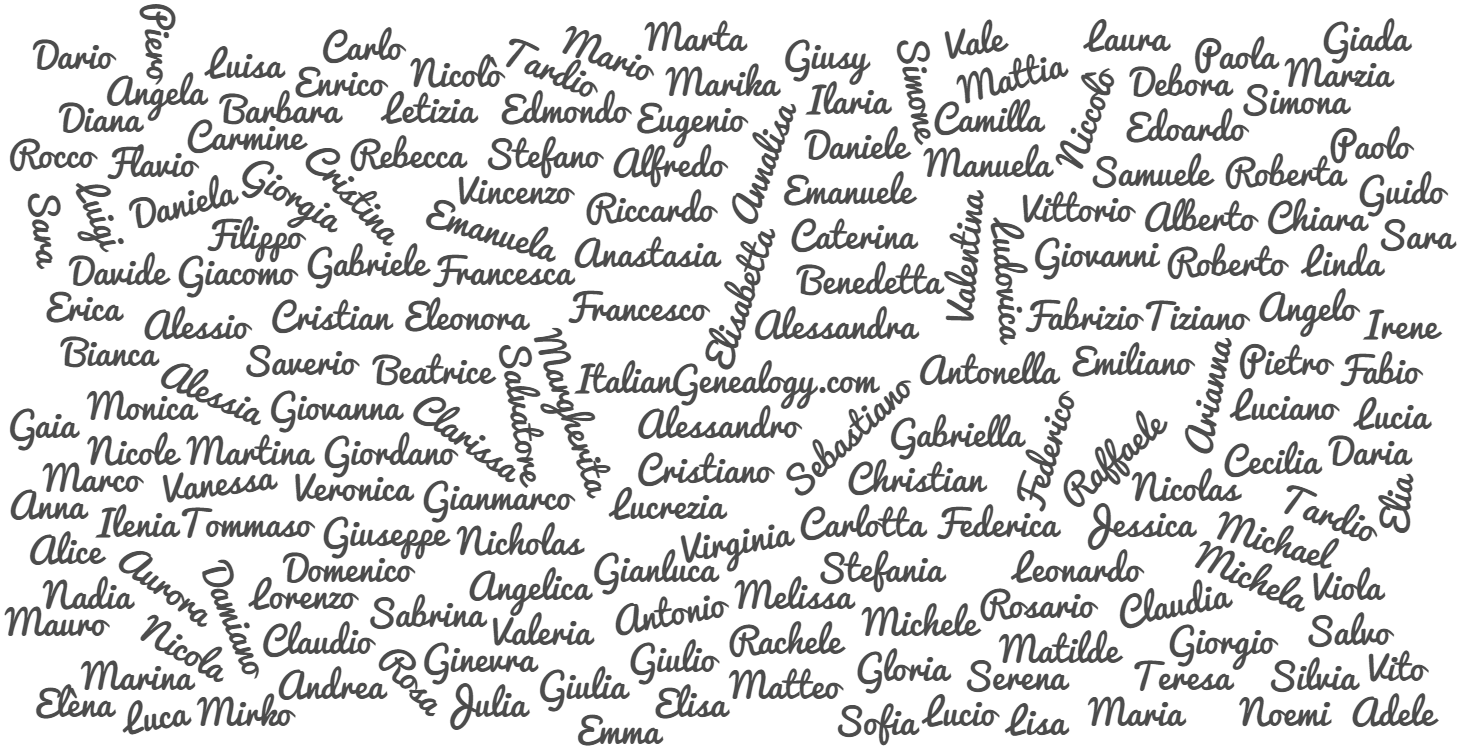 Being the second born son, I should have been named after my mother's father, Salvatore Vetri. That would have been nice, since my Dad's lifelong nickname was Sal, even though he was born Saverio. Since I was born 11 years after Salvatore's passing, perhaps my mother felt less obliged to name me after him. My sisters and brother who came before me met the same fate with their names. The oldest of us--the twin sisters--Barbara and Joan should have been named Caterina and Mariantonia, Caterina being my paternal grandmother's name, and my maternal grandmother being Caterina. (Barbara was the oldest by three days... YES, they were born three days apart, but that's another story.) Kenneth, my older brother, should have been named Sergio, after my paternal grandfather. My sister Joyce should have been named after one of my aunts, perhaps Antonia or Rosa. Although I know that Barbara, Joan, Kenneth and Joyce are my siblings, I have no idea who they were named after since those names are unknown in our family tree. Only their middle, confirmation names reflect names of uncles or aunts. Perhaps other movies my mother watched while she was pregnant for each of them influenced her... The twins? Barbara Hutton and Joan Crawford were famous during the 1940s when the Twins were born, Joyce Reynolds was a well-known, All-American looking actress when my sister Joyce was born. But Kenneth? There really were no famous actors or performers named Kenneth when my brother was born--and it's a very British name, at that. Mom probably just liked the sound of it. As for me, I really think I would have preferred to be named Francesco, Giovanni, or even Anselmo after one of my my uncles. "Jerry" never really suited me. And here's an interesting note about my father's name, Saverio... There is no Saverio in our family tree, and since my great-grandfather Anselmo was adopted, there was no maternal grandfather to name him after. It seems the name was given to my father (second son of Sergio) as a "votive name". Saverio means "second home" or "new home". My grandfather traveled to America 2 times before bringing over is wife and three children, 7 year-old Anselmo (named after my great-grandfather), 4 year-old Saverio and baby Antonia. Perhaps Saverio was born at the moment my grandfather decided to take the first steps on emigrating. Saverio. New Home. It suited Dad. 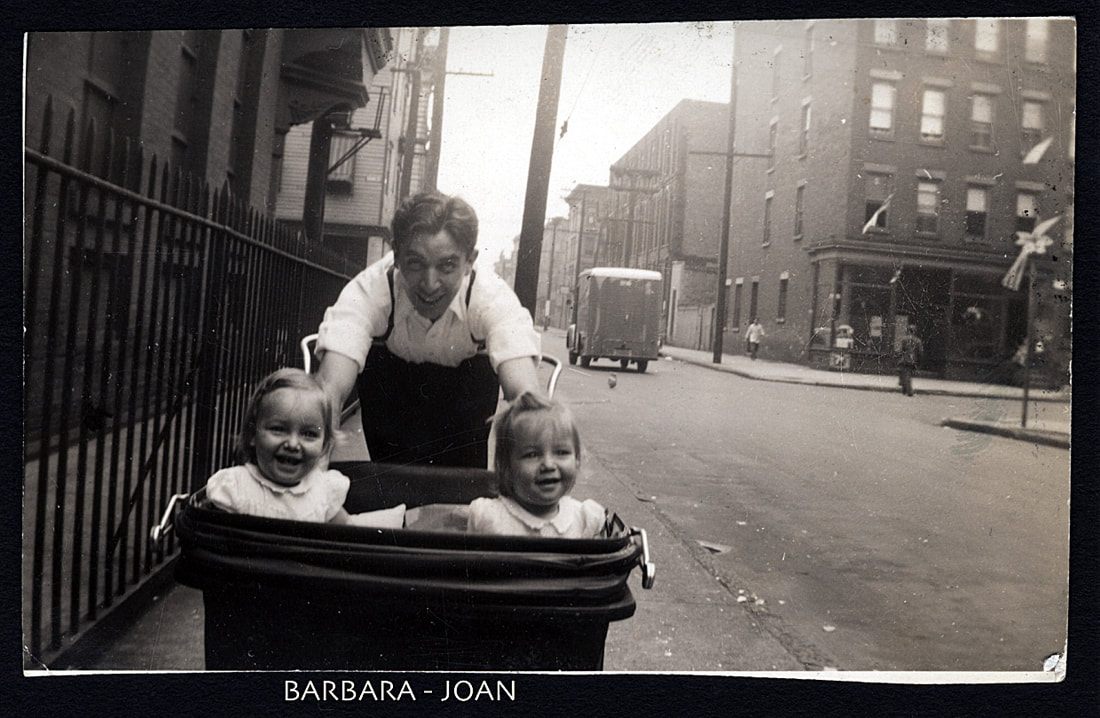 Dad with the Twins How to properly name an Italian child... . The basic convention goes like this:
Be aware that there are exceptions to this naming custom that preclude this assuming your ancestors adhered to these conventions. In the case of orphans, they would have no idea of parents' names. For someone estranges from his family, he might not want to use their names. It is also possible that the first born son might have died, so they might have also given the same name to a second born son who survived. Many children did not live to adulthood in the nineteenth century and earlier. It is also very possible that your ancestors didn't keep to these conventions, for instance, many named their first sons after a hero. For example a hero in southern Italy (The Two Kingdoms of Sicily) in the early 1800s was Guglielmo Pepe, so an ancestor in this time period could be named after him. A final example of exceptions to the naming custom can be seen in the nontraditional family of my great-great-grandparents, Pasquale and Rosa. They were great opera fans who named all of their children after characters from their favorite operas. Due to theses types of exceptions, you cannot use the Italian naming tradition to assume an ancestor's name. When doing genealogical research another problem can arise when finding several people living in the same town at the same time, all with the same first and last name. Think about it a second. If someone named Giovanni had five sons, all of them could have named their first born sons Giovanni, resulting in confusion as to which one is your gr-gr-grandfather and which are merely distant uncles. The same would hold true when researching the maternal members... Nonna Rita might have several Ritas that were named after her. They might even have been born in the same year! Remember, families were often quite large, especially in the rural, agricultural south. This shows that although it seems naming conventions might help you discover your ancestors, they might also confuse the issue. When in doubt, it might be a good idea to hire a genealogical research professional to make sure you find the right people in your family tree. --Jerry Finzi For help in researching your ancestors, the Facebook group Italian Genealogy is highly recommended by GVI. There are several professional researchers who are members who freely offer their advice and who can be hired to help find your ancestors. 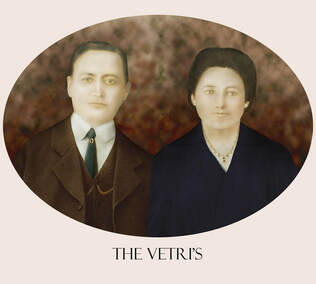 My Maternal Grandparents, Salvatore & Mariantonia 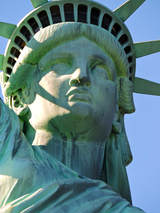 More often than not, I'm shocked at the blatant racism I see on Italian Facebook pages and felt compelled to leave a response to someone who claimed that most immigrants today offer nothing to American society and exist well below the poverty line... in other words, "we don't want to support them" or "we don't want them" or "they have no skills anyway".... My response to these people: Many would argue that when our grandparents and great-grandparents came here, they were also living below the poverty line--in fact, poverty was one of the main reasons for them coming to America. They also didn't speak English at all. Most Italians listed their profession as "Laborer" or "Farmer"... in other words, unskilled peasants. Often the father came first, working to earn enough to bring over his wife and children, as my Grandfather Sergio Finzi did. He sailed across the Atlantic, in steerage, in the middle of winter (when fares were cheaper) three times over the course of 5 years... the third time bringing his wife Caterina and three children (including my 4 year old father, Saverio). My father's family came from Molfetta and had a very tough life at first in Hoboken... a large family living in a tenement. (They would have another 5 children born here making them a family of 10). Pretty much the same with my Mother's family. Luckily, my grandfather was skilled as a tailor and found employment in a coat factory. As young children, my father and his brothers were tasked with walking the RR tracks to pick up chunks of coal that fell from the trains for the kitchen stove, which was the only source of heat in winter. They all had to leave elementary school early to help support their family. My father and one of his brothers bought a lame "Three-Legged Horse" and wagon and sold fruit and veggies to the people coming off the ships in the harbor. Another brother started his own grocery store in Hoboken. A couple of my uncles served in WWII and even my 65 year-old grandfather carried a U.S. Draft Card while my father worked in a military plant making springs for jeeps and tanks. My father became a fruit and deli man his entire life, always working for other people. Even as a child, I remember my father working long hours, night shifts and often even on holidays. And there was no overtime pay! My mother and her mother both worked in factories for "piece work"... paid by the piece. My mother bore the sweltering heat and airplane hum of industrial fans all day long as she worked at hot press machines making jewelry boxes... and crushed two fingers, bearing her crooked finger the rest of her life to show for it. She worked her way up to be a supervisor over 30 other workers. Somehow my parents housed, clothed and fed their 5 children and saved enough to buy a small six-family apartment house where I grew up, the rents from the other five tenants helping to support us. After work I remember helping my father as he maintained the building: putting on a new roof, repairing the chimney, fixing the furnace, doing plumbing and electrical, painting--whatever was needed to keep the tenants happy. He taught me that working hard was a good thing. My grandparents and parents definitely contributed to our society and created opportunities for their children... My parents were proud to have 5 children, lived to see 19 grandchildren and many great-grandchildren, all living as Americans today. Several of us owned our own businesses, hired employees, bought nice homes... and lived the American Dream. I remember the pride on my parent's face the first time they came into Manhattan to see my 5000 square foot photo studio. It took our family three generations to succeed in America--three generations to fully assimilate. America gave us that chance. As Americans, we all have to remember that even people who are desperate enough to enter our country through unusual means for asylum (like the Cuban boat people or Central Americans trudging through the desert) in fact should have a chance at a new life. There are no laws against crawling or swimming out of desperation onto our shores. Not everyone wanting a better life comes to our country on a jumbo jet through airport Customs. For those of you who have never read the entire text of the poem that is emblazoned on the Statue of Liberty: New Colossus Not like the brazen giant of Greek fame, With conquering limbs astride from land to land; Here at our sea-washed, sunset gates shall stand A mighty woman with a torch, whose flame Is the imprisoned lightning, and her name Mother of Exiles. From her beacon-hand Glows world-wide welcome; her mild eyes command The air-bridged harbor that twin cities frame. “Keep, ancient lands, your storied pomp!” cries she With silent lips. “Give me your tired, your poor, Your huddled masses yearning to breathe free, The wretched refuse of your teeming shore. Send these, the homeless, tempest-tossed to me, I lift my lamp beside the golden door!” My purpose in penning these words is not to let people forget that we are all immigrants and owe thanks to the struggles of those who went before us--AND who come after us. In my opinion, our country is stronger for their efforts and contributions. I've lived in another country and know for certain that we have something special here. Never forget that WE were immigrants, too. Jerry Finzi
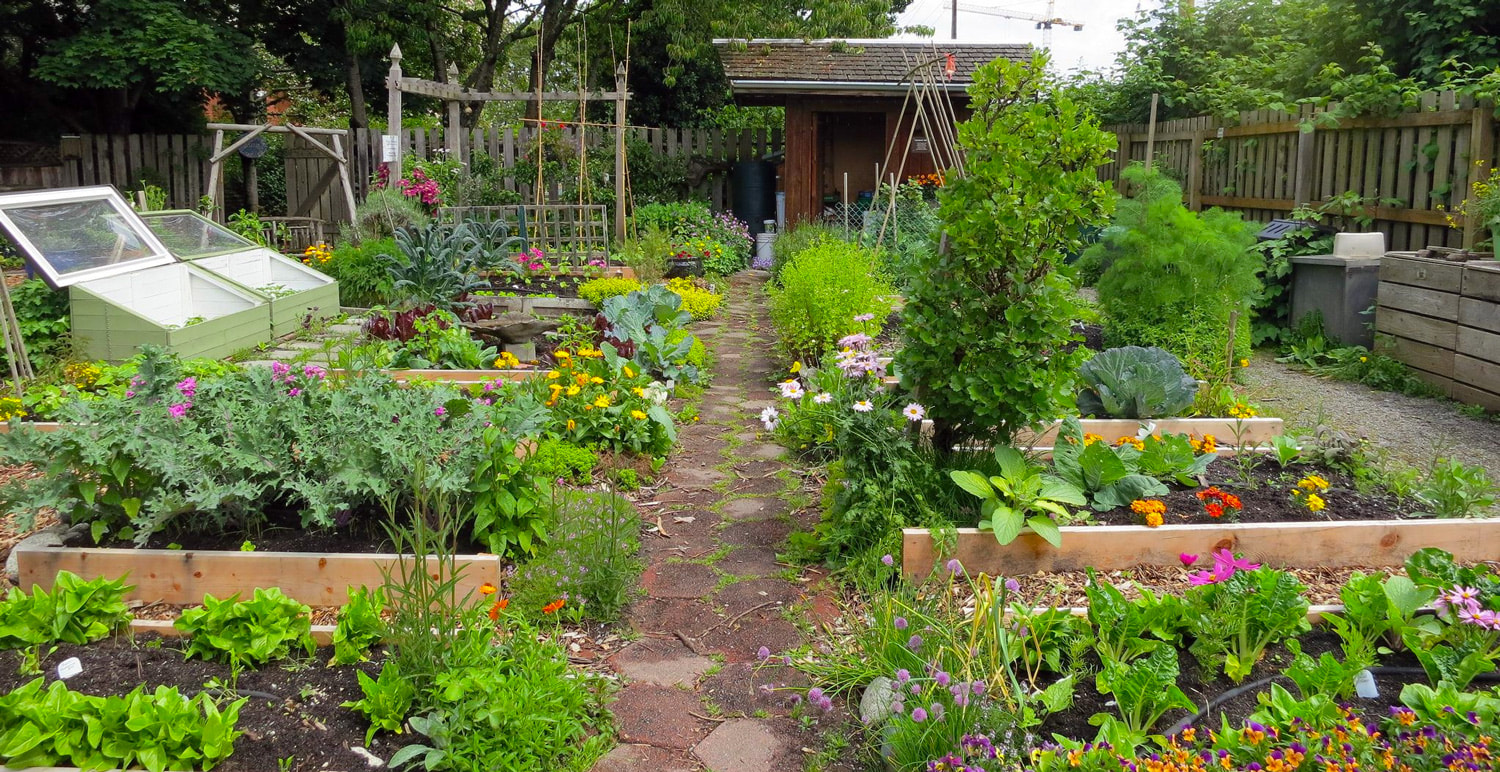  by David Dalessandro from Sharon, Pennsylvania Need some guidance here, so I thought coming to my paisans at Italian Gardeners on Facebook would be a good place to go... While pulling my tomato plants today it hit me that I was alone. My knowledge of gardening, weak as it is, came most from my Father who got his knowledge from his Father who was an immigrant to the U.S. from Foggia. My grandfather worked for Carnegie Steel in Farrell, PA as a janitor for the office. Carnegie had provided a home for him at a cost of $2.200. Company homes without a bathroom were $2,000 so Pasquale went for the better model. Companies did that in those days...this was 1925. The company then deducted so much from his pay and he had a decent house where he could walk to work. Another thing the company did for employees was to provide garden space. Carnegie owned extra land in Wheatland, PA and the company would plow the land--at no cost to workers--and let employees claim part of it to put in their own garden. My grandfather took great advantage of that and every year would plant tomatoes, potatoes, beans and other vegetables that would help to feed his family. It was in this garden that he taught my Father, who then taught me. So, fast forward to today, about 80 years later. I am stuck on the Teaching Thing. My children are grown and not really interested. My daughter is in El Paso, Texas and my son, still living with us, is working to become a tennis professional. Neither are much interested in gardening. 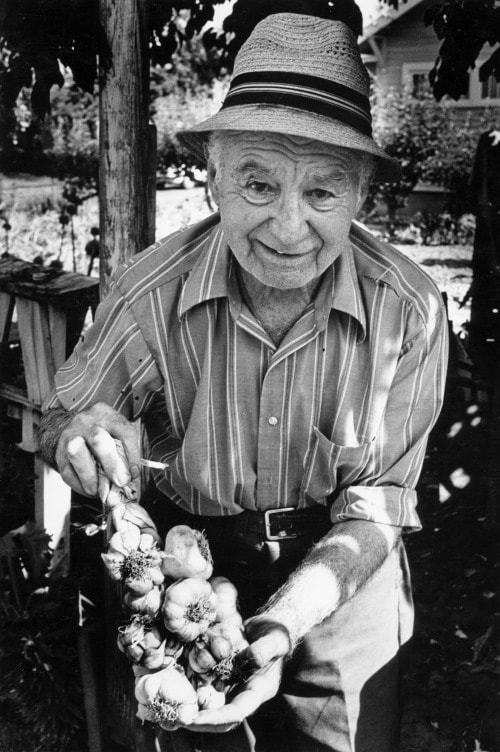 100 year-old Portland gardener, Ulisse Edera. Photo by Keith Skelton. 100 year-old Portland gardener, Ulisse Edera. Photo by Keith Skelton. But I love it. I enjoy starting the seeds, tilling the ground, fertilizing and watching the plants grow. Because of the abundance God has provided, I also can many jars of tomato, sauce and hot peppers. Again, not because I have to, like my Grandfather had to, but because I want to. But, I am afraid that I am the last of the line. My uncles are gone. My Father is gone. My wife humors me and lets me do my thing in the garden. It bothers me that it is likely to end here. And, I fear I am not alone. No one at work talks about a garden. No one else in the neighborhood has one. Just me. It is a shame, I think, that the accumulated knowledge of at least three generations will end. Do any of you have the same concerns? Do you have children or grandchildren who work with you and ask questions and help pull weeds and can tomatoes and wonder why something is growing or not? Let me know...and if you have answers for this situation, I would love to hear them. Thank you so much, my paisans.  Amalfi cat tending his garden 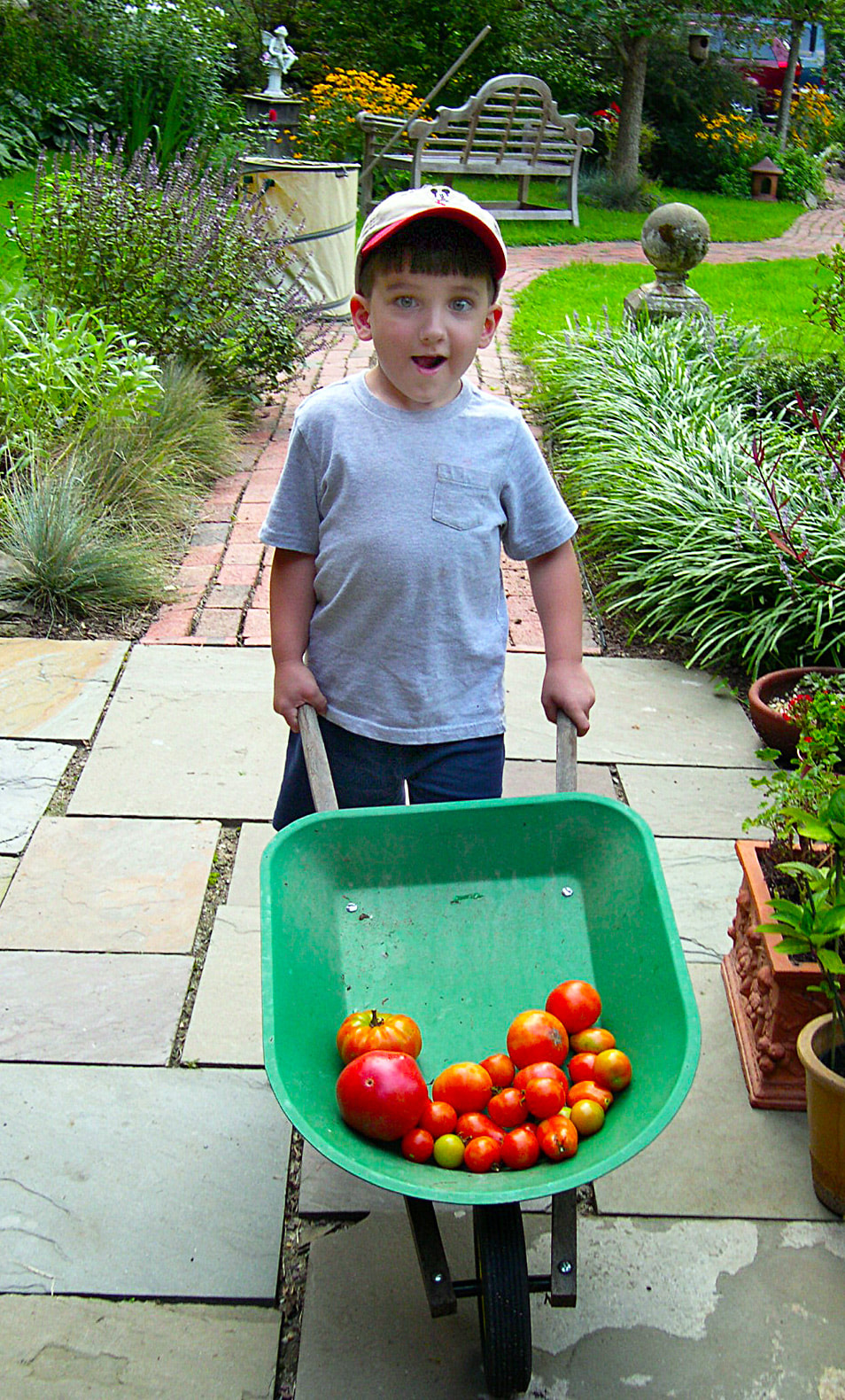 Passing on the tradition Passing on the tradition And my Thoughts... And I totally agree with David, which is why I've asked his permission to post his words here on Grand Voyage Italy. After all, we are #AllAboutItaly here... and we're all about the Truths about our culture. I feel David is correct--too many young people today are detached from their cultural roots and have no idea where their food comes from, especially true with Italian-Americans. When one takes a Voyage around Italy, all you see is gardens--everywhere, in tiny front yards, hanging on walls, on balconies and terraces and in pot gardens surrounding people's front doors. It doesn't matter if they have lemons and pomegranates on their patio or just a pot of basil on their windowsill--it seems that everyone grows something edible. We should all strive to teach our children the value of home grown, healthy food, like I've done for my own son, Lucas. Here's a photo of him with his tomato harvest at 4 years old... He's 15 now and looks forward to each February when we go down into the cellar, sort out our seeds and start our heirloom seeds that we save each year from our garden. He now looks forward to the tomatoes we grow as if they are old friends... Eva Purple Ball, Olivette Juane, Giant Belgium, Jersey Devil and more. He also is learning to cook using the vegetables harvested from our garden, and even when we don't grow them ourselves, he now knows how to smack a cantaloupe, listening for the lowest pitched sound (a sign of ripeness), or check a peach's ripeness with his nose, as my Dad taught me. Gardening is part of the Italian soul. Pass it on, people. Pass it on... --Jerry Finzi And for more on the subject of gardening... Creating a Hanging Italian Wall Garden
Bicycles - Italian Garden Style My New Favorite Tomato: Striped Roma San Marzano Tomatoes: Accept No Imitations! How the Tomato Became Part of Italian Culture Only in Italy: Strange Veggies from La Belle Paese To see how you can create an Italian Garden of your own, check out the Grand Voyage Italy Shop on Amazon. 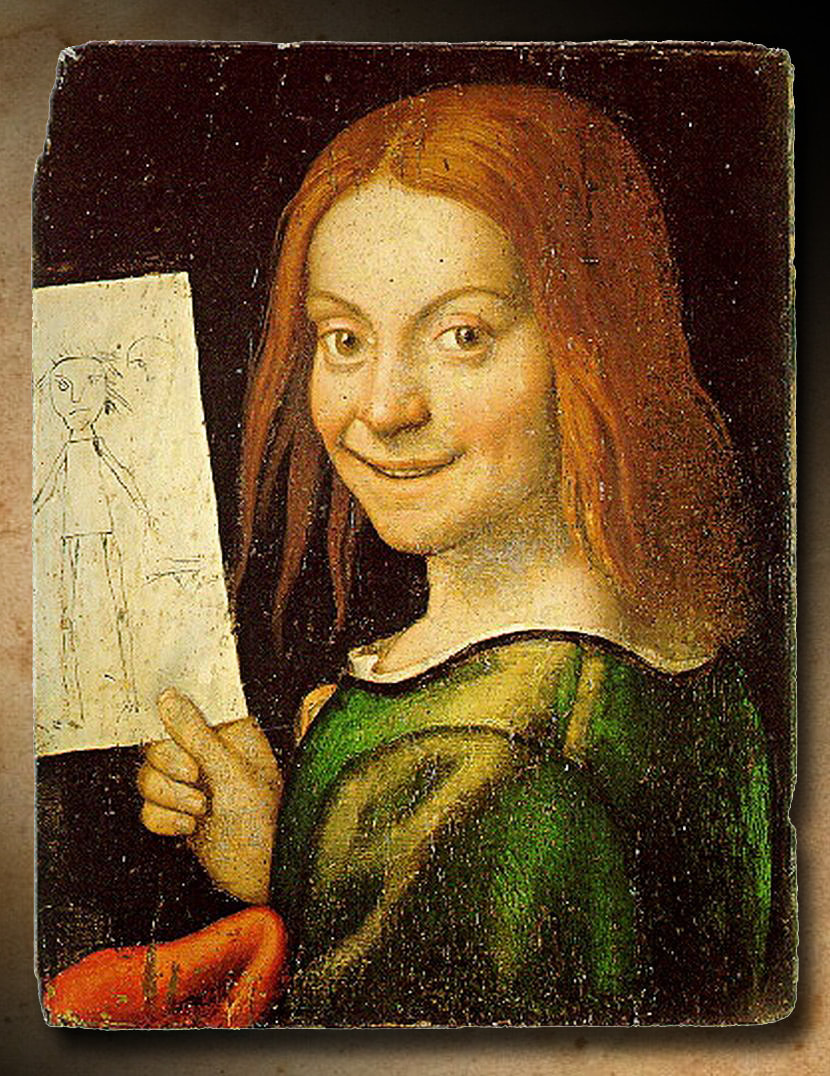 This painting, Portrait of a Young Boy Holding a Drawing by Giovanni Francesco Caroto (1480 – 1555) is perhaps one of the strangest portraits from the Renaissance period. Since carota in Italian means carrot, and the boy in the painting has "carrot-top" colored hair, many believe it's a self portrait of the artist as a boy. Others think it's a portrait of the artist's son. There are some who believe that to truly represent a child's drawing in the portrait, Carota asked a child to paint that part of the picture, which if true, would mean that it has dual authorship--Carota and an unknown child. This is also the painting from which Dr Harry Angelman derived the now defunct name of Happy Puppet Syndrome for children (now referred to as Angelman’s syndrome). In the painting, the boy’s happy expression and the jerky movement of the puppet of which he holds a picture, reminded Angelman of the behaviors exhibited by three young patients who had the syndrome in his pediatric ward in Warrington, England. Angleman’s syndrome is a rare genetic disorder characterized by intellectual and developmental delay, sleep disturbance, seizures, jerky movements (especially hand-flapping), and frequent laughter or smiling. It affects approximately one in 20,000 children. To add more interest to this odd painting, it was among others stolen from the Museo di Castelvecchio in Verona in 2014. Little more than a year later, the paintings were recovered in in the area of Odessa, on an island of the Dniester river not far from the partially recognized state of Transnistria, just a few kilometres away from the border between Ukraine and Moldavia. According to the Ukrainian police commissioner Viktor Nazarenko, the paintings were buried wrapped in some black plastic drop cloths and hidden behind some shrubs. (Watch the discovery in the video below). --GVI  My father, Sal with the twins, Joan and Barbara on the streets of Hoboken 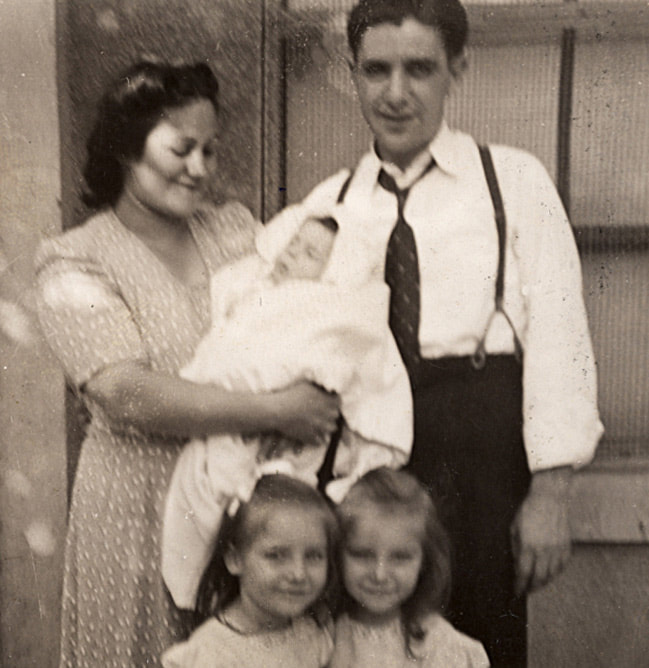 And then there were three. My brother Kenneth and the twins with Mom and Dad. And then there were three. My brother Kenneth and the twins with Mom and Dad. I suppose the first gift to my father, Sal, was his first two children... the "Twins", Joan and Barbara, born three days apart but healthy, nonetheless. This was the start of my immigrant Dad's entry into fatherhood. Just when other men were being drafted into the U.S. army to fight in World War II, he suddenly was burdened not with one, but two children--this was in 1942 when twins were a mere 1% of all births. His nickname, Sally-Boy was coming to an end. Things had just gotten serious. When he saw only one baby on that first day, the doctor casually told him, "The second one just isn't ready yet". He couldn't rest assured that everything was OK until the second was born three days later, an event that placed my mother's photo holding the two of them on the pages of New York City's Daily News. The war started and my Dad worked in a defense plant making springs for tanks. As you can see from the photo above, my father was not only a proud father, but a rather goofy one. Always the joker... that was his first real gift to his children. John and Barbara were to be followed by Kenneth, Joyce-Ann and myself, the "baby" of the brood. Somehow, Dad provided. Before he was married, he and his brother had a "Three Legged Horse and Cart" and sold fruit and vegetables to the seamen down at Hoboken harbor. He had dreams of having his own Italian delicatessen or market someday, but he opted to have security for his family, always working for others for a steady salary. He clothed and fed us by being a grocery and deli man his entire life. This was another gift to us all. 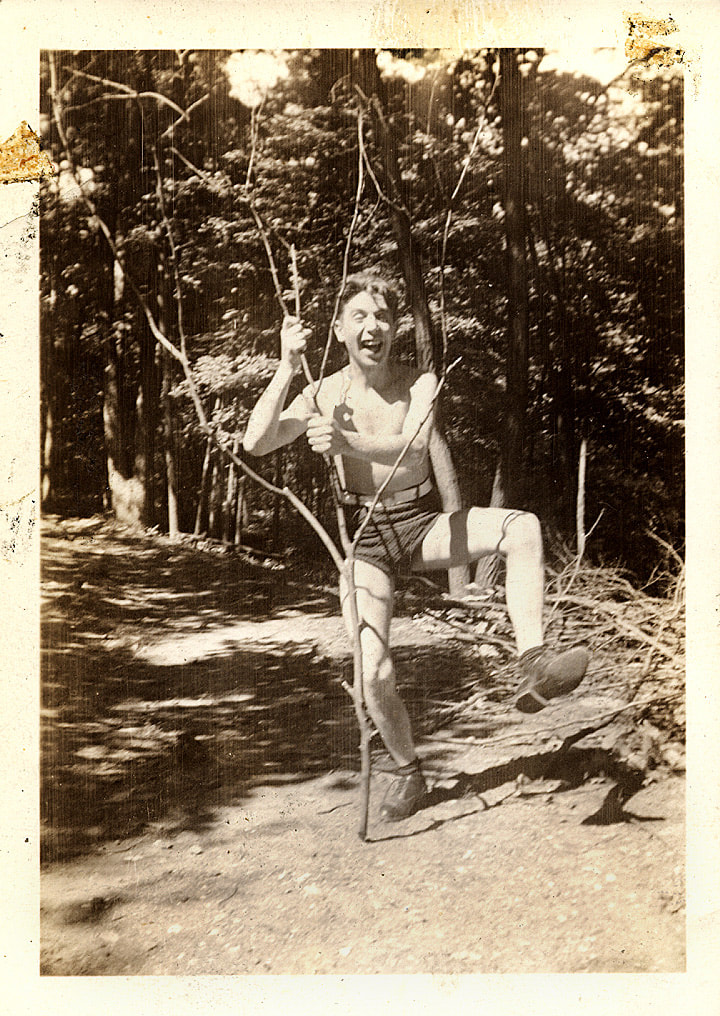 Always the clown, even as a young man Always the clown, even as a young man Dad always played the fool, constantly at the ready to play a joke on us, to get us to laugh, putting us close to sheer embarrassment. At the beach he always insisted that we bury him under the sand, head exposed with his shoes stuck out 12' away from his head under a ridiculously long body of sand. Everyone passing by loved it. After a while (and his nap) we'd mockingly wind up stomping on his sandy "stomach" (safely clear of his real one) to the amusement of others around us, aside from my mother, who always made like she didn't know him. When we were the only Italian family going to a New Jersey mountain lake previously only frequented by Germans, my father offered them meatballs, sausage and spaghetti and became the biggest clown in the middle of the lake, making his infamous sea monster growl that echoed from the mountainside. He taught us to put small, rounded stream stones into the barbecue so they would explode and scare the heck out of Mom when she was grilling burgers and hot dogs. He came up with the idea to put the watermelon in the stream to keep it cool all afternoon--which worked great except for one day when my sister and I had to run, splashing down the stream to recapture it after it got loose. These were also gifts from Dad.  Fishing on the Hudson with Dad, myself and Joyce on the rocks Dad always took me fishing and crabbing down the abandoned docks and piers along the Hudson River. He taught me how to get past chain link fences and avoid guard houses to find the best fishing spot. I remember long, hot afternoons, the smell of fish and tar, and the pinching of the crabs we'd catch in our box crab nets. Some days we'd be there so long until the tide shifted on the Hudson... in the morning the river would be flowing out to sea, and in the afternoon it the river would actually flow upstream. He'd also drop some bait lines from the wooden pilings using little screw-in springs with bells on them. A big "Mama eel" would latch on to a hook, the bell would ring and Dad would have dinner for him and Mom. One day we caught a big eel in the crab net and a big Jersey blue crab on the drop line. At the end of a long day, we'd head home with a bucket full of beautiful blue crabs and perhaps a few eels to fry up. Again, more gifts from Dad. 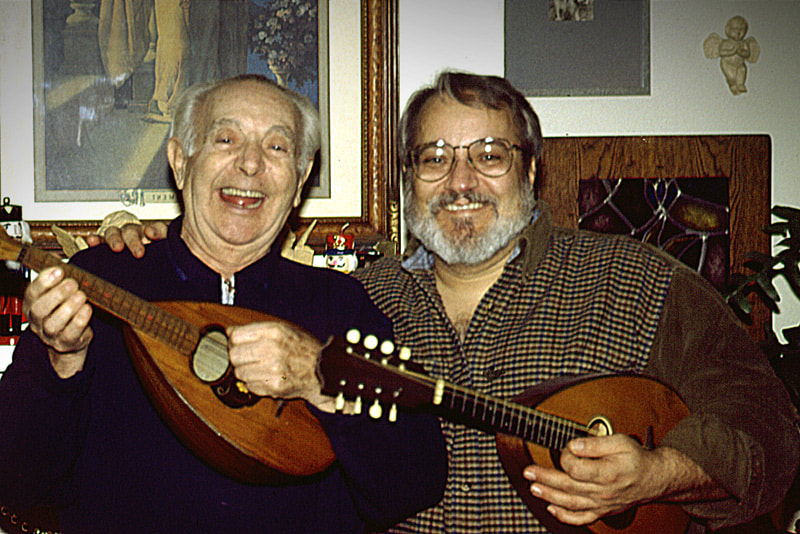 Sally Boy and Me Of course, we all bought Dad gifts for Father's Day. I remember saving the deposit money I earned from collecting empty soda bottles and buying him a bottle of shaving lotion or a pair of socks. A I got older, my gifts were many and varied: bottles of Amaretto, a fishing rod, a lop-eared rabbit, a 3 foot tall basket woven bottle of Chianti, a turquoise pocket knife, a trip to Caesar's Palace in Atlantic City, and odd assortments of power and garden tools.
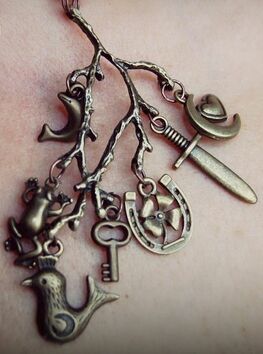
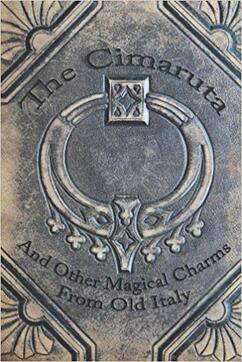
But looking back, my gifts never matched the gifts he gave to me. He gave rock-solid, undeniable love and pride toward me. He gave simple, sound advice when I most needed it. He even gave me the gift of my wife and son when one day challenging me, "So, when are you going to marry that girl? You spend all your time with her anyway!" Thanks Dad... for everything. --Jerry Finzi 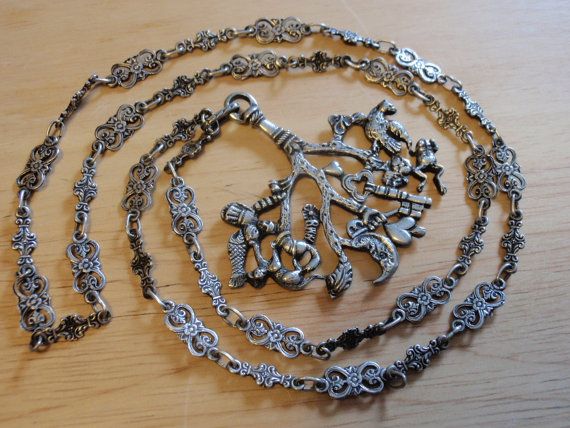 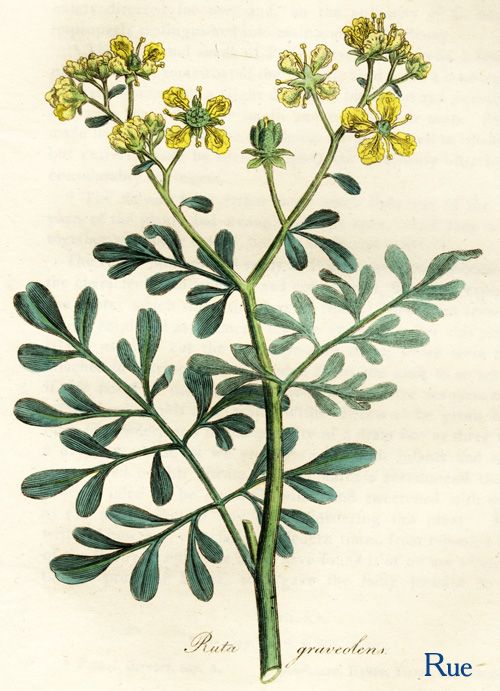 The cimaruta is a very old Italian portafortuna (good luck charm) rooted in the lore of the ancient Pagan religions of Italy. It can be worn around the neck or hung above an infant's bed to ward off any evil. Like many of the lasting ancient symbols and beliefs, the cimaruta design eventually took on certain symbols of Catholicism. One example of a Christian addition to the design is the appearance of "the sacred heart" of Jesus. However, ancient Roman charms did include a heart symbol, which may indicate that the heart on the cimaruta isn't an entirely new addition. The traditional cimaruta is fashioned after the leafy sprig of rue, which is an herb that is highly featured in Italian magic and lore. The branch of the rue is divided into three stems symbolizing the three forms of the goddess Diana. Rue was a sacred herb for Diana. Various charms appear on the rue design, each having its own meaning. The main symbols are the moon, serpent, and key. These represent the goddess as Hecate (the key), Diana (the moon) and Proserpina (the serpent). There may also be a rose; a hand holding either a wand or a sword; a flaming heart; a fish or dolphin (a nod to Diana); an owl (to flirt with the Devil); a plumed medieval helmet; a vervain blossom (a flower from Italian fairy ore); a cherub; a rooster (watchful guardian); and an eagle (able to see evil coming from far away). One cimaruta, for example, might bear the collective imagery of a key, dagger, blossom and moon. The cimaruta is worn nowadays more by women than men. 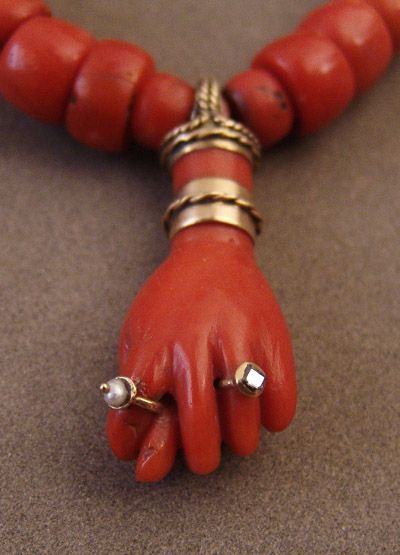 Mano in Fica The clenched fist with a trusting thumb is known as mano in fica or simply, mano figa ("fig-hand"), or far le fiche ("c*nt gesture", pardon the profanity), for the resemblance to female genitalia. The word figa itself is a very vulgar word to describe a vagina in Italy. Such a rude hand gesture was common in past centuries, similar to "giving the finger" or "flipping the bird", but has fallen out of use. Dante's Divine Comedy (Inferno, Canto XXV) mentions the mano in fica. Supposedly, this charm is used to insult the devil and others casting evil spells. 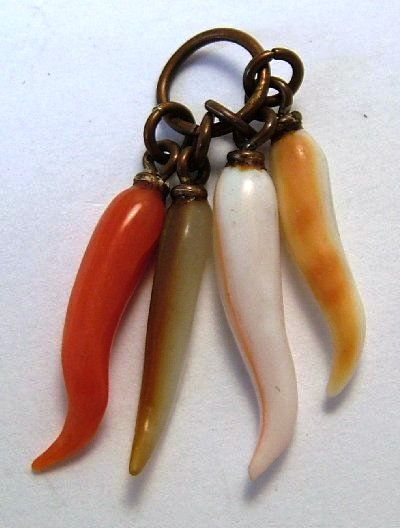 Cornetto The cornetto, shaped like a horn or chili pepper, is still popular in Southern Italy around Naples, Calabria and in the rest of Mezzogiorno (southern Italy). In Calabria and Naples this charm is worn as jewelry, hung on rear view mirrors, hung in shop windows, on key rings, and on t-shirts. It is more effective if it is red (representing an enemy's blood) and topped with a crown (representing wealth). The cornetto is a symbol of virility (obvious with its phallic shape), but it also brings luck, wealth, success and can also used by women. A similar magical horn of plenty was carried by the Roman Goddess Abundantia to represent abundance, and many think the cornetto has its roots in ancient Roman times. 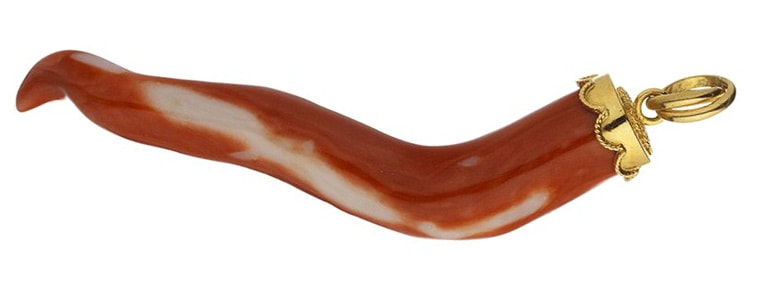 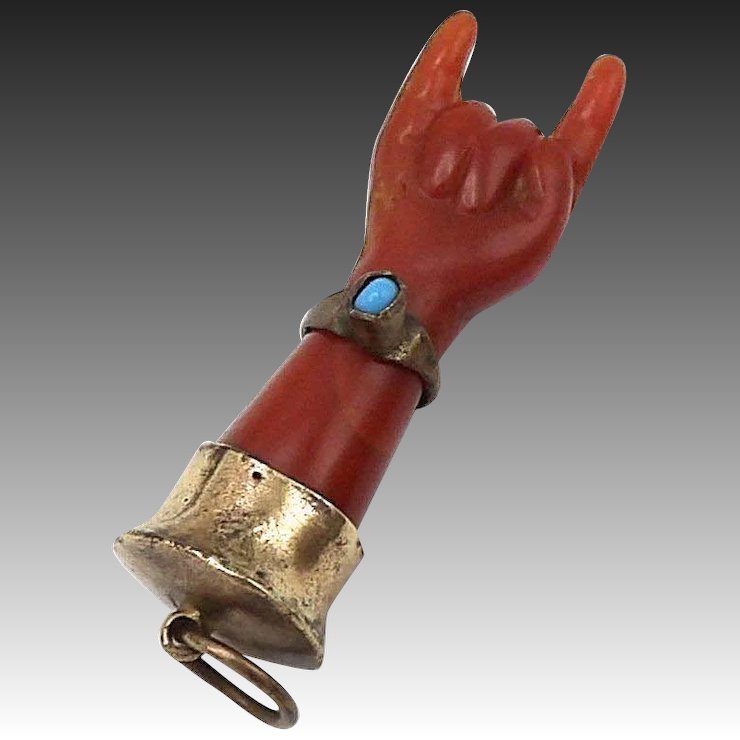 Mano Corno An alternative to the cornetto, some claim the Mano Corno can ward off the malocchio (evil eye). However, in Italy, the Mano Corno can be seen as offensive... this hand gesture is called cornuto, or a cuckolded man. Give this hand sign to an Italian man and you are basically calling him weak, pathetic and unmanly. This sign--along with sticking up a middle finger--are the most insulting signs you can insult an Italian man with. This charm directly insults the devils and his demons himself. 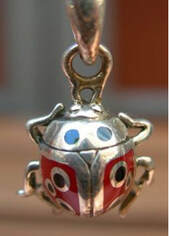 Coccinella The Coccinella, or ladybug (ladybird) charm brings luck in the arena of love and romance. it's a very common charm in Italy, especially with women. The red color has multiple meanings... red represents victory over one's enemies (spilling their blood); red helps ward off malocchio; and red also is the color of passion and romance. Another fact about the ladybug is they eat the bad bugs who would eat a farmer's crops, so of course they came to be thought of as a sign of good luck, helping prevent crop failure.
  When I was a kid, we would occasionally find a garter snake living in our small urban garden along with our collection of 15 box turtles. I always loved snakes... smooth, silky, muscular and graceful. On our country property today, I've often seen several species of snakes: garter, ribbon, black rat. The hill behind our home is called Rattlesnake Hill, but I've never seen one. I still find it interesting when I come across snakes... but I don't honor them in any way and couldn't dream of anyone holding a festival for them!
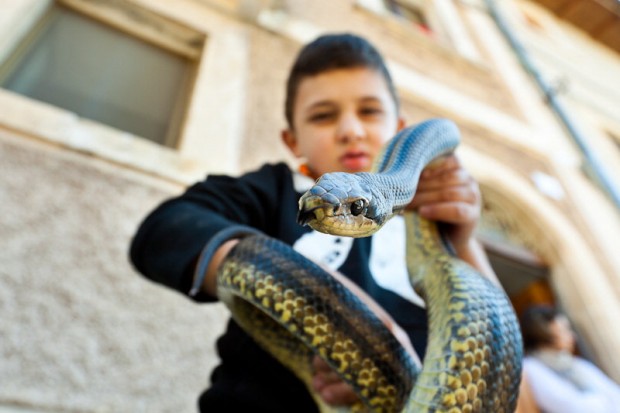
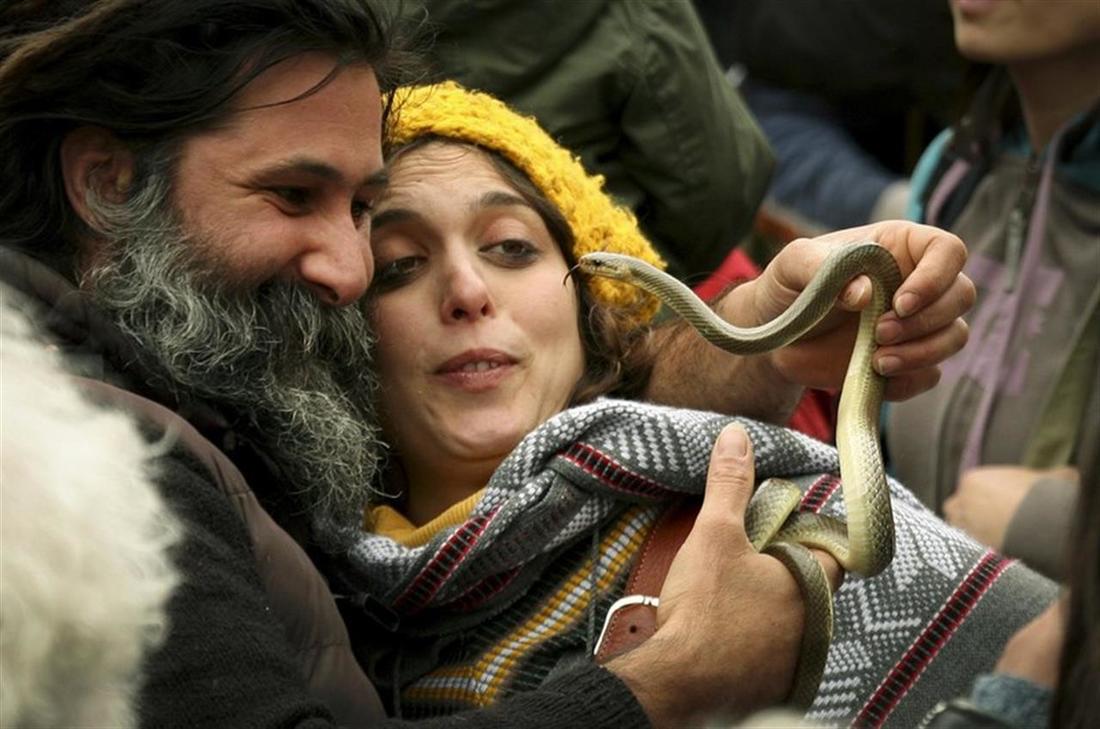
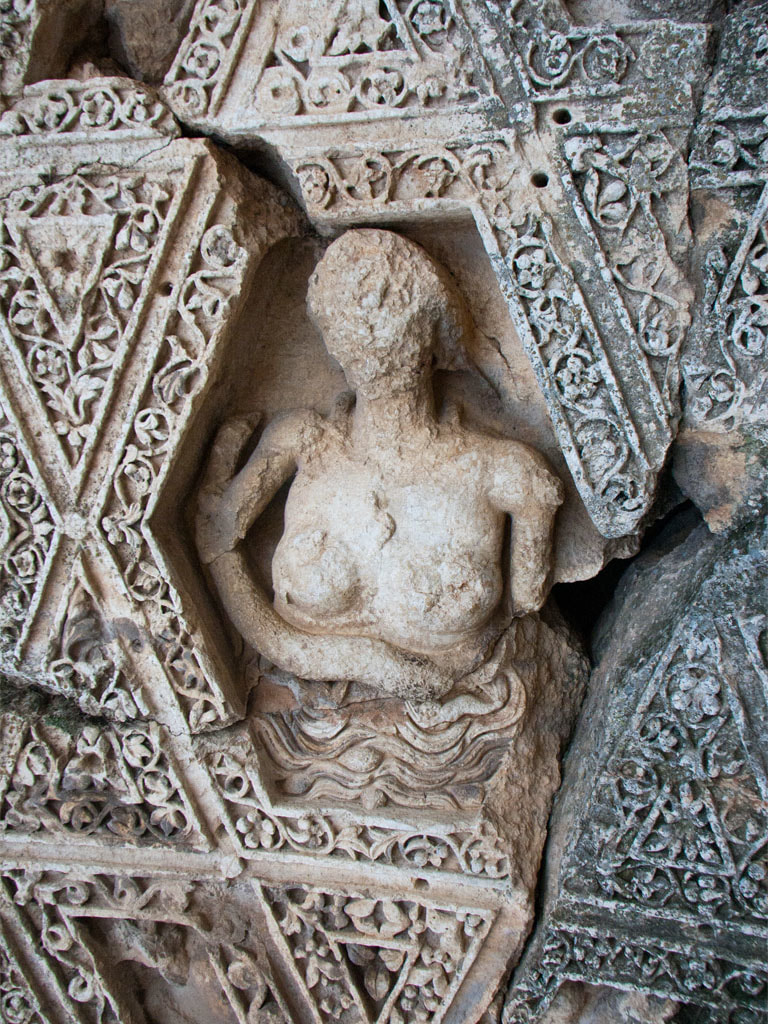 Ancient Roman temple to Angitia Ancient Roman temple to Angitia Yet, each year in the beginning of May, in the small towns of Cocullo and Villalag0, La Festa dei Serpari is held. The festival is held in honor of Saint Dominic, protector of toothache, reptile bites and rage. But the festival also has ancient pagan roots in honor of the Oscan healer and snake goddess, Angizia. Also known as Angitia to the ancient Romans, she was revered by the Marsi, a warlike tribe of people who lived to the east of Rome in the Apennine Mountains. 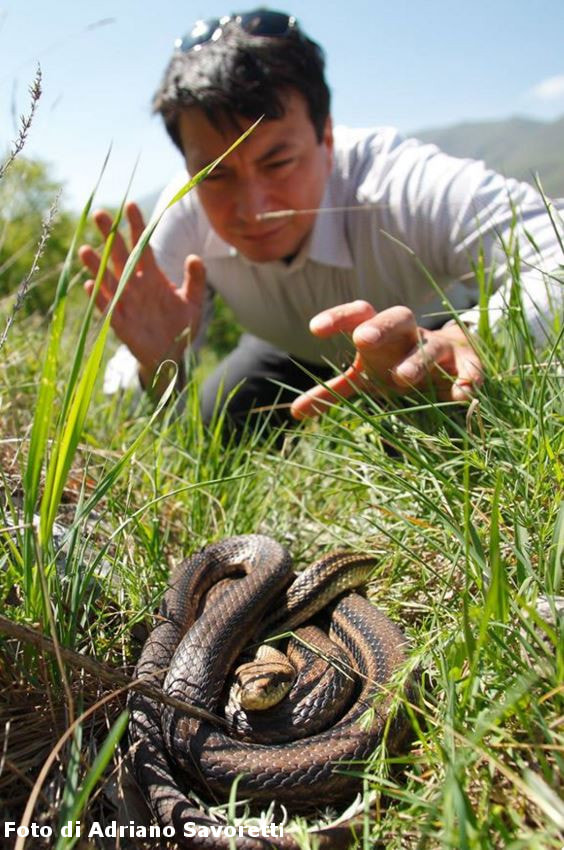 Separi reaching for his catch Separi reaching for his catch Angizia possessed an ability to heal those who had been poisoned--especially by snakes--and had the power to kill serpents by casting verbal spells. First century Romans knew the Marsi region contained many healers, magicians, and snake-charmers was infamous as a hotbed of witchcraft. The Festa dei Separi honors the modern-day separi (snake wranglers), with many of them catching and contributing snakes to the festivities. In preparation for the Festival, during the last half of March, the separi spread out across the countryside in their hunt for snakes. Once captured, they are carefully stored in wooden boxes, or as in ancient times, inside terracotta containers for 15-20 days. The snakes are fed a healthy diet of live mice and hard-boiled eggs. 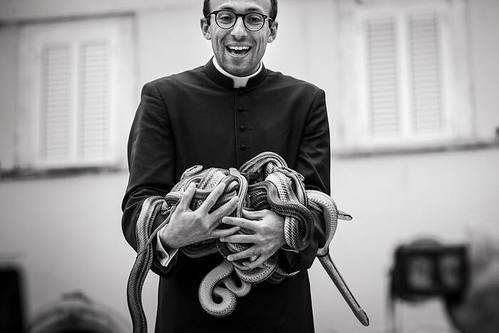
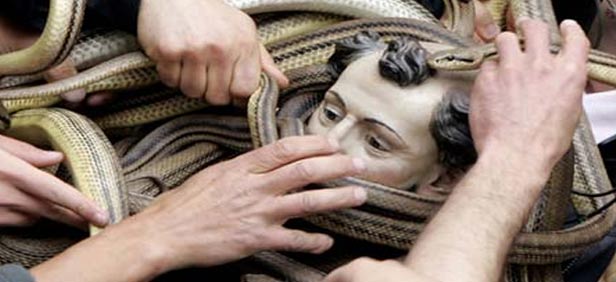
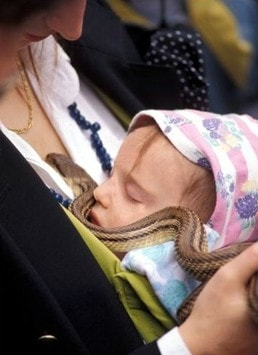
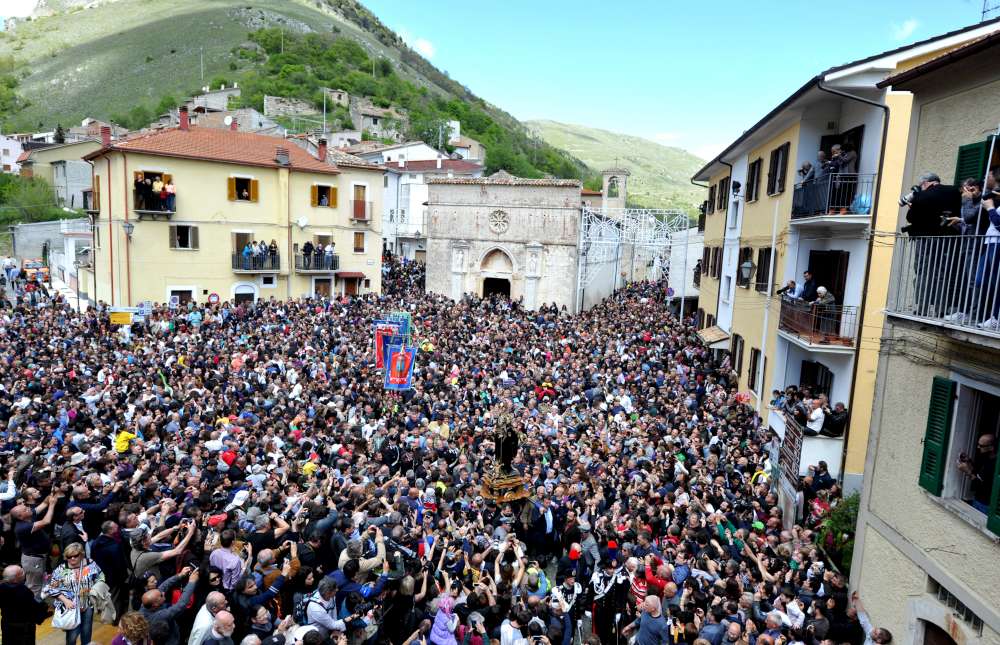 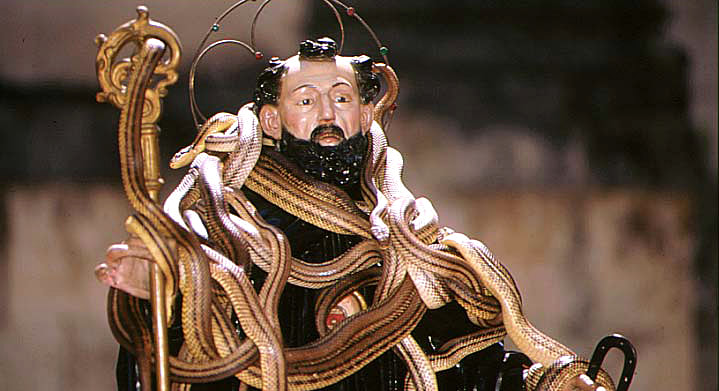 On the day of the festival, pilgrims gather in the church of San Domenico to be healed. After Mass, the statue of the Saint is draped with live snakes and carried into the piazza where believers gather to touch both the Saint and the snakes for their healing powers. The local separi also drape themselves with snakes and follow the procession. In years past, the snakes were killed afterwards and eaten in a feast, but now the bread is substituted, formed into various snake shapes... interlocking rings of snakes, biting their tails, or as serpents with sliced almond scales and coffee bean eyes. The snakes are no longer killed, but released back into the wild when the festival is over.
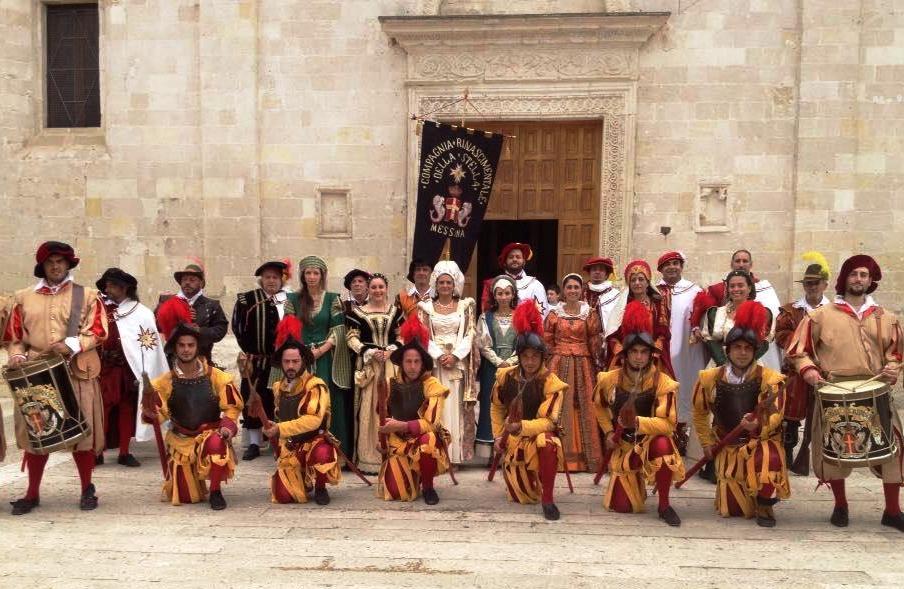
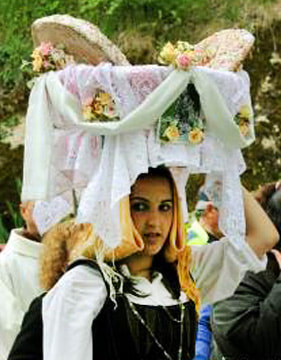
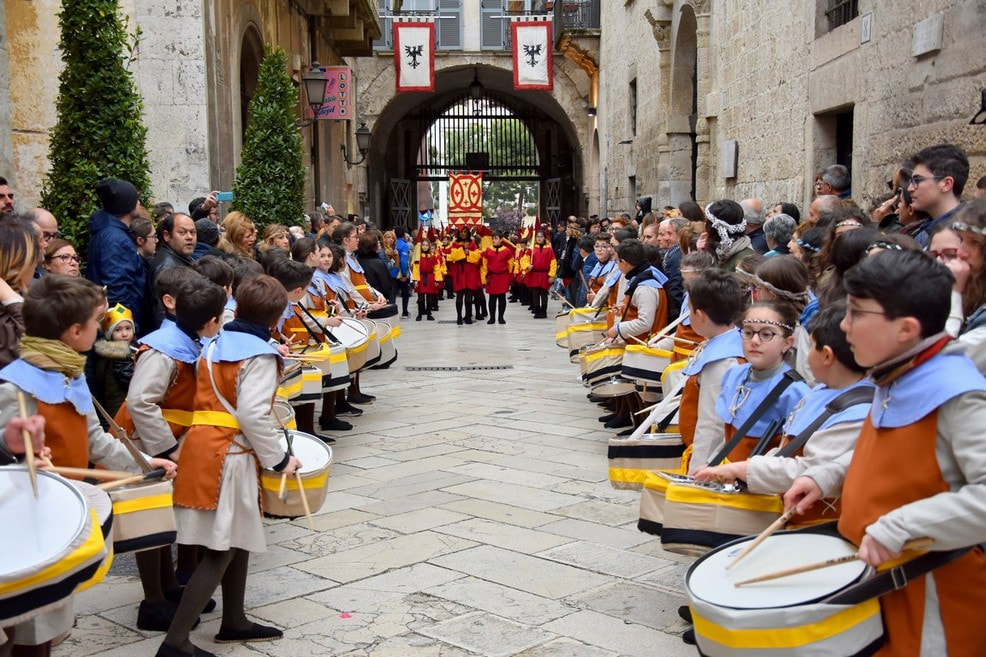
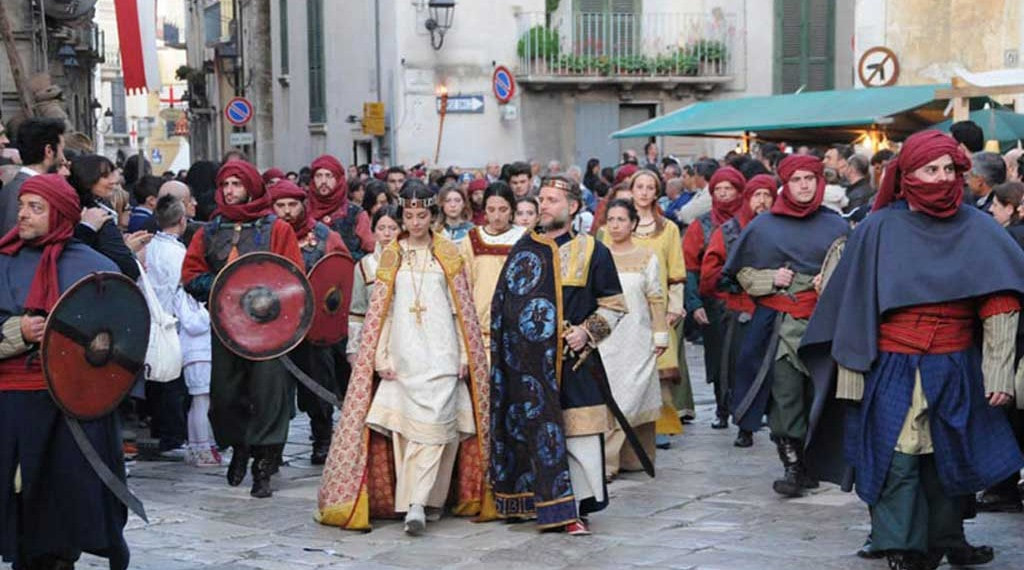
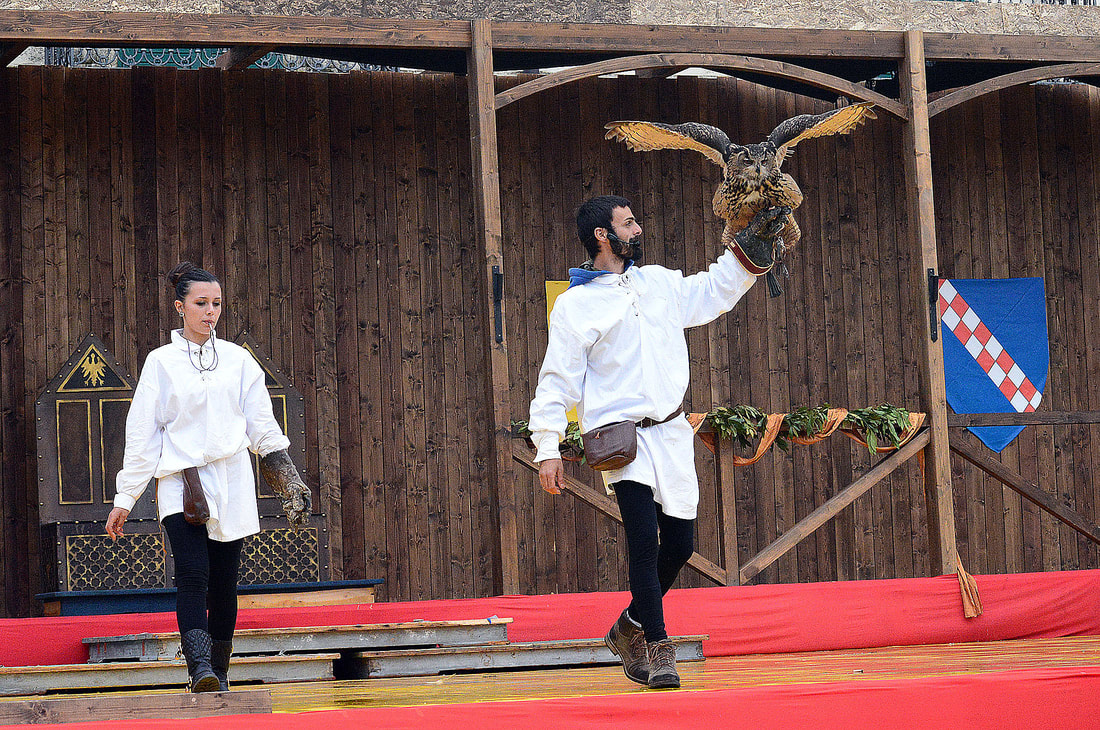
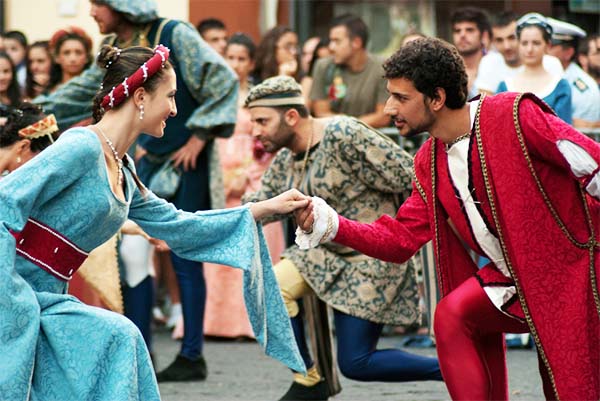
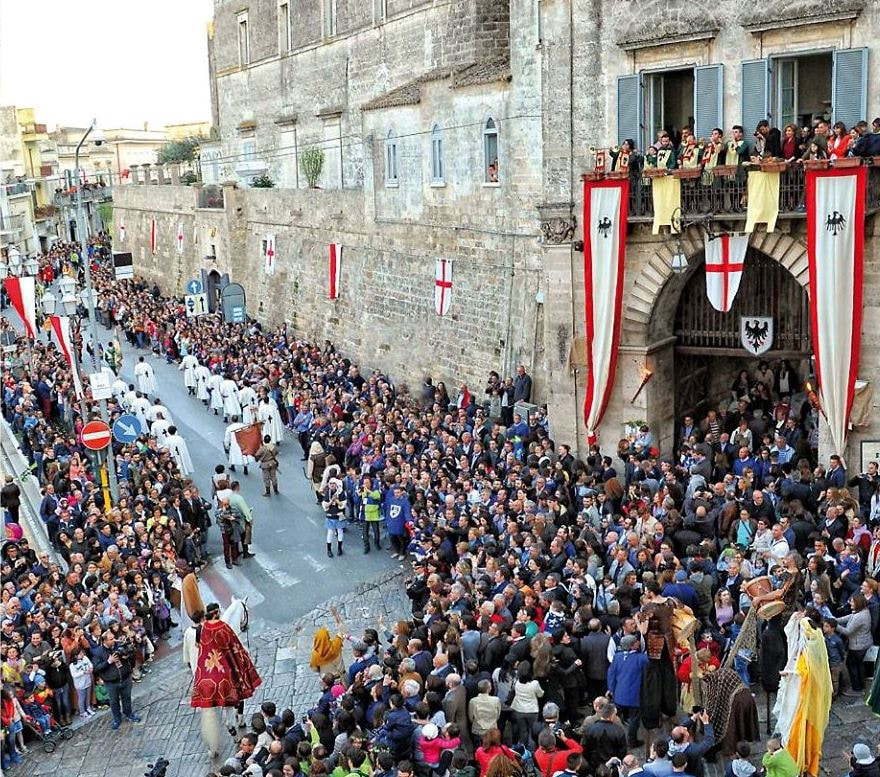
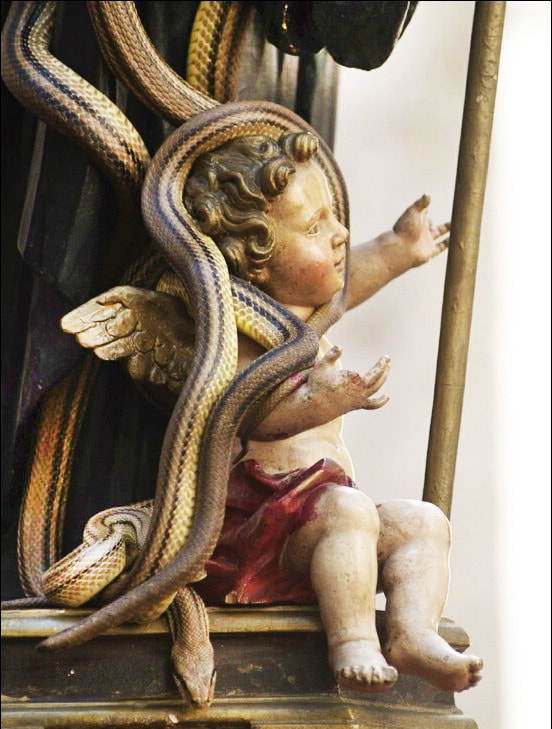 Some other scholars argue that the festival dates back even further to the Greek hero and god, Hercules. Supposedly, jealous Hera sent two snakes to kill him in his crib. The infant Hercules was unusually strong and fearless and strangled the snakes before they could strangle him. In the nearby hamlet of Casale votive bronzes representing Hercules have been found. Saint Domenico himself is particularly revered in Cocullo because some personal relics are kept in the church there: a molar and a horseshoe from his mule. Villalag0 also has one of his molars. There is no telling who has the rest of his teeth. Perhaps they were eaten--by snakes. --GVI 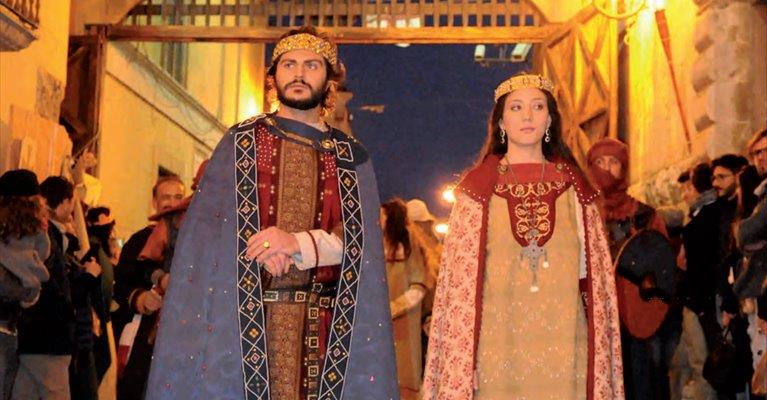 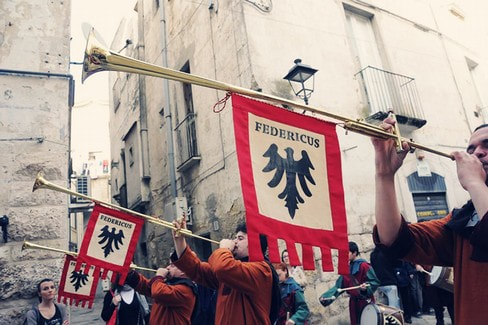 Every year around this time, the town of Altamura in the Alta Murgia region of Puglia settles down to bed in the 21st century and awakes the next morning in the Middle Ages. The Federicus Medieval Festival is a historical re-enactment dedicated to Frederick II of Swabia who stopped in Puglia during his return journey after the Crusades. In 1232 Frederick II decided to have a cathedral built, around which the town center developed. Held this year from April 28th through May 1st, the festival consists of an historical parade with jugglers, jesters, street performers, flag bearers, and of course, medieval ladies and gentlemen, ancient music and of course, food. 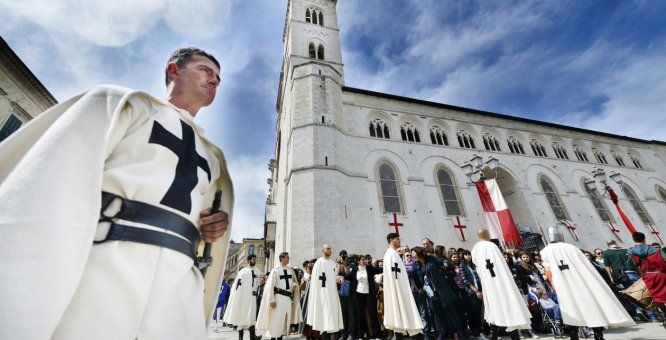
Frederick II was heading towards Bari to sail to the Holy Land, and needed to leave some of his soldiers suffering from malaria in Altamura. Miraculously, they were healed. To celebrate the miraculous recovery, the Emperor had a cathedral built in 1232. Opposing this legend, what the Emperor really wanted was to build a church to obtain the benevolence of Pope Gregory IX (who had previously excommunicated him) in a city with a strategic position within the Pope's beloved Apulia. When visiting Altamura, don't forget to sample their amazing Pane di Altamura, a wonderful, tasty bread that can stay fresh for up to a month! For more info: Federicus Festival
 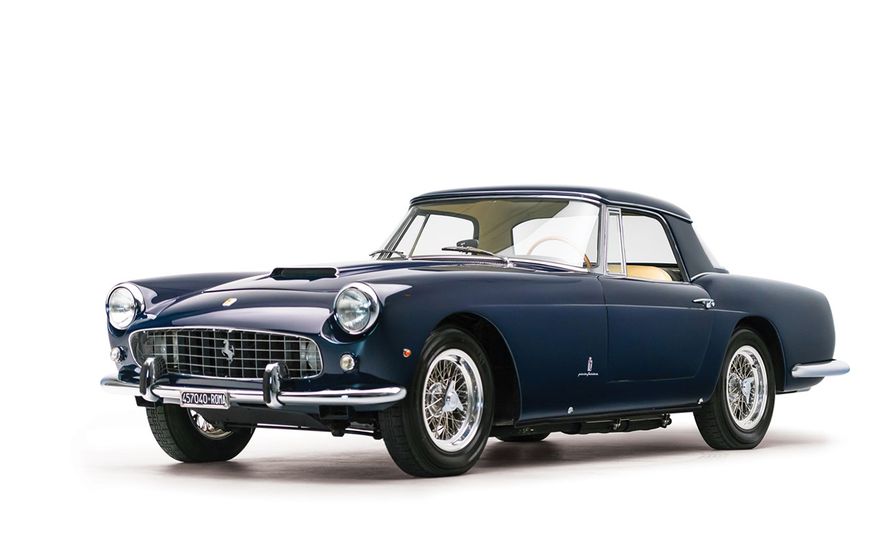 The Ferrari 250GT Cabriolet is technically a 1961 model, but it was developed and built at the end of 1959. Because of the timing, it allowed Ferrari to incorporate four-wheel disc brakes and engine lessons learned from the legendary Ferrari 250 Testa Rossa race car. It’s a more plush and powerful version of the 250GT California Spider. Only 200 examples were built, and this particular car underwent a total restoration after it was exported to the United States in the 1970s.  The 1964 Ferrari 250GT/L Berlinetta Lusso was the last model in the famous 250GT line, incorporating as many chassis upgrades and luxury features as Ferrari could stuff under its sensual, Pininfarina-Scaglietti body. There were only 350 built, with this particular car imported new to the United States, where it spent its entire life with an odometer reading of just over 44,000 miles.  This 1931 Bugatti Type 55 is the first Type 55 in existence and was owned by the Duc de la Trémoille of the French nobility. It won the 1947 Rally des Alpes—a four-day, 1035-mile race. 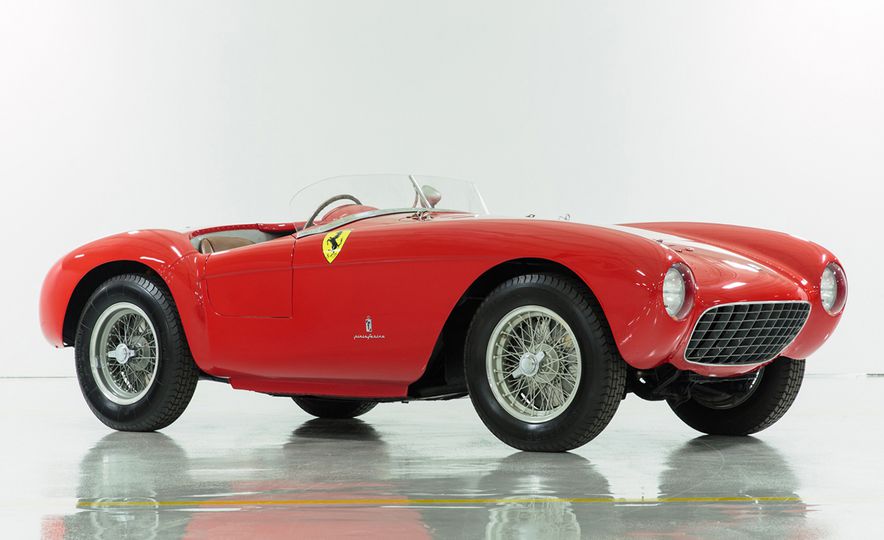 This 1954 Ferrari 500 Mondial Spider originally sold in Europe and raced extensively between 1954 and 1956 by its first two owners. This car has resided in the United States almost exclusively since the mid-1960s. Original to this car, its 170-hp 2.0-liter inline-four is more or less a copy of those engines that powered Alberto Ascari to Formula 1 championships for Enzo Ferrari’s team in 1952 and 1953.
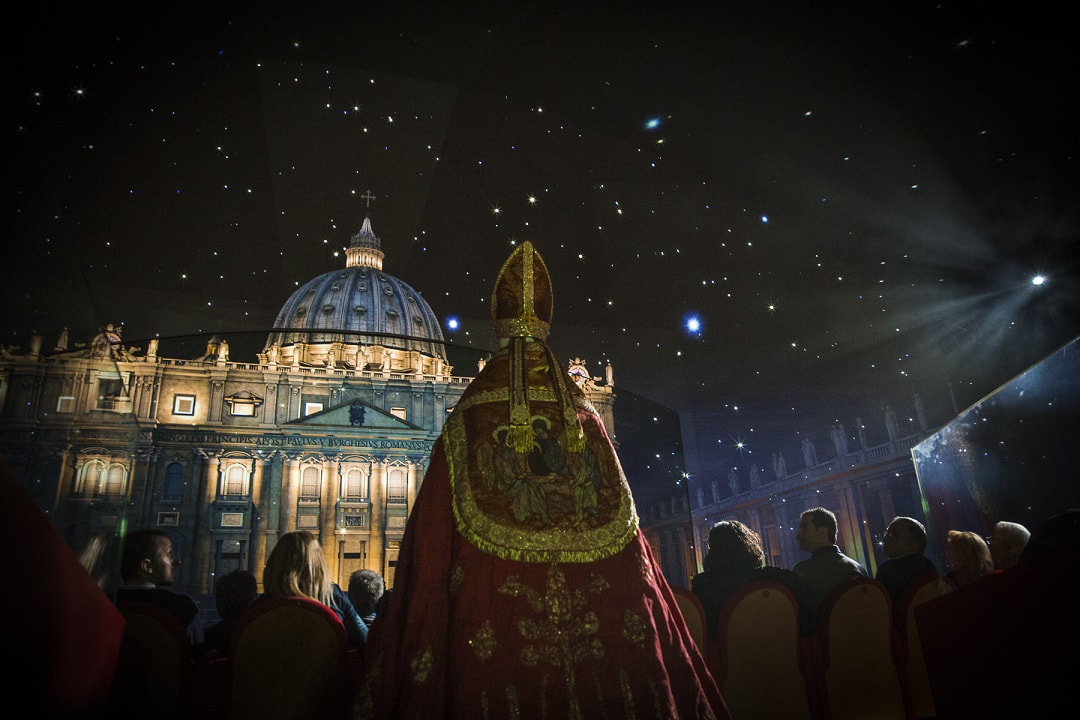
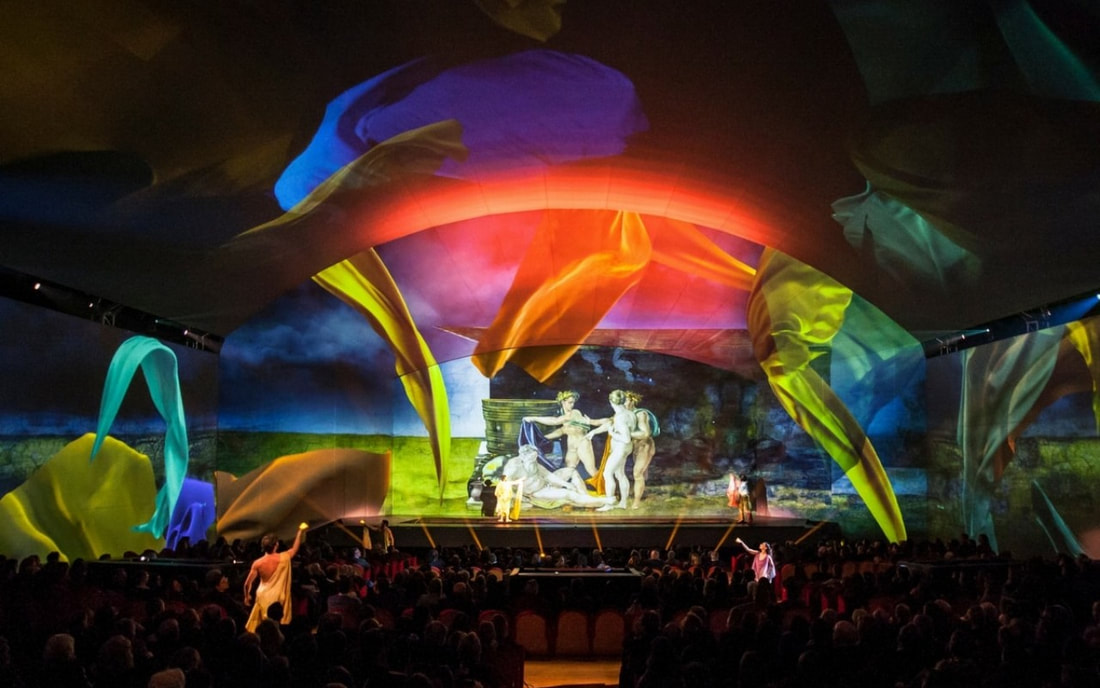
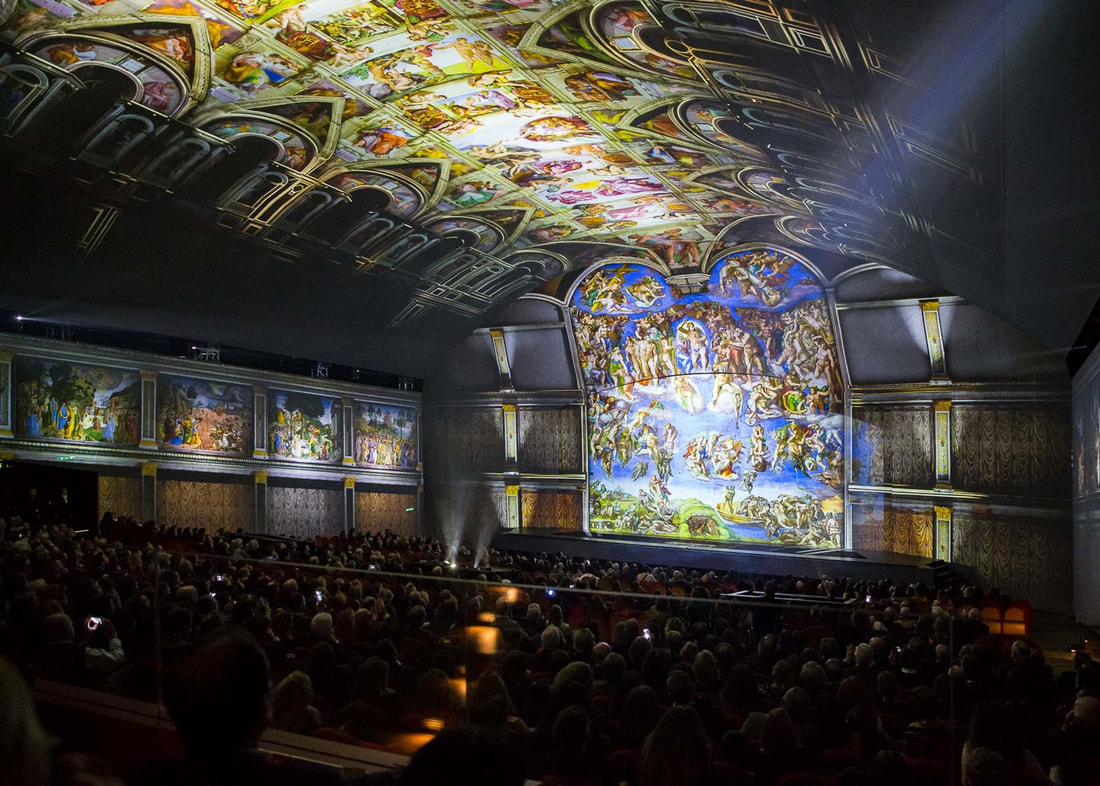 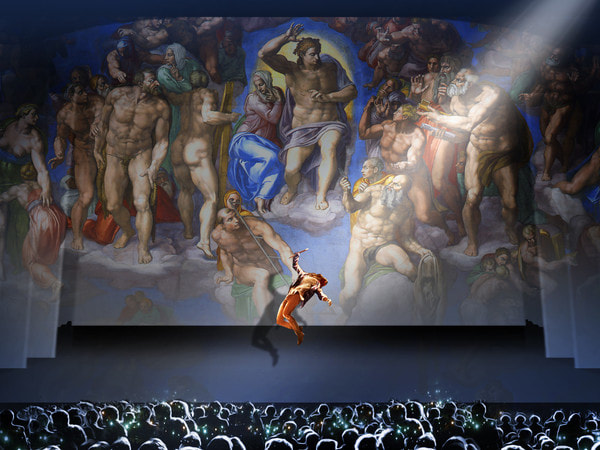 When considering a visit to the Sistine Chapel and Vatican Museum tour, perhaps you've had doubts about the long lines, heat, the expense, hours on your feet slugging through the 5 miles of museum corridors, shoulder-to-shoulder with the cruise ship tour groups, trying to soak in all of the Sistine Chapel's majesty within the 10 minutes they allow... well, you may now have a serious option for enjoying the art of the Master in a unique and new way... Artainment Worldwide Shows, along with the expertise of the Vatican Museums, have produced Giudizio Universale's Michelangelo and the Secrets of the Sistine Chapel. The multimedia and live performance show aims to be an important event for art lovers and will be a must-see for the millions of Italian and international visitors who place Rome and the Vatican Museum at the top of their Must See List. Conceived by Marco Balich, the show is the first example of an innovative format that combines the narrative of the origin of a masterpiece with the most sophisticated and technologically advanced instruments of live entertainment. For this project, Marco Balich has collaborated with world-renowned musician Sting, who composed the original theme music. The other names of the cast are stunning: the voice of Michelangelo will be by Pier Francesco Favino (known for the Disney fantasy “The Chronicles of Narnia – Prince Caspian” and the collaboration with the Oscar-winning director Ron Howard’s “Rush” and “Angels and Demons”). Together with the original theme performed and arranged by Sting, there will be new music composed by John Metcalfe, a leading figure in the contemporary pop-rock scene and producer of artists such as Morrisey, Blur and Coldplay. The show explores more than just the Sistine Chapel, but the history and works of the Master himself--Michelangelo and the 16th century Renaissance. The show is a mix of art history, theatrical performance, both photographic and physical special effects, words, images, dance and music. 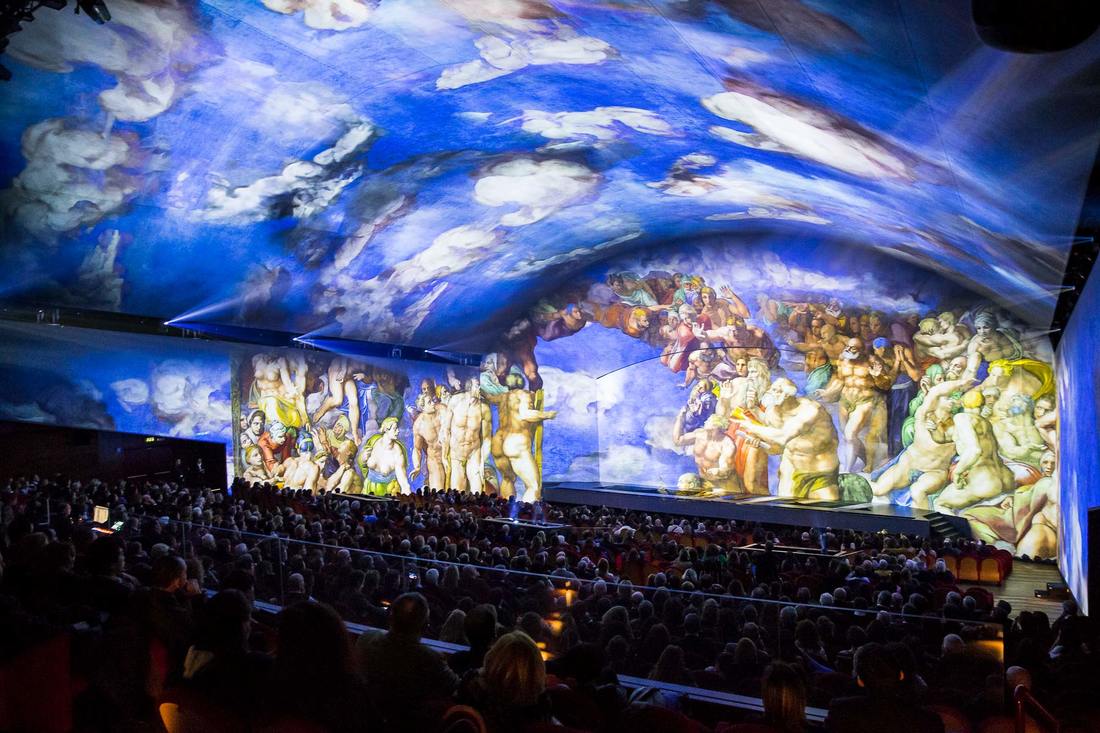 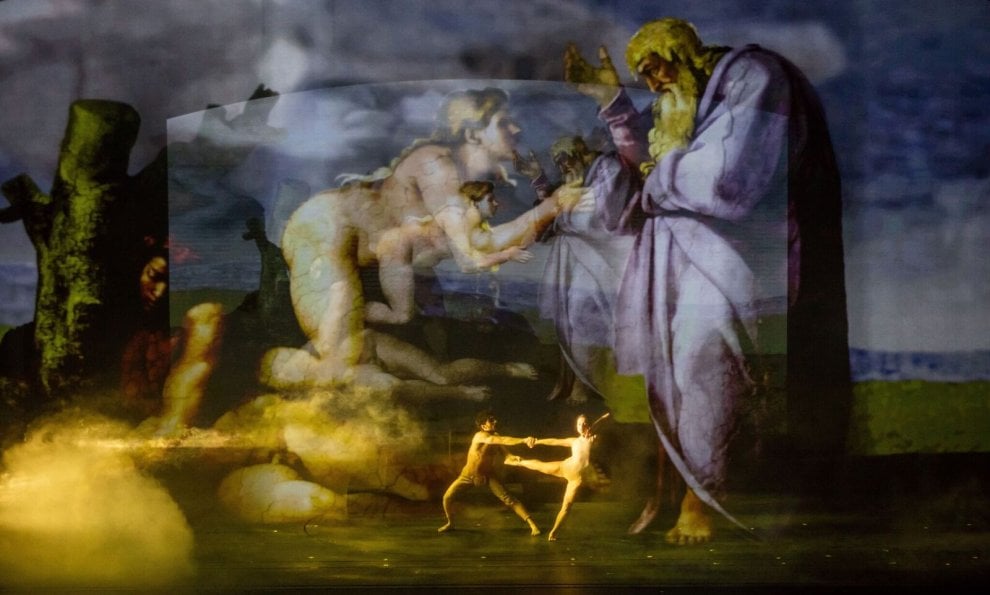 The most impressive thing about the production are its 270° immersive projections, together with larger-than-life stage effects and live performances similar to Cirque du Soleil acrobatics. During a 60-minute show, spectators will follow the story of the origin of Michelangelo’s masterpiece, from Giulio II‘s commission of frescoes of the vault to the realization of the Universal Judgment, through a reenactment of the Sistine Chapel as the place for the papal election. Through the storytelling about Michelangelo, modern special effects will animate the frescos of the Sistine Chapel to end with the wonderful Universal Judgment that will come to life throughout the space around the public. A new chapter of the Italian cultural offering, Giudizio Universale is a long-term project with a typical Italian style. It will run from March 15, 2018, at the Auditorium della Conciliazione in Rome. The audience will be able to choose to attend the show in Italian or in English (starting March 24). 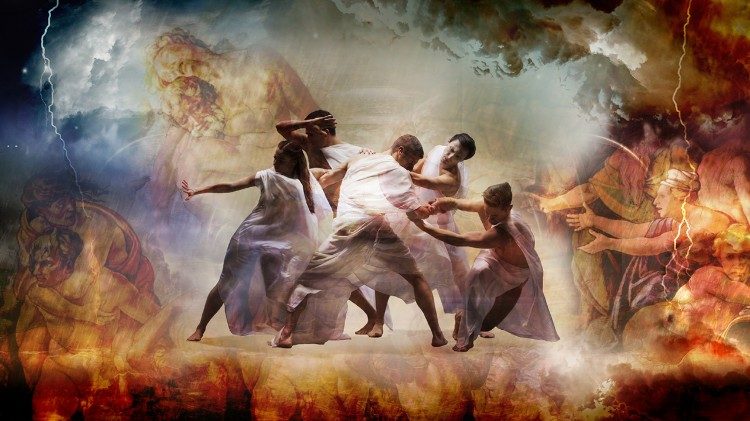
Let's hope that the production draws away some of the crowds that are overburdening the Vatican Museum itself... and that the Vatican helps to publicize the show. It's become obvious the Vatican has oversold both the Museum and St. Peters Basilica with a fear that they are destined to become a tourist destination with as little passion and meaning as a visit to Euro Disney. From the Mouth of the Bocca: This is a great option for people who normally would never spend an entire day in a hot, stuffy art museum and prefer lighter entertainment. --Jerry Finzi |
Categories
All
Archives
January 2024
|


 RSS Feed