 This is a collection of the many stereotypes I've collected throughout my travels and my research on the Italian culture... I reject the idea that any of them are true.
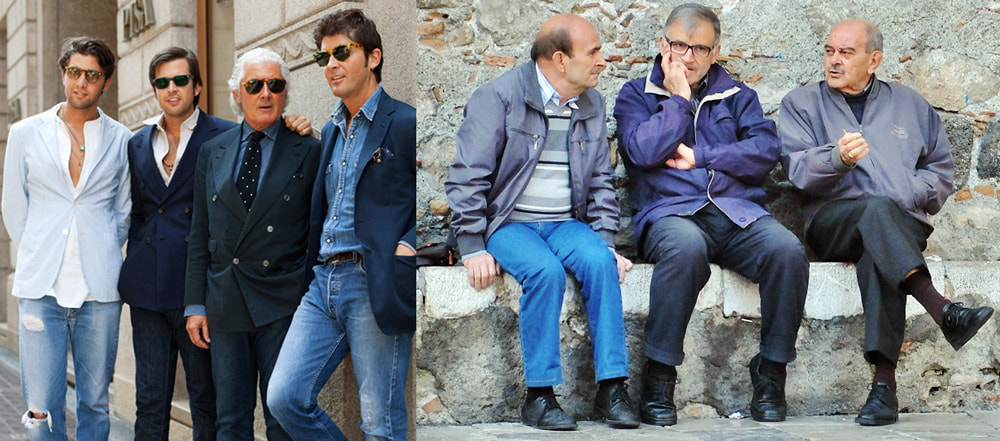
When traveling throughout Italy, we discovered a definite difference between North and South. In general, Northern Italians reminded me of more fast-paced New Yorkers as opposed to the more laid-back lifestyle and attitudes of Rural America. This is not to say that we didn't find many nice people in both the North and South, and that we didn't find some real jerks in both regions as well. People are people. Stereotypes are ridiculous. Take people for what they are--how they present themselves.
A supposed wise man once said, "You've gotta take the good with the bad". No thanks. I'll look for the good people, no matter where I am and will always reject the bad. I've heard that Northerners refer to the South as the "Mezzogiorno". This word basically means high-noon, when the sun is at its highest and brightest. Northerners use it to describe the sunnier and sweltering South. I will remind all Italians that the same sun shines on all of them. It's no brighter or darker in the North or the South. Same sun... Same people... Same heat... --Jerry Finzi  Watch just about any old movie filmed in Italy and more than likely they'll be flirting... especially the stereotype of an incorrigible flirt coming on to a woman. An old gent pursing his lips to his fingers letting a young girl know how tasty she looks, or a young regazzo following for a few steps on the street accosting a young lady with a flurry of metaphorical compliments, or it could be a supposed innocent young boy blurting out blatantly how great a woman's legs are. 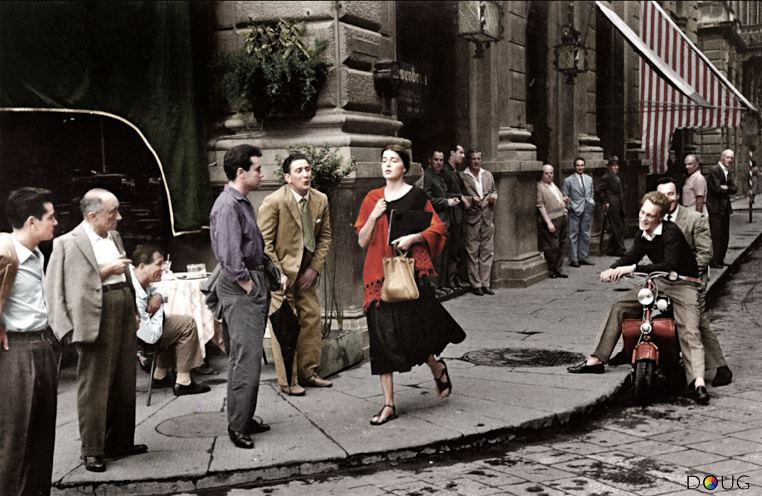 Flirting is part of life in la Bel Paese. In fact, there is a special metaphor for it... fare la civetta, which literally means "to make like an owl", or simply una civetta (an owl) meaning "flirt". The expression was first penned in 1494 when poet Poliziano used the word civettare to describe how a woman might attract a man, by cooing like an owl to attract her prey, and then silently pouncing on them with their sharp talons as their prey approaches. In reality, Italian women do flirt more like an owl than men do. They are more subtle and less obvious than the screeching of regazze hawks. A young regazza will start to walk away from her prey, but then turn her head back slightly with a half smile and side glance, and then keep walking away.... Hooked. Hair dangling over the eyes is another technique. Lowering her head and letting a few wisps of hair hide her admiring glance at a young man, but then flipping them back into place shows a guy she sees something she likes... Hooked. Subtle and blatant at the same time, una giovane bellezza (a young beauty) may be sitting at a gelateria touching a spoonful of gelato to her lips, glance over at her targeted regazzo and slyly lick her lips, putting her spoon right back to the work of enjoying her confection... Hooked. 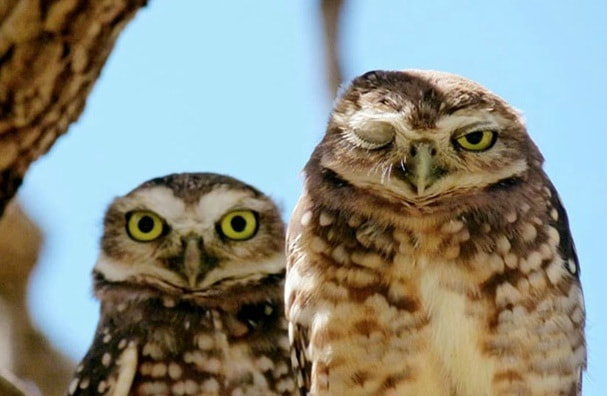 Sexy wink... definitely a flirt Amazingly--but very Italian--there are many distinct variations in the way this word is used:
The context matters, too. For instance, if someone says "Non andrai da nessuna parte con Adelina. È una vera civetta." (You won't get anywhere with Adelina. She's a real tease.") Most men stay clear of a tease once they become away of their game. Curiously, there is even the giacca civetta (owl jacket). This is the second jacket a man leaves over the back his chair at work so the boss and co-workers think he is somewhere in the building... when in reality he is out of the office wearing his other jacket (metaphorically or otherwise) while fare la civetta. Even more interesting, I recently discovered the expression Italians use for "bait and switch" when a company advertises one cheap product (the owl cooing) just to trick you into buying their more expensive one (the talons)... Produtto civetta! Perhaps Italian men have gotten a bad reputation, mostly from stories of them pinching girls behinds or following aggressively down the street. In fact, Italian men are Mama's boys, very romantic and won't marry until they find l'angelo perfetto (the perfect angel), or one as worthy as Mama. Their flirting can also be very direct, but often in poetic praises: "Hai degli occhi bellissimi." (You have beautiful eyes.) "Mi piace il modo in cui ridi" (I like the way you laugh). "Il tuo sorriso è davvero fantastico!" (Your smile is really awesome!) "Ho visto che mi stavi guardando e ho pensato di venire qui a fare due chiacchiere." (I saw you were looking at me and I thought I could come over and chat). "Complimenti alla mamma." (My compliments to your mother). "Nel cielo manca un angelo?" (Is heaven missing an angel?) "Ti sei fatta male cadendo dal cielo?" (Did it hurt when you fell from heaven?) In English these pick-up likes might sound corny... in Italian, just try to resist... --Jerry Finzi 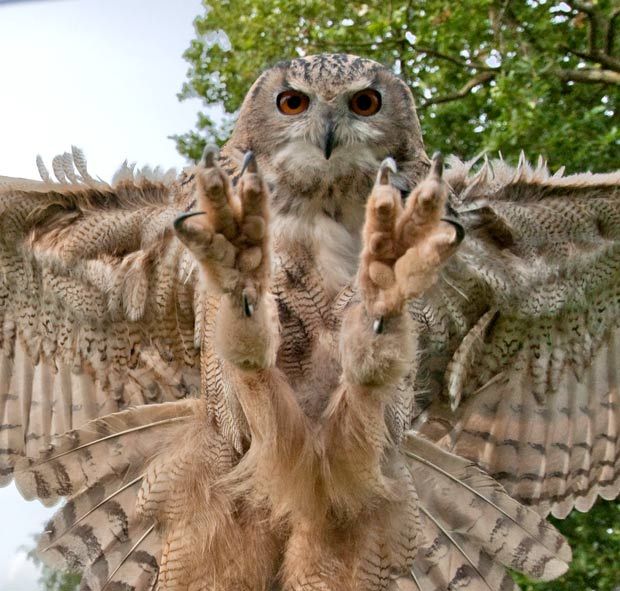 I've got you... You're MINE!  What does Furbo mean? Click Here.
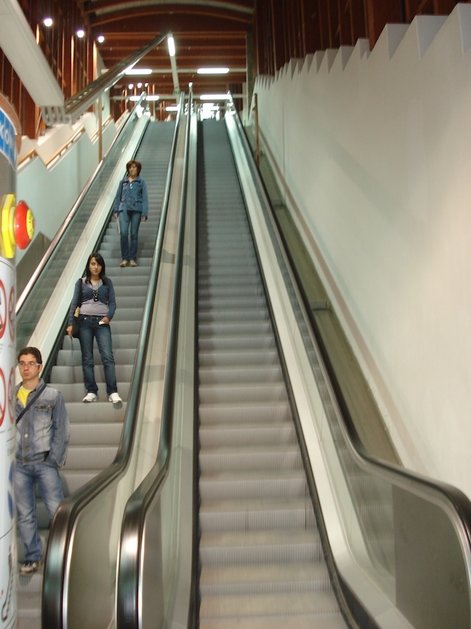
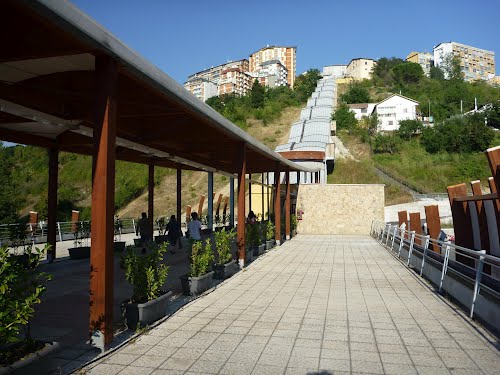
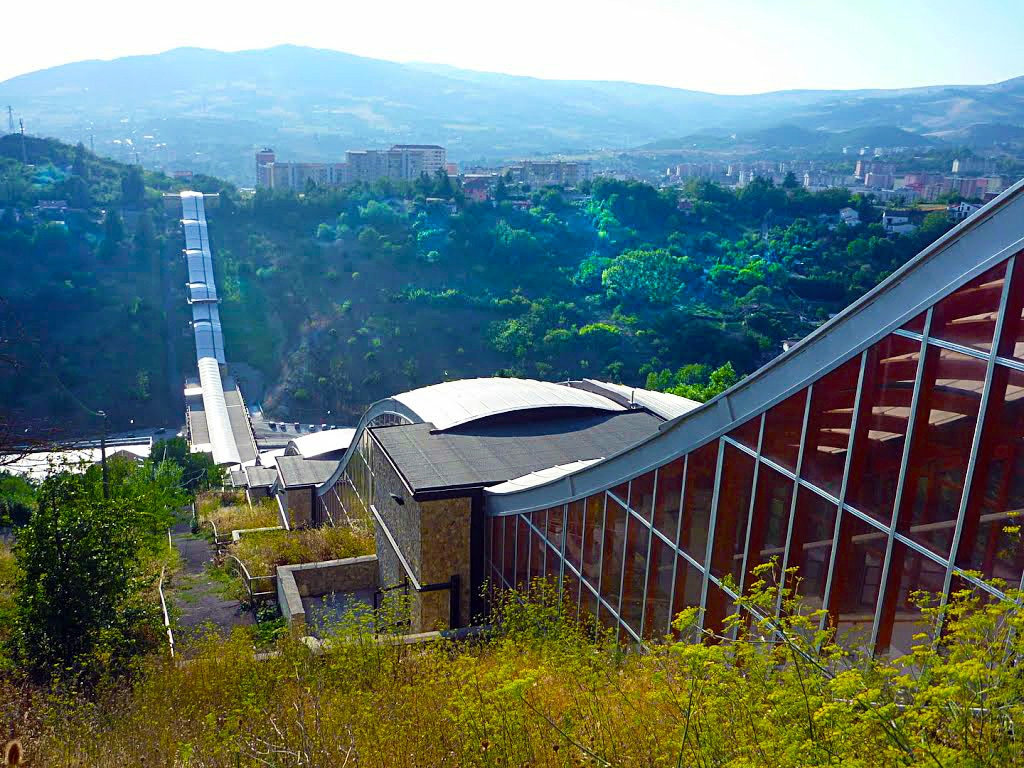 Basilicata is a hilly, mountainous region, and its capital, Potenza sits at 2700 feet above sea level--the highest elevation of any regional capital in Italy. It has a medieval historic center on the top of one hill, and a much newer part of the city on another, with a 300 foot dip in between. People need to commute to work from the historic center to the other hill to work in modern government offices, retail outlet stores and even a conservatory of music. Multiple modern apartment towers on that hill also have people commuting the other way around--to the old town.
Vito Santarsiero, who spearheaded the project during his 10 years as mayor, has been optimistic that interest will grow as word spreads about Potenza’s attractions. He is no longer the mayor. The Scale Mobile Santa Lucia has been plagued by problems ever since it opened... mechanical breakdowns, cost overruns, lack of use, safety, grafitti, and even "up-skirt" weirdos photographing ladies panties as they rode up the escalators. To me, it seems the whole design has a couple of major flaws. First of all, on the Via Tammone side (the new town), there is only the entrance building for the escalator system. There is nothing there. No parking lot--so people needing to get to the old town have somewhere to park right next to the escalators. It;s not that there isn't space for a public parking lot--there is a hugh grassy field laying empty right there. There is no piazza, no park, no bar or cafe, no where for people to mingle, meet and take in a view of the old historic town on the opposite hill. And even if there was a little piazza with a view, there would be nothing nice to look at. It seems that some time ago, local politicians gave permission to builders (meaning, they were paid off) to erect tall, ugly, modern apartment buildings which blocked the view of the old town. They are built along the edge of the old town right in front of all the historic structures. There is a beautiful bell tower, but you can't see it. There are clay tile roofs, but they too are blocked. Perhaps I tuned in to this because of where I grew up on the Jersey Palisades across from Manhattan on the Hudson River. When I was a kid, crooked politicians sold the citizens a bill of goods about their taxes going down (never happened) as many high rise apartment buildings went up--blocking the view from the older historic homes along the boulevard. Now, when you look back to New Jersey from Manhattan, there are parts of the Palisades that are nearly wall-to-wall high risers. I have never seen this in Italy. More typically, Italians are incredibly proud of their hilltowns and their views. I can't tell you how many wonderful little outdoor spaces I've discovered right at the edge of the hilltop view of a valley below, the sea, or mountains. I've seen large piazzas, tiny vest pocket parks, children's playgrounds, or even just a simple promenade with benches for taking a stroll during the evening passeggiata with your family or friends after dinner. There is nothing substantial on the modern town side of this "escalator system" for several blocks. It's just sort of--there. Now don't get me wrong. I'm a big fan of public mobility projects in Italy, especially helping people get from a low part of a town to the highest parts. There are literally thousands of hilltowns in this mountainous country. In San Gimignano, I welcomed the elevators that took us up--and then back down to the old town from the public parking lot below the historic center. And I'm sure visitors parking below the "Under the Tuscan Sun" hilltown of Cortona appreciate the outdoor escalators that take them from the parking lot up almost 200 feet to the Piazza Garibaldi. The Potenza escalators made some people's pockets fat, but was there really a need for them? --Jerry Finzi
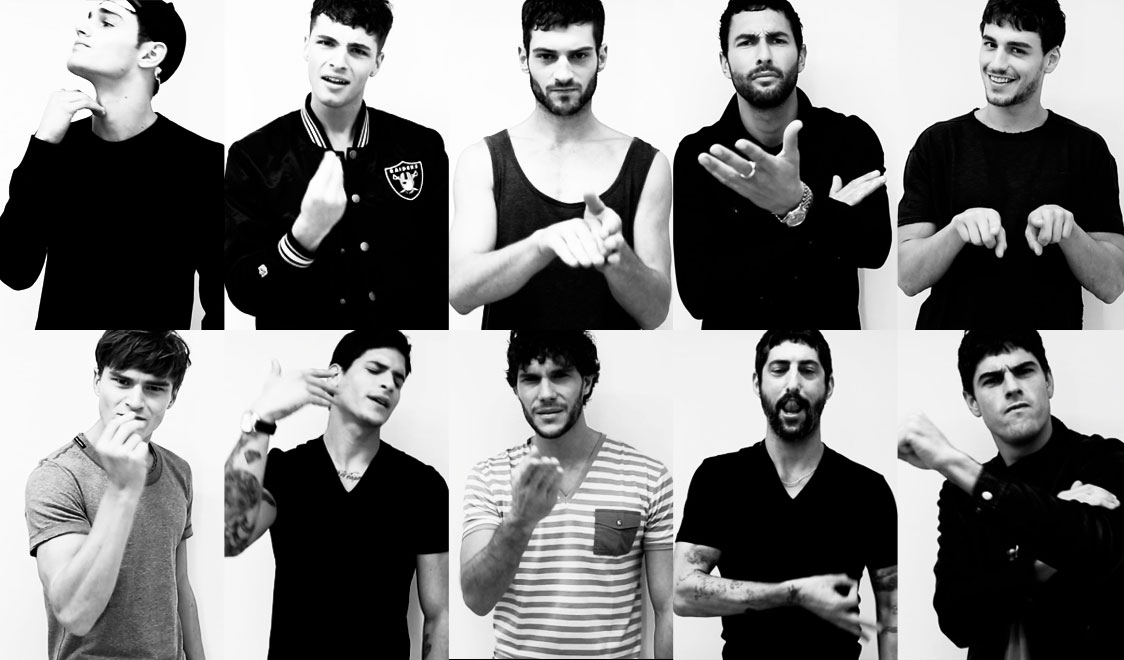 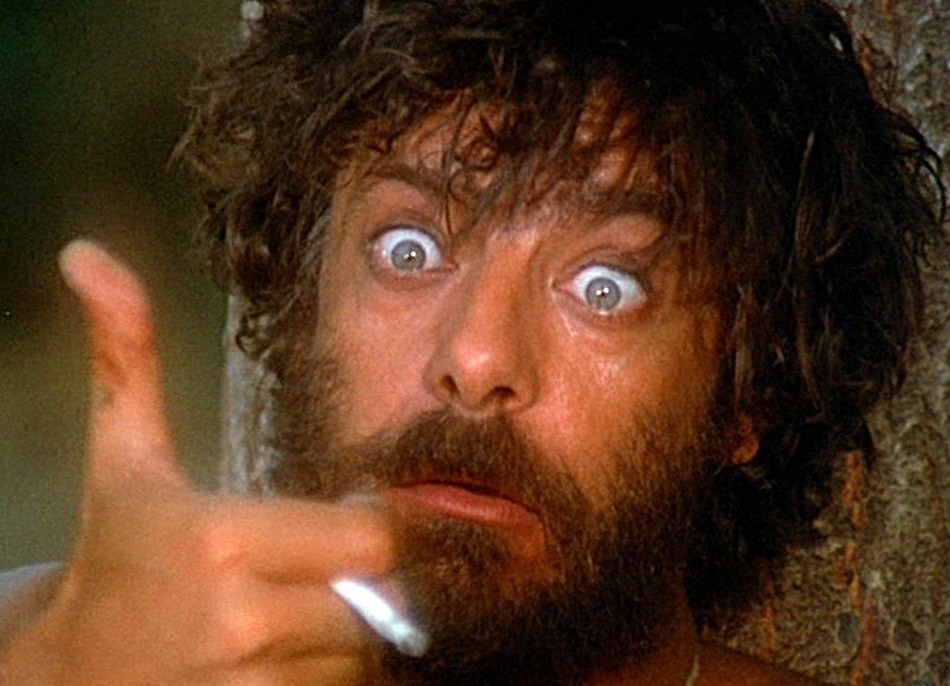 Giancarlo Gianini added his eyes into his sign language Giancarlo Gianini added his eyes into his sign language We've all seen Italians talking with their hands, waving them wildly in the air, sometimes right into the face of the person they are talking to. To the onlooker it seems random, yet it does seem tied into their facial expressions, which will change swiftly depending on the gesture being used. It's led people to paint a caricature of every Italian, although most Italian Americans don't have a clue about this unwritten language. Yes, it's a language in and of itself. 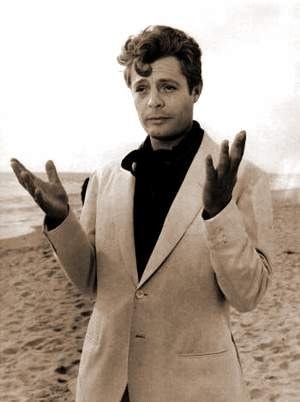 Marcello Mastroianni was always good with his hands--just ask Sophia Marcello Mastroianni was always good with his hands--just ask Sophia Where did it start? What's the reason? It more than likely started in the port cities of Italy after the Roman Empire. I say after, because before that Latin was a widely spread language. After the fall of the Roman Empire, imported languages started taking over, as conquerors and immigrants came from many different parts of the ancient world: The Carolingians (mixing early German and French into northern Italy), The Visigoths (mixing German, Spanish and French), the Normans (descending from Vikings from Northern France, they took over Southern Italy), Saracens (Muslims that invaded southern Italy and settled in Sicily), the German tribes (in pre-Christian times and in the middle ages), French (taking over northern Italy in the 1400s) and Austrians.  "Furbo", Watch Out, Pay Attention "Furbo", Watch Out, Pay Attention Leaving Latin Behind Latin itself morphed into what we now call the Italian language. But even "modern" Italy didn't become a cohesive nation until the 1860s, and still today Italians are very region-centric, with many varied dialects still spoken throughout the country. One example I witnessed is on the train from Bari to Rome. The announcements were in three languages: English, Italian and Southern Dialect. And believe me, Dialetto sounds very different than "proper" Italian--my Dad spoke it. He was from Molfetta. My Mom couldn't understand him. She spoke another Dialetto from Naples. 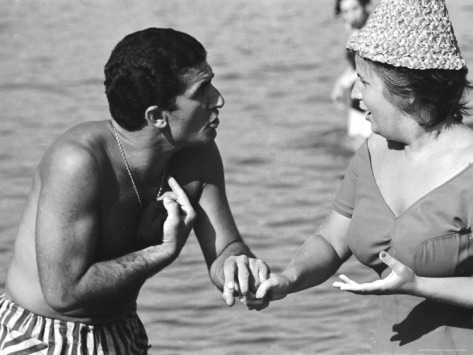 The port cities, like Naples, Venice, Bari or Palermo needed a way to communicate with the many different people, all speaking different tongues. Every so often a a new population and ruling class would be established, depending on who the conqueror was. Hand gestures became a necessity in Italy, and it remains today a large part of how people communicate. For this reason, this might make things easier on travelers to Italy as Italians have many ways of getting people to understand what they are saying. At the end of this post is a video of a charming Italian gent illustrating the many subtleties of hand gestures. You could learn to have an entire conversation without words! When I was a kid, my parents told me not to eat with my hands... but speaking with my hands was absolutely permitted. Ciao! --Jerry Finzi  "Americans never really get a day off. When they are on vacation, they still check for messages, file reports, talk to their boss and attend phone conferences. The vast majority of Italians don't do that. If they are on vacation, they are on vacation. They have no conversations about work, don't think about it and certainly don't call up their bosses to hear about what's going on while they're away."
What Italians Really Think about Americans: Adapting to Italian Life "While we Italians have a reputation for being welcoming, we really expect you to adapt to our lifestyle when you are visiting. If you start complaining about our Italian lifestyle and claim things were better back home, don't expect sympathy. Only Italians are allowed to point out what's wrong with our own country! Don't like our public toilets? Go back to your hotel room and stay there! You want more ice in your drink? Go to Iceland!"
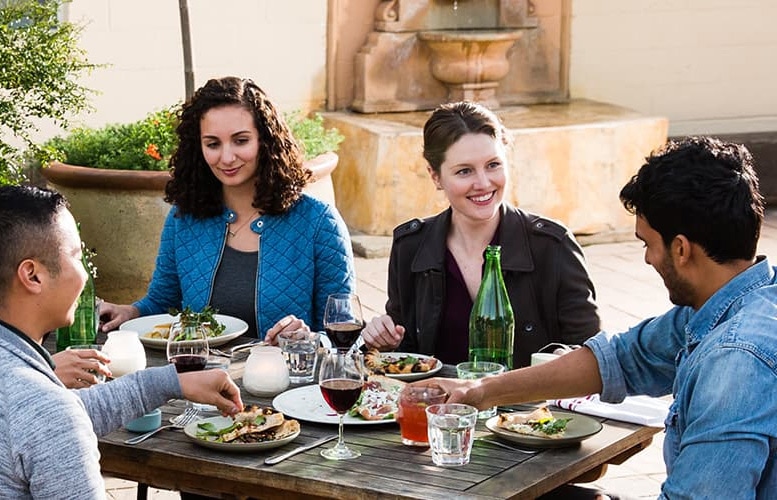 " In America, you eat first with your wallet first, your eyes second, and third with your mouth. In Italy we eat with our heart first, second and last.”
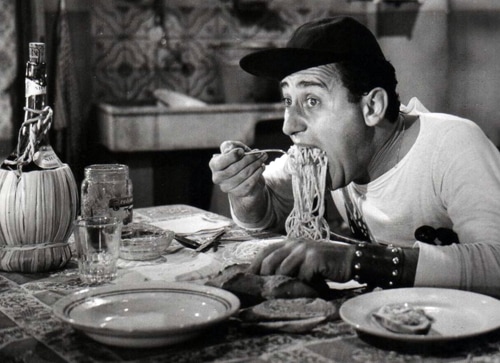 "You Americans are always concerned about your weight. Even if you are thin, you think you are overweight. If you have a big stomach, you're embarrassed and want to lose weight. You even have operations to stop you from eating too much. In Italy if I get too thin a Nonna will stop me on the street and say 'You need to eat more. You’re too thin. Also, you’re dog is too thin. EAT MORE and feed this poor dog!'"
|
Categories
All
Archives
January 2024
|
 RSS Feed