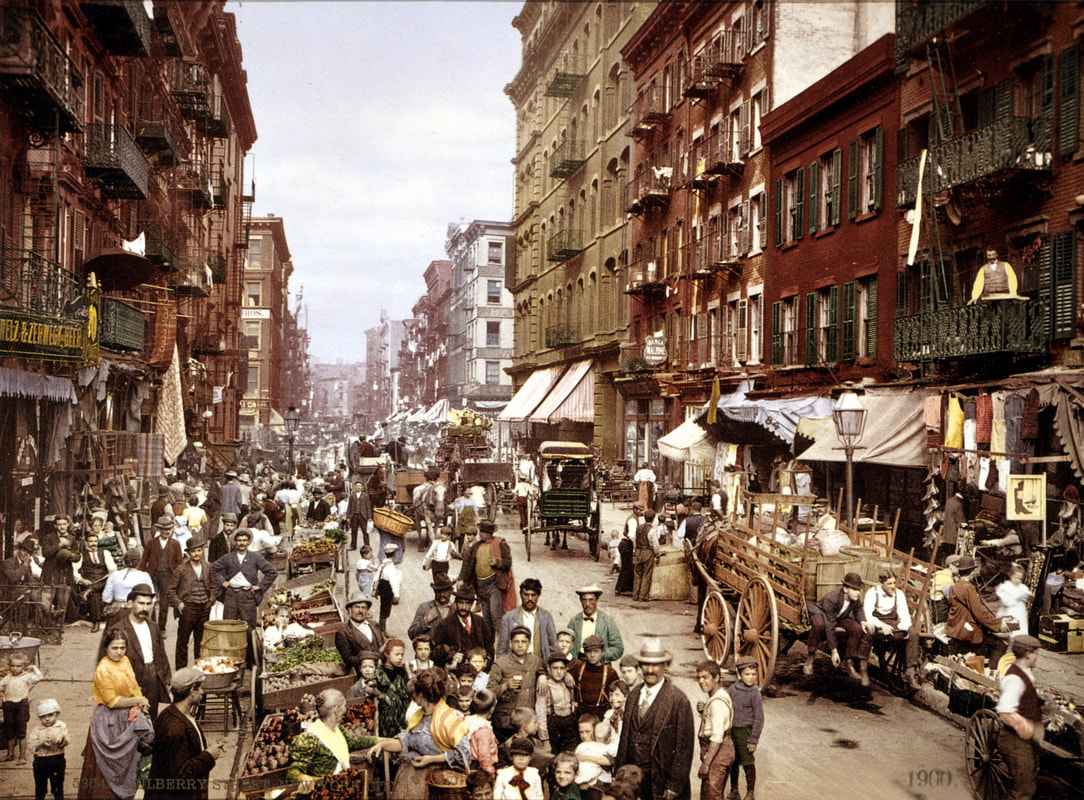
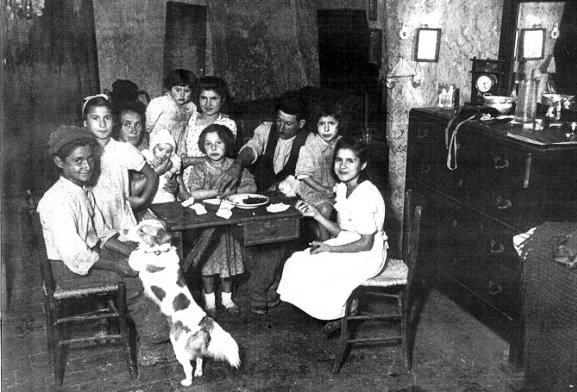
  Packed like sardines... Coming to America The Many Reasons for Coming to America Poverty was the main motivation for an Italian leaving his family and home and putting up with the hardships of traveling to America. In 1898, widespread "bread riots" plagued all of Italy, with people protesting the lack of jobs and the sudden increase in the price of wheat and bread. Other motivators were the constant political strife and the dream to return to Italy with enough money to buy land and improve their lives. Fully 80% of Italians were farmers and couldn't afford modern farming equipment to better their lives. Rural Italians lived in harsh conditions, residing in one-room houses with no plumbing or privacy. In addition, many peasants were isolated due to a lack of roads in Italy.
 It was difficult to feed such a large family in rural Italy Most Italians didn't own land, so they were indebted to landlords, who charged high rents and took a portion of their crops. Higher wages in America--as often falsely advertised by many flyers produced by steamship companies--proved to be an attractive draw. AN Italian contadino who farmed year-round might earn 16-30 cents per day in Italy. A carpenter in Italy would receive 30 cents to $1.40 per day, making a 6-day week’s pay $1.80 to $8.40. In America, a carpenter who worked a 56-hour week would earn $18. Farmers faced even further reasons to immigrate. Besides falling wheat prices, fruit and wine prices were also falling. The phylloxera virus destroyed nearly every grape vine used to produce wine. America was envisioned as a place of opportunity, with abundant land, high wages, lower taxes--and at the time--no military draft. Yes, one more reason why many Italian men wanted to leave Italy... to escape conscription into the military. But still, many wanted only to go to America, earn money and return to buy their own land. Political hardship was also a factor in motivating immigration. Beginning in 1860, la Guerra dei Contadini del Sud (the Southern Peasants War) began. This was an uprising to resist the changes that the North was forcing on the Southern provinces with the Unification. Led by mostly brigands (many of who had previously had the support of contadini), this was a type of "social banditism" who were rebelling in order to retain their small sphere of power and wealth in their rural areas. The poor contadini were caught suddenly in the cross fire. Later in the 1870s, the government took measures to repress political views such as anarchy and socialism. Many Italians came to the United States to escape political policies and warring factions.  Taking a train to an Italian port city Italian immigrants to the United States from 1890 onward became a part of what is known as “New Immigration,” which is the third and largest wave of immigration from Europe and consisted of Slavs, Jews, and Italians. This “New Immigration” was a major change from the “Old Immigration” which consisted of Germans, Irish, British, and Scandinavians and occurred earlier in the 19th century. Between 1900 and 1915, 3 million Italians immigrated to America, which was the largest nationality of “new immigrants.” These immigrants, a mix of both artisans and peasants, came from all regions of Italy, but the largest numbers were from the mezzogiorno--Southern Italy. Between 1876 and 1930, out of the 5 million immigrants who came to the United States, fully 80% were from the South, representing such regions as Calabria, Campania, Abruzzi, Molise, Apulia and Sicily. The majority (2/3 of the immigrant population) were farm laborers or laborers, or contadini, as noted on the ship manifests when arriving at Ellis Island. The laborers were mostly agricultural and did not have much experience in industry such as mining and textiles. The laborers who did work in industry had come from textile factories in Piedmont and Tuscany and mines in Umbria and Sicily. Though the majority of Italian immigrants were laborers, a small population of craftsmen also immigrated to the United States. They comprised less than 20% of all Italian immigrants and enjoyed a higher status than that of the contadini. The majority of craftsmen were from the South and could read and write; they included carpenters, brick layers, masons, tailors, and barbers.
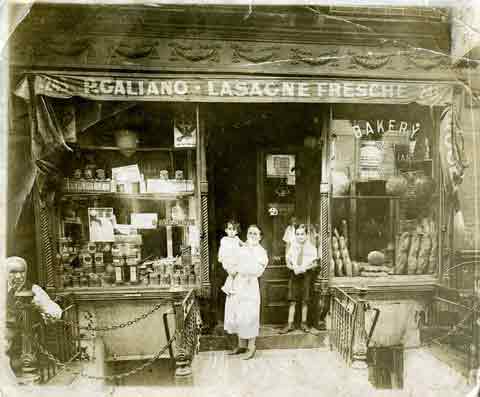
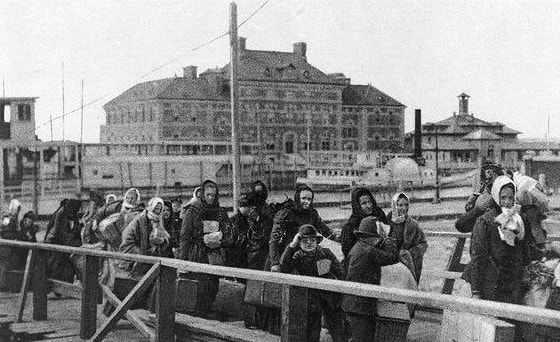 Ellis Island newcomers The first wave of Italian immigration began in the 1860s after the Unification of Italy. By 1914, the number of Italians immigrating to the United States reached it's peak at over 280,000 making the journey to America. Since there was a larger population and higher skilled laborers (such as miners) in the industrial northern Italian provinces, a higher number emigrated from the North. But even though the South had a sparser population with less labor skills, more per capita came from these southern regions. In fact, by 1915, the number of emigrants from the South nearly matched those coming from the North. 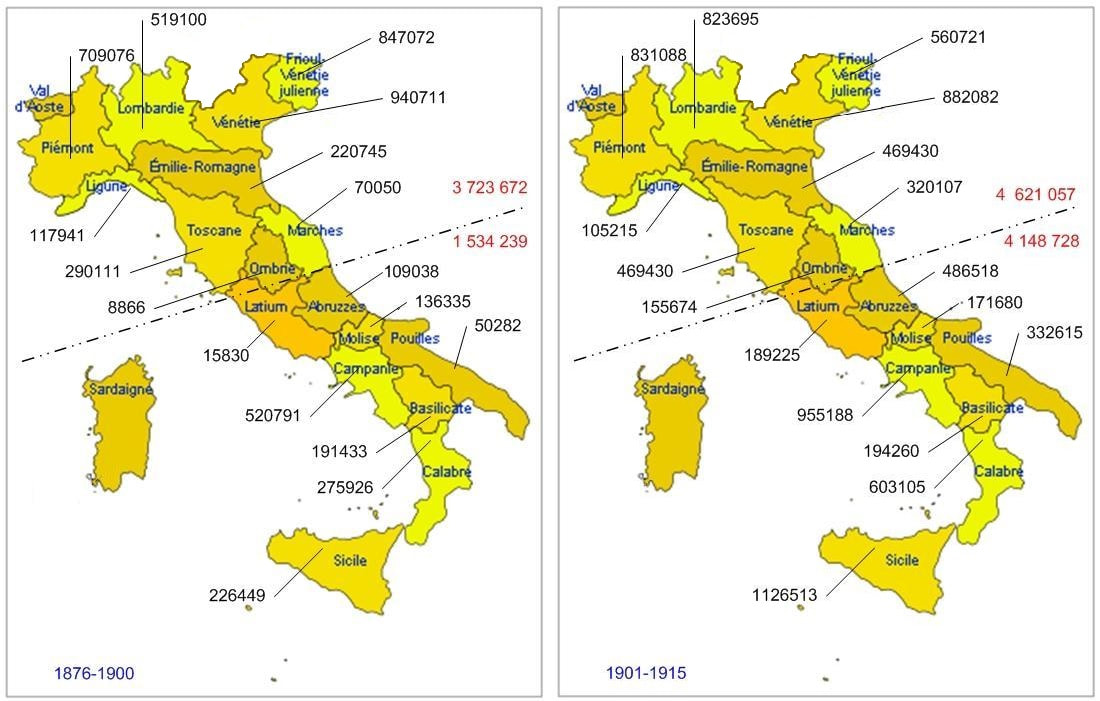 Italian Immigration by region  Due to the large numbers of Italian immigrants, Italians became a vital component of the organized labor supply in America. They comprised a large segment of the following three labor forces: mining, textiles, and clothing manufacturing. In fact, Italians were the largest immigrant population to work in the mines. In 1910, 20,000 Italians were employed in mills in Massachusetts and Rhode Island. An interesting feature of Italian immigrants to the United States between 1901 and 1920 was the high percentage that returned to Italy after they had earned money in the United States. About 50% of Italians repatriated, which can be interpreted as many having trouble assimilating into the American way of life. Some of this can be blamed on the blatant racist views toward Italians and refusal to hire them for better paying jobs. In the large cities, tenements were essentially slums. If an immigrant couldn't get a decent living wage, they might reconsider trying to raise their family in America. Because Italian immigrants tended to be gregarious--often clustering together in "Little Italys", often they didn't feel there was a need to learn English, another factor in not being able to secure better paying jobs. Many might have fallen into the trap of getting housing or jobs through a padrone, a boss and middleman between the immigrants and American employers. The padrone was an immigrant from Italy who had been living in America for a while. He at first might seem helpful in providing lodging, functioning as safe "bankers" or money changers (often short changing), and found work for the immigrants (albeit, for a percentage of their earnings). Often, they would get the work that they could do in the apartments they rented to them... making silk flowers, rolling cigars, sewing, etc. After a few years of paying a percentage of their salaries to these padrone, many immigrants got discouraged enough to return to the homeland. At best, these situations became indentured servitude, at worst slavery. Child labor was also a product of these padrone, filling sweat shop factories with children as young as 10 years old. 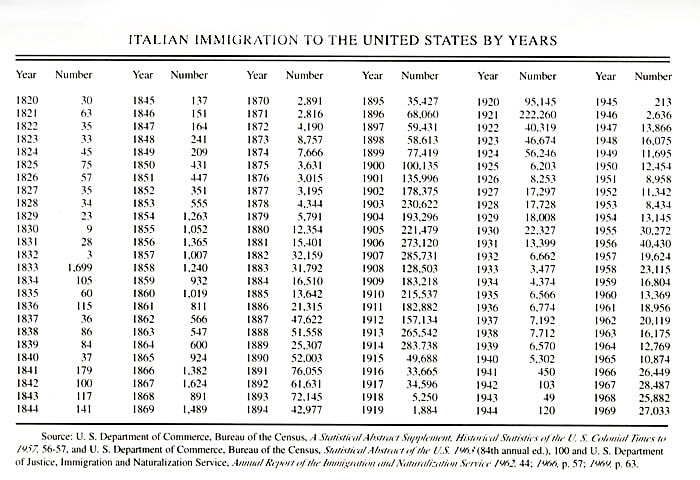 Prejudice Rears its Ugly Head Both immigrant contadini and those with skills faced economic as well as ethnic prejudices upon entering the labor force in America. The poor economy caused hostility toward Italians and many were labeled as strikebreakers and wage cutters from 1870 onward. American workers already feared the new mechanization in factories was the cause of taking away their jobs. Job bosses used Italians to fill their jobs as scabs during labor strikes. Prejudices were especially aimed at (as perceived) darker skinned Southern Italians who became scabs during strikes in construction, railroad, mining, long shoring, and industry. The Italian workers were called derogatory names such as:
 Laying trolly tracks Italians were the only workers to work along side black people and employers preferred Slovaks and Poles to Italians. At the time, it was said that "railroad superintendents ranked Southern Italians last because of their small stature and lack of strength”. In the mining industry especially there was an ethnic hierarchy: English-speaking workers held the skilled and supervisory positions while the Italians were hired as laborers, loaders, and pick miners. It was not until the 1920s that Italians became more integrated into the American working class, regardless of whether or not they spoke English. More immigrants started to work at semi-skilled jobs in factories as well as skilled positions but one-third of the population remained unskilled. In trade unions, meetings were held in English and Italians were not elected to official positions.
 Dad's name on the Ellis Island wall - Saverio Finzi My Grandfather, Sergio Finzi had made two preliminary Voyages across the Atlantic trying to establish connections and work so he could bring his wife and children over. He was a tailor, a skill he brought with him from Molfetta. They were poor. My father told of not having enough coal or wood to fire up their kitchen stove--the only heat in winter. He said he and his brother walked the railroad tracks to pick up scraps of coal fallen from passing trains. They left school in the fourth grade to help the his familia scrape a living from their new home. Many Italian immigrants suffered--and endured. We are all proof if this fact. Italian immigrants--as many immigrants from other lands--help build this country. They helped defend it. They assimilated. They became citizens. Paid taxes. Sent their kids to school. And here we are... over 100 years later and many in our country are still ambivalent or even dead against immigrants. Have we really lost sight of the fact that unless we have 100% Native American blood running through our veins, that we all are descended from immigrants? Starting in 1888, photographer Jacob Riis, a Danish immigrant, in an attempt to call attention to the suffering of immigrants, photographed the Manhattan tenement slums where Italian (and other) immigrants were living in squalor. He was followed by Lewis Hines, who photographed not only the immigrants and slums but the children who were the most helpless victims of this inflicted poverty. Enjoy the slide show... and try to remember the hardships our fore-bearers went through to get us where we are today... --Jerry Finzi 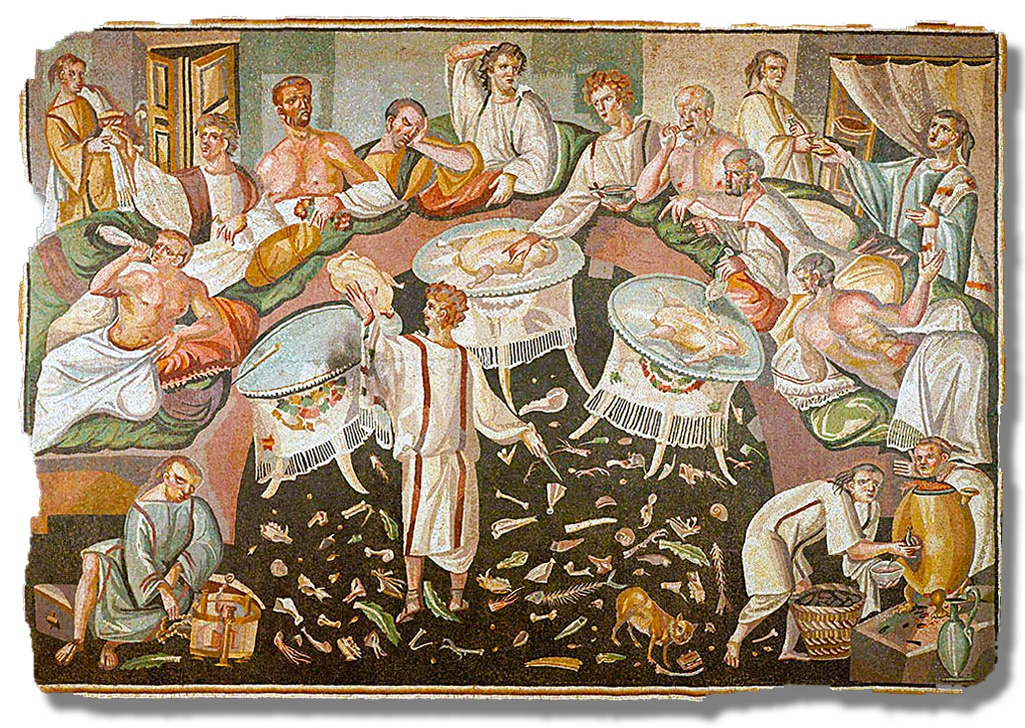 On our modern Julian calendar, March is the third month of the year, but to ancient Romans, Martius (as it was called) was the first month of each new year. It makes sense when you think about it. Right now in Italy, the flowers are blooming all over the place. Things are growing, the weather is warm again and it makes sense to think of Spring as the beginning--the birth--of a new year. The Romans celebrated holidays from the first through the Ides of March (on the 15th) to bring in their New Year. The most important celebration on the Ides was to the god Jupiter, the supreme deity, but also to Anna Perenna, the goddess of the year itself. Anna Perenna was more popular with the plebeians of Rome who drank, played games and had picnics. Later, in Imperial Rome, the Ides began a week long celebration for several various festivals. The so called "Ides" of a given month refer to the midpoint of a month, for some months (like March) falling on the 16th, and on others falling on the 13th day--all governed by the phases of the moon. The Ides on the ancient Roman calendar was on the new year's first new moon. The Romans didn't use day numbers, but counted backwards from given points in the month... the Nones (5th or 7th, depending on the length of the month), the Ides (13th or 15th), and the Kalends (1st of the following month). Of course, we all know that in modern times, the Ides of March is the day that Julius Caesar was assassinated in 44 BC. Shakespeare tells the tale in his classical play Julius Caesar... Caesar was stabbed to death by a crowd of his opponents, with Brutus and Cassius at the lead. A seer foretold that Caesar would come to an end on the Ides, but when the day came he saw the seer on the street and laughed in his face, saying that nothing bad had happened, but the seer answered back, "...Yet". 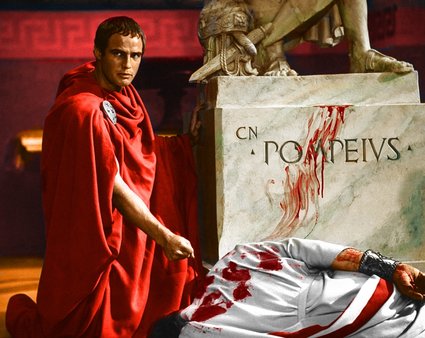  Recently, researchers think they have found the exact location of where Julius was stabbed 23 times by the group of senators... at the Largo di Torre Argentina, in the center of Rome not far from the Pantheon, known nowadays to tourists and Romans alike for the tram station adjacent to the site and all the feral cats that live among the ruins. Ancient texts always claimed that Caesar was killed in the Curia of Pompey, a theater at the site, but until recently no archeological evidence could be found. In 2012 a large concrete marker was found which was erected as a monument to Caesar by his loyal followers after his death...
All those cats seem to be wandering and waiting for Caesars return... You can hear their call... "miao, miao... miao..." Oh, I almost forgot... Felix Annus Novus! (That's Happy New Year in Latin.) --Jerry Finzi You can also follow Grand Voyage Italy on: Google+ StumbleUpon Tumblr 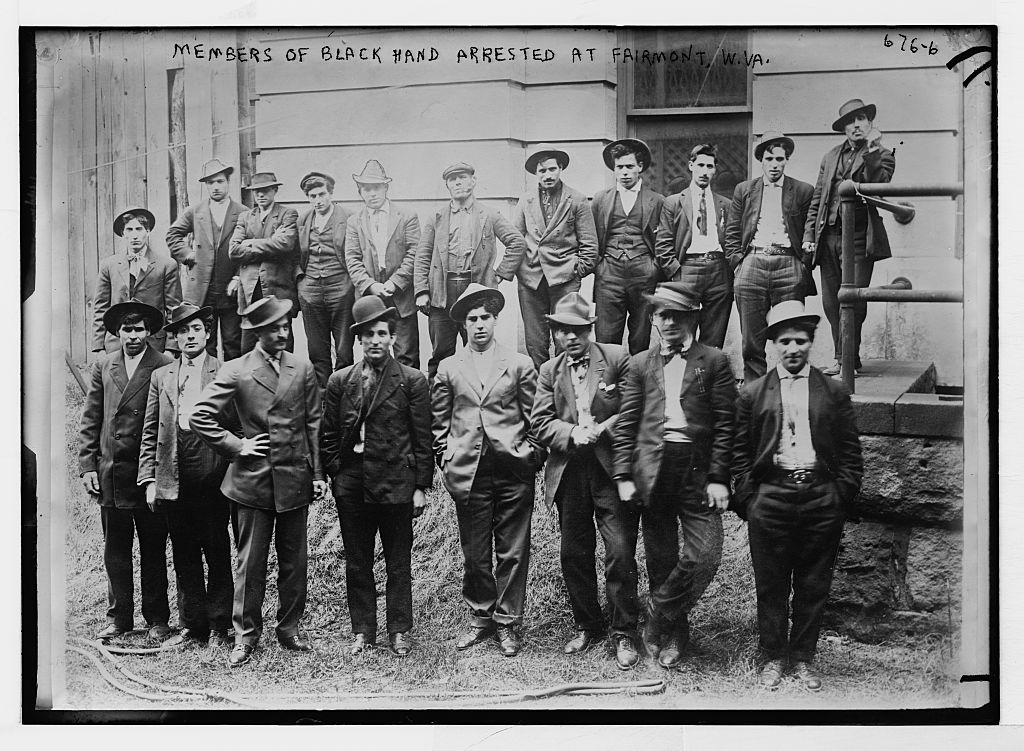 Members of Black Hand (la Mano Nera) arrested at Fairmont, W. VA.-The Mafia, more commonly known as the Black Hand in West Virginia, reared its ugly head in Marion County in 1908. The members of the Black Hand, all natives of Italy, had banded together with Frank Pisconeri as their president. They carried out a campaign of extortion throughout the county with their victims either Italians or Italians by descent.
-(Marion Co Historical Society) Black Hand (Italian: Mano Nera) was a type of extortion racket. It was a method of extortion, not a criminal organization as such, though gangsters of Camorra and the Mafia practiced it. According to a newspaper report in the New York Tribune of June 1912, the Black Hand "...really exists only as a phrase. As an organization such a thing never existed out of the minds of the police. It is a catch phrase made familiar through the newspapers, and the quick witted criminal of Latin extraction lost no time in using it as a nom de crime, which he wrote at the bottom of his blackmailing letters, sometimes - in fact, generally - adding fanciful decorations of his own, such as daggers dripping blood, revolvers spitting fire and bullets, crudely drawn skulls and crossbones and the inevitable sketch of a human hand." Origins The roots of the Black Hand can be traced to the Kingdom of Naples as early as the 1750s. However, the term as normally used in English specifically refers to the organization established by Italian immigrants in the United States during the 1880s who, though fluent in their Southern Italian regional dialects, had no access to Standard Italian or even a grammar school education. A minority of the immigrants formed criminal syndicates, living alongside each other. By 1900, Black Hand operations were firmly established in the Italian-American communities of major cities including New York, Philadelphia, Chicago, New Orleans, Scranton, San Francisco, Olean, NY and Detroit. In 1907, a Black Hand headquarters was discovered in Hillsville, Pennsylvania, a village located a few miles west of New Castle, Pennsylvania. The Black Hand in Hillsville established a school designed to train members in the use of the stiletto. Although more successful immigrants were usually targeted, possibly as many as 90% of Italian immigrants and workmen in New York and other communities were threatened with extortion. Typical Black Hand tactics involved sending a letter to a victim threatening bodily harm, kidnapping, arson, or murder. The letter demanded a specified amount of money to be delivered to a specific place. It was decorated with threatening symbols like a smoking gun, hangman's noose, skull, or knife dripping with blood or piercing a human heart, and was in many instances, signed with a hand, "held up in the universal gesture of warning", imprinted or drawn in thick black ink. According to author/historian Mike Dash, "it was this last feature that inspired a journalist writing for The New York Herald to refer to the communications as "Black Hand" letters—a name that stuck, and indeed, soon became synonymous with crime in Little Italy." The term "Black Hand" (in Italian: Mano Nera, and in Sicilian: Manu Niura) was readily adopted by the American press and generalized to the idea of an organized criminal conspiracy, which came to be known as "The Black Hand Society". The tenor Enrico Caruso received a Black Hand letter, on which a black hand and dagger were drawn, demanding $2,000. Caruso decided to pay, "and, when this fact became public knowledge, was rewarded for his capitulation with 'a stack of threatening letters a foot high,' including another from the same gang for $15,000." Realizing the extortionists would continue to demand money, he reported the incident to the police who, arranging for Caruso to drop off the money at a prearranged spot, arrested two Italian-American businessmen who retrieved the money. 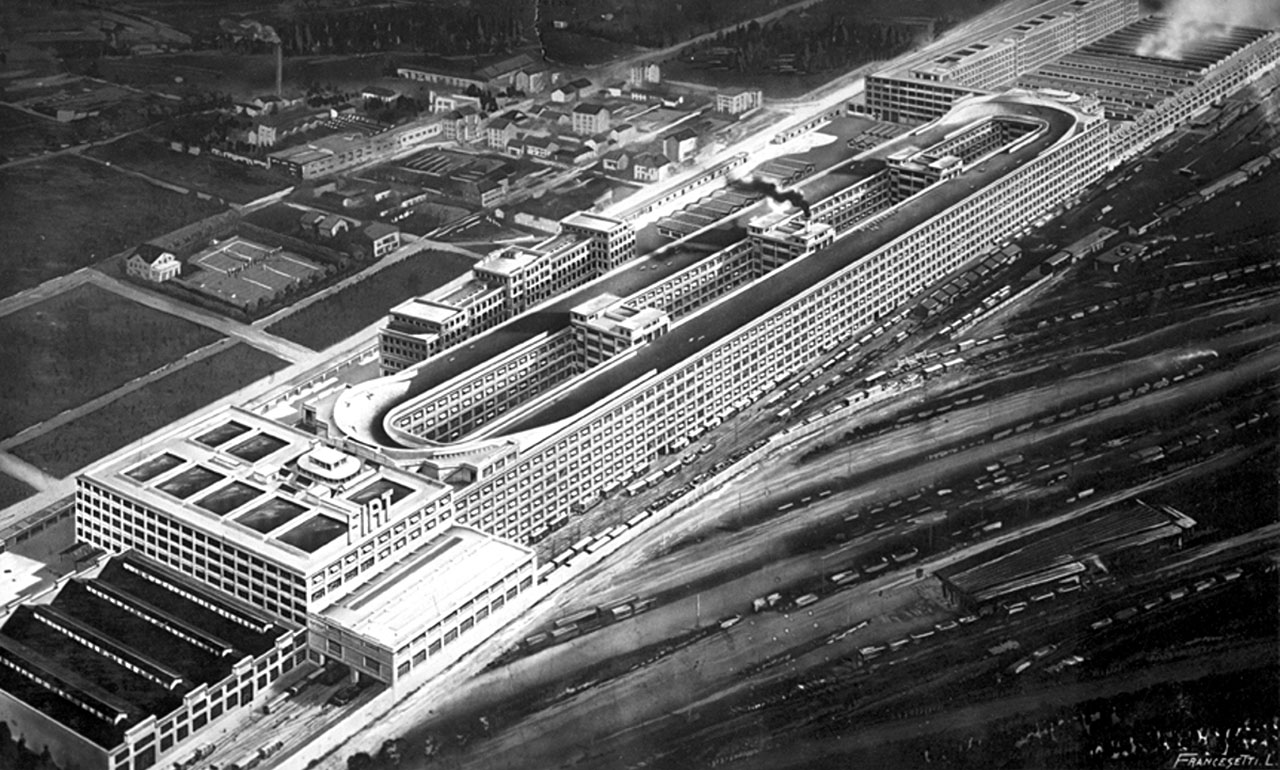 Fiat's rooftop test/race track in the Lingotto neighborhood of Turin Unlike Henry Ford's factory line, which went from one end of his huge manufacturing facility to the other, popping out a finished car at the end, Fiat did things a bit different, to say the least. The Lingotto building in Milano was designed by architect Matté Trucco, had five floors, with raw materials going in at the ground floor, and cars built on an assembly line spiraled up through the building. Finished cars emerged at the top level and immediately were driven on the rooftop test track to ensure quality control. Built between 1916 and 1923, it was the largest car factory in the world at that time. 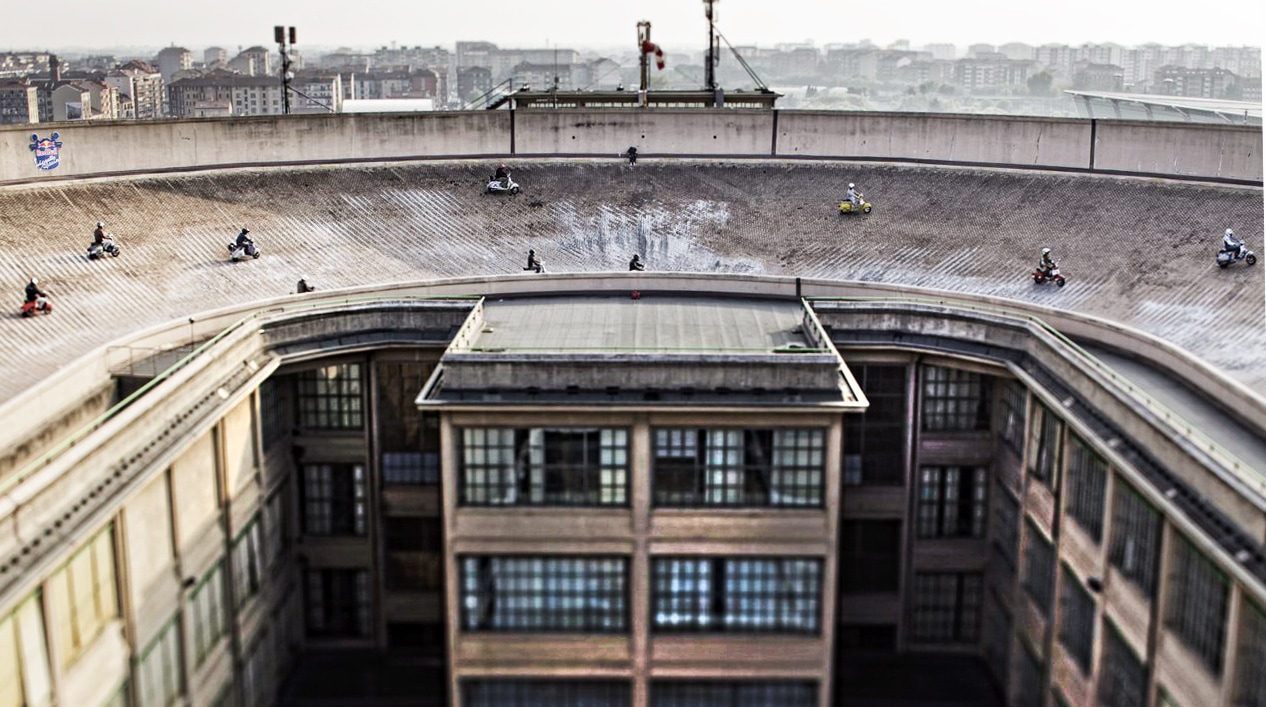 One of the banked turns at the Turin track This factory was closed in 1982, but public outcry over a plan to demolish the structure caused it to be redeveloped into a more modern use. The structure was turned into a modern public complex containing a shopping mall, concert halls, theater, convention center and a hotel. The work was completed in 1989. The test track was saved, and can still be visited today on the top floor of the shopping mall and hotel.  The spiraled assembly line ramp leading up to the rooftop track in Turin A scene from the film, The Italian Job from 1969 with Mini-Coopers and police in a car chase on the Fiat rooftop track, curiously, they drove Mini-Coopers and not Fiats. 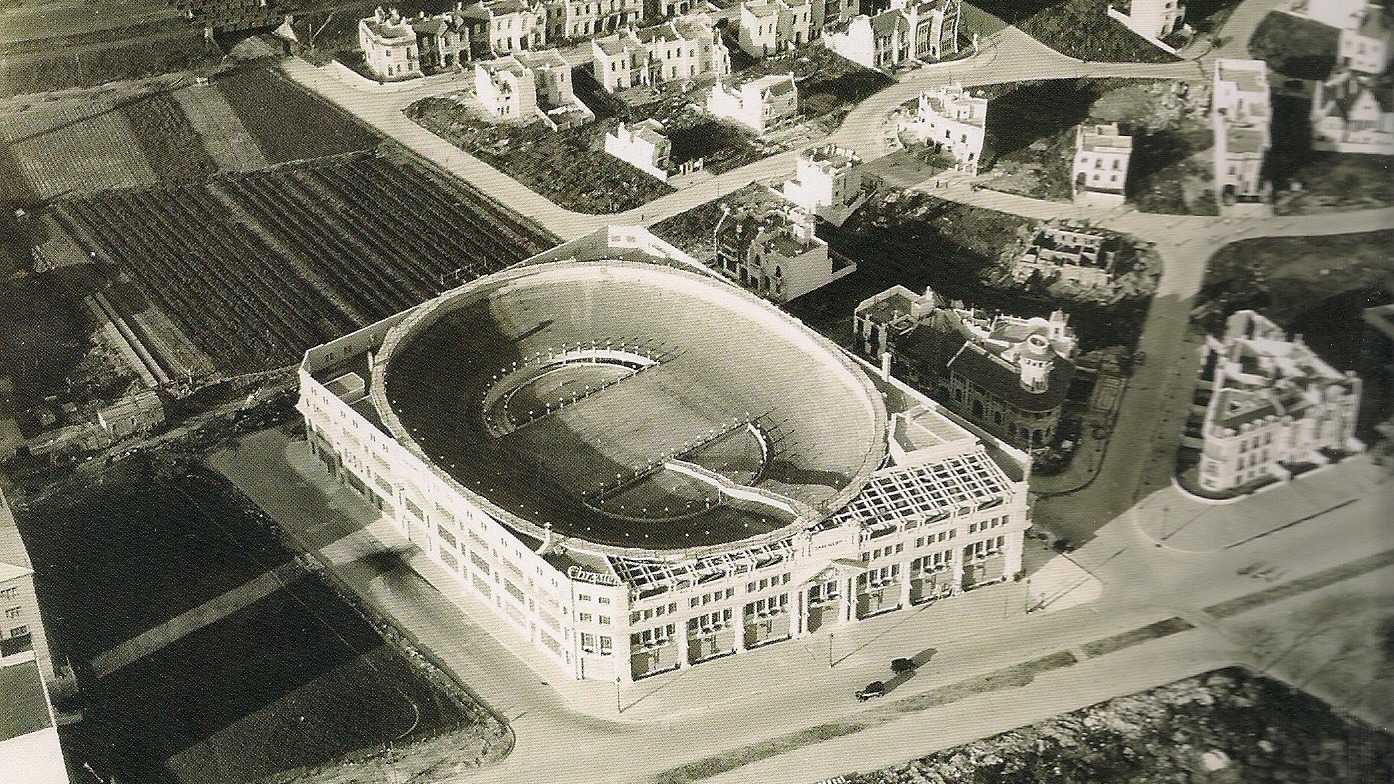 Fiat also built a test track on the rooftop of its facility in Buenes Aires 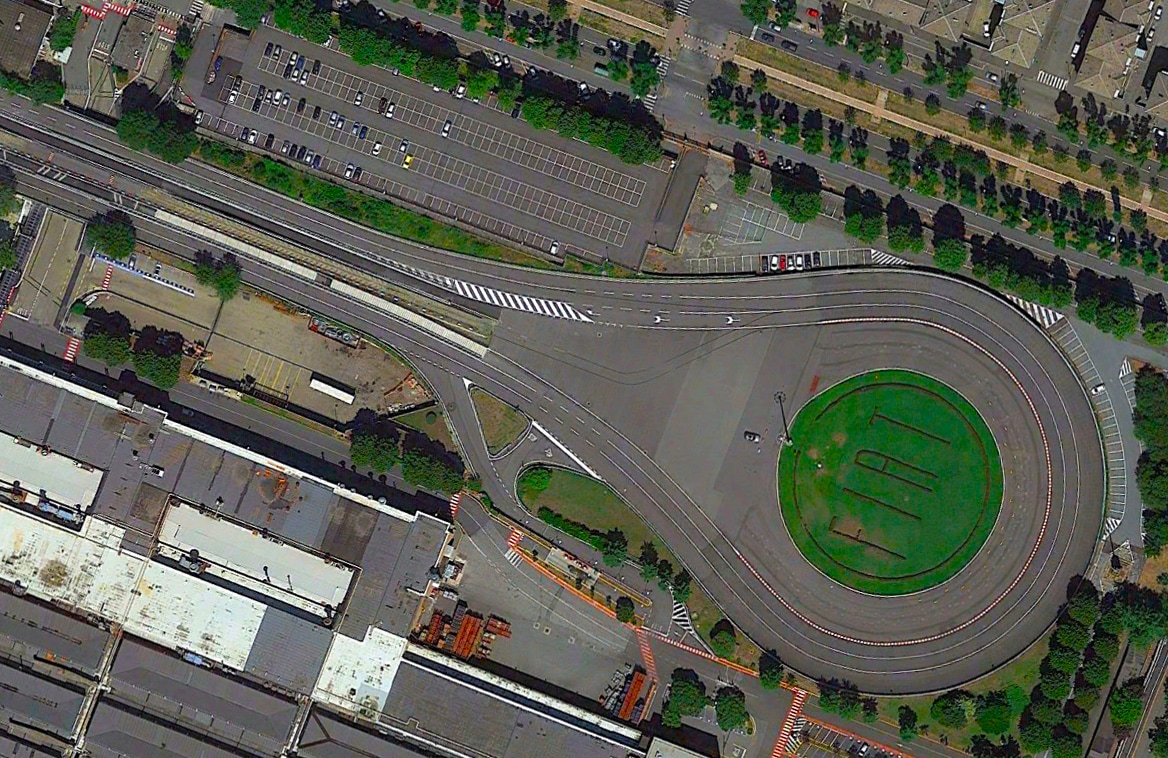 A Google Earth view of the current test track in Turin --Jerry Finzi
If you CARE, please SHARE. Ciao! 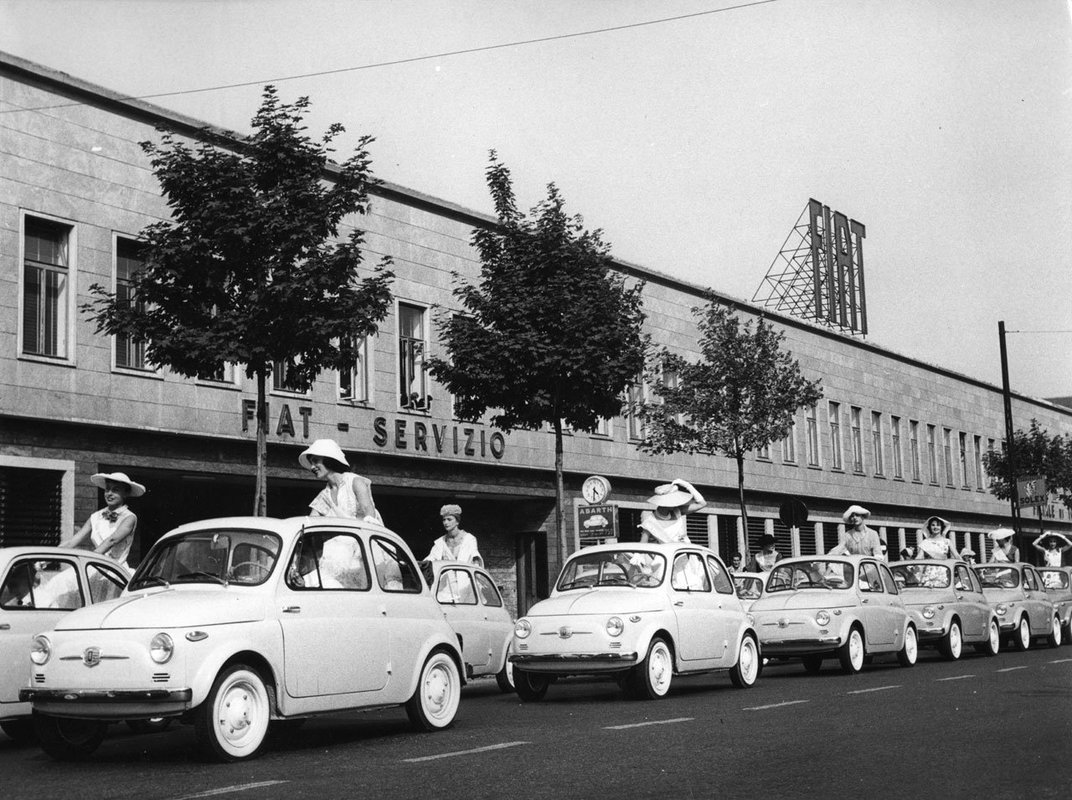
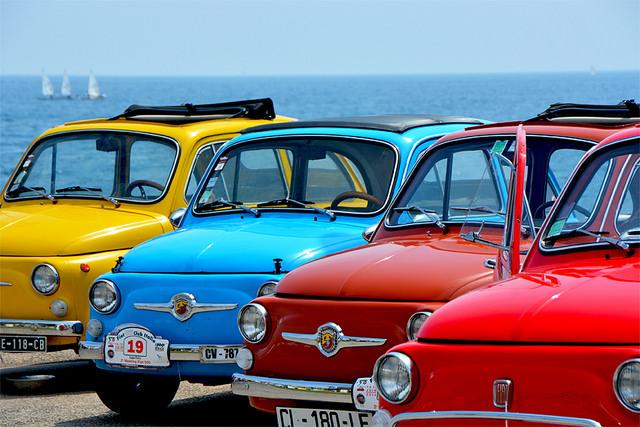
On July 4, 1957 the first of the Fiat 500 Nuova were introduced to the public in Turino. In a massive public relations stunt, a procession Fiat 500s, each with a beauty queen on board, drove from the factory. At the same time driving in Rome a similar procession to St. Peter's Square.
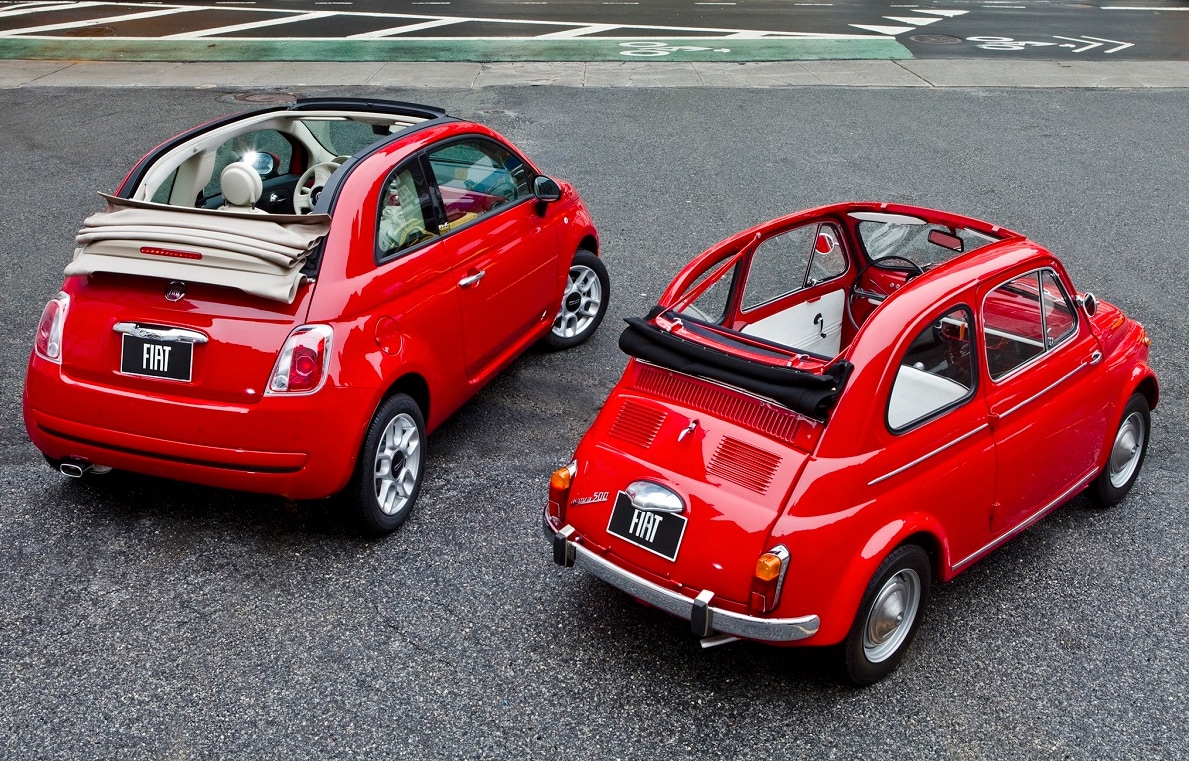
 Big brother, Seicento with a the smaller Cinquecento parked just behind it
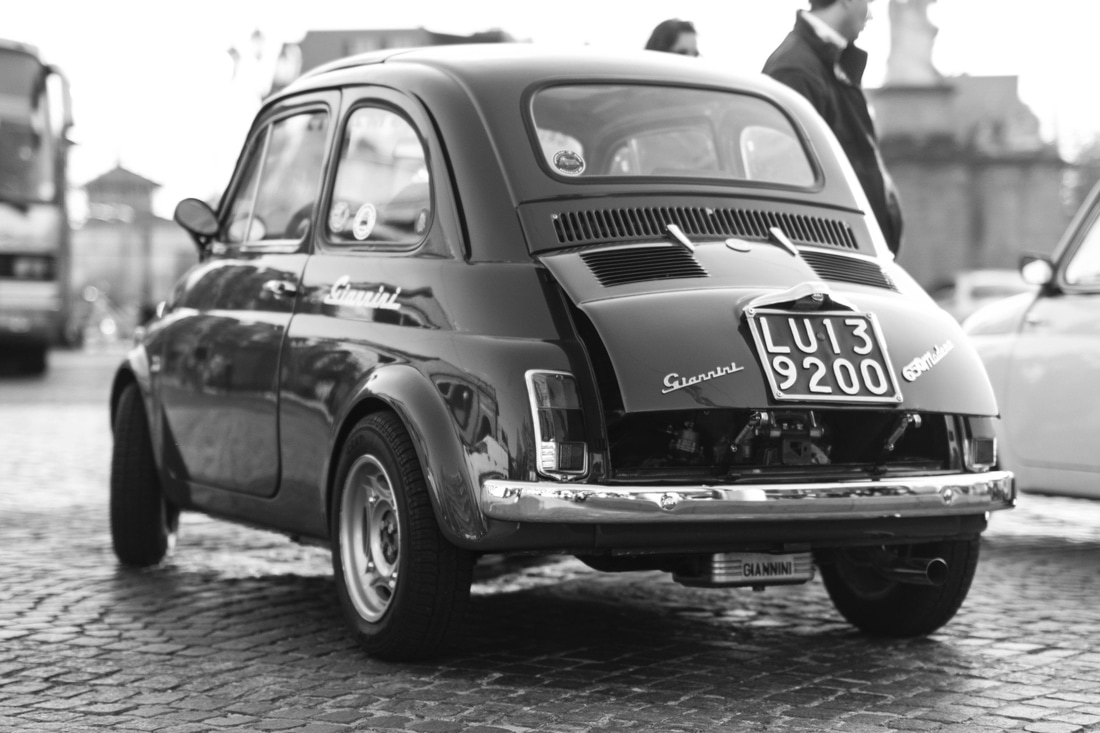
Coming to be known as the Cinquecento (cheen-qway-CHENT-o... Italian for "500"), its sales were slow in the beginning, because prior to its release, the water-cooled Fiat 600 (the Seicento, produced from 1955 - 1969) was enormously popular and Fiat didn't want to swamp the market with yet another model. Eventually, they produced nearly 3.5 million copies of the Nuova 500 until 1975.
TRIVIA: Fiat is an acronym for Fabbrica Italiana Automobili Torino

Nicknamed the Topilino (Italian's name for Mickey Mouse), this was the precursor to both the 500 and 600 models - produced from 1936-1955
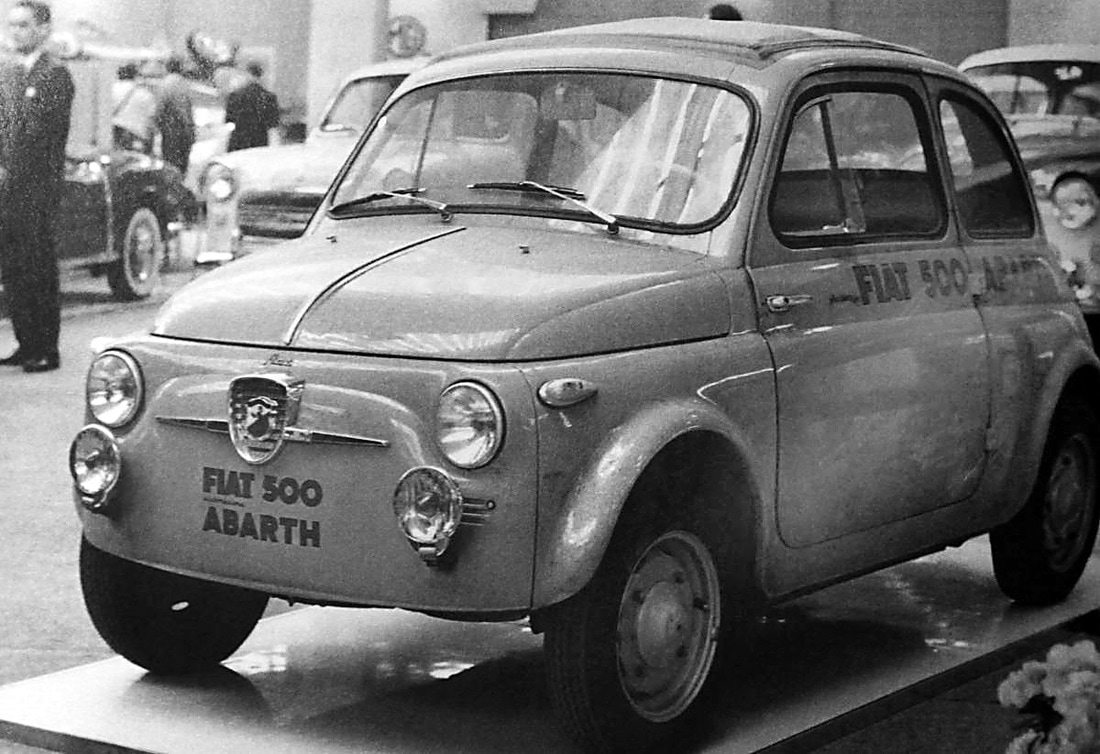
The first Nuova 500 was referred to as "N" model, with backwards opening "suicide" doors, no heater, fixed rear side windows and a fabric roof opening all the way to the rear. It was spartan, to say the least--and tiny--a mere 9'9" long. It was designed as an every-man's car... a family car for essential trips around town.
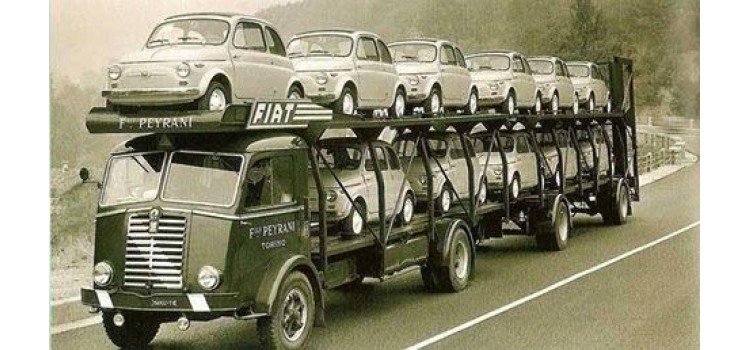
 1957 Marinella, for resort transportation
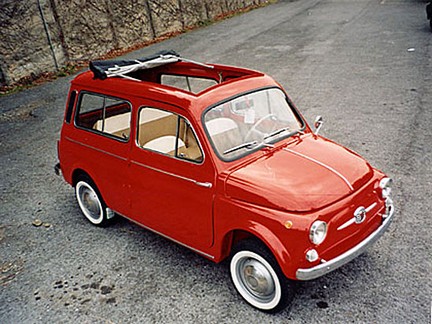
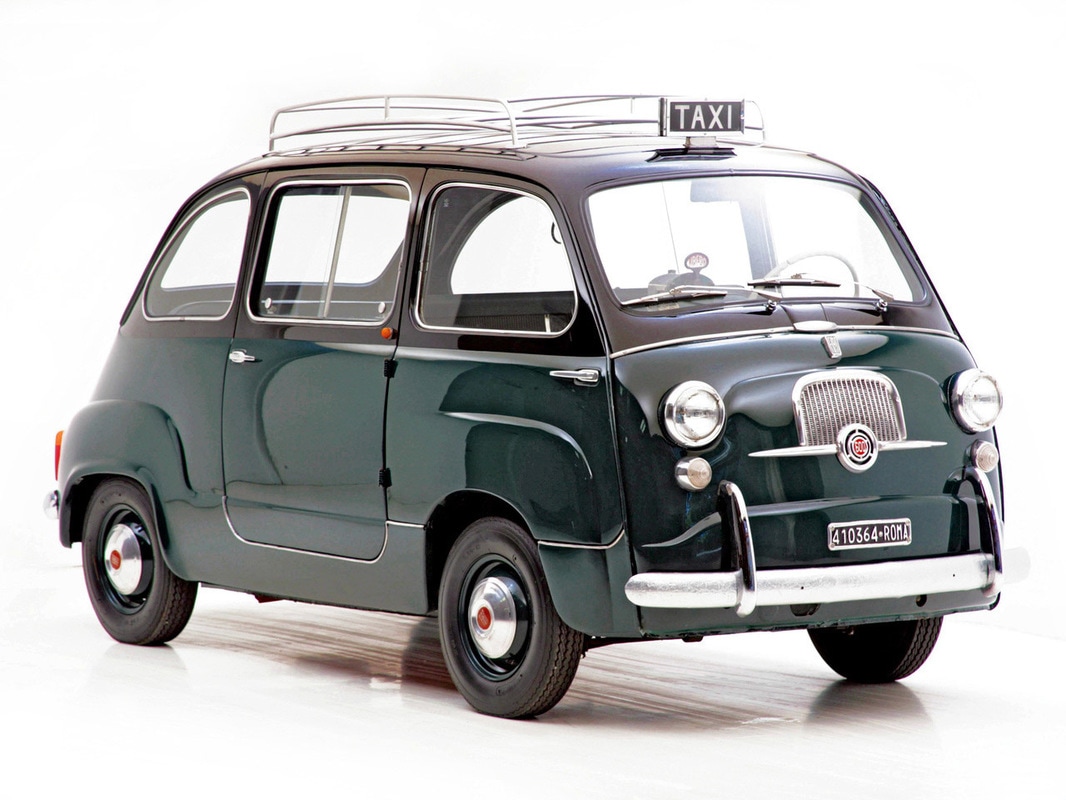
A close cugino (cousin) to the original Fiat 500 and 600, the Multipla (commonly known as the Seicento Famigliare--"Family 600") was primarily based on the Fiat 600 and sat six people in fairly small size. The driver's compartment was moved forward over the front axle, effectively eliminating the front storage trunk, but giving it a modern minivan appearance. It could be configured with either a flat cargo area behind the front seats or a choice of one or two bench seats. This popular people and cargo mover was a very popular taxi in many parts of Italy up until the 1970s. There even was a beach car version called the Marinella created by car design shop Carrozzeria Ghia.
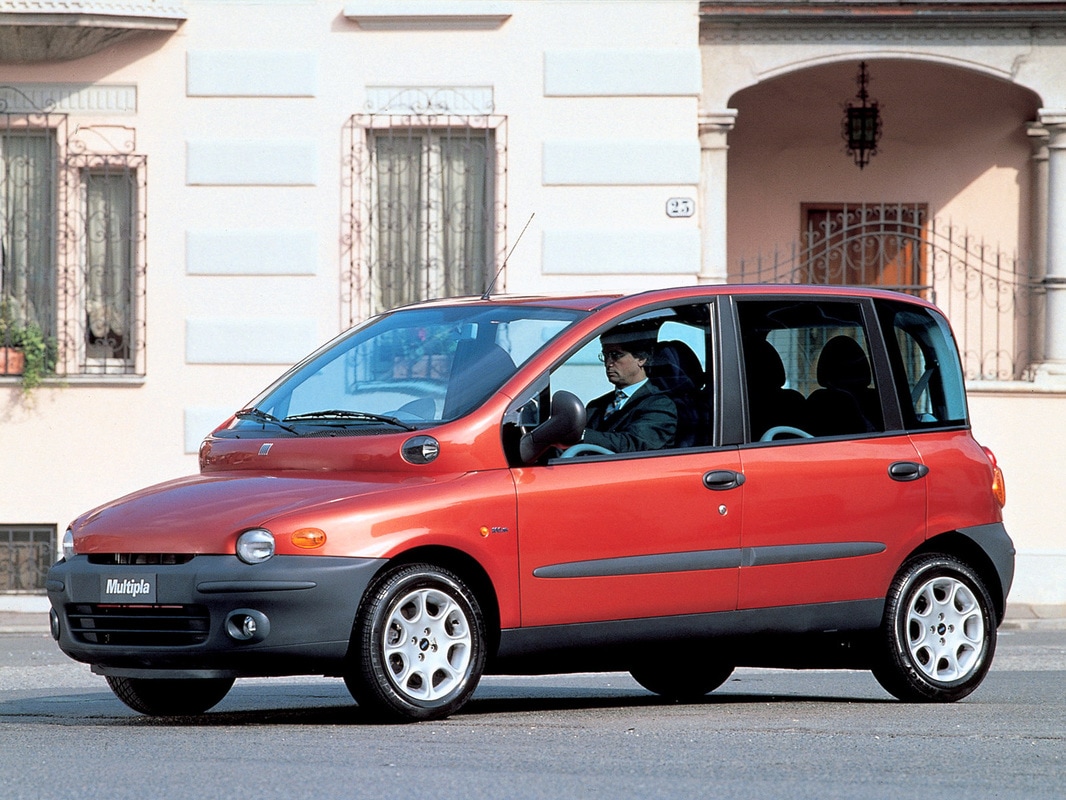
I personally love practical cars, and loved driving the new Fiat 500L (called the "Large" in Italy) during our Voyage through Italy, although I am certain the U.S. version has a better transmission. We've owned three minivans in our family and would love to see a new version of the Multipla brought to the U.S. in a family minivan configuration. Fiat did introduce a modern version of the Multipla from 1998 to 2010, but despite acclaim for it's bold design (amazing visibility due to huge windows) slack sales outside of Italy doomed the model.
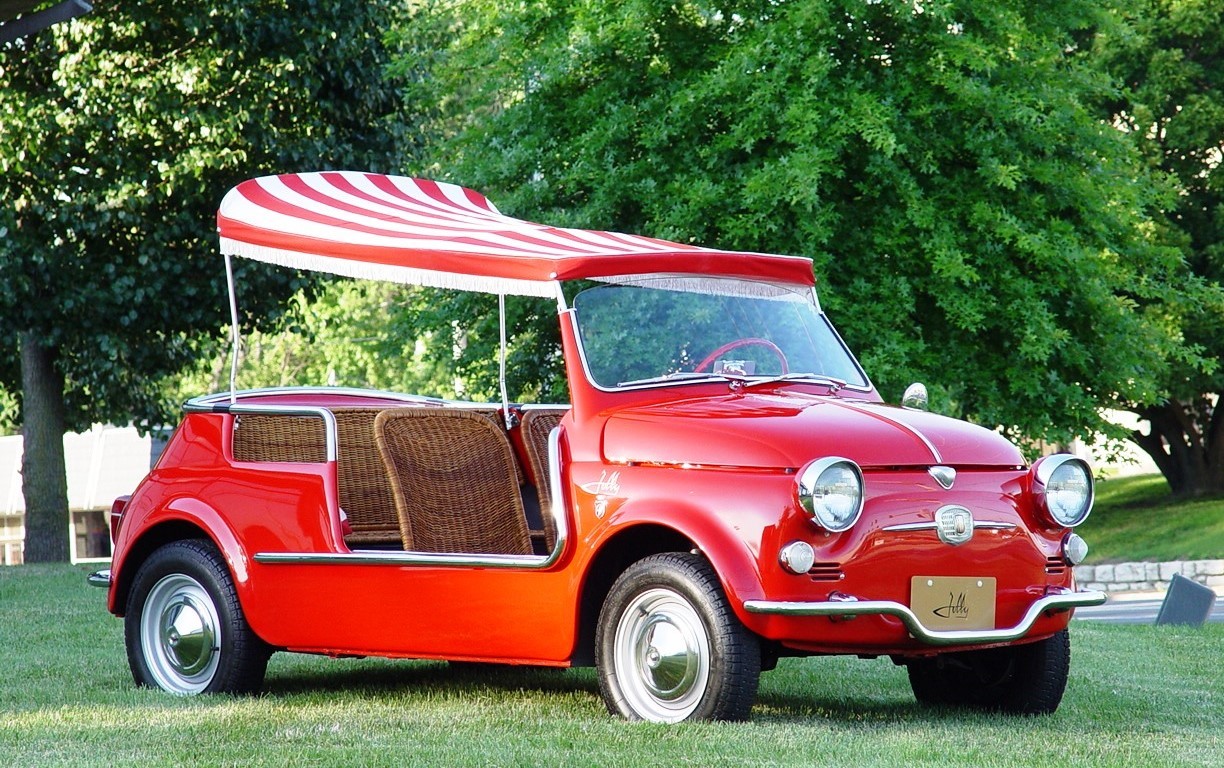
Perfectly happy name for this car... Jolly
The legendary automobile coach builder Ghia (of Volkswagon Karmann Ghia fame) also created one of my all time favorite cars based on the Cinquecento... the fun-sounding Jolly. The chassis was made by Fiat but everything else was built by Ghia. The little car with a surrey on top was really designed for the rich--as a small car that could be hoisted on and off mega-yachts tooling around the Mediterranean. Oil magnate, Aristotle Onassis (Jackie Kennedy's second hubby) owned one and President Johnson rode around his Texas ranch his. It was a perfect seaside runabout to go from marina to golf course to dinner and back to the marina... while keeping the sun off of the heads of the rich, famous and film stars. Since mostly the elite usually bought them, each one was customized. Besides the canopy, it had no doors and wicker seats. Very cool car... nowadays going for a couple of hundred thousand dollars at classic car auctions. Supposedly, there are less than 100 left in the world.
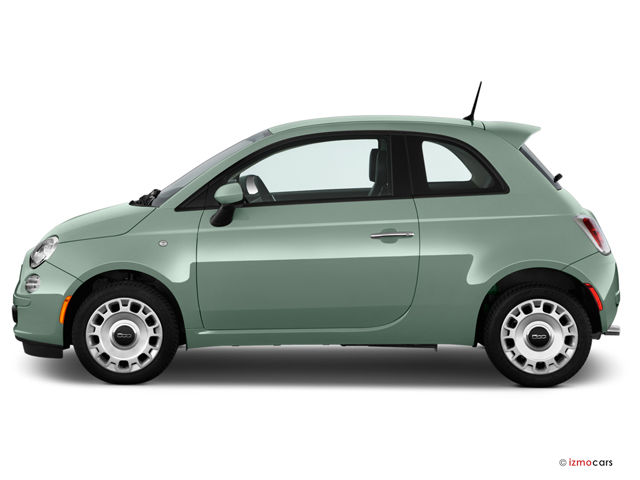
Of course, this brings us to the current incarnation of the Cinquecento... the Fiat 500 (Type 312). Introduced in 2007, its new styling is reminiscent of Fiat's original 1957 Nuova. It holds four passengers fairly comfortably with a front rather than rear engine, has front wheel drive, and is offered in a three door hatchback and two door cabriolet styles. The newest addition to the U.S. market came in 2016 as a nod to the past Spider series with the Fiat 124 Spider--a joint venture with Mazda, using the new Mazda MX-5 platform. Car manufacturers make strange bedfellows lately... after all, who would have thought that Chrysler would now be owned by Fiat?

Very sexy lines on the 124 Spider
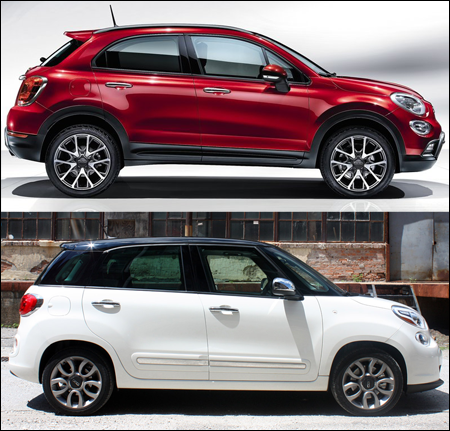
It was great to see Fiat's return to the American market after 27 years... I owned a red Fiat 128 station wagon back in the Seventies during the oil embargo and odd-even gas rationing days. I got 30 miles to the gallon while most back then got about 6. I recently did a test-drive the new Cinquecento and love it... although being a tad small, even for our "We Three" family. It's drive didn't feel small, at all. The advent of the Fiat 500L and 500X go even further in changing all that. These are bigger, four door models with plenty of room for small families. Lucas loved having a raised rear "theater" seat in the "L" while we traveled through Italy... giving him much better views. We also liked having the glove box drink chiller--a very welcome thing in hot Italy.
All in all, the Fiat 500 was--and still is--one of the most important, practical designs for people movers on the planet. When you live in a country like Italy with winding roads, limited parking spaces, narrow streets in most villages and the price of fuel always grabbing cash out of your wallet, the ubiquitous Cinquecento simply makes sense... Bravo Fiat! Bravo Italia! --Jerry Finzi If you CARE, please SHARE... Ciao!
 Click the photo to see the map in high resolution
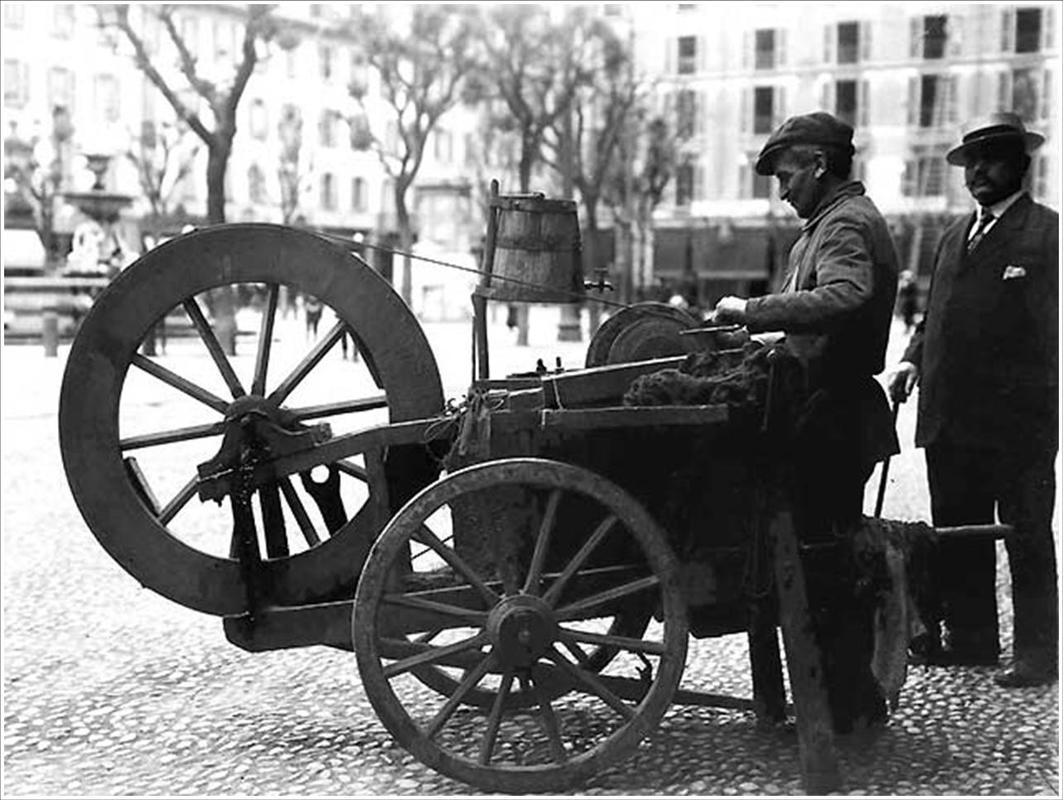
 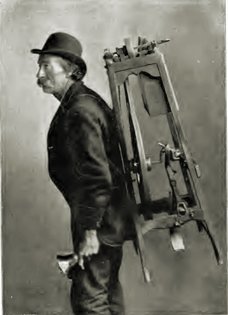 When I was growing up in our neighborhood in New Jersey, there were several types of street vendors that appeared every week, each selling wares from a truck: the fruit and vegetable truck was a favorite because of the way he sang his prices; the ice man too, because in summer he'd always leave chunks for us to cool off with; the sound of the coal truck dumping coal down the chutes of the few remaining buildings still using coal as a fuel is also burned in my memory. But the most interesting to me was the arrotino--the knife grinder. He trudged through the neighborhoods past the Victorian era apartment buildings on foot. I would hear him coming because of the bell he rang while walking--a rather large brass school bell that he swung in sync with his walking gait. When people heard that bell with its distinctive ca-clang-ca-dang pattern, they would grab their dull knifes and scissors or tools and head down to the street to meet him.  Once in a while my mother would hand me the big kitchen knife and a quarter to go and have him sharpen it. This particular man was fairly old (at least to my young eyes) and a bit arched in his back, but yet he carried his entire sharpening rig and stone on his back via two long leather straps, hitched to him like a big-wheel backpack. I remember the grinding wheel being about 18" in diameter attached to a framework of wood. When a customer wanted something sharpened, he'd unhitch himself from the rig, turn the stone upward and start pumping the treadle with one leg while sparks flew. By the time he was finished, we had a shiny, very sharp knife once again... all for 25 cents. 
 Walking all day long, often through hilly, cobbled streets was hard work, especially while either carrying or pushing a heavy grinder--some having more than one polishing stone and a box to hold more tools of the trade. The push type rolled along inverted and pushed by holding wooden handles. Once the arrotino found customers, he would turn the grinder rig right-side up and start work. The sharpened kitchen knifes for the casalinga, scythes and butchering knives for contadini (farmers), knives for pescivendolo (fish mongers), cleavers for macellai (butchers), scrapers for stuccatori (plasterers), large knives for cacciatori (hunters) and pocket knives for gentiluomini (gentlemen).
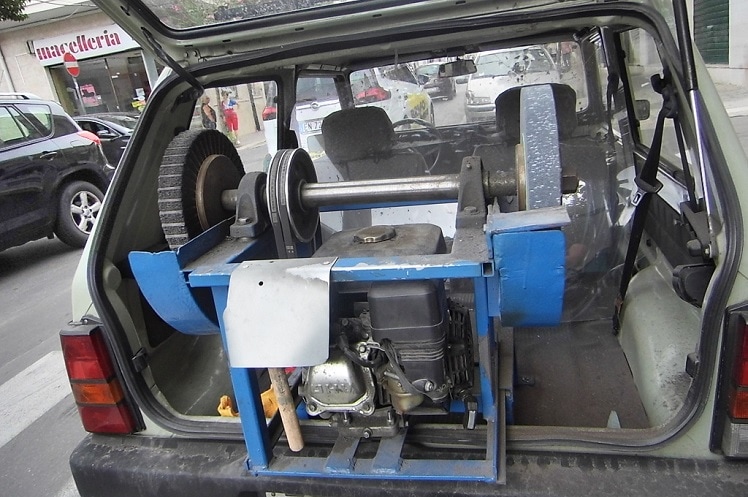
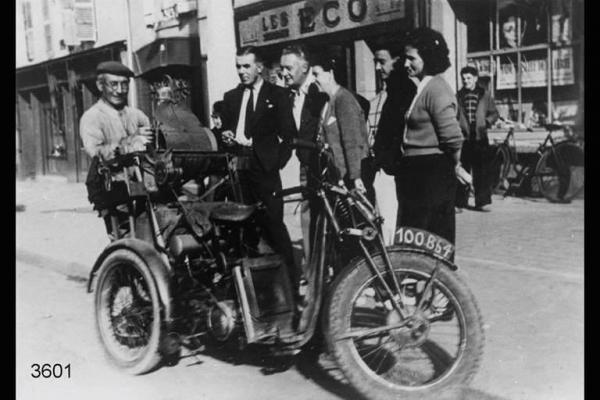
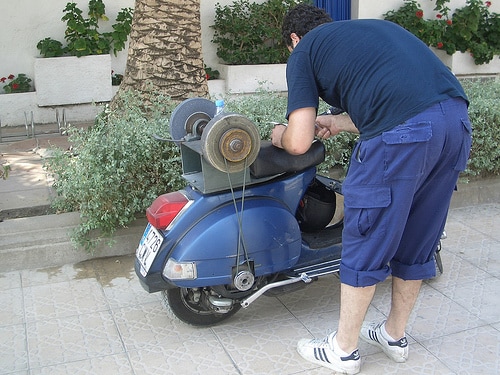
The grinding wheel is attached to a rudimentary treadle board which he pumps with one leg to keep the heavy wheel turning. There are either ropes or rubber belts that attach to the various wheels and axles. A can of either water or oil is mounted above the working part of the stone to drip lubricant on the stone while sharpening..  In the old days, l'arrotini were vagabond craftsmen, going from village to village to find clients. He might set up in a village square and eat and sleep where he found food and a hay bed to lay down in. You can imagine that some of his best clients were farmers, not because they might be able to pay his fees, but more often because they could offer food and a comfortable place to sleep. Otherwise, he was mainly self-sufficient, carrying a craticula (an ancient type of BBQ grill), cooking simple meals during his voyages. He cleansed himself at public fountains or in a stream. He returned to his home several times a year, definitely at Christmas and Easter, when a child was born or a relative died, but also for harvesting crops (most in rural Italy still have olives, nuts or grapes to tend).  During the 1950s and 60s the advent of the bicycle grinder rig helped arrotini go further, get more work and return to home more often. The grinding wheel was mounted over the front wheel and attached to the pedals by a second drive chain that could use the pedaling action when a lever was flipped. Next came the Vespa scooter and the Tre Ruote Ape (three-wheeled vehicle). In both cases, the motor also drove the grinding wheels. The rear compartment of the Tre Ruote was large enough for arrotini to expand their services--refurbishing and refinishing traditional knives, selling new knives and scissors, offering repairs and parts for old style gas kitchen cookers, and selling and repairing umbrellas, of all things!

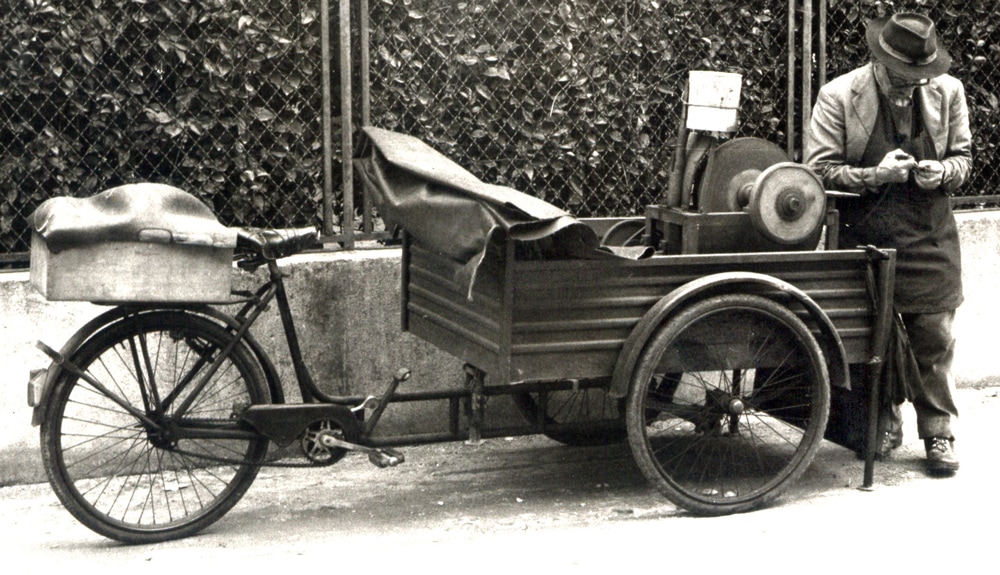 "Donne! È arrivato l'arrotino! Arrota coltelli, forbici, forbicine, forbici da seta, coltelli da prosciutto! Donne è arrivato l'arrotino e l'ombrellaio; aggiustiamo gli ombrelli. Ripariamo cucine a gas: abbiamo i pezzi di ricambio per le cucine a gas. Se avete perdite di gas noi le aggiustiamo, se la cucina fa fumo noi togliamo il fumo della vostra cucina a gas." Translation: "Ladies! The Grinder is here! Sharpen knives, scissors large and small, sewing scissors, prosciutto knives! Women, the Grinder and Umbrella Repairman is here; we fix your umbrellas. We repair gas cookers: we have spare parts for your cookers. If your gas is leaking, we'll fix it, if your kitchen is smoking we remove the smoke from your gas cooker."
I don't know about you, but I sense a little naughty double entendre in the wording of the announcement... Perhaps the arrotini have sharpened some of their other skills and offer even more personalized services to le donne over the years... putting out the smoking fires in the kitchens of casalinga all over Italy... Sharpening blades, indeed... Reminds me of the old bawdy blues song lines: "Yea, Babe, I'm your Handyman..." or "Stick out your cans, here comes the garbage man!" --Jerry Finzi And in Our Video Collection: Old Roman Knife Grinder (Arrotino) Explains his Craft L'Arrotini in Venice: Calling All Knife Grinders L'Arrotino: Knife Grinding on a Vespa If you CARE, please SHARE. Grazie. 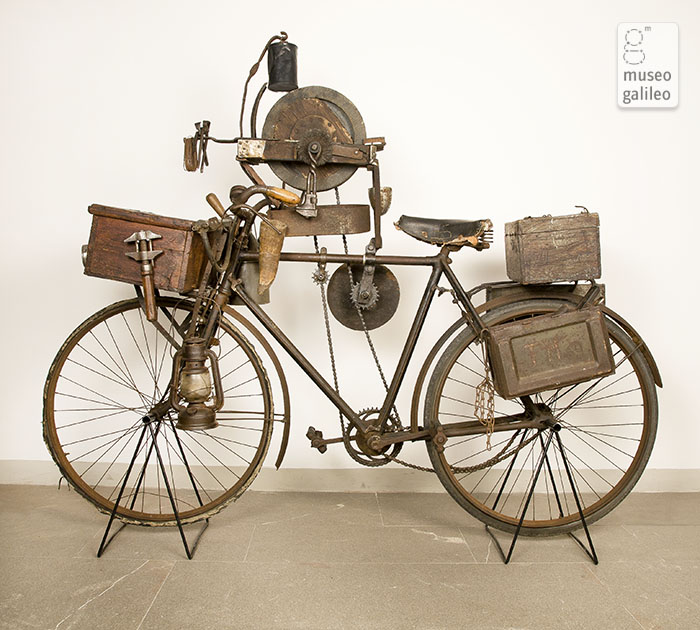 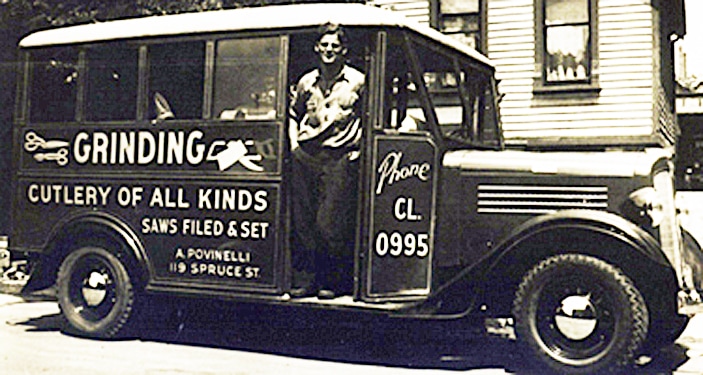 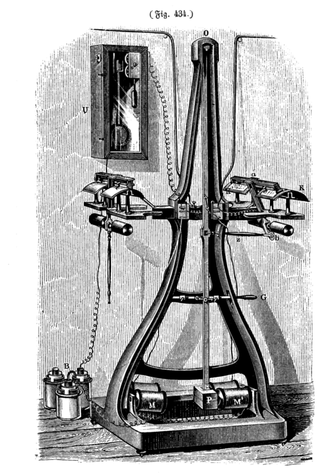 I remember when I got my first fax machine in the 1980s. It was slow, but became essential in my studio, as art directors started using them to send layout revisions. What a time saver. Who knew that the fax... or facimile... or telefax was really invented back in 1863 by Giovanni Caselli, an Italian priest! Caselli invented his device thirty years before Bell invented the telephone and actually put it into commercial use by contract with the French government. Caselli was seen as a mad scientist rather than a man of the cloth by his friends and neighbors, with odd mechanical devices mixed among his furniture. Born 1815 in Siena, Caselli studied both theological and scientific studies. While the wired telegraph was already sending coded messages, sending pictures by wire was only a dream at the time. Caselli's idea was his pantelegraph, an concept first thought of by Alexander Bain of Scotland in 1840. Bain created a crude device to send pictures over wire, but never fully developed the idea. 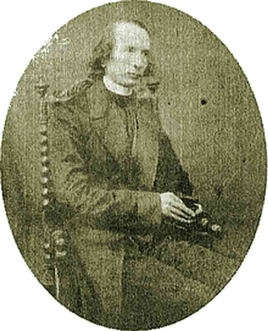 Living in Florence at the time (while hiding out from his political enemies) Caselli reworked Bain’s device and improved on it, but he didn't have enough mechanical skills to make a working prototype. So he went to Paris and partnered with Gustav Froment, a leading maker of scientific instruments. After seven years in 1863, they triumphed.
Caselli received a U.S. patent for his telegraphic apparatus, making major improvements to the design. Unlike Bain's design which scratched the image on metal plates, Caselli's fax used ordinary ink. The image received could be enlarged or reduced. Multiple messages could be transmitted through a single wire at the same time. Caselli also developed an electrically sensitive paper, soaked in potassium, that changed color each time electricity passed through it. His fax machine was more than six feet tall, with long pendulums, batteries, and wires. For the 1860s, the quality of the fax image was amazingly high. Eventually, he would dub it the pantelegraph. Emperor Napoleon III liked the device so much they passed a law to connect a fax service between Paris and Lyons. In 1861 the French government authorized tests of a fax system using telegraph lines between Paris and Lille and Paris and Marseilles. By 1863 a Paris-Lyons line was tested with great success. Transmitting at fifteen words per minute, the fax could send forty telegrams of twenty words each hour. In 1865 the French government decided to take the system public. On May 16, 1865, the pantelegraph was set up on the existing Paris-Lyons telegraph line. It must have worked well because in two years, the Marseilles connection was added. By 1867 four Caselli machines serviced the Paris-Lyons lines. Service was so successful and the device so efficient that 110 faxes and hour could be sent. The newspaper industry, seeing what a boon it could be for their industry, touted the new invention on their pages. Interestingly, early fax machines needed to "talk" to machines of the same brand and model and it wasn't until 1974 that the world's first international fax standard was approved by the United Nations. In the 1980s, personal and small business fax machines proliferated around the world. And to think, we own it all to an eccentric Italian priest. --Jerry Finzi Remember, if you CARE, please SHARE. Grazie! |
On Amazon:
|










 RSS Feed