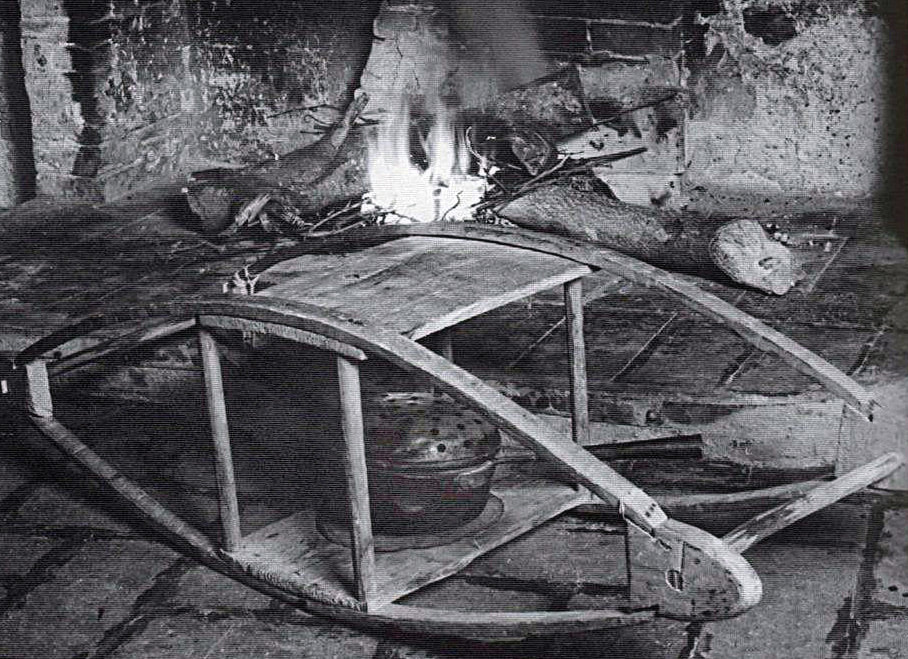
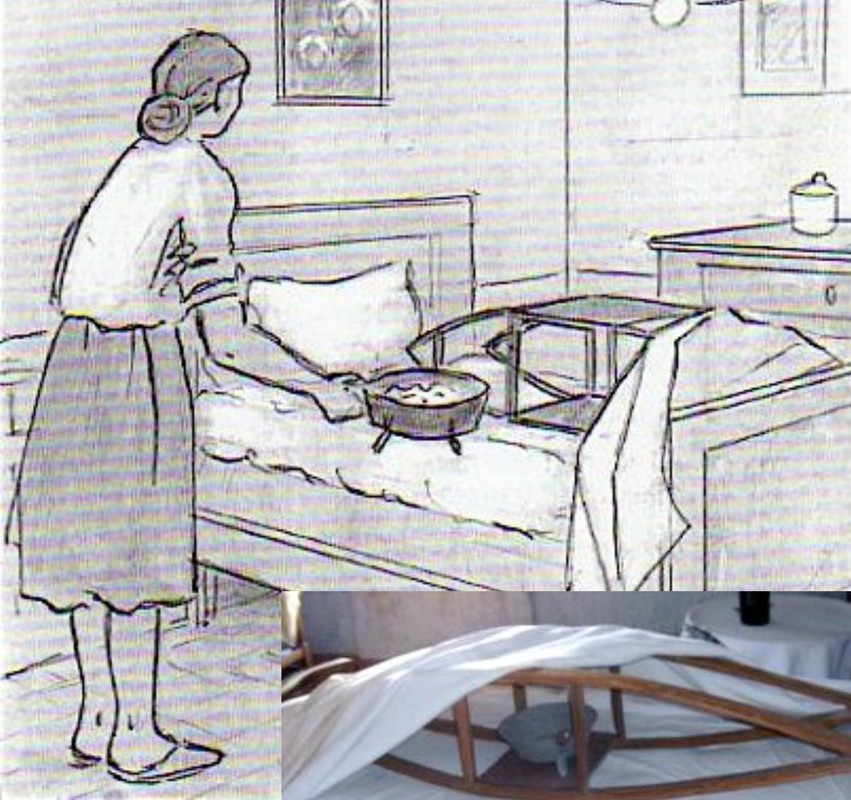
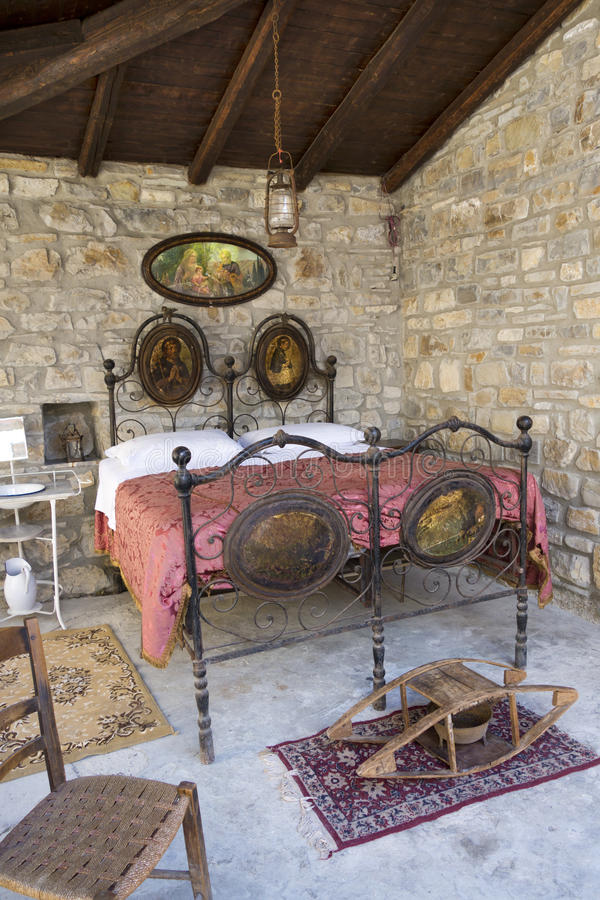
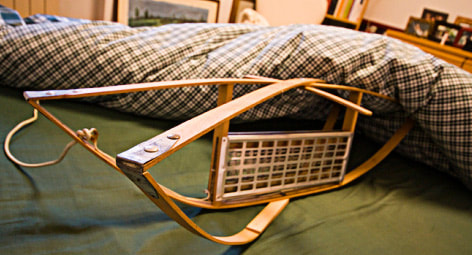
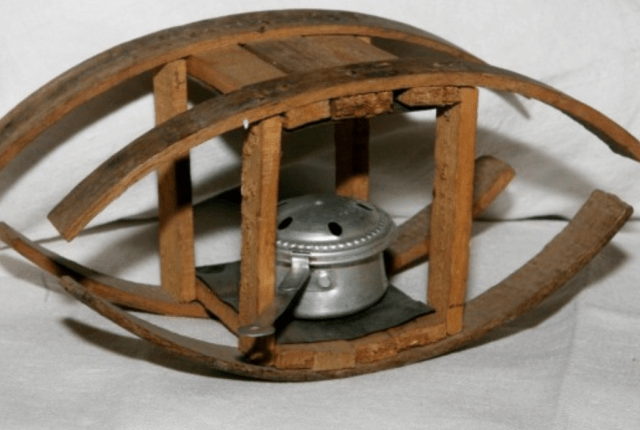
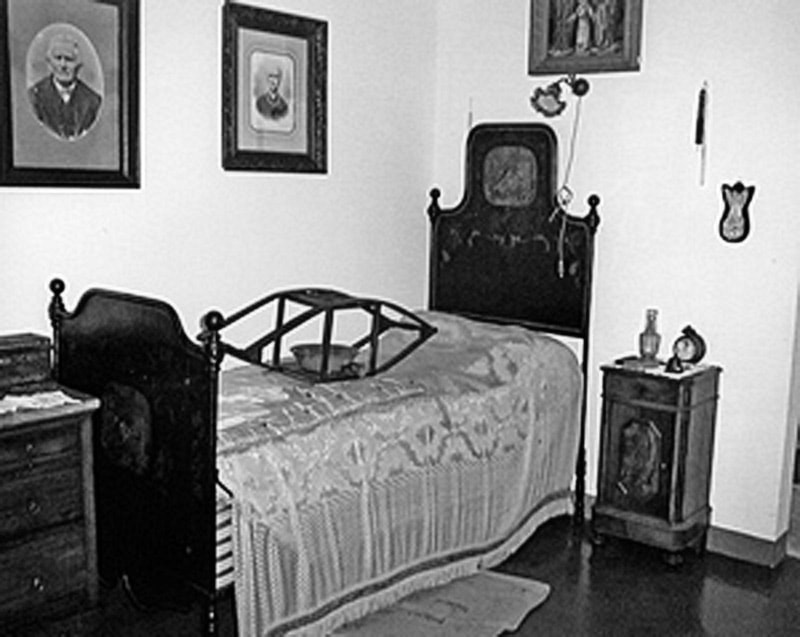
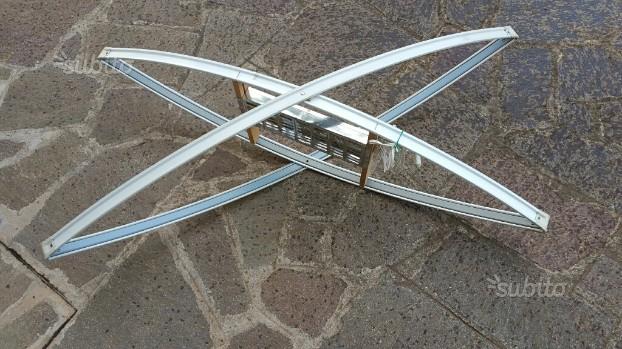
  OK. Now, don't scream, "sacrilege". Let me explain... More than 100 years ago in Italy, people really would place the Nun and Priest into their beds to warm things up. The Suora e Prete (Nun and Priest) was the name of a device used to warm the bed and blankets just before bedtime. In northern dialect, they might be called Frà dël let, or Bed Brother. They were often used until the early 1900's, and perhaps even later on in poorer parts of Italy. The Nun, or scaldaletto (warming bowl), was a removable round bowl with handle, into which hot coals (with ashes to slow down their cooling) were placed. Placing hot bricks in place of the Nun was also an option. Wealthier folks could afford rocchetti--small cylindrical containers filled with compressed coal dust. They were heated in the fireplace and lasted a lot longer than loose coals and ash. The Priest constituted a frame that housed the Nun along with its hot embers, holding sheets and blankets well above the coals to prevent them from scorching or bursting into flames entirely. Sometimes the Nun had a lid with decorative perforations which allowed the heat to escape. The Nun and Priest also helped dry the damp sheets--a common problem in the cold and damp of stone houses during the winter months. What are the roots of the name? Many consider the draping bed coverings to look like the draping of a nun's hood. Why "Priest" then? With Italians' tendency to be shockingly irreverent, we can only guess. Perhaps there is a reason the priest is on top... of course, I mean to hold in the heat of the Nun under "him". Wait... I'm getting myself into trouble here.... 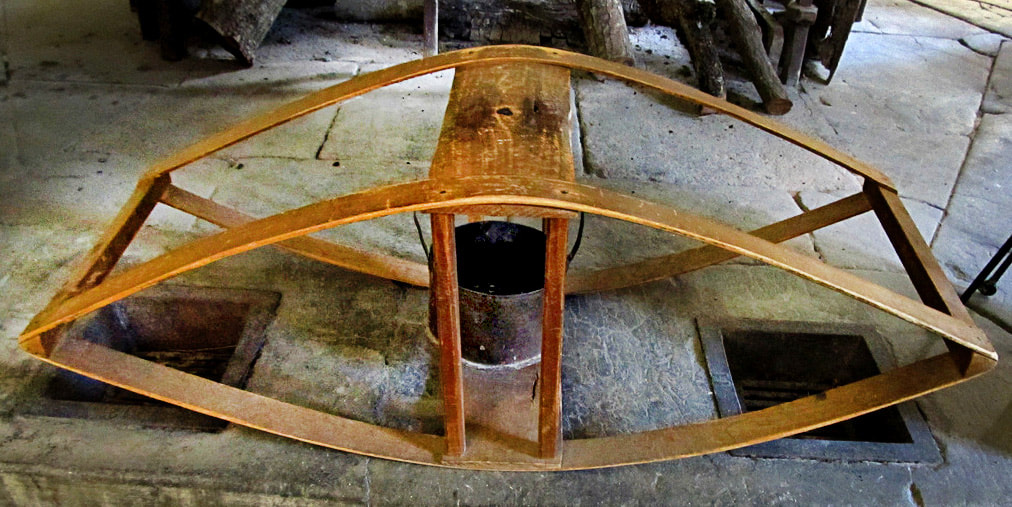
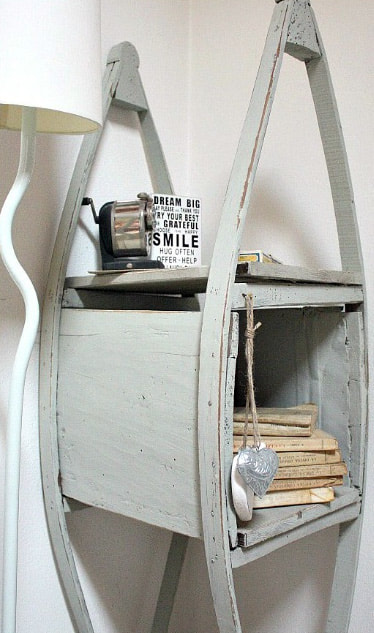
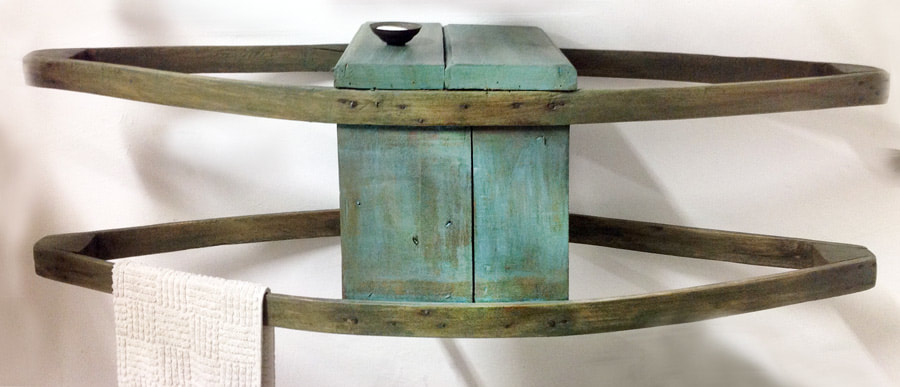
The interesting thing is, the Nun and Priest is still being made today, albeit in electric versions. When considering the thick stone walls and dampness of old Italian houses, this contraption might seem like a very good idea to warm up the bed on a cold windy night. Very common in Italian antique stores and flea markets, many people have taken to finding new uses for the Nun and Priest, especially as decorating objects.
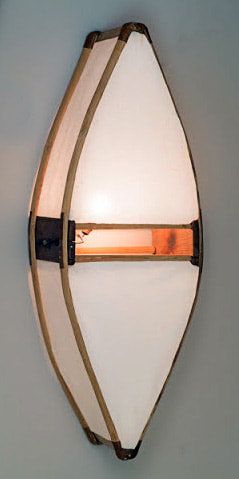
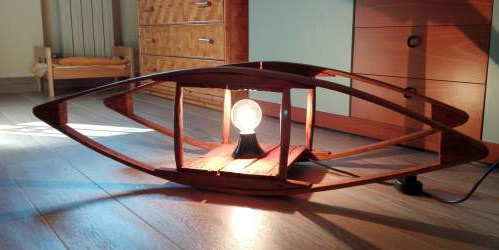 A very cool floor lamp The Monk, a Close Cousin... 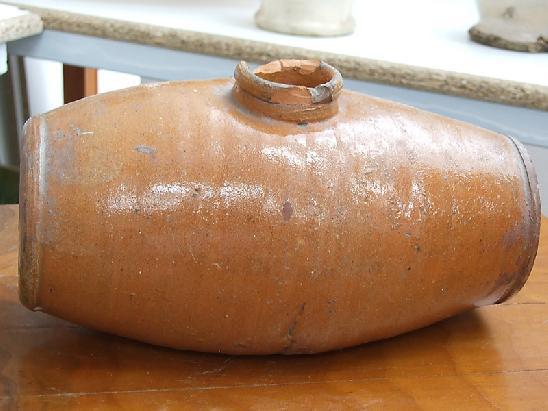 The Monk Another tool to heat the bed was il Monaco or also Mariteddu (the Monk), a kind of terracotta amphora that was filled with boiling water and placed under the covers. The rather thick, heavy ceramic would retain heat for long periods of time and release it slowly, creating a gentle warmth under the covers. Unlike the Nun and Priest which warmed the bed before you got in, the Monk could be kept in bed during the night with you. Oh no... here I go again. I'll stop now. --Jerry Finzi This might also interest you...
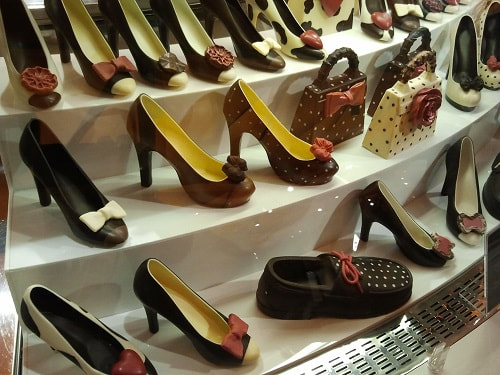
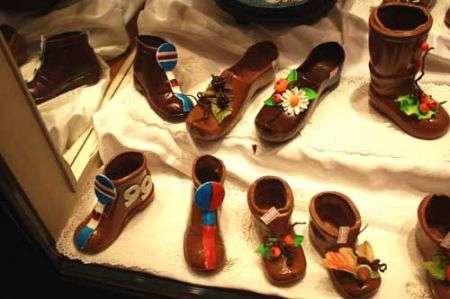
Italian Warmth from the Poor Mans' Hearth: Il Braciere, the Brazier 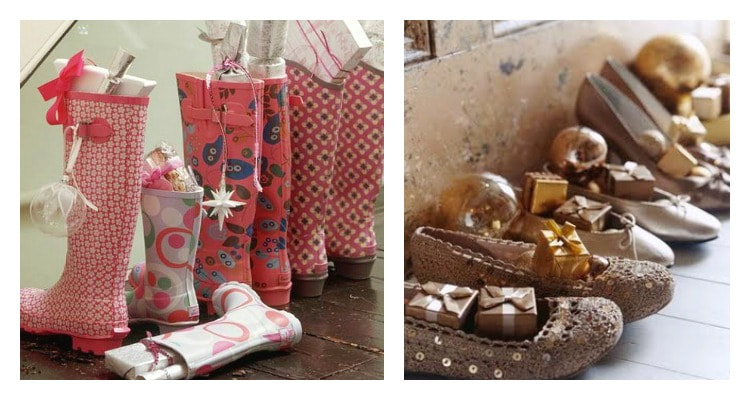 Until recently, Christmas in Italy was exclusively a family feast, and children only received gifts on Epiphany (January 6). After leaving out a bottle of wine and some slices of salami to appease La Befana the night before, in the morning they would discover sweets and gifts left in their stockings and shoes. The presents were traditionally a piece of fruit or candy, but naughty children might also receive a lump of coal. This tradition has morphed into leaving gifts not only in stockings or shoes, but giving gifts of edible chocolate shoes filled with treats. Obviously, with chocolatiers making very high quality pieces of art in the form of shoes, this tradition is not just for little ones any longer... 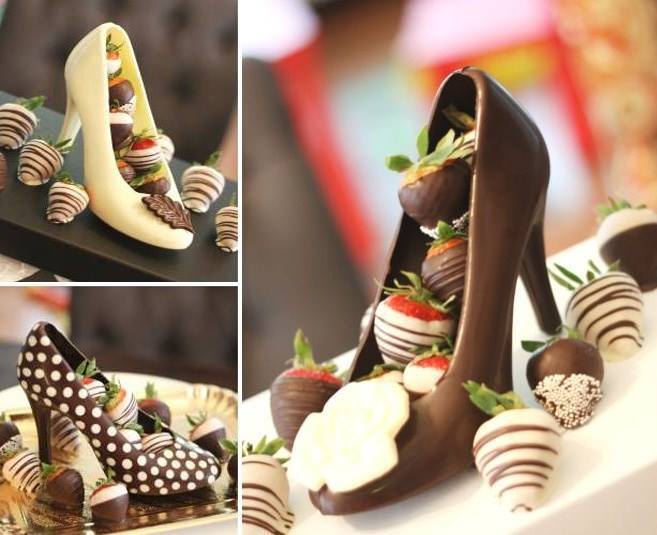
 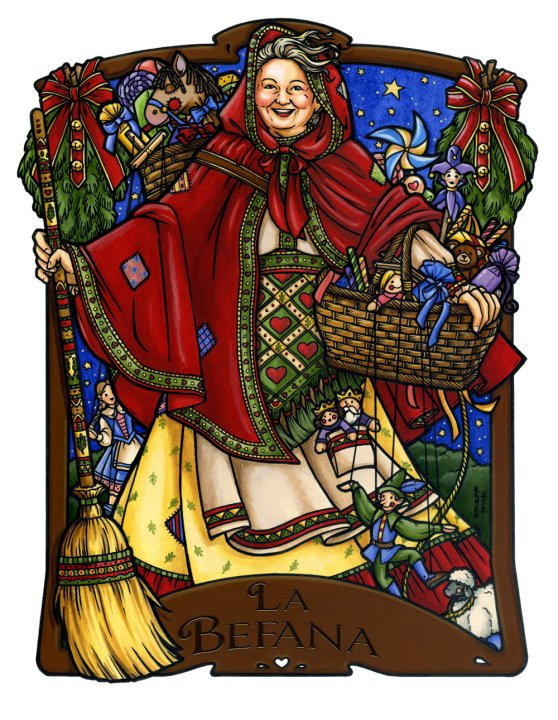 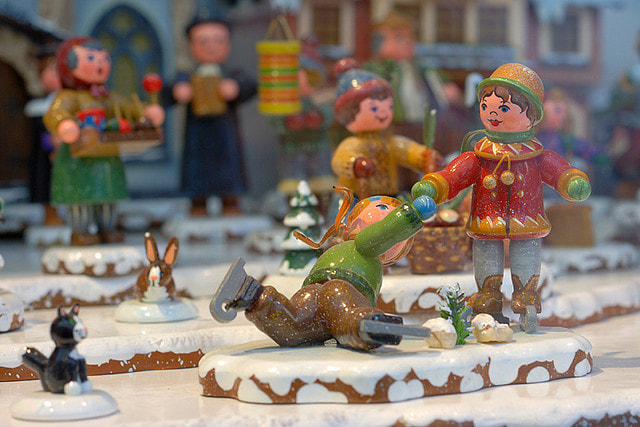 Now that the New Year is behind us, the fireworks smoldering out, the empty bottles of Prosecco dumped into the recycling bin and our stomachs filled to the breaking point, you might think that the holiday is over. In Italy, the Season has another week to go... Christmas time in Italy is not finished until the Epiphany on January 6th (giorno della Befana). In essence, the Twelve Nights of Christmas come after December 25th. On the night of the Epiphany, children wait for the Befana the Christmas Witch who--according to Italian folklore--arrives on a broomstick, comes down the chimneys and fills kids’ stockings with sweets, chocolate or a lump of coal for those who have been naughty. Children will hang stockings on the mantle for Befana to fill, even though the modern custom of receiving gifts on Christmas Day is also enjoyed. In parts of northern Italy, the Three Kings might bring your present rather than Befana. And even though Babbo Natale (Santa Claus) might have brought them some small gifts on December 25th, the main day for present giving is on Epiphany. Many Italians continue the Holiday season by taking a trip down South if the weather is warm or up North or to the mountains where they can enjoy some skiing. The week following Capodanno is for family gatherings, vising distant relatives or simply spending time at home with their children, who are home on Christmas break until after the Epiphany. 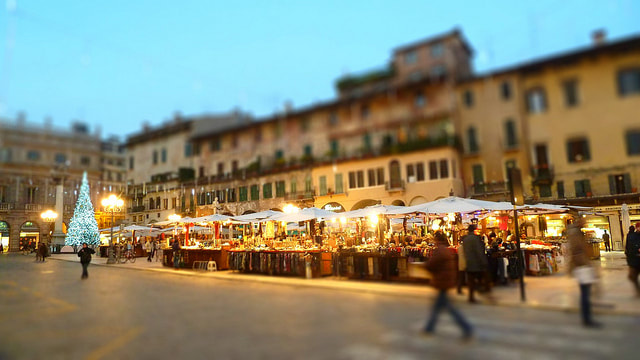 In some towns, Christmas markets are still running strong:
Trento: from November 22, to January 6 (closed on Christmas day). The Trento Christmas market will be twice as big with wooden huts selling Christmas and traditional goods both in Piazza Fiera and Piazza Cesare Battisti. The traditional Nativity Scene will be hosted in Piazza Duomo. Levico Terme: from November 22 to January 6. Rovereto: from November 22 to January 6. Arco: from November 21 to January 6. Merano: November 24th - January 6th on Piazza Terme and surrounding streets. Vipiteno, South Tyrol: November 24th - January 6th, Piazza Città Naples, Campania: any time of the year, visit artisans that create presepe and character figurines and accessories. On Via San Gregorio Armeno  A seemingly dying tradition in Italy involves tossing old personal items directly out of the window. Be careful... even though it's not done all that often, you might still come across unexplained personal trash laying on the streets below apartment blocks. Keep an eye out while strolling around on New Year's Eve, just in case! 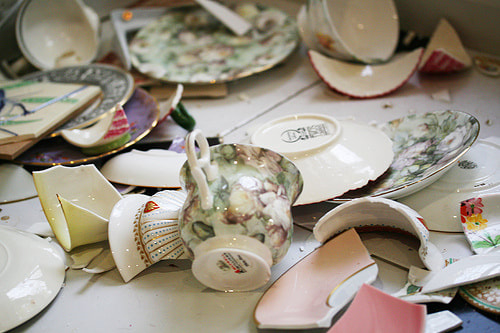 Another old ritual involves smashing plates, glasses, vases and other pottery against the ground to drive away any bad omens that might infect the New Year, beginning everything anew. Some might do this in their house, but you will often see broken china laying at the curbside... something else to watch out for!
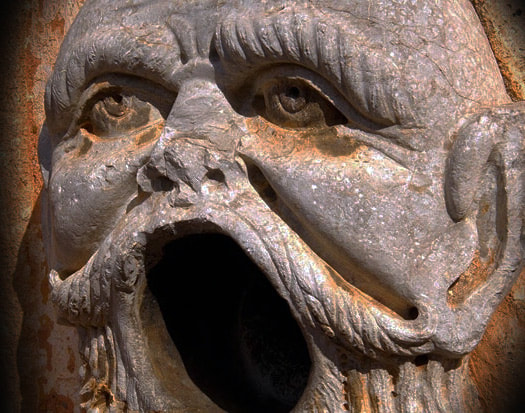 This Halloween season I thought I'd give all my fellow Grand Voyage Italy goblins and ghouls a little scare... from the horrors of the ancient Romans: Monsters from myths, legends and pagan lore. So, pull your loved one close, get the kiddies (as long as they are beyond the age of having nightmares), pour some spiced wine, roast some chestnuts, turn the lights down low and put on some spooky music--preferably an old, scratchy opera recording. And above all... Sleep tight... and don't let anything bite. --Jerry Finzi 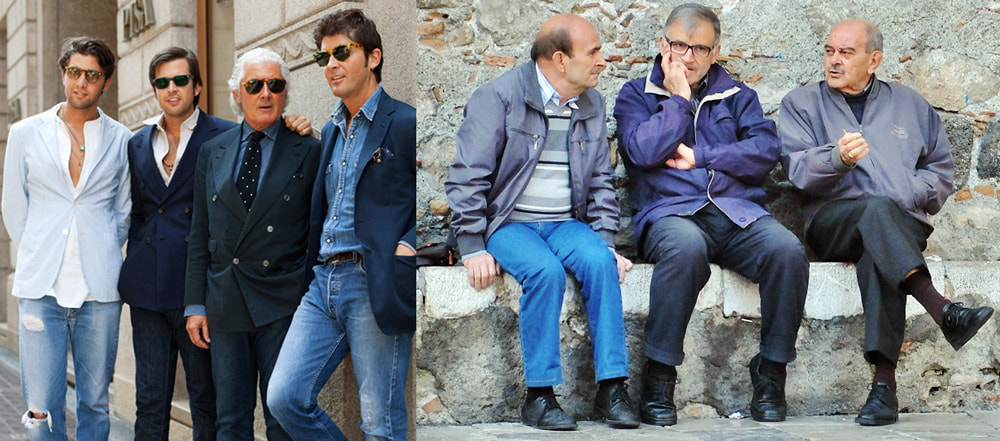 This is a collection of the many stereotypes I've collected throughout my travels and my research on the Italian culture... I reject the idea that any of them are true.
When traveling throughout Italy, we discovered a definite difference between North and South. In general, Northern Italians reminded me of more fast-paced New Yorkers as opposed to the more laid-back lifestyle and attitudes of Rural America. This is not to say that we didn't find many nice people in both the North and South, and that we didn't find some real jerks in both regions as well. People are people. Stereotypes are ridiculous. Take people for what they are--how they present themselves.
A supposed wise man once said, "You've gotta take the good with the bad". No thanks. I'll look for the good people, no matter where I am and will always reject the bad. I've heard that Northerners refer to the South as the "Mezzogiorno". This word basically means high-noon, when the sun is at its highest and brightest. Northerners use it to describe the sunnier and sweltering South. I will remind all Italians that the same sun shines on all of them. It's no brighter or darker in the North or the South. Same sun... Same people... Same heat... --Jerry Finzi  Watch just about any old movie filmed in Italy and more than likely they'll be flirting... especially the stereotype of an incorrigible flirt coming on to a woman. An old gent pursing his lips to his fingers letting a young girl know how tasty she looks, or a young regazzo following for a few steps on the street accosting a young lady with a flurry of metaphorical compliments, or it could be a supposed innocent young boy blurting out blatantly how great a woman's legs are. 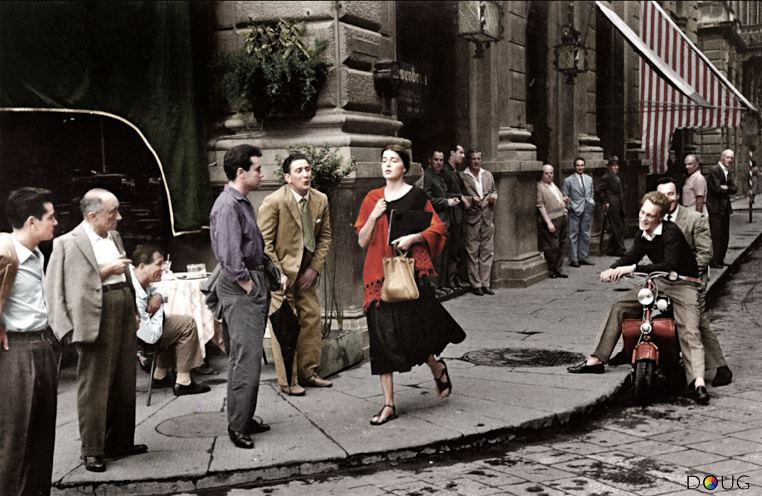 Flirting is part of life in la Bel Paese. In fact, there is a special metaphor for it... fare la civetta, which literally means "to make like an owl", or simply una civetta (an owl) meaning "flirt". The expression was first penned in 1494 when poet Poliziano used the word civettare to describe how a woman might attract a man, by cooing like an owl to attract her prey, and then silently pouncing on them with their sharp talons as their prey approaches. In reality, Italian women do flirt more like an owl than men do. They are more subtle and less obvious than the screeching of regazze hawks. A young regazza will start to walk away from her prey, but then turn her head back slightly with a half smile and side glance, and then keep walking away.... Hooked. Hair dangling over the eyes is another technique. Lowering her head and letting a few wisps of hair hide her admiring glance at a young man, but then flipping them back into place shows a guy she sees something she likes... Hooked. Subtle and blatant at the same time, una giovane bellezza (a young beauty) may be sitting at a gelateria touching a spoonful of gelato to her lips, glance over at her targeted regazzo and slyly lick her lips, putting her spoon right back to the work of enjoying her confection... Hooked. 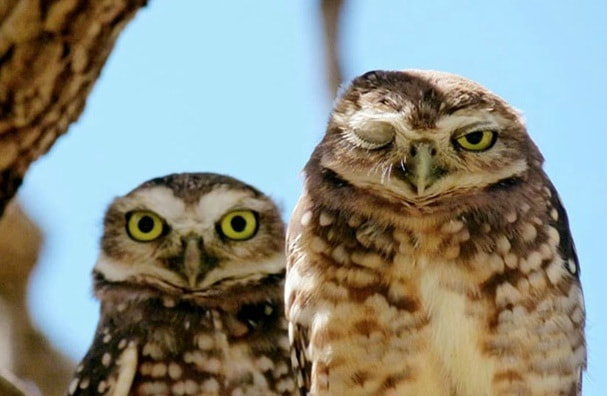 Sexy wink... definitely a flirt Amazingly--but very Italian--there are many distinct variations in the way this word is used:
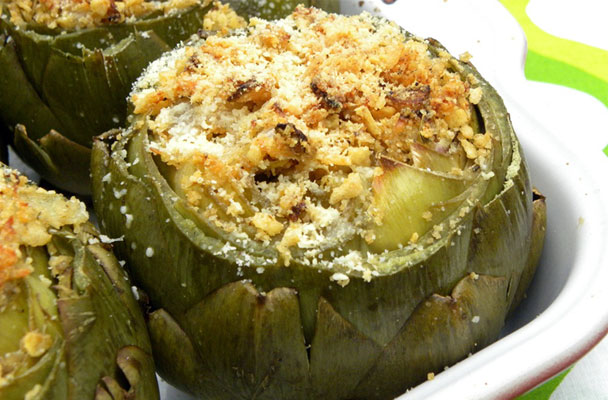
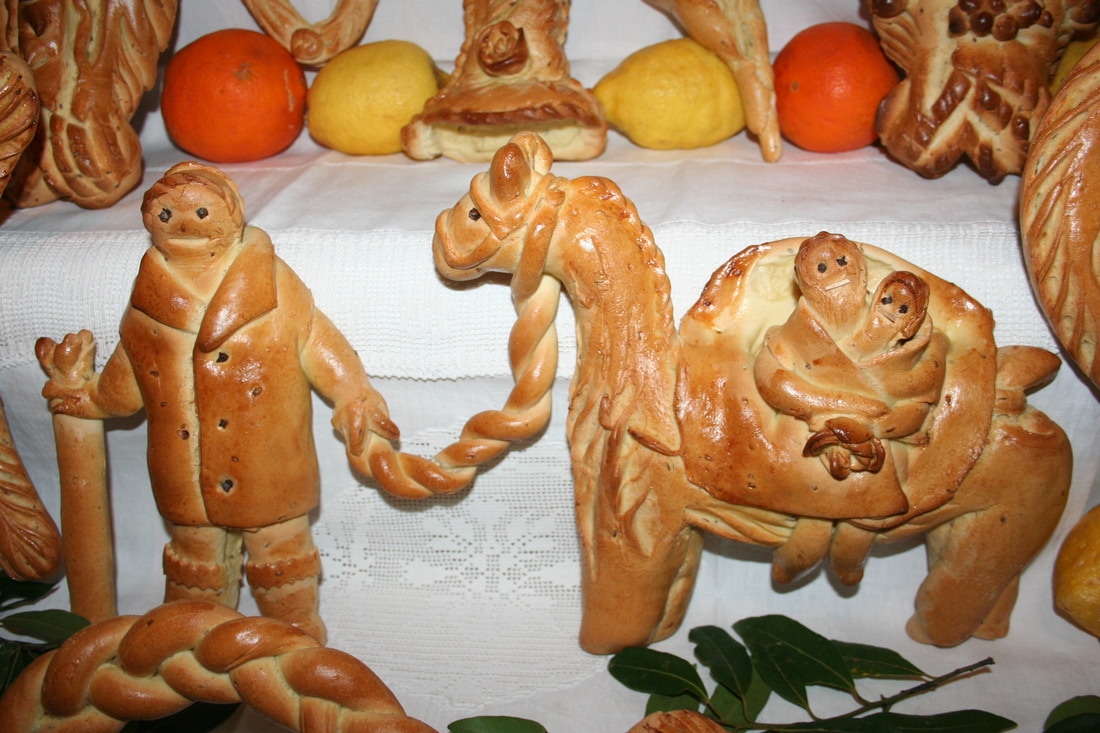
The context matters, too. For instance, if someone says "Non andrai da nessuna parte con Adelina. È una vera civetta." (You won't get anywhere with Adelina. She's a real tease.") Most men stay clear of a tease once they become away of their game. Curiously, there is even the giacca civetta (owl jacket). This is the second jacket a man leaves over the back his chair at work so the boss and co-workers think he is somewhere in the building... when in reality he is out of the office wearing his other jacket (metaphorically or otherwise) while fare la civetta. Even more interesting, I recently discovered the expression Italians use for "bait and switch" when a company advertises one cheap product (the owl cooing) just to trick you into buying their more expensive one (the talons)... Produtto civetta! Perhaps Italian men have gotten a bad reputation, mostly from stories of them pinching girls behinds or following aggressively down the street. In fact, Italian men are Mama's boys, very romantic and won't marry until they find l'angelo perfetto (the perfect angel), or one as worthy as Mama. Their flirting can also be very direct, but often in poetic praises: "Hai degli occhi bellissimi." (You have beautiful eyes.) "Mi piace il modo in cui ridi" (I like the way you laugh). "Il tuo sorriso è davvero fantastico!" (Your smile is really awesome!) "Ho visto che mi stavi guardando e ho pensato di venire qui a fare due chiacchiere." (I saw you were looking at me and I thought I could come over and chat). "Complimenti alla mamma." (My compliments to your mother). "Nel cielo manca un angelo?" (Is heaven missing an angel?) "Ti sei fatta male cadendo dal cielo?" (Did it hurt when you fell from heaven?) In English these pick-up likes might sound corny... in Italian, just try to resist... --Jerry Finzi 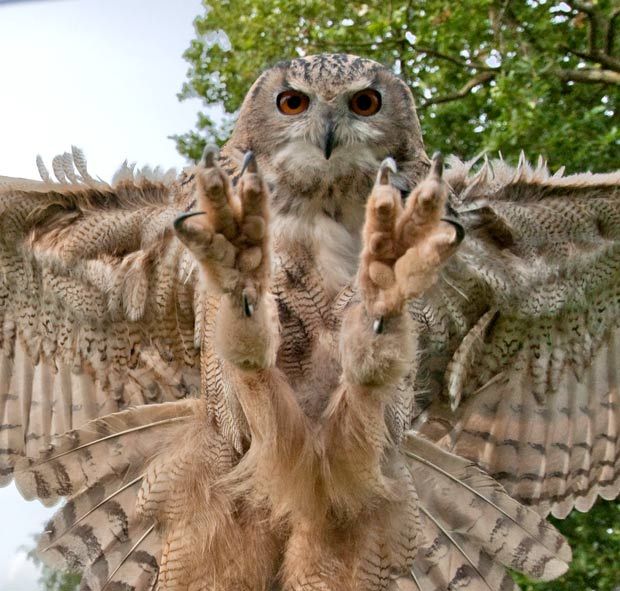 I've got you... You're MINE! 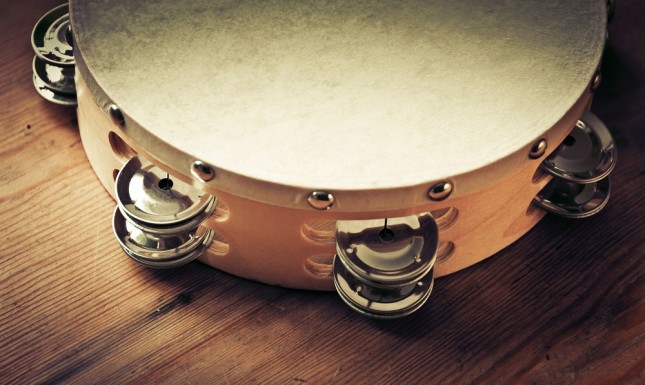 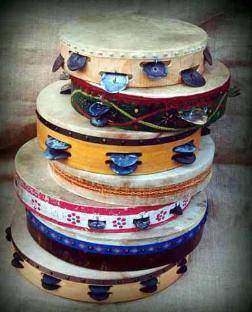 The Italian tamborello is an integral part of Italian folk music with history over 2000 years old. Also called tammorra (a slightly different design) and tamburo, this hand drum (a fore-father of the tamborine) holds a prominent role is in the accompaniment of the tarantella, which is an old hopping dance allegedly related to ancient Dionysian ritual dances. The name references the hopping of the tarantula spiders during their mating dance. As varied as the landscapes, dialects and cuisine of Italy, many variations exist in both the tarantelle and the playing techniques of the tamborello instrument. All techniques allow virtuoso triole-playing (rapid, triple strokes) by using different rotation techniques, where the hand rotates either over the horizontal or the vertical axis of the drum. This can also be accomplished by a stiff finger dragging and jittering forwards across the drum head--a very difficult technique only masters of the instrument achieve. 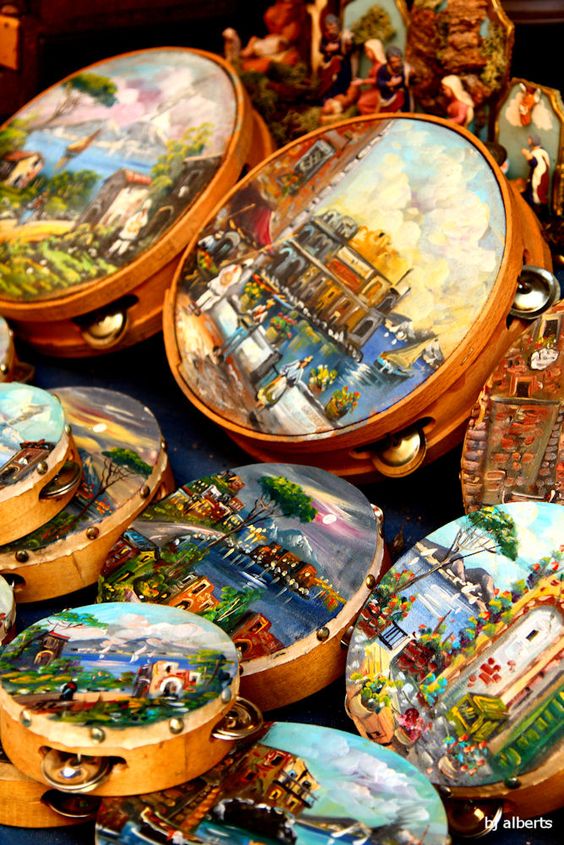 Cheap, painted tamborelli made for tourists Cheap, painted tamborelli made for tourists Traditionally, a tamborello would be made by the same artisans that made household and farm sieves. The technique used steam to bend the shape of the frame for each drum. Skins can be dog, cat, kid (goat) or even donkey. In Calabria, often the hairs are left on to give a deeper, more mellow sound. In Sicily the skins are highly refined giving a more bright, crisp sound. Many modern tamborello are made using synthetic drum heads which keep their pitch, unlike natural skins which change their pitch depending on humidity. Even today the tamborello can be heard on every street and folk dance festival in Southern Italy. The culture and music have been passed on over the many centuries with considerable changes. Nowadays fusions of tarantella with Heavy Metal, Ancient Music, Jazz, Pop etc. are very popular. 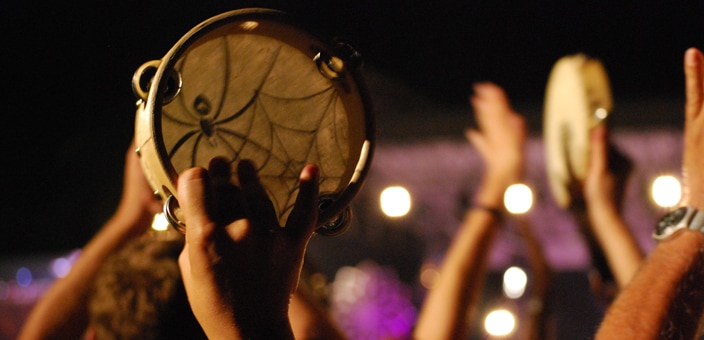 Watch a master demonstrate some techniques...   Giancarlo Gianini added his eyes into his sign language Giancarlo Gianini added his eyes into his sign language We've all seen Italians talking with their hands, waving them wildly in the air, sometimes right into the face of the person they are talking to. To the onlooker it seems random, yet it does seem tied into their facial expressions, which will change swiftly depending on the gesture being used. It's led people to paint a caricature of every Italian, although most Italian Americans don't have a clue about this unwritten language. Yes, it's a language in and of itself.  Marcello Mastroianni was always good with his hands--just ask Sophia Marcello Mastroianni was always good with his hands--just ask Sophia Where did it start? What's the reason? It more than likely started in the port cities of Italy after the Roman Empire. I say after, because before that Latin was a widely spread language. After the fall of the Roman Empire, imported languages started taking over, as conquerors and immigrants came from many different parts of the ancient world: The Carolingians (mixing early German and French into northern Italy), The Visigoths (mixing German, Spanish and French), the Normans (descending from Vikings from Northern France, they took over Southern Italy), Saracens (Muslims that invaded southern Italy and settled in Sicily), the German tribes (in pre-Christian times and in the middle ages), French (taking over northern Italy in the 1400s) and Austrians.  "Furbo", Watch Out, Pay Attention "Furbo", Watch Out, Pay Attention Leaving Latin Behind Latin itself morphed into what we now call the Italian language. But even "modern" Italy didn't become a cohesive nation until the 1860s, and still today Italians are very region-centric, with many varied dialects still spoken throughout the country. One example I witnessed is on the train from Bari to Rome. The announcements were in three languages: English, Italian and Southern Dialect. And believe me, Dialetto sounds very different than "proper" Italian--my Dad spoke it. He was from Molfetta. My Mom couldn't understand him. She spoke another Dialetto from Naples. 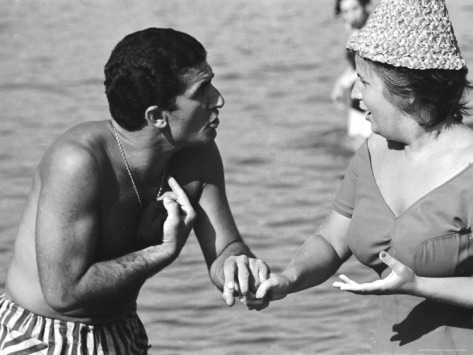 The port cities, like Naples, Venice, Bari or Palermo needed a way to communicate with the many different people, all speaking different tongues. Every so often a a new population and ruling class would be established, depending on who the conqueror was. Hand gestures became a necessity in Italy, and it remains today a large part of how people communicate. For this reason, this might make things easier on travelers to Italy as Italians have many ways of getting people to understand what they are saying. At the end of this post is a video of a charming Italian gent illustrating the many subtleties of hand gestures. You could learn to have an entire conversation without words! When I was a kid, my parents told me not to eat with my hands... but speaking with my hands was absolutely permitted. Ciao! --Jerry Finzi 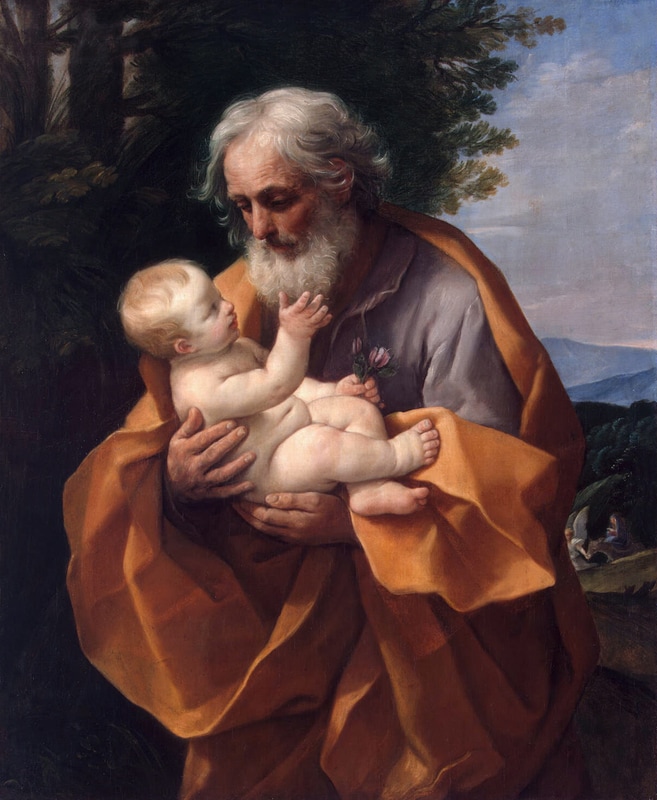 As a young Catholic, all I knew about St. Joseph is what the nuns taught us: that he was a foster parent to Jesus; he worked as a carpenter; and that if your parents were selling their home, burying a little plastic statue of him upside down in your garden would help get a buyer. As a grown man and a father to my Lucas, I realize that St. Joseph's real strength was as a father. He must have been a man of great faith and trust and love to accept Jesus as his own son. Because of this, in Italy, the feast day honoring him is used to honor all fathers... La Festa di San Giuseppe (Feast of St. Joseph) on March 19th in Italy is a saint day celebrating the mortal father of Jesus--namely, Joseph. There are two meanings for this day in Italy: as a Name Day to celebrate anyone with the name Giuseppe, Joseph, Josephine or Beppe, but also as La Festa del Papà (alternately, la Festa del Babbo), on which most Italians celebrate their fathers, as we do on Fathers Day. There are some interesting ways to celebrate, but of course, most involve food. For instance, artichokes come to market in March in Italy, so eating artichokes stuffed with a breadcrumb mixture is one way... the breadcrumbs represent sawdust, honoring St. Joseph's life as a carpenter. On St. Joseph's day, tradition calls for sprinkling breadcrumbs on pasta dishes rather than cheese. Then there is Pane di San Giuseppe in which bread dough is fashioned into crosses and other various shapes.
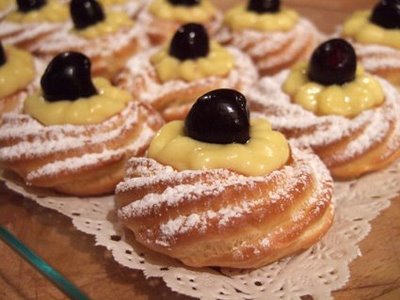
Another cerebration dish to make to celebrate St. Joseph or your Dad is to make Pasta cod Sarde (Pasta with Sardines), a traditional meal made with bucatini (hollow, spaghetti-like pasta), raisins, pignoli nuts, fennel, onions and sardines. 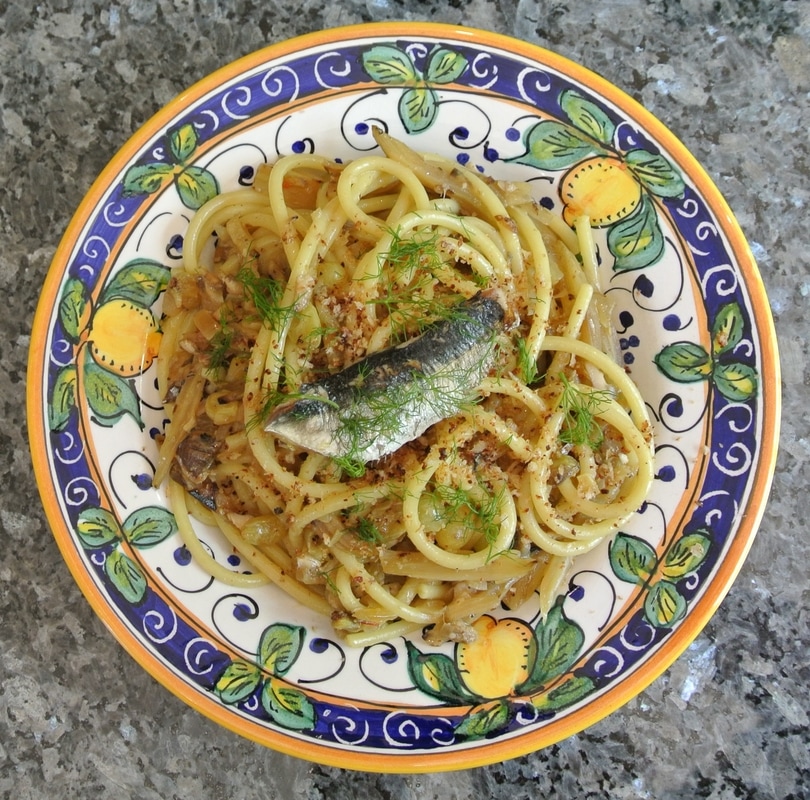 Sardines are a bit too fishy for my tastes, but my Dad would have loved this dish Then there are the sweet treats... mainly sfinci (alt, sfinge). Some are made like profiteroles or cream puffs and stuffed or topped with either a custard or a sweet ricotta filling and topped with a sour cherry, while others are more like bready, sugared zeppole, some stuffed, some not. There are also others called Zeppole di San Giuseppe that are not bready like what we Italian-Americans buy at Italian festivals called zeppole but are like cream puffs. Bottom line, there are lots of sweets that are made to celebrate St. Joseph's Day, and in Italy, the word "zeppole" is used fairly broadly to refer to many types of fried or baked donuts. 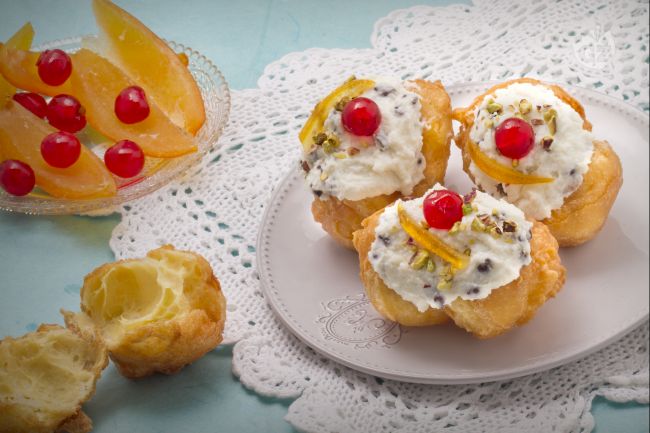 Sfinci
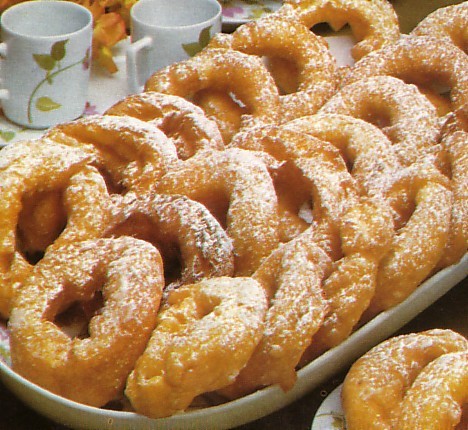 Here's another Zeppole di San Giuseppe in a more common donut shape In Sicily, during the Middle Ages, people prayed to St. Joseph to bring rain and save them from starvation and drought. The rains came and so did the fava bean crop, which saved the people. Still today, fava beans are part of celebrating St. Joseph--by eating Maccù di Fave (a fava bean soup) and carrying a fava bean that has been blessed by a priest in their pocket for good fortune. 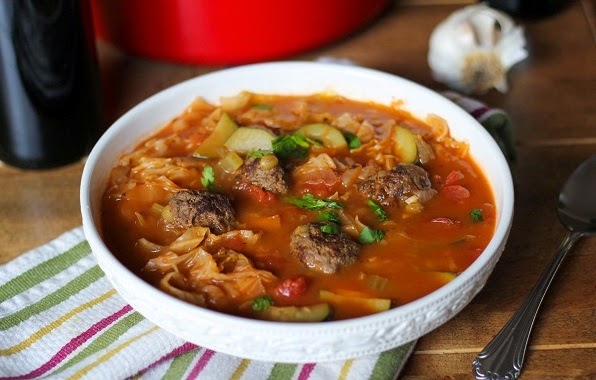 Maccù di Fave  Sfincione Sfincione In the United States, Italian-Americans started the tradition of wearing red clothing on St. Joseph's Day. This was started to offset the proximity of St. Patrick's Day (March 17th) and the "wearing of the green". Apparently, there is no religious or other significance of wearing red on St. Joseph's Day. To honor my Dad, I usually make a special Sicilian pizza--a traditional Sfincione--which is covered with breadcrumbs on top. My Dad was a decent carpenter, and always loved working with wood and his hands. When I was a boy, he held the wood as I would try using the saw. He was a truly great father, never judging, always there for me. Dad, you would have loved a couple of slices of Sfincione... We miss your smile, Sally Boy...  |
Categories
All
Archives
January 2024
|


 RSS Feed