 My father, Sal with the twins, Joan and Barbara on the streets of Hoboken 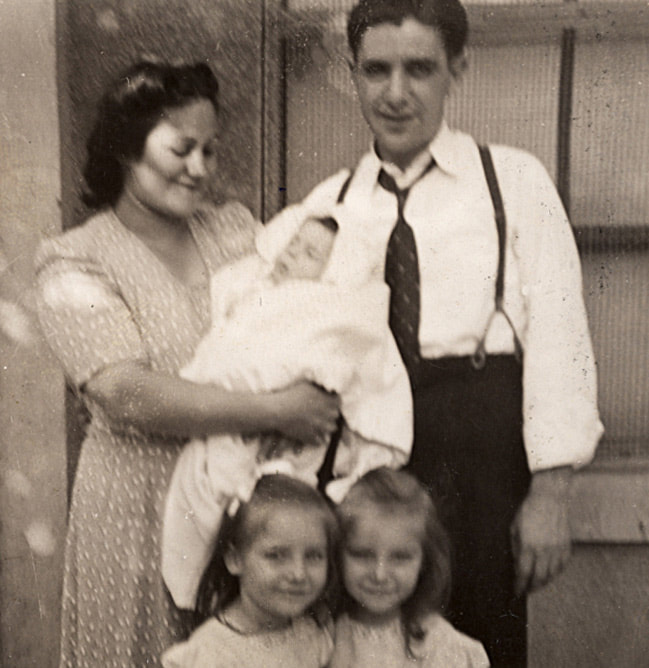 And then there were three. My brother Kenneth and the twins with Mom and Dad. And then there were three. My brother Kenneth and the twins with Mom and Dad. I suppose the first gift to my father, Sal, was his first two children... the "Twins", Joan and Barbara, born three days apart but healthy, nonetheless. This was the start of my immigrant Dad's entry into fatherhood. Just when other men were being drafted into the U.S. army to fight in World War II, he suddenly was burdened not with one, but two children--this was in 1942 when twins were a mere 1% of all births. His nickname, Sally-Boy was coming to an end. Things had just gotten serious. When he saw only one baby on that first day, the doctor casually told him, "The second one just isn't ready yet". He couldn't rest assured that everything was OK until the second was born three days later, an event that placed my mother's photo holding the two of them on the pages of New York City's Daily News. The war started and my Dad worked in a defense plant making springs for tanks. As you can see from the photo above, my father was not only a proud father, but a rather goofy one. Always the joker... that was his first real gift to his children. John and Barbara were to be followed by Kenneth, Joyce-Ann and myself, the "baby" of the brood. Somehow, Dad provided. Before he was married, he and his brother had a "Three Legged Horse and Cart" and sold fruit and vegetables to the seamen down at Hoboken harbor. He had dreams of having his own Italian delicatessen or market someday, but he opted to have security for his family, always working for others for a steady salary. He clothed and fed us by being a grocery and deli man his entire life. This was another gift to us all. 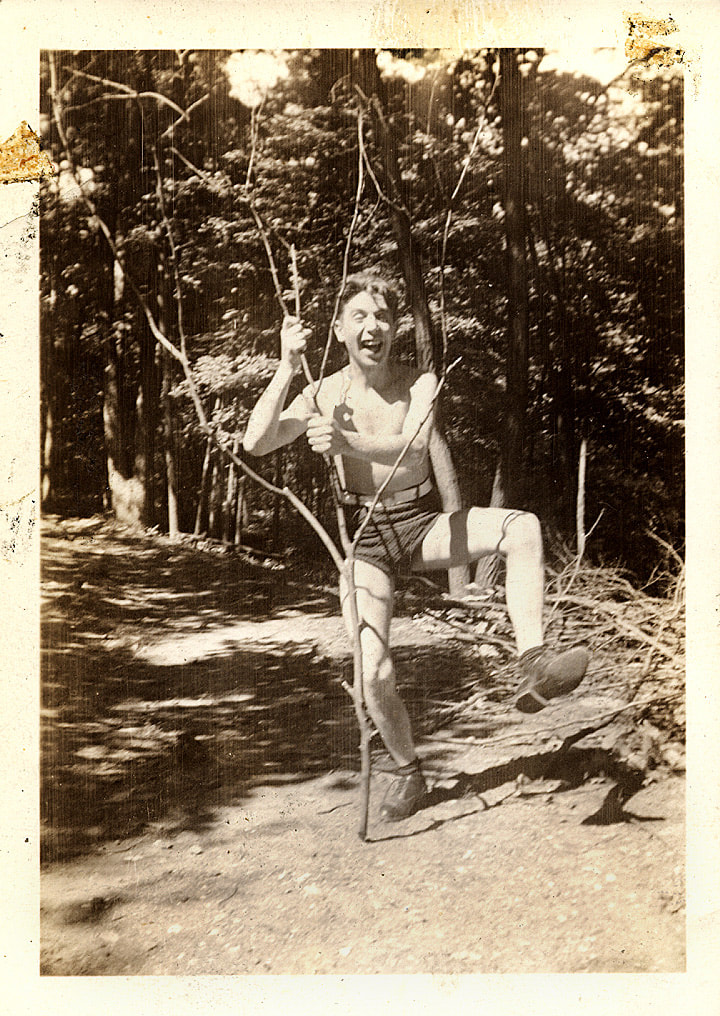 Always the clown, even as a young man Always the clown, even as a young man Dad always played the fool, constantly at the ready to play a joke on us, to get us to laugh, putting us close to sheer embarrassment. At the beach he always insisted that we bury him under the sand, head exposed with his shoes stuck out 12' away from his head under a ridiculously long body of sand. Everyone passing by loved it. After a while (and his nap) we'd mockingly wind up stomping on his sandy "stomach" (safely clear of his real one) to the amusement of others around us, aside from my mother, who always made like she didn't know him. When we were the only Italian family going to a New Jersey mountain lake previously only frequented by Germans, my father offered them meatballs, sausage and spaghetti and became the biggest clown in the middle of the lake, making his infamous sea monster growl that echoed from the mountainside. He taught us to put small, rounded stream stones into the barbecue so they would explode and scare the heck out of Mom when she was grilling burgers and hot dogs. He came up with the idea to put the watermelon in the stream to keep it cool all afternoon--which worked great except for one day when my sister and I had to run, splashing down the stream to recapture it after it got loose. These were also gifts from Dad.  Fishing on the Hudson with Dad, myself and Joyce on the rocks Dad always took me fishing and crabbing down the abandoned docks and piers along the Hudson River. He taught me how to get past chain link fences and avoid guard houses to find the best fishing spot. I remember long, hot afternoons, the smell of fish and tar, and the pinching of the crabs we'd catch in our box crab nets. Some days we'd be there so long until the tide shifted on the Hudson... in the morning the river would be flowing out to sea, and in the afternoon it the river would actually flow upstream. He'd also drop some bait lines from the wooden pilings using little screw-in springs with bells on them. A big "Mama eel" would latch on to a hook, the bell would ring and Dad would have dinner for him and Mom. One day we caught a big eel in the crab net and a big Jersey blue crab on the drop line. At the end of a long day, we'd head home with a bucket full of beautiful blue crabs and perhaps a few eels to fry up. Again, more gifts from Dad. 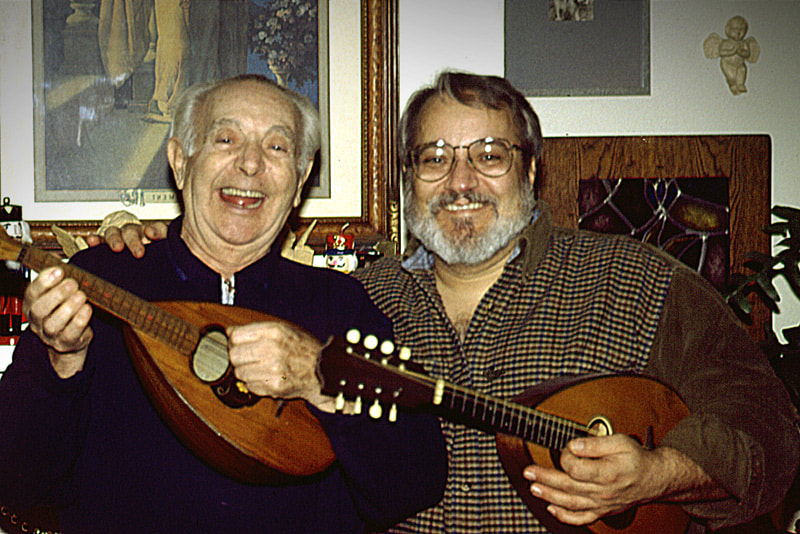 Sally Boy and Me Of course, we all bought Dad gifts for Father's Day. I remember saving the deposit money I earned from collecting empty soda bottles and buying him a bottle of shaving lotion or a pair of socks. A I got older, my gifts were many and varied: bottles of Amaretto, a fishing rod, a lop-eared rabbit, a 3 foot tall basket woven bottle of Chianti, a turquoise pocket knife, a trip to Caesar's Palace in Atlantic City, and odd assortments of power and garden tools.
But looking back, my gifts never matched the gifts he gave to me. He gave rock-solid, undeniable love and pride toward me. He gave simple, sound advice when I most needed it. He even gave me the gift of my wife and son when one day challenging me, "So, when are you going to marry that girl? You spend all your time with her anyway!" Thanks Dad... for everything. --Jerry Finzi  The culture in Italy is very different than in the U.S... especially concerning rules of proper behavior. What is acceptable in the States might be considered disgusting in Italy. What Italians consider as normal behavior, we would never thing of doing at home. Here are a few differences...  Popular tissues in Italy Popular tissues in Italy
 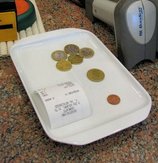 Pick up your change Pick up your change
 Avoiding la colpo d'aria 
 It's Chilly down there It's Chilly down there
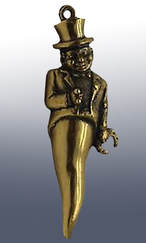
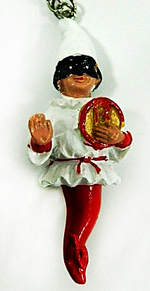
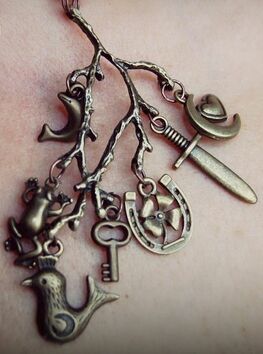
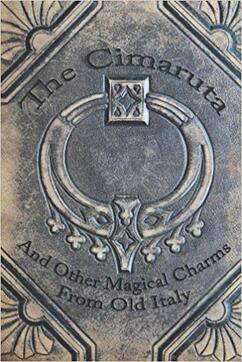
--GVI 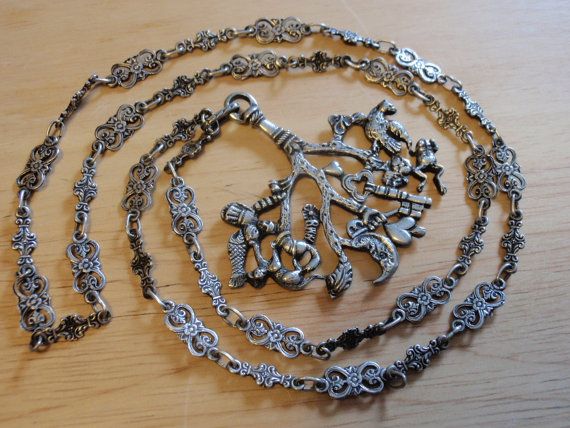 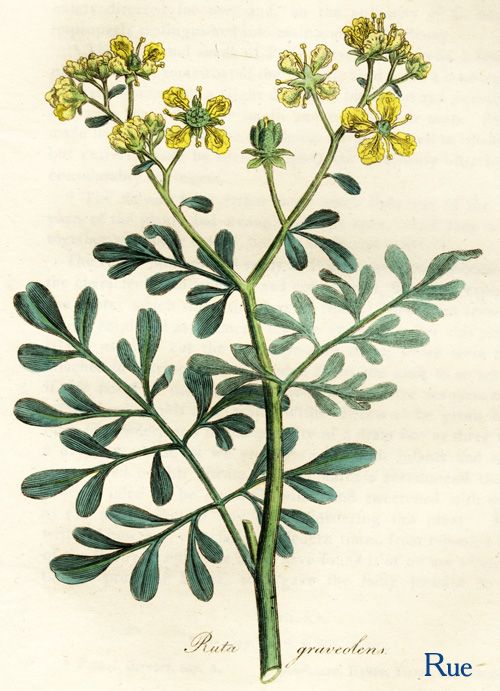 The cimaruta is a very old Italian portafortuna (good luck charm) rooted in the lore of the ancient Pagan religions of Italy. It can be worn around the neck or hung above an infant's bed to ward off any evil. Like many of the lasting ancient symbols and beliefs, the cimaruta design eventually took on certain symbols of Catholicism. One example of a Christian addition to the design is the appearance of "the sacred heart" of Jesus. However, ancient Roman charms did include a heart symbol, which may indicate that the heart on the cimaruta isn't an entirely new addition. The traditional cimaruta is fashioned after the leafy sprig of rue, which is an herb that is highly featured in Italian magic and lore. The branch of the rue is divided into three stems symbolizing the three forms of the goddess Diana. Rue was a sacred herb for Diana. Various charms appear on the rue design, each having its own meaning. The main symbols are the moon, serpent, and key. These represent the goddess as Hecate (the key), Diana (the moon) and Proserpina (the serpent). There may also be a rose; a hand holding either a wand or a sword; a flaming heart; a fish or dolphin (a nod to Diana); an owl (to flirt with the Devil); a plumed medieval helmet; a vervain blossom (a flower from Italian fairy ore); a cherub; a rooster (watchful guardian); and an eagle (able to see evil coming from far away). One cimaruta, for example, might bear the collective imagery of a key, dagger, blossom and moon. The cimaruta is worn nowadays more by women than men. 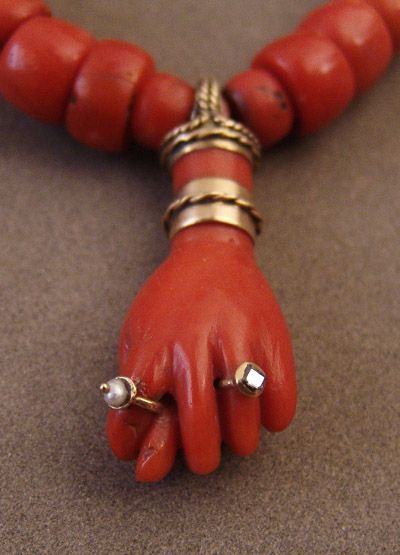 Mano in Fica The clenched fist with a trusting thumb is known as mano in fica or simply, mano figa ("fig-hand"), or far le fiche ("c*nt gesture", pardon the profanity), for the resemblance to female genitalia. The word figa itself is a very vulgar word to describe a vagina in Italy. Such a rude hand gesture was common in past centuries, similar to "giving the finger" or "flipping the bird", but has fallen out of use. Dante's Divine Comedy (Inferno, Canto XXV) mentions the mano in fica. Supposedly, this charm is used to insult the devil and others casting evil spells. 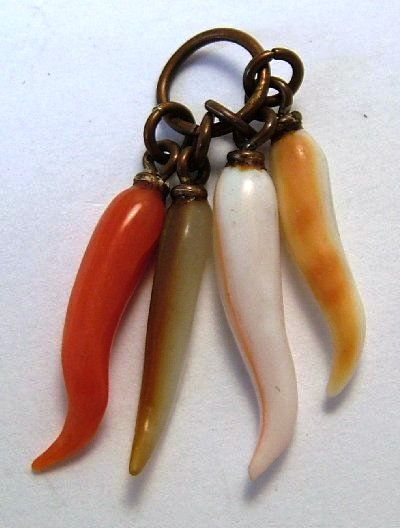 Cornetto The cornetto, shaped like a horn or chili pepper, is still popular in Southern Italy around Naples, Calabria and in the rest of Mezzogiorno (southern Italy). In Calabria and Naples this charm is worn as jewelry, hung on rear view mirrors, hung in shop windows, on key rings, and on t-shirts. It is more effective if it is red (representing an enemy's blood) and topped with a crown (representing wealth). The cornetto is a symbol of virility (obvious with its phallic shape), but it also brings luck, wealth, success and can also used by women. A similar magical horn of plenty was carried by the Roman Goddess Abundantia to represent abundance, and many think the cornetto has its roots in ancient Roman times. 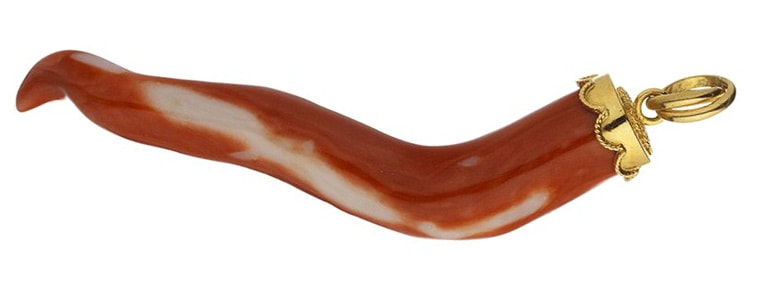 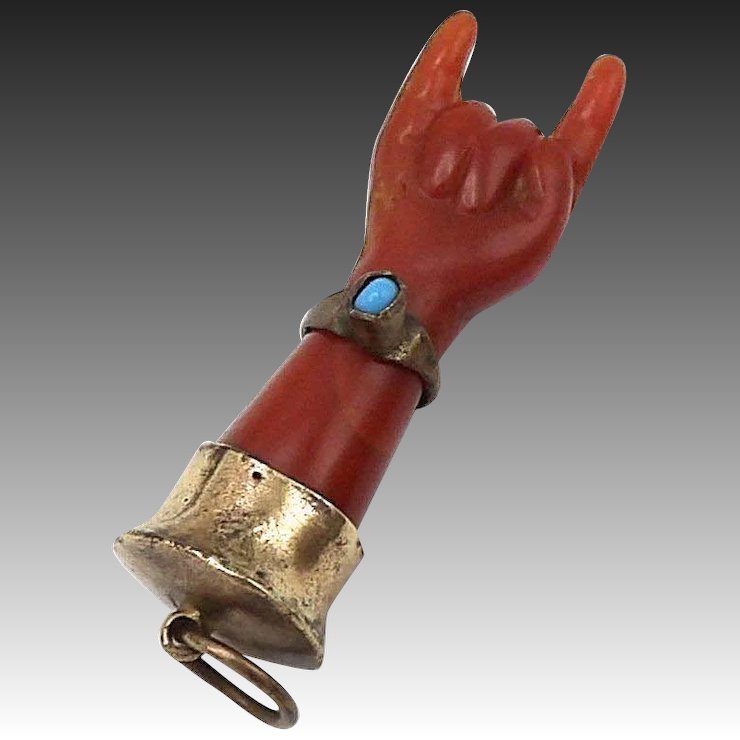 Mano Corno An alternative to the cornetto, some claim the Mano Corno can ward off the malocchio (evil eye). However, in Italy, the Mano Corno can be seen as offensive... this hand gesture is called cornuto, or a cuckolded man. Give this hand sign to an Italian man and you are basically calling him weak, pathetic and unmanly. This sign--along with sticking up a middle finger--are the most insulting signs you can insult an Italian man with. This charm directly insults the devils and his demons himself. 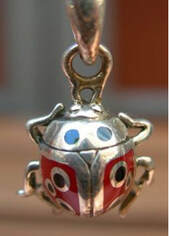 Coccinella The Coccinella, or ladybug (ladybird) charm brings luck in the arena of love and romance. it's a very common charm in Italy, especially with women. The red color has multiple meanings... red represents victory over one's enemies (spilling their blood); red helps ward off malocchio; and red also is the color of passion and romance. Another fact about the ladybug is they eat the bad bugs who would eat a farmer's crops, so of course they came to be thought of as a sign of good luck, helping prevent crop failure.
  When I was a kid, we would occasionally find a garter snake living in our small urban garden along with our collection of 15 box turtles. I always loved snakes... smooth, silky, muscular and graceful. On our country property today, I've often seen several species of snakes: garter, ribbon, black rat. The hill behind our home is called Rattlesnake Hill, but I've never seen one. I still find it interesting when I come across snakes... but I don't honor them in any way and couldn't dream of anyone holding a festival for them!
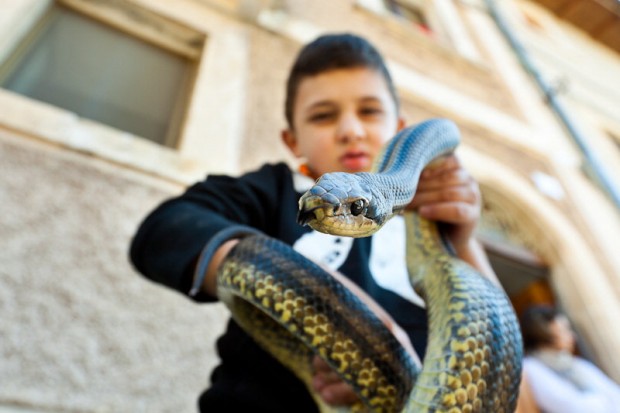
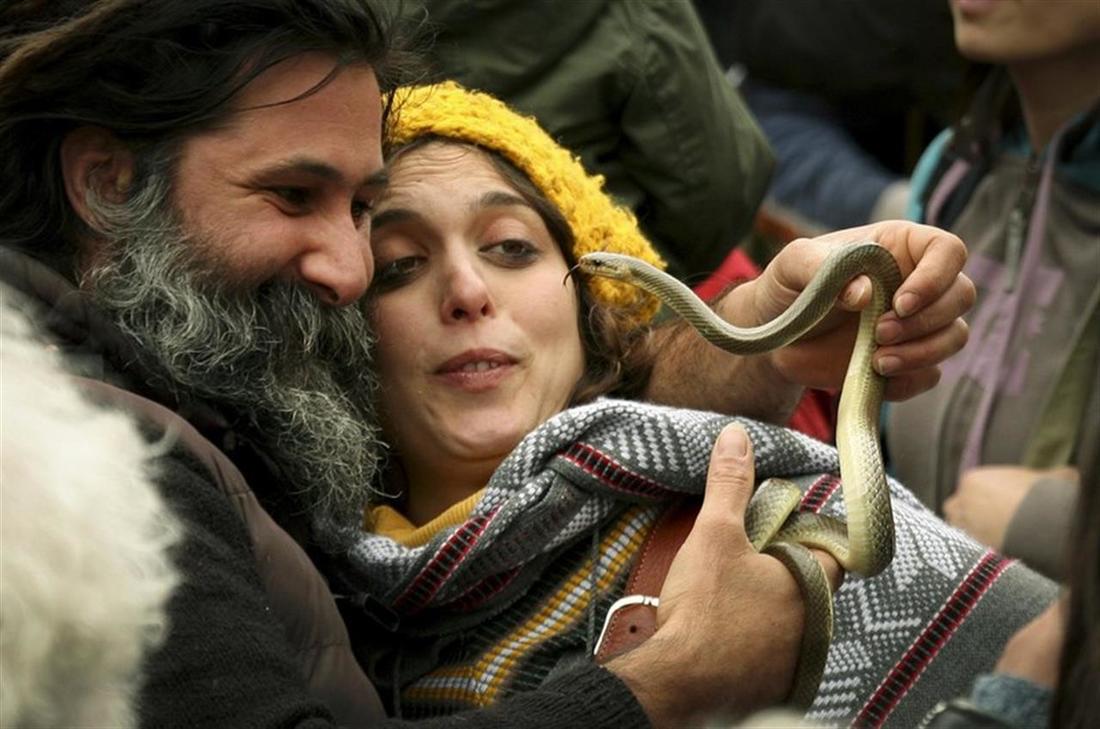
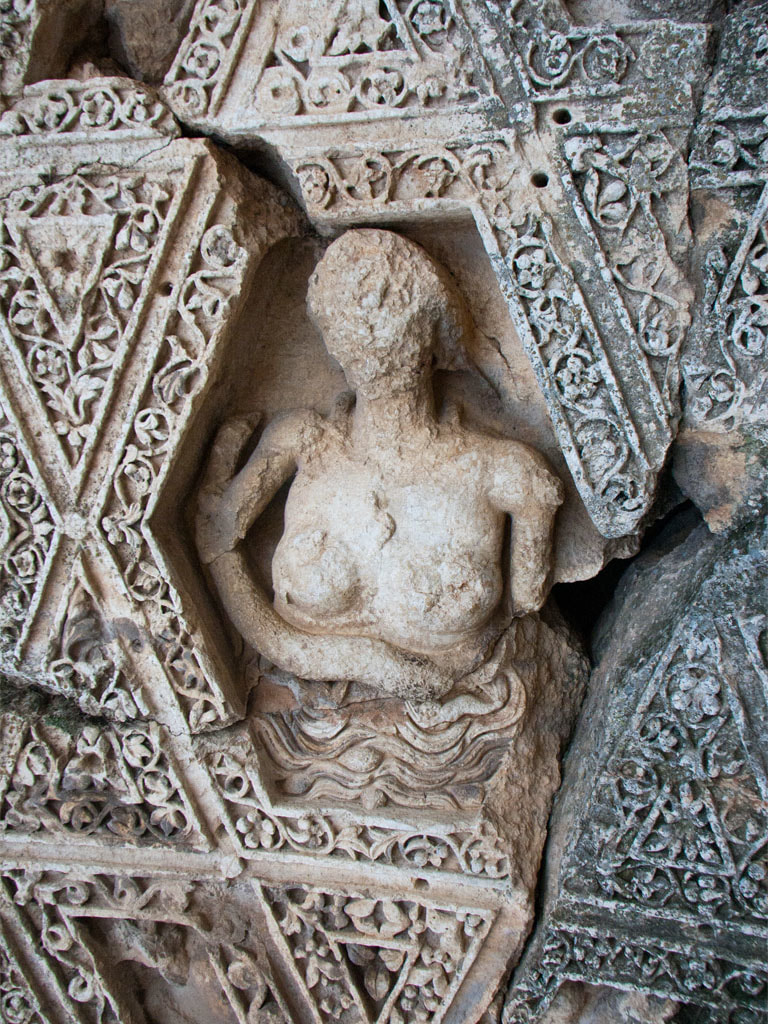 Ancient Roman temple to Angitia Ancient Roman temple to Angitia Yet, each year in the beginning of May, in the small towns of Cocullo and Villalag0, La Festa dei Serpari is held. The festival is held in honor of Saint Dominic, protector of toothache, reptile bites and rage. But the festival also has ancient pagan roots in honor of the Oscan healer and snake goddess, Angizia. Also known as Angitia to the ancient Romans, she was revered by the Marsi, a warlike tribe of people who lived to the east of Rome in the Apennine Mountains. 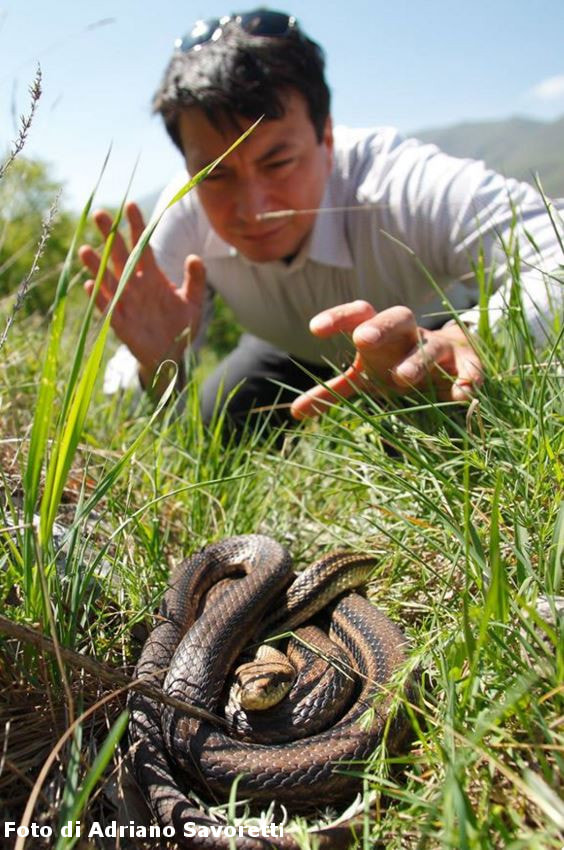 Separi reaching for his catch Separi reaching for his catch Angizia possessed an ability to heal those who had been poisoned--especially by snakes--and had the power to kill serpents by casting verbal spells. First century Romans knew the Marsi region contained many healers, magicians, and snake-charmers was infamous as a hotbed of witchcraft. The Festa dei Separi honors the modern-day separi (snake wranglers), with many of them catching and contributing snakes to the festivities. In preparation for the Festival, during the last half of March, the separi spread out across the countryside in their hunt for snakes. Once captured, they are carefully stored in wooden boxes, or as in ancient times, inside terracotta containers for 15-20 days. The snakes are fed a healthy diet of live mice and hard-boiled eggs. 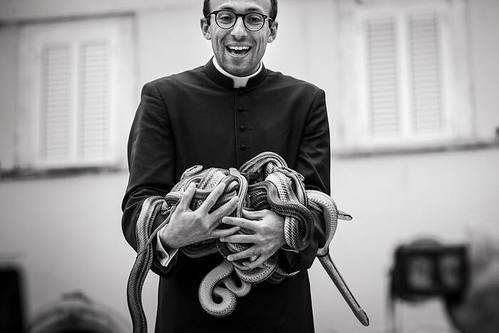
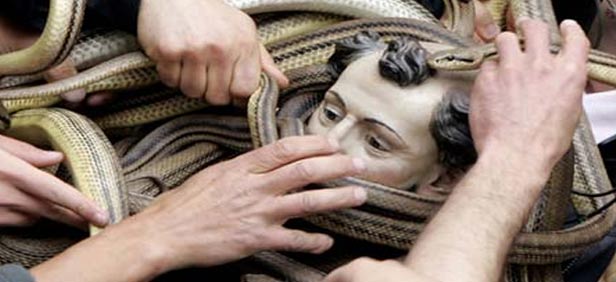
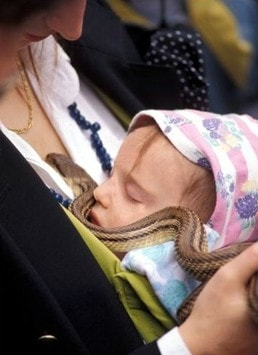
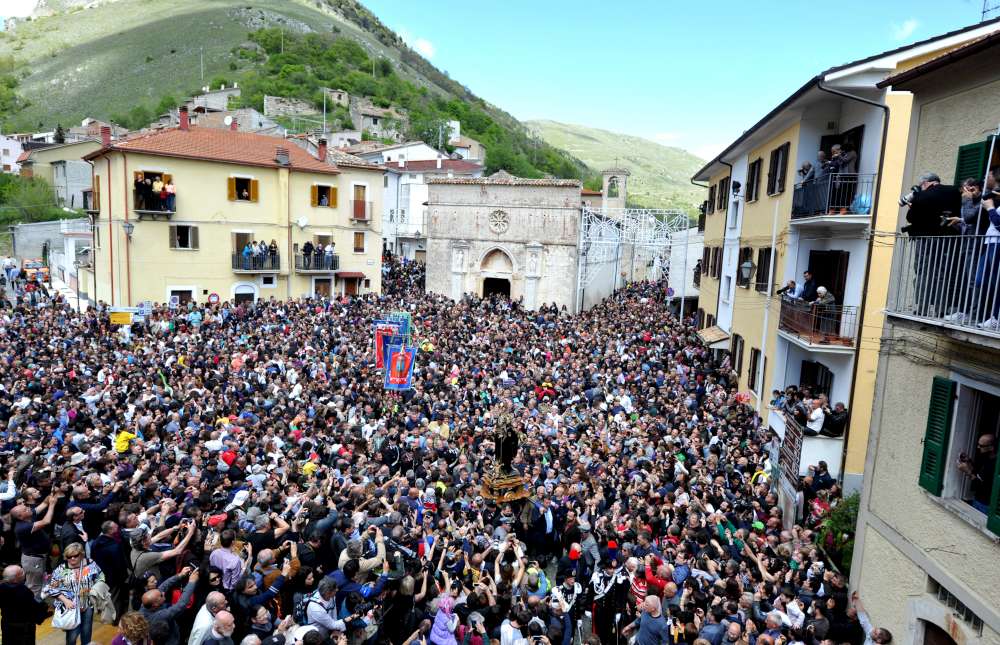 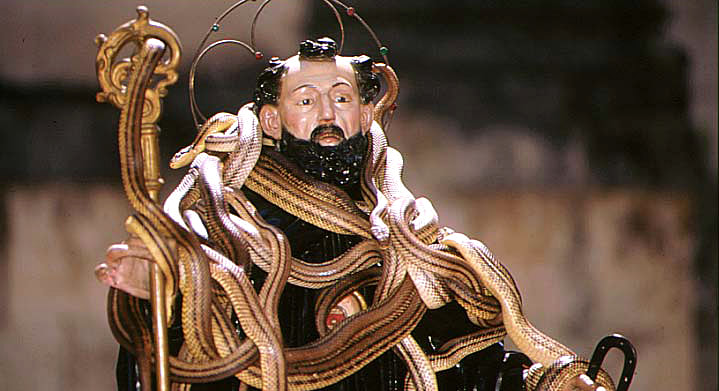 On the day of the festival, pilgrims gather in the church of San Domenico to be healed. After Mass, the statue of the Saint is draped with live snakes and carried into the piazza where believers gather to touch both the Saint and the snakes for their healing powers. The local separi also drape themselves with snakes and follow the procession. In years past, the snakes were killed afterwards and eaten in a feast, but now the bread is substituted, formed into various snake shapes... interlocking rings of snakes, biting their tails, or as serpents with sliced almond scales and coffee bean eyes. The snakes are no longer killed, but released back into the wild when the festival is over.
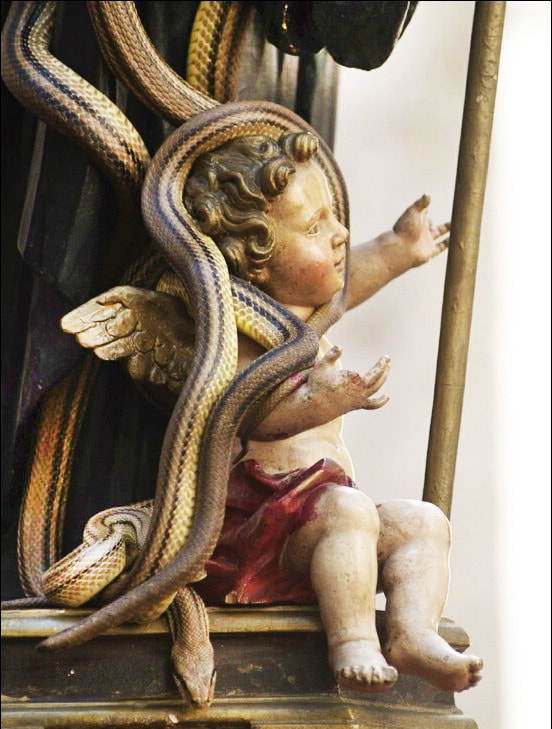 Some other scholars argue that the festival dates back even further to the Greek hero and god, Hercules. Supposedly, jealous Hera sent two snakes to kill him in his crib. The infant Hercules was unusually strong and fearless and strangled the snakes before they could strangle him. In the nearby hamlet of Casale votive bronzes representing Hercules have been found. Saint Domenico himself is particularly revered in Cocullo because some personal relics are kept in the church there: a molar and a horseshoe from his mule. Villalag0 also has one of his molars. There is no telling who has the rest of his teeth. Perhaps they were eaten--by snakes. --GVI 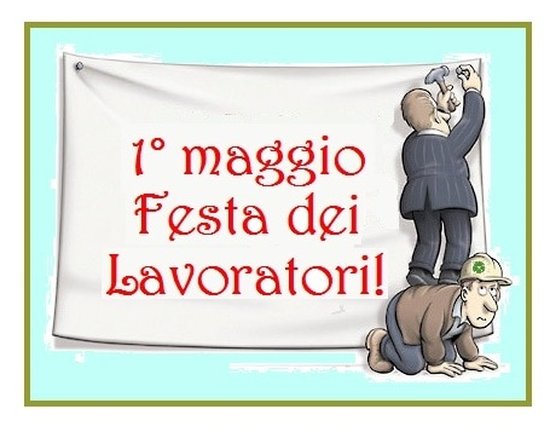  In the United States, May Day isn't really a holiday at all. All we know about it is when people with roots from Germanic countries celebrate the return of summer with children dancing around the ribboned May Pole. We also know it as a day of marches for left-wing or worker political parties promoting their agendas for various worker's rights, similar to how workers in many countries treat May Day. In Italy, the 1st of May is called Festa dei Lavoratori (Workers' Day), similar to American's Memorial Day or Labor Day. While there might still be workers marching and holding protests depending on which way the the political and economic wind is blowing, for most workaday furbo Italians, it's simply a day off from work and a long weekend to go to the beach, attend one of the many rock concerts, have a barbecue or rent a holiday cabin in the mountains. After all, it's a lot of work to organize and protest on hot city streets, isn't it? Easier to just go to the beach and throw some steaks on the grill. Most museums are closed as well as many other shops for the entire holiday weekend. This is perhaps not the best weekend to visit major tourist destinations in Italy simply because this is one of the holiday weekends where Italians do the tourist thing... just the way Americans might visit tourist sites in the States during Memorial Day or Labor Day weekends. 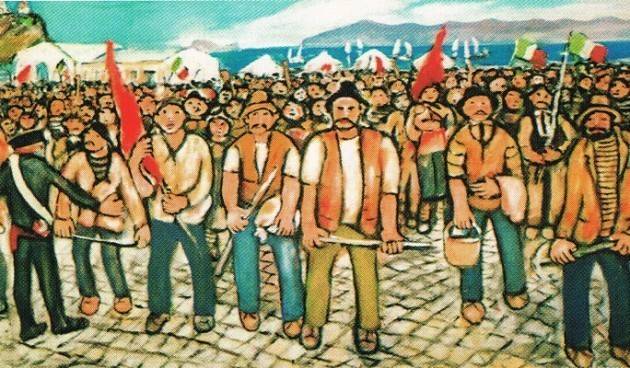 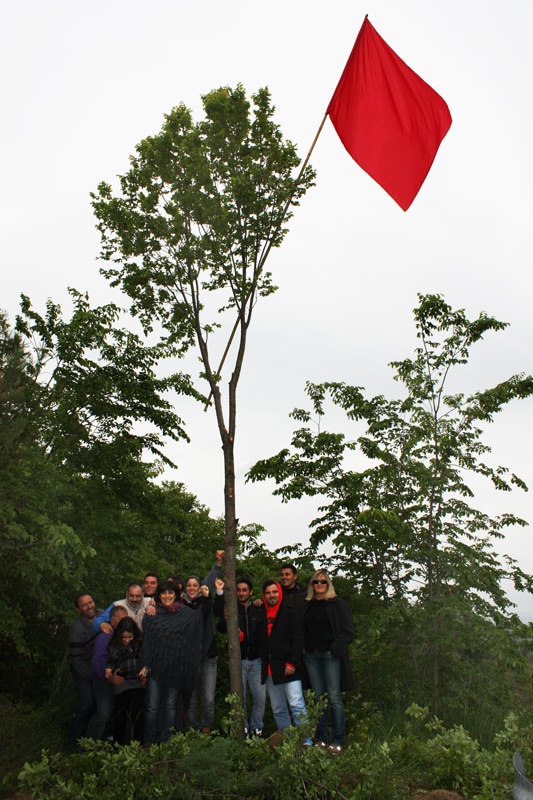 Red flag raised on maypole at Appignano del Tronto Red flag raised on maypole at Appignano del Tronto Still, in some parts of Italy (southern Marche, for example) a red flag is placed at the top of a poplar tree as a Socialist party symbol. If you're overly anti-communist, don't get paranoid... Italian socialists--and communists--mix well with other Italians and tourists alike. You might meet them later on during the weekend at the beach...
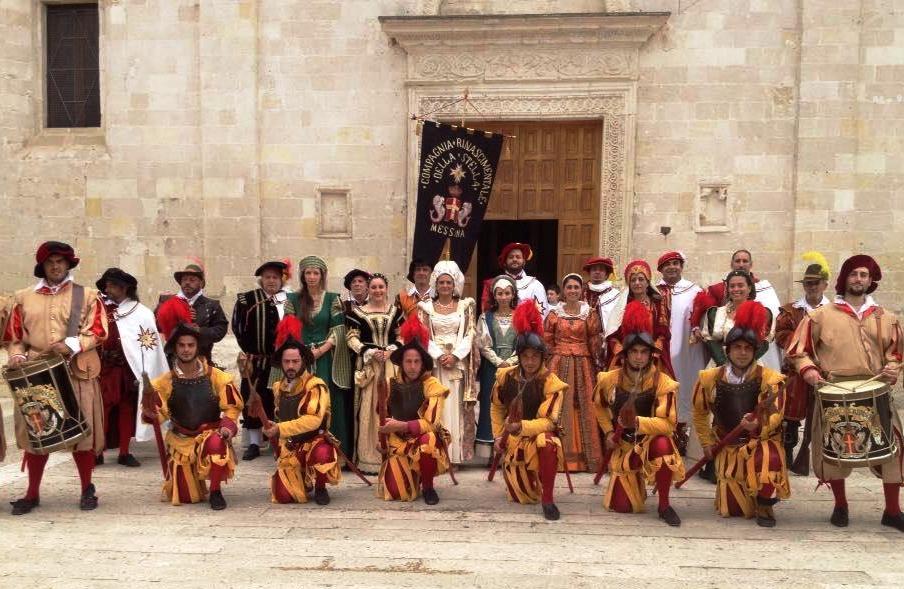
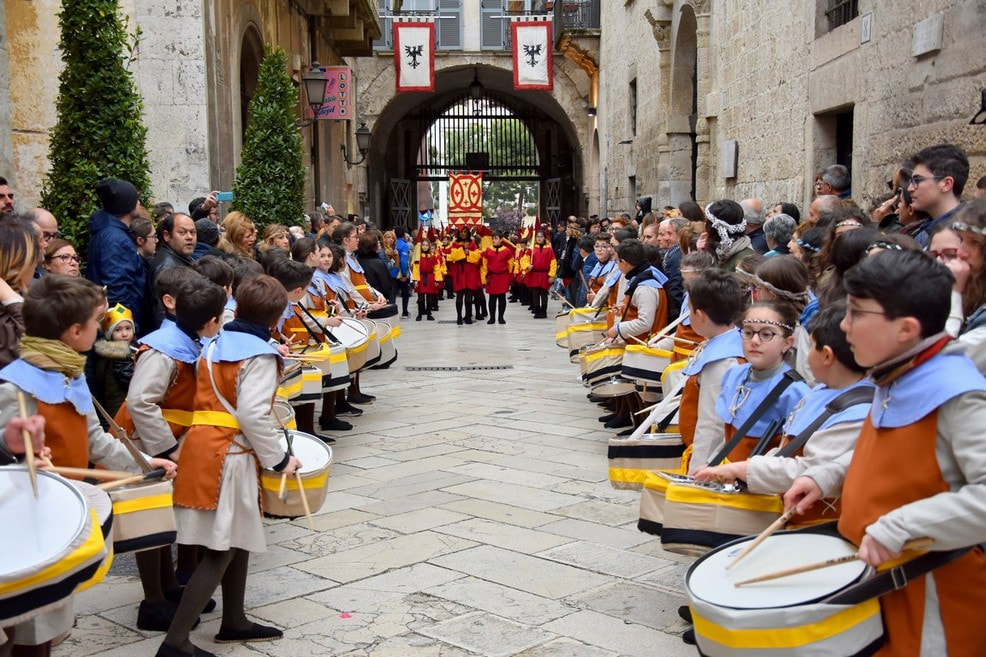
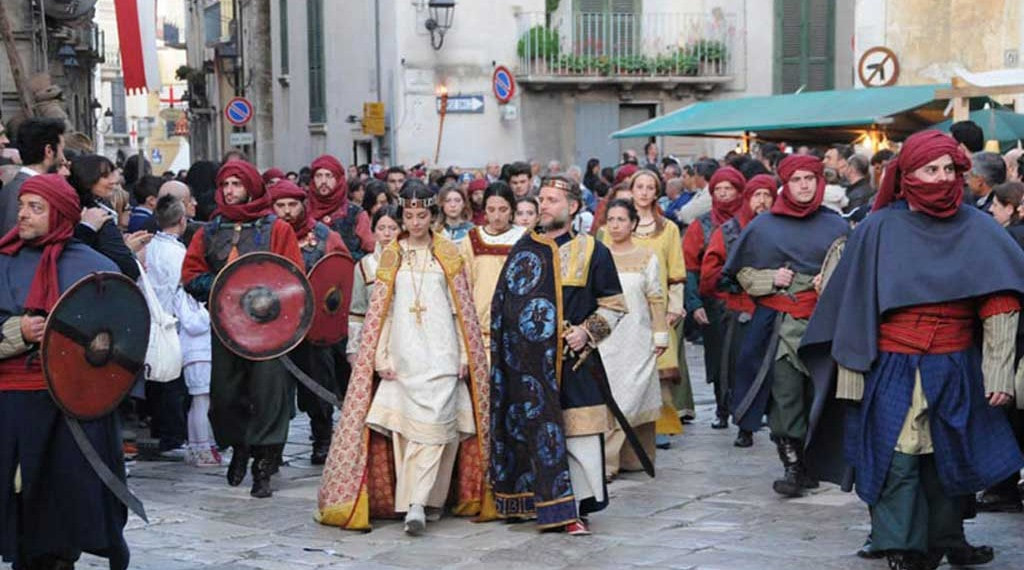
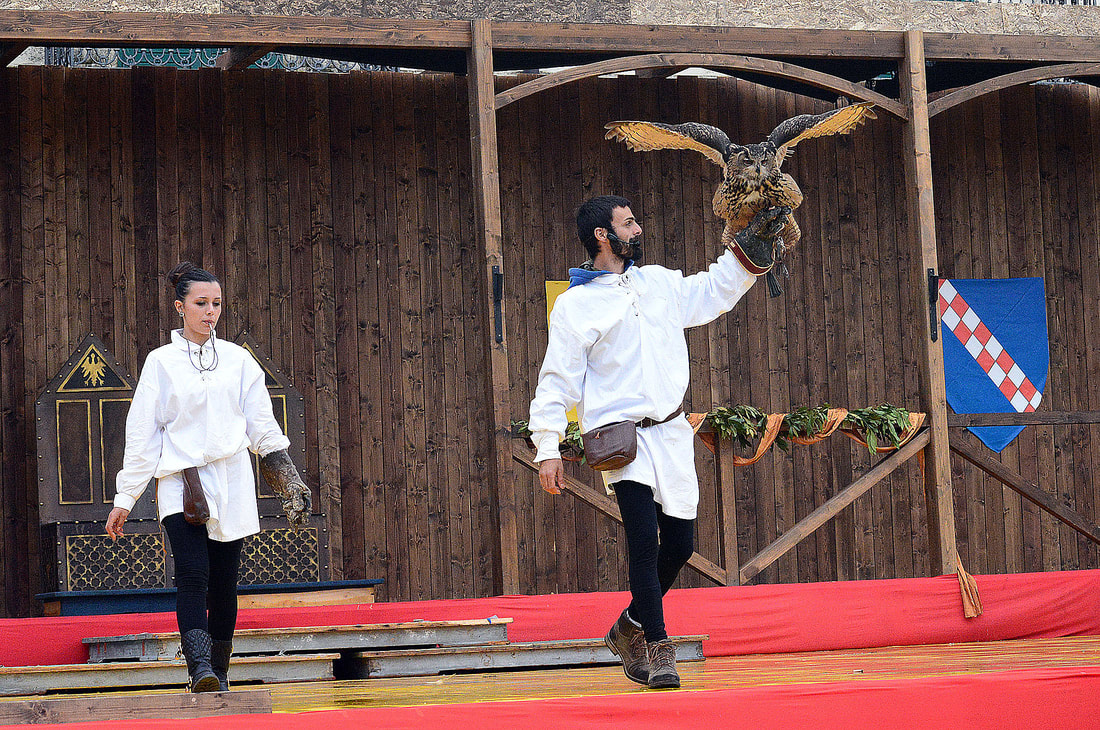
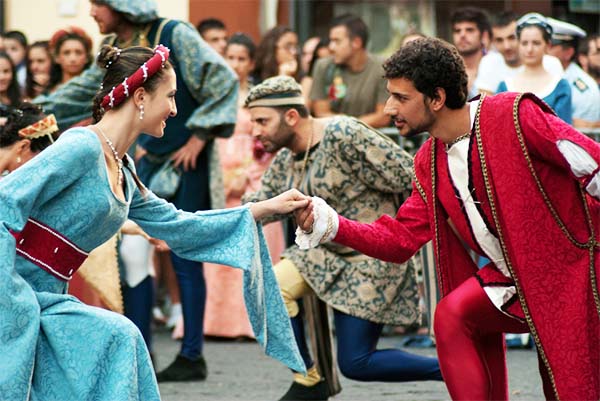
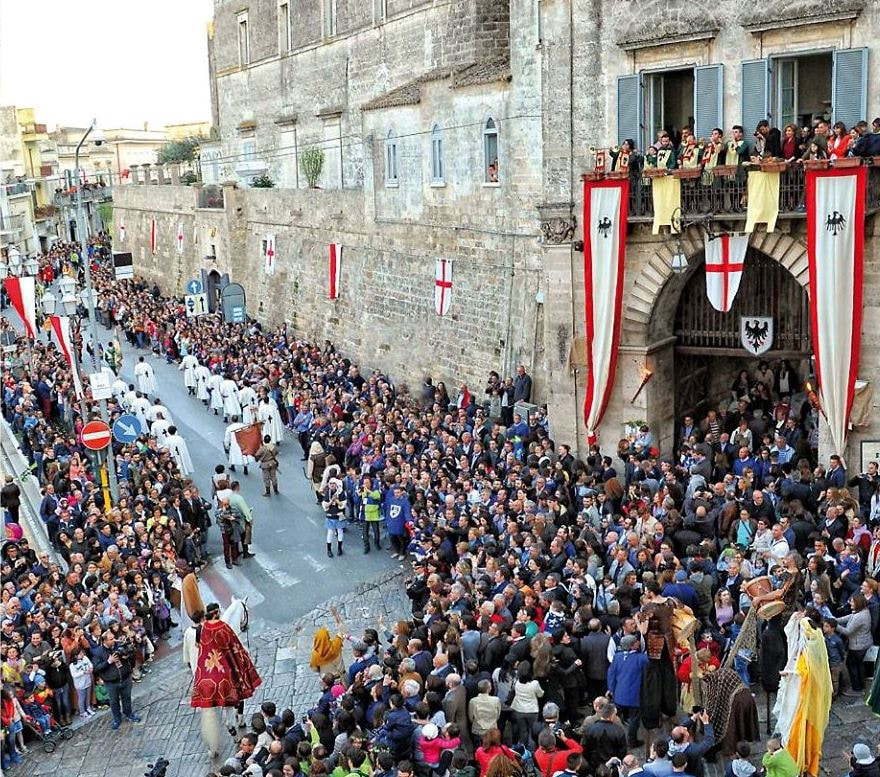
Have a great May Day! --Jerry Finzi 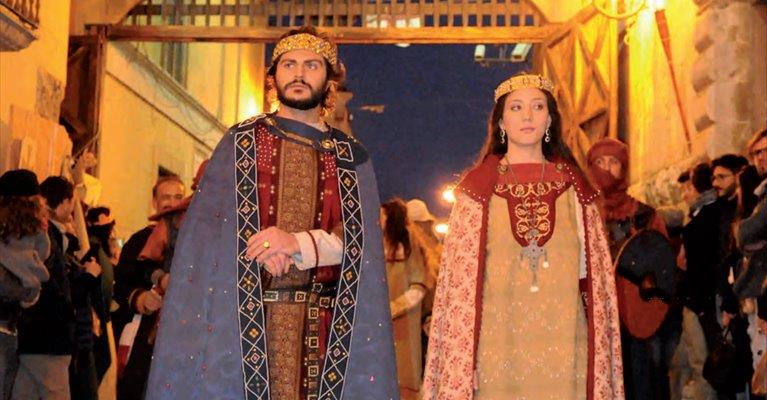 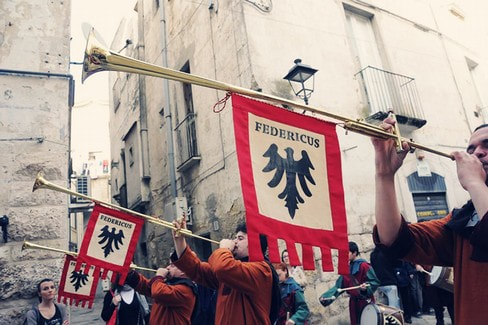 Every year around this time, the town of Altamura in the Alta Murgia region of Puglia settles down to bed in the 21st century and awakes the next morning in the Middle Ages. The Federicus Medieval Festival is a historical re-enactment dedicated to Frederick II of Swabia who stopped in Puglia during his return journey after the Crusades. In 1232 Frederick II decided to have a cathedral built, around which the town center developed. Held this year from April 28th through May 1st, the festival consists of an historical parade with jugglers, jesters, street performers, flag bearers, and of course, medieval ladies and gentlemen, ancient music and of course, food. 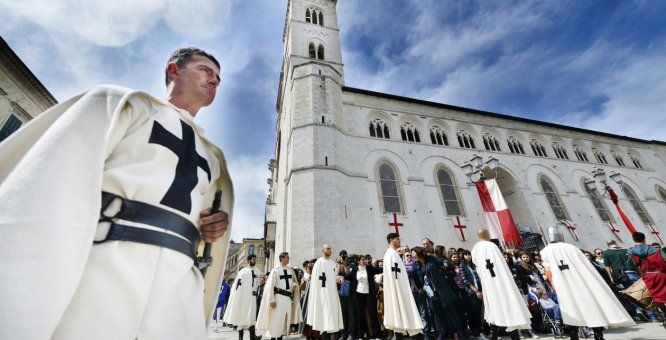
Frederick II was heading towards Bari to sail to the Holy Land, and needed to leave some of his soldiers suffering from malaria in Altamura. Miraculously, they were healed. To celebrate the miraculous recovery, the Emperor had a cathedral built in 1232. Opposing this legend, what the Emperor really wanted was to build a church to obtain the benevolence of Pope Gregory IX (who had previously excommunicated him) in a city with a strategic position within the Pope's beloved Apulia. When visiting Altamura, don't forget to sample their amazing Pane di Altamura, a wonderful, tasty bread that can stay fresh for up to a month! For more info: Federicus Festival
 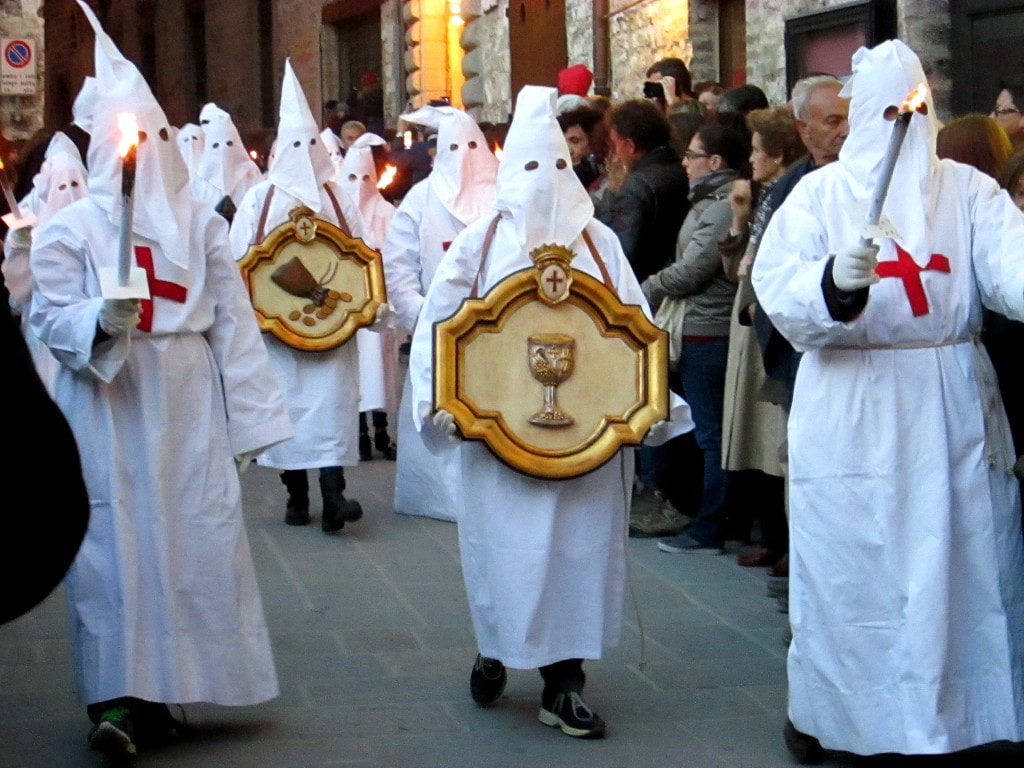 Good Friday penitent procession Confraternities of Penitents or Congrèe in Italian, are Roman Catholic religious groups, with bylaws prescribing various penitential works. Beginning in the mid 12th century, a members of these brotherhoods were referred to as converso, Church laymen who had made a "conversion of life" and were affiliated to a monastic order as lay brothers. 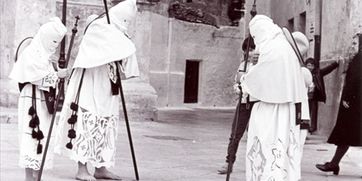 Penitents, also called Addolorati, are those who adopted asceticism, of which there are two types. "Natural asceticism" is a lifestyle with lessened material aspects, fasting, refraining from sexual relations without actually entering a monastery. "Unnatural asceticism" includes self infliction of pain or flagellation. These Penitents lived fairly normal lives, while adhering to rules against blasphemy, gambling, drunkenness, and womanizing. In 1227 Pope Gregory IX recognized his "Brothers and Sisters of Penance". As with today, most penitent confraternities were involved in charitable activity and considered benefactors to both Church and their local communities. 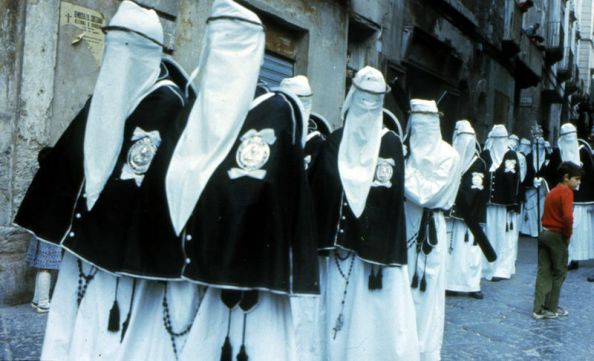 Taranto 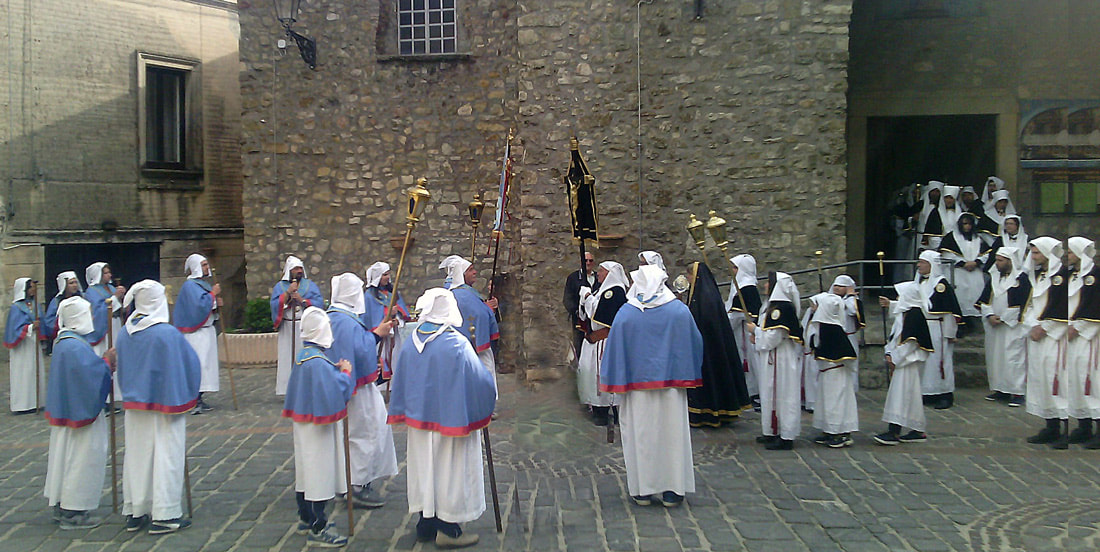 In the past as well as today, the penitent brothers are known for wearing robes and pointed hoods during public processions on Catholic holy days, such as Good Friday, to hide their identities, both for purposes of hiding their sinfulness and providing anonymity for their charitable works. I feel it must be pointed out (unintended pun here), that these are good-hearted, devout Catholics. Although their pointed caps and white robes (there are other sects throughout Europe with other colors: black, red, blue, etc.) repulse most Americans, the similar garb worn by the extreme racist members of the Ku Klux Klan and these pious Catholic brotherhoods have absolutely nothing in common with each other. The Klan sides with the Devil... the Penitents with God... --Jerry Finzi  Unnatural asceticism - Beating nail pads into their chests until they bleed - A representation of Christ's blood on Good Friday Enna, Sicily
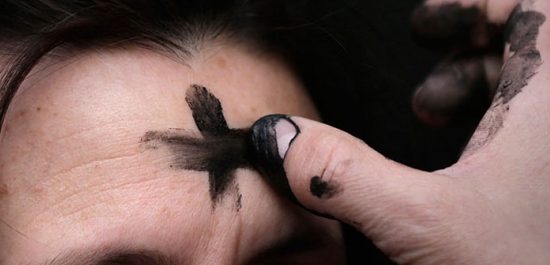 Known as Quarrelsome, or the 40th day, in Italian, Lent is the word Catholics use to describe the fast before Easter. Of course, one of the more well-known traditions during Lent are Meatless Fridays, on which Catholics refrain from eating meat. This Lenten fasting really begins on Ash Wednesday (Mercoledì delle Ceneri) and every Friday until Easter arrives. Ash Wednesday takes place 46 days before Easter Sunday, and is chiefly observed by Catholics, although many other Christians observe it too. Ash Wednesday is the day after Mardi Gras (Fat Tuesday or Martedì Grasso in Italian), the last day to party--essentially the end of the Carnivale season in Italy.  The most popular items being given up for Lent Ash Wednesday comes from the ancient Jewish tradition of penance and fasting. The practice includes the wearing of ashes on the head. The ashes symbolize the dust from which God made us. As the priest applies the ashes to a person's forehead, he speaks the words: "Remember that you are dust, and to dust you shall return. 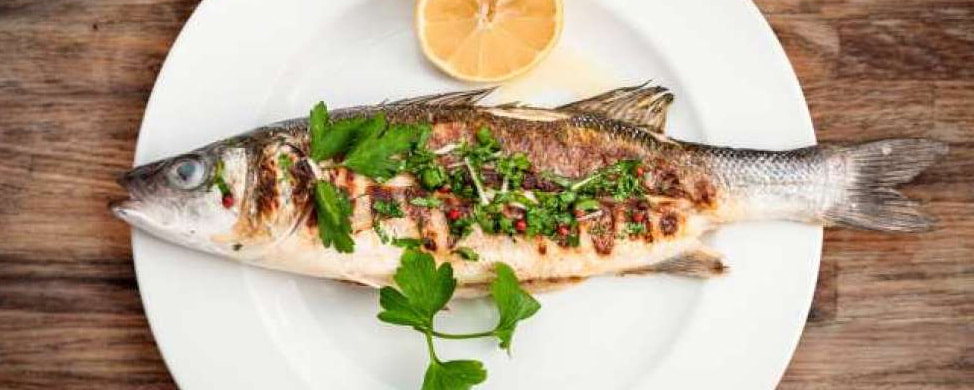  Even though Italy is a strictly Catholic country--where most Catholic holidays are also National holidays--self-denial during Lent it is no longer a strict requirement but a matter of personal principle. In modern times, fasting during Lent in practice doesn't mean starving oneself, but professing a Lenten Promise, such as giving up foods that are seen as excesses... typically, dolce and chocolate. But giving up meat on Ash Wednesday and Fridays during Lent is still a popular notion, with fish becoming the main protein during this period.
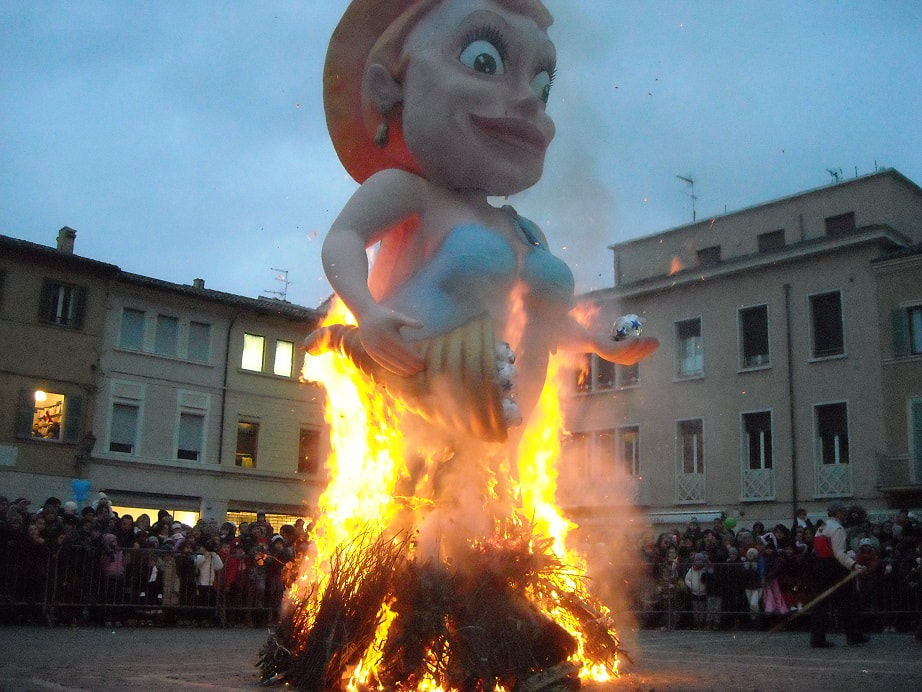
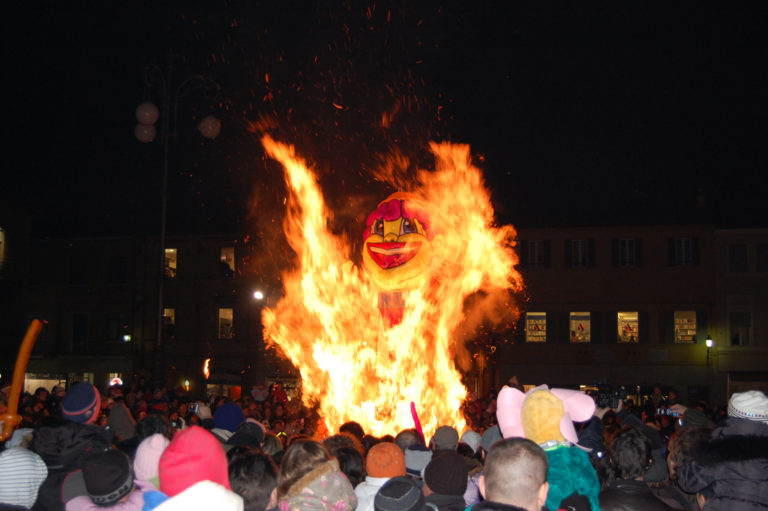
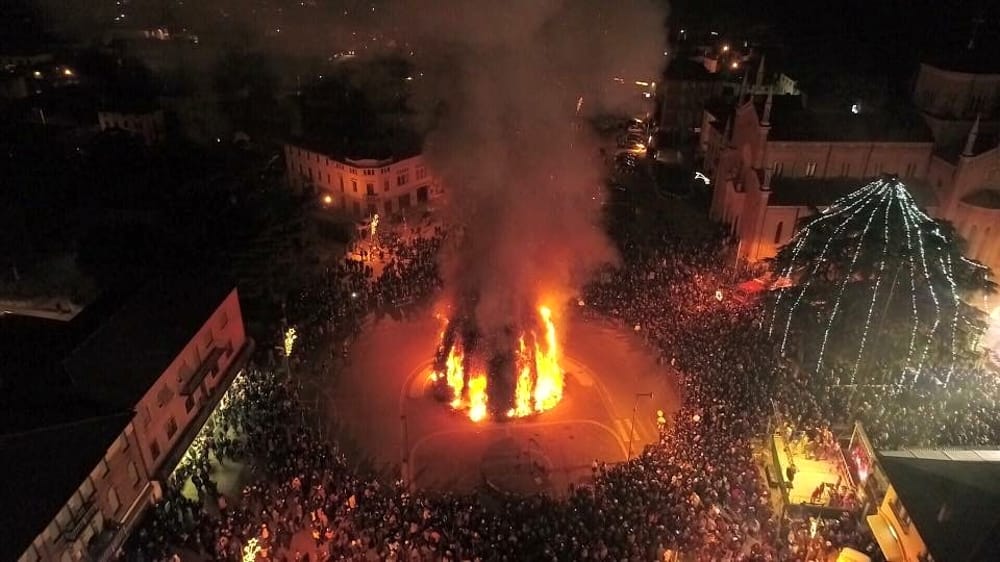 Panevin in Arcade, Veneto Fire has always been a mystical entity to Man. Even today, scientists have a difficult time explaining what fire is, while people around the planet stare into the flames and see things that dreams are made of. The glowing, dancing orange tongues of flame are hypnotizing. No wonder flames have found there way into ritual and traditions throughout the world, from modest candles to raging bonfires... In the Unites States, bonfires might be lit during homecoming for a local sports team, or in New England for the Fourth of July, or perhaps along the levees of the Mississippi in southern Louisiana to light the way of Papa Noel's return at Christmas. But in Italy, although often related to a particular saint's day, bonfires have more pagan roots and meanings. Some are burned in early January to signify the end of one year and the beginning of another, while others are burnt during Mardi Gras (for Carnevale season) or during lent. In Italy the ritual of flames are evident in the many Bonfire Festivals, or Festa dei Falò.
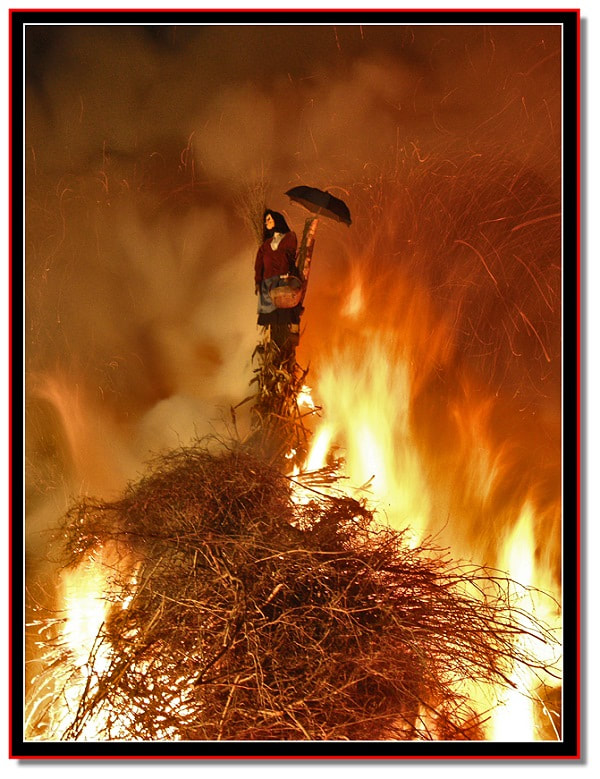
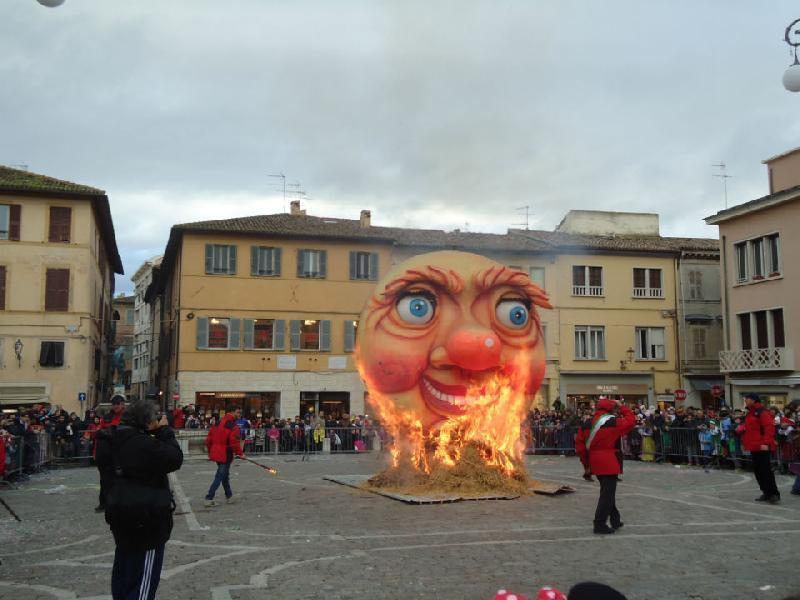
"Semel in anno licet insanire."--Ancient Roman Saying "Madness is permissible once a year."  Padova, January 6th to celebrate Befana Padova, January 6th to celebrate Befana In Northeast Italy, the celebrations of Panevin (in English "bread and wine"), Foghera or Pignarul are held on the evening of Epiphany's eve (5 January). A straw witch dressed with old clothes symbolizing the past year, is placed on a bonfire and burned to ashes. The direction of the smoke indicates whether the new year is going to be good or bad. In Northen Italy, La Vecchia ("the old woman") is a huge wicker-woman effigy built of wood and vines and burned once a year as part of town festivals. As depicted in the film Amarcord by Federico Fellini, it has a more pagan-Christian connotation and is burned on Mid-Lent Thursday. In Abbadia San Salvatore, a village in the south of Tuscany, bonfires called Fiaccole up to seven meters high are burned during Christmas Eve to warm up people around them waiting for the midnight. In Southern Italy, traditionally bonfires are lit on the nights of the 16th and 17th of January, thought to be the darkest and longest night of the year. The celebration is also linked to the cult of Saint Anthony The Great. 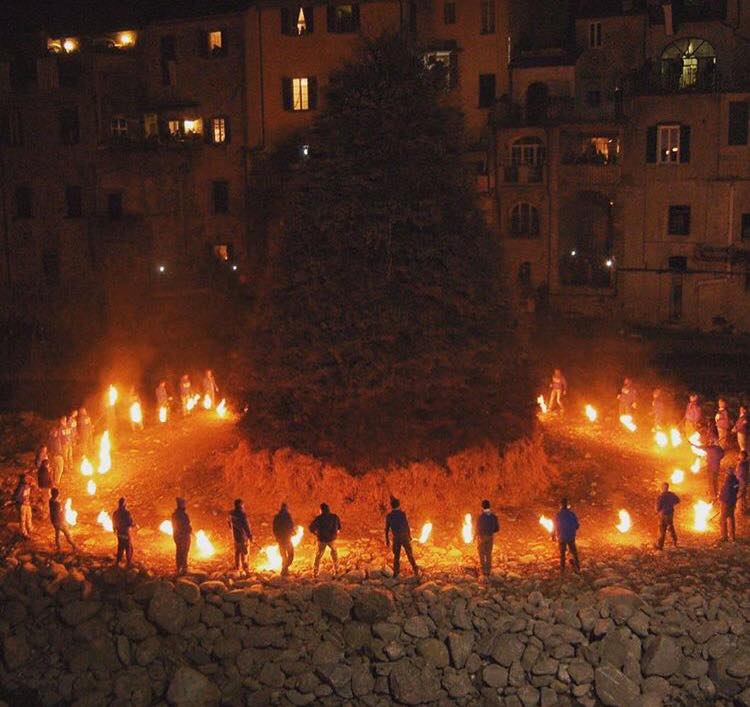 Falò A Pontremoli In Tuscany, there are many fire festivals during the winter months with ancient origins. These sagre and their fires are meant to draw attention from the “Sun God”, to conjure up its presence--and warmth--during the dark, cold months. As Christianity grew in ancient times, the pagan rituals were converted to celebrate various saints or holidays of the Catholic religion. In the town of Fano, Marches, from early February to Mardi Gras, they hold the Carnivale di Fano, one of the oldest--and sweetest--carnivals in Italy. During the festivities you can watch and take part in battle fought with chocolates and candy! Hundreds of pounds of sweets, caramels and chocolates are showered from parade floats onto the crowds of spectators, who then thrown them back or at each other. At the end of the month-long festival, there is the Rogo del Pupo, the Bonfire of the Baby Doll, a huge paper mache doll (a different one is designed and built each year).
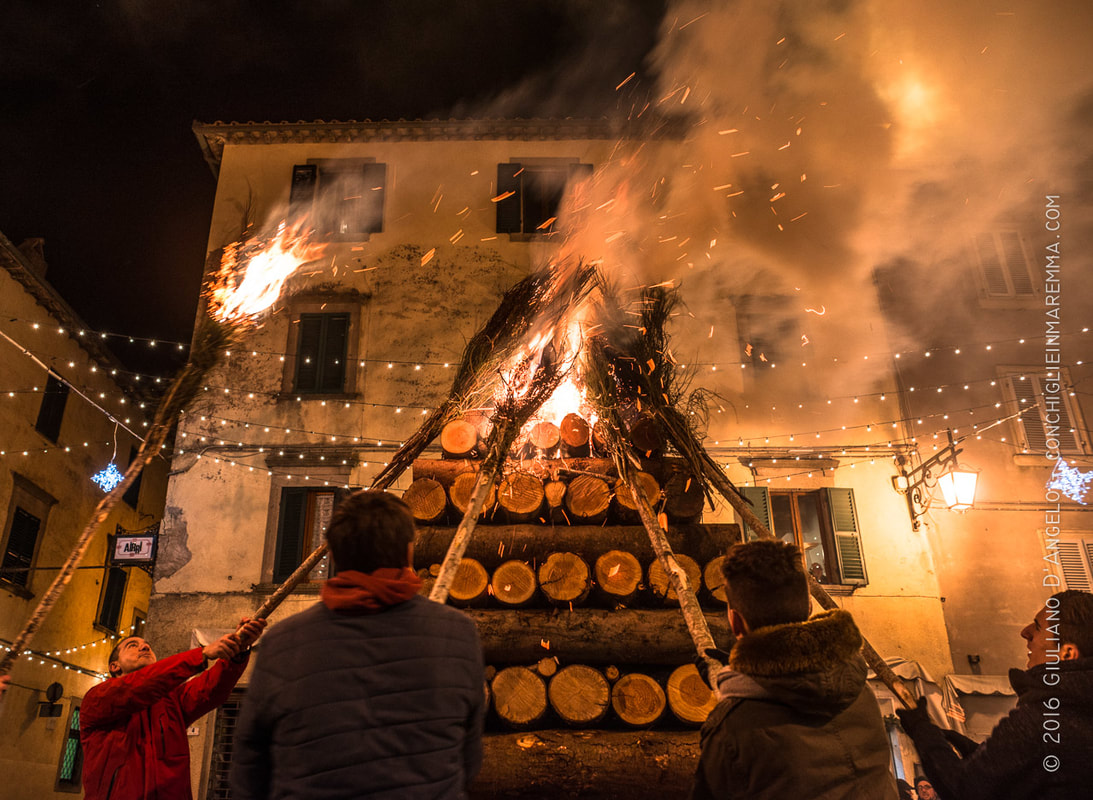 Fiaccolata di Santa Fiora Flaming Festivals in Tuscany
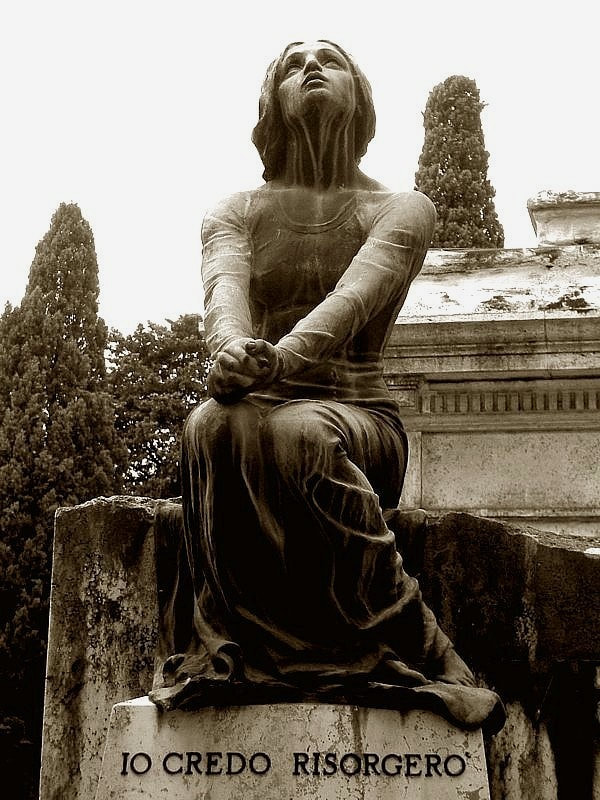
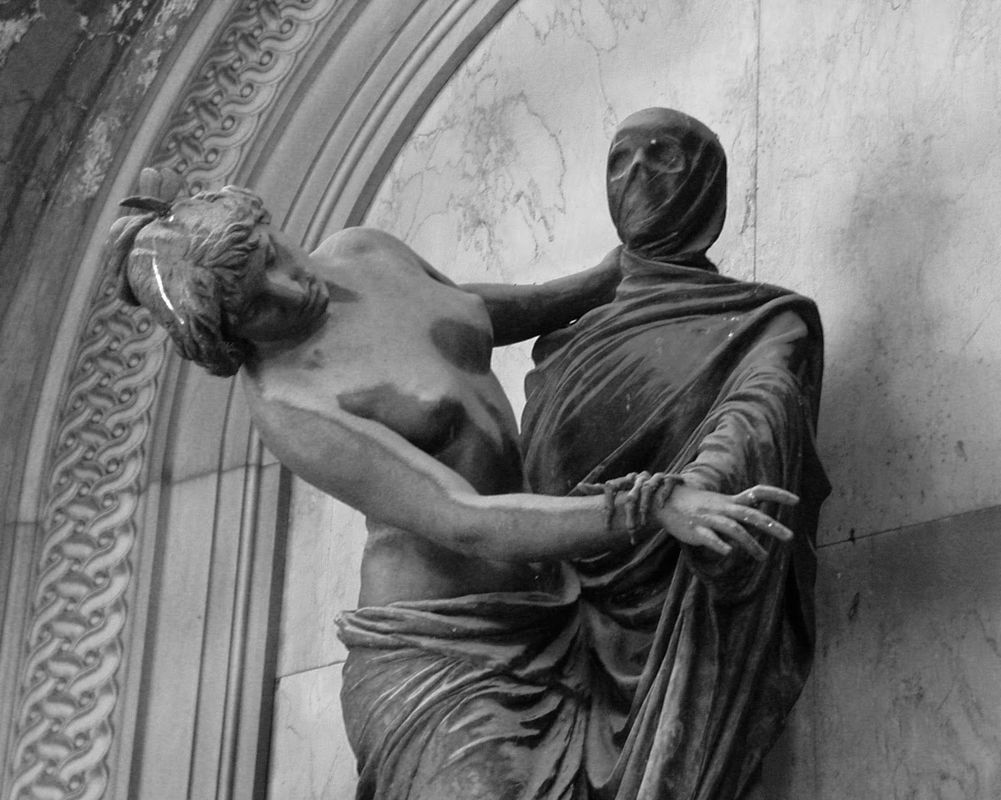
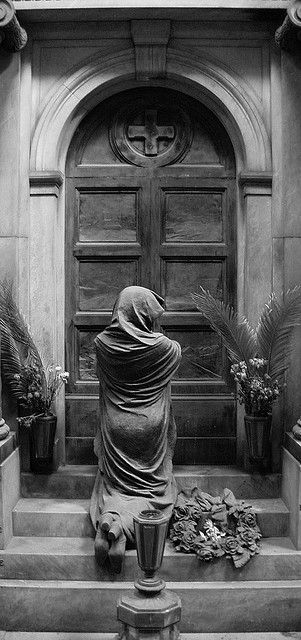
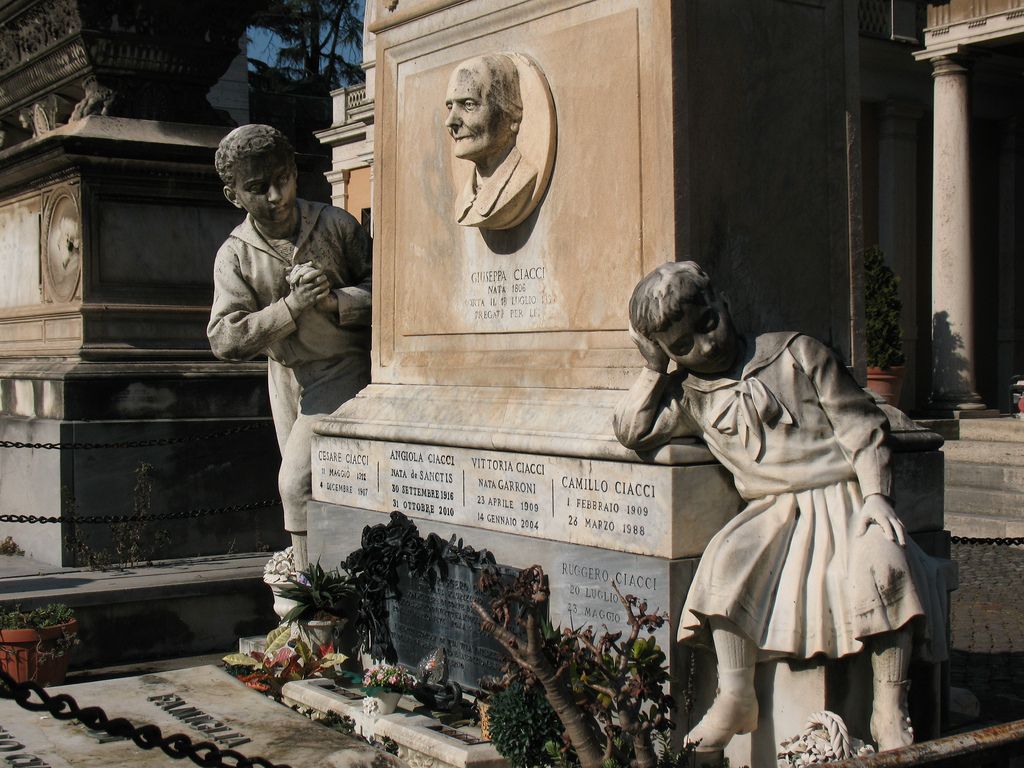
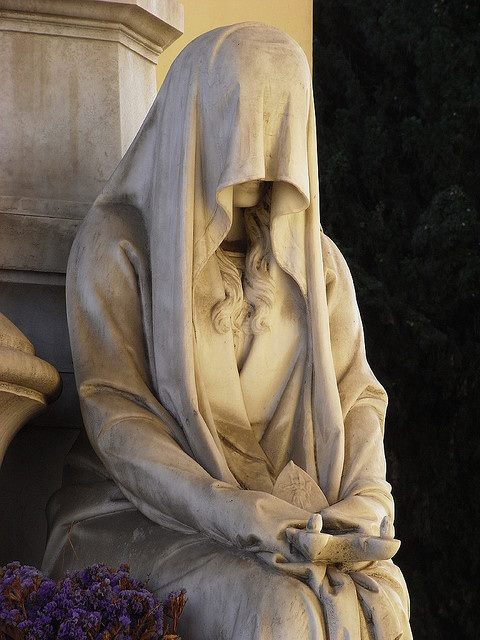
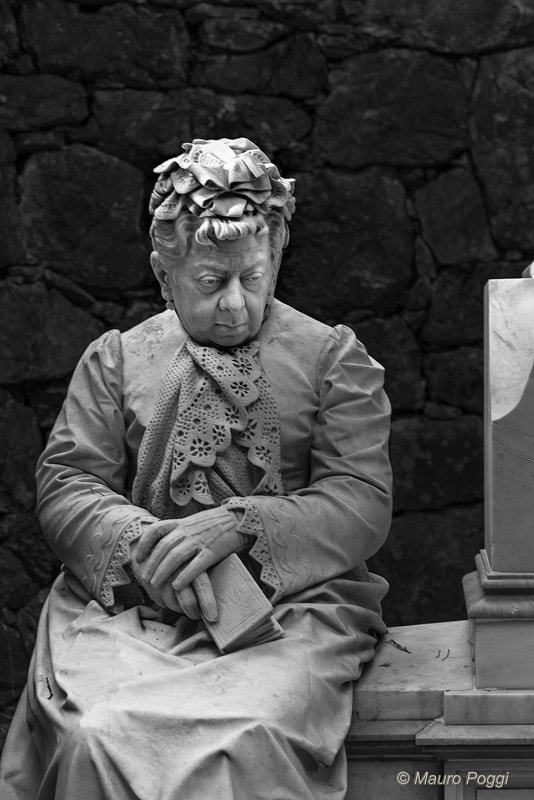
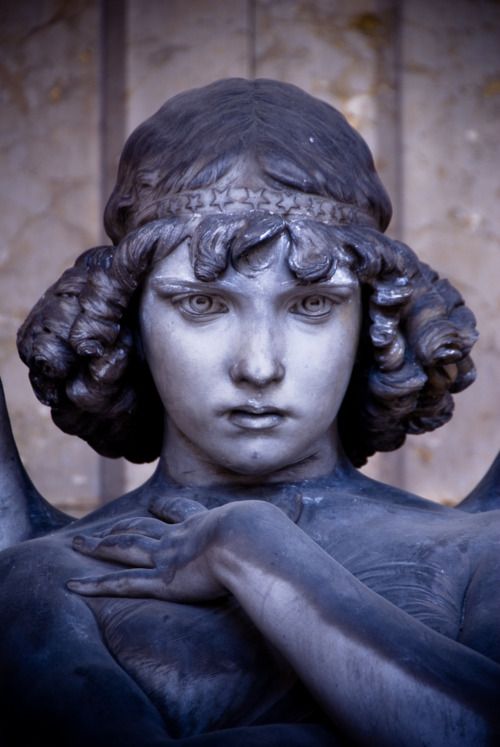
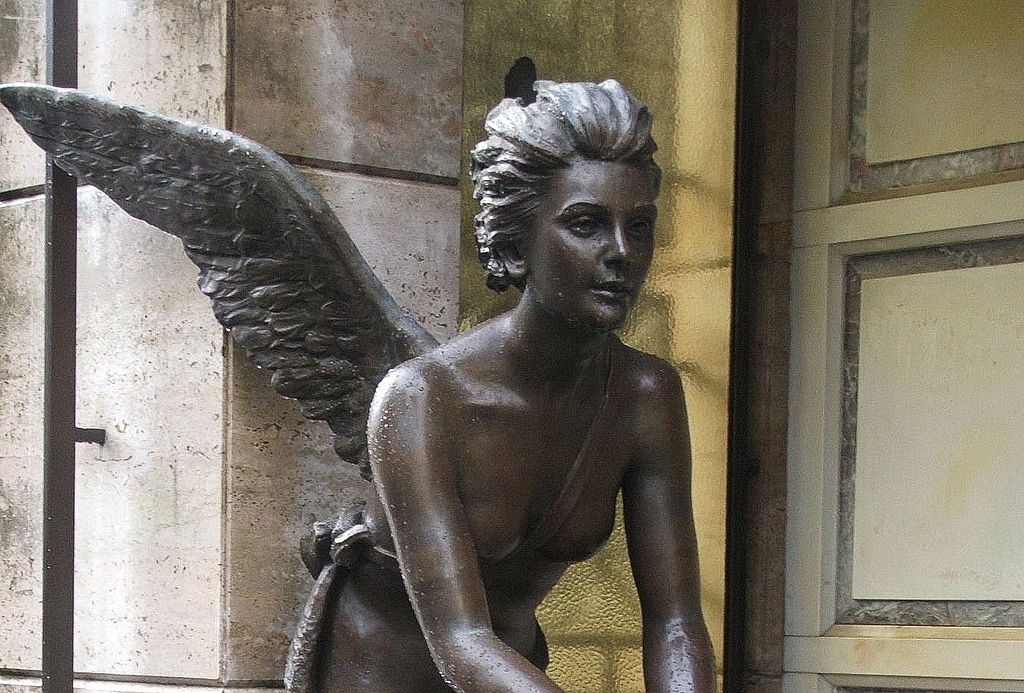
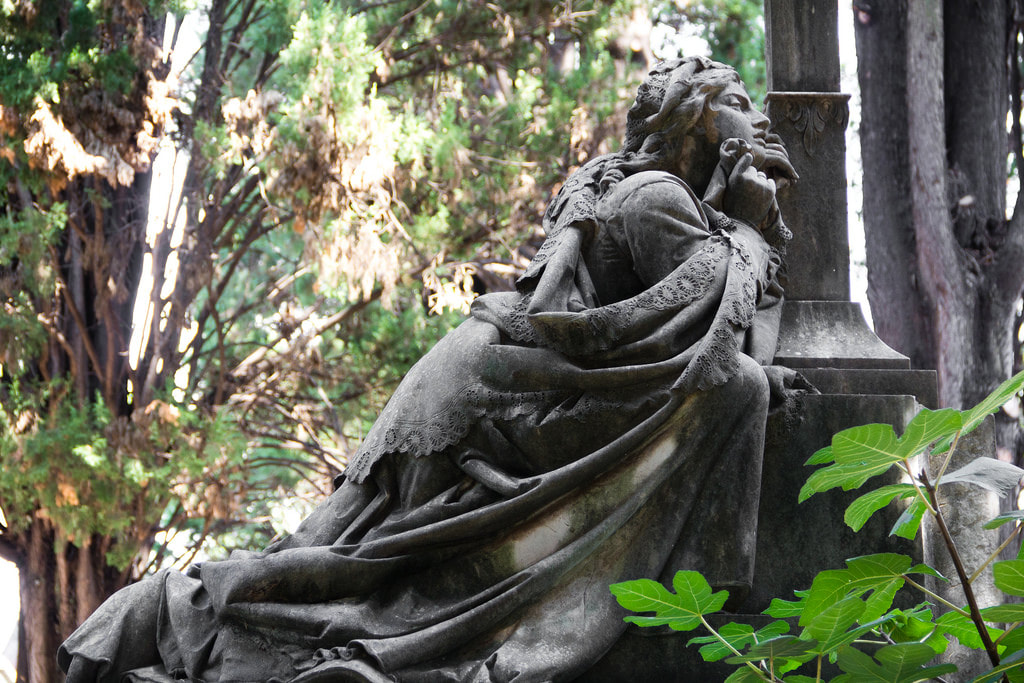
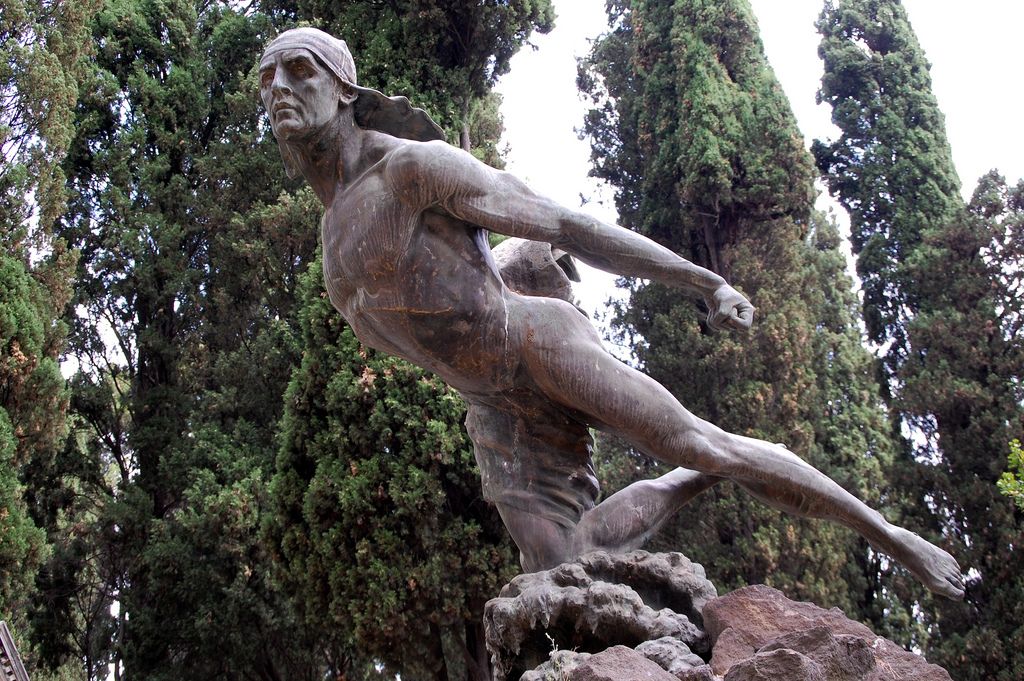
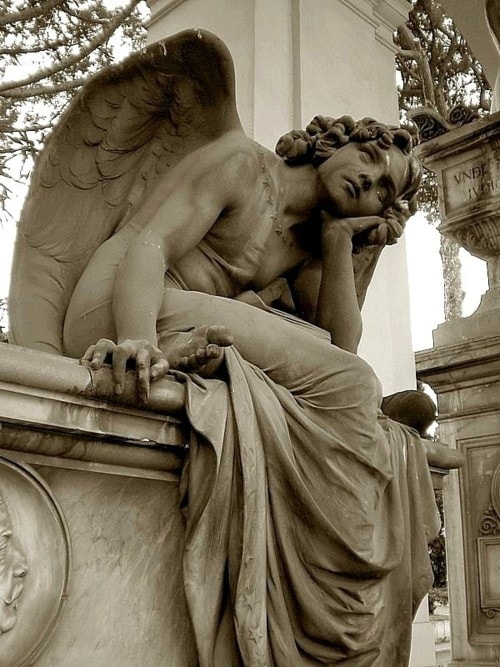
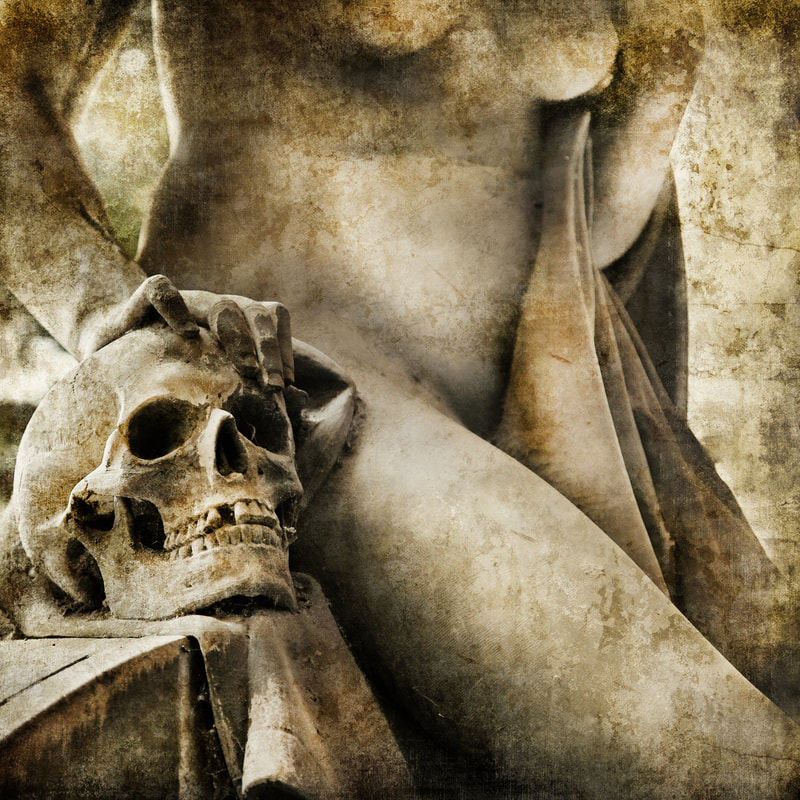
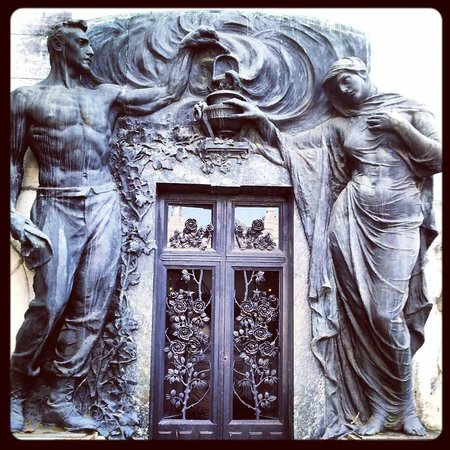
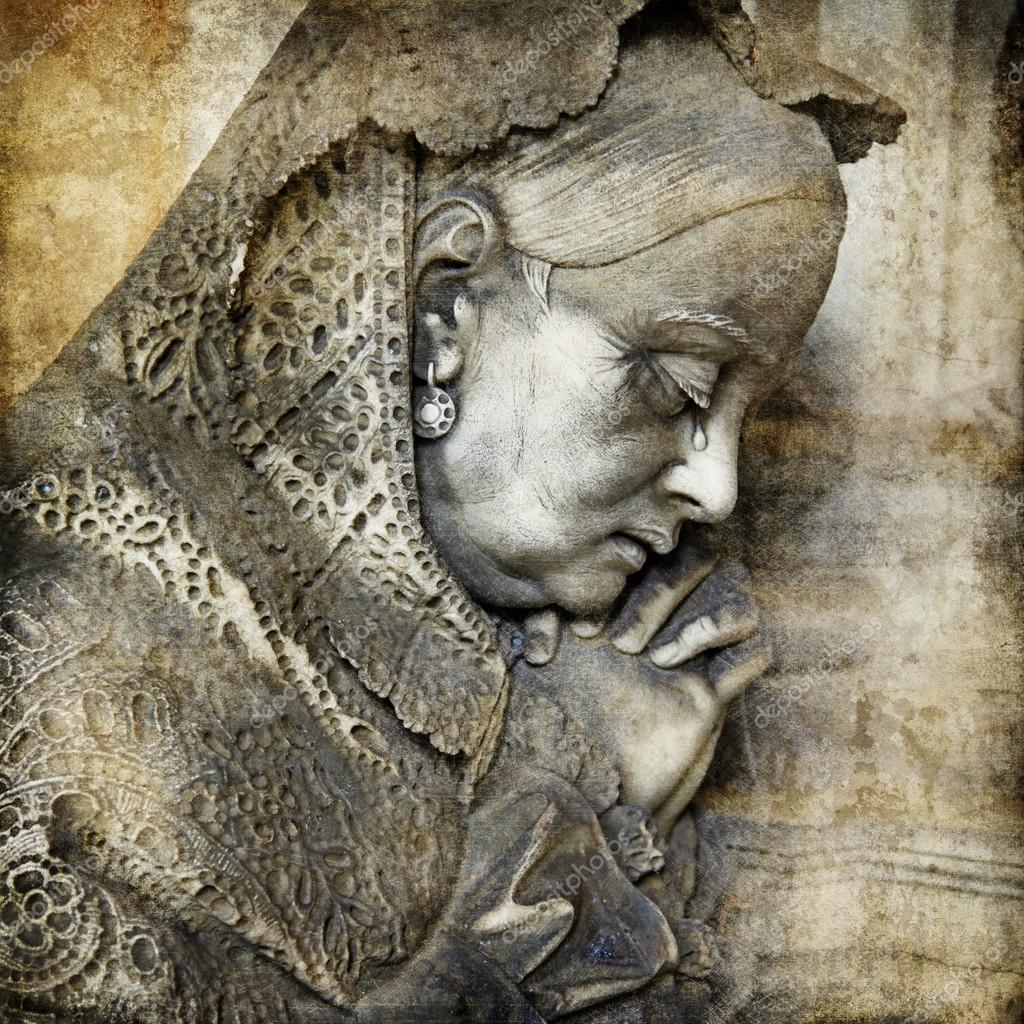
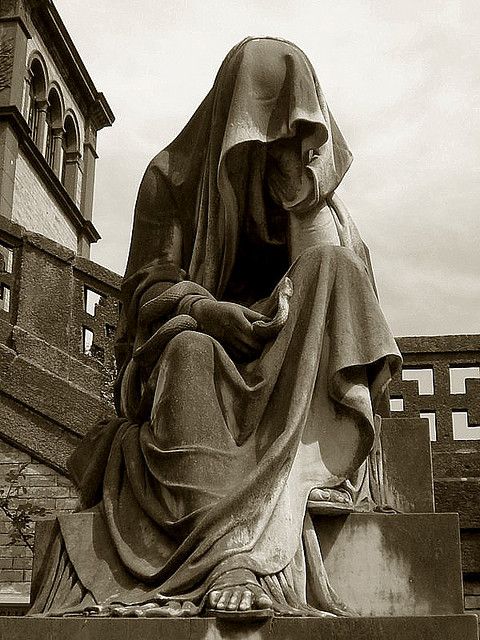
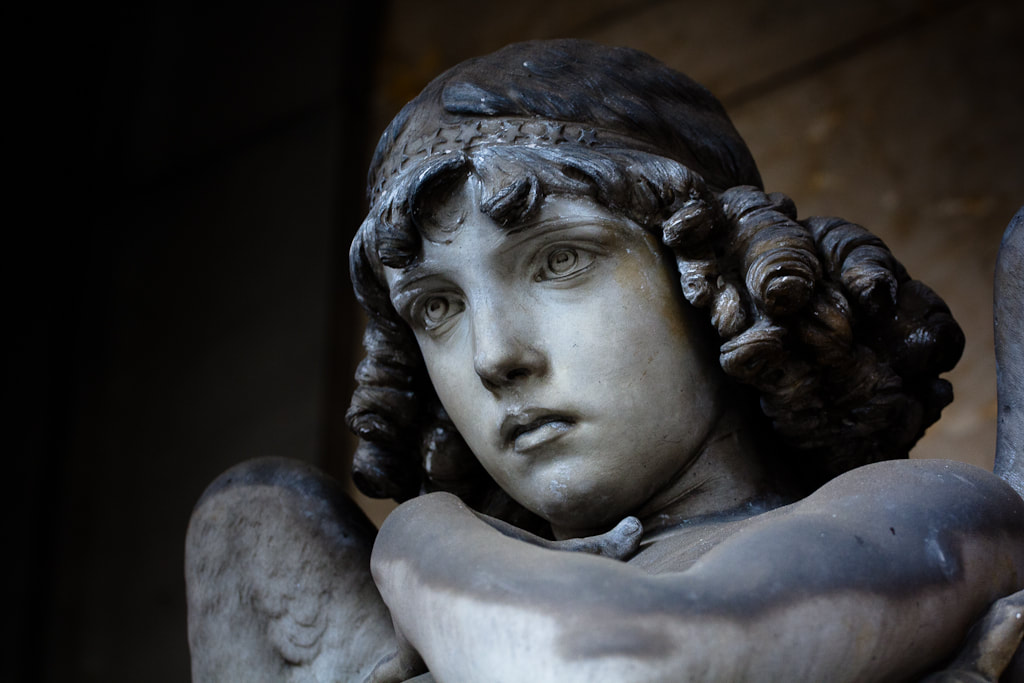
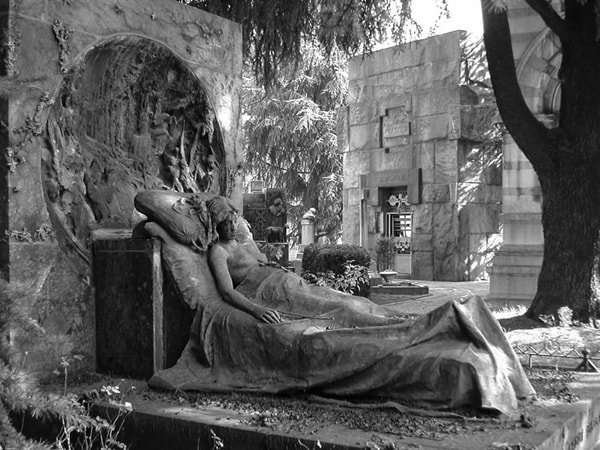
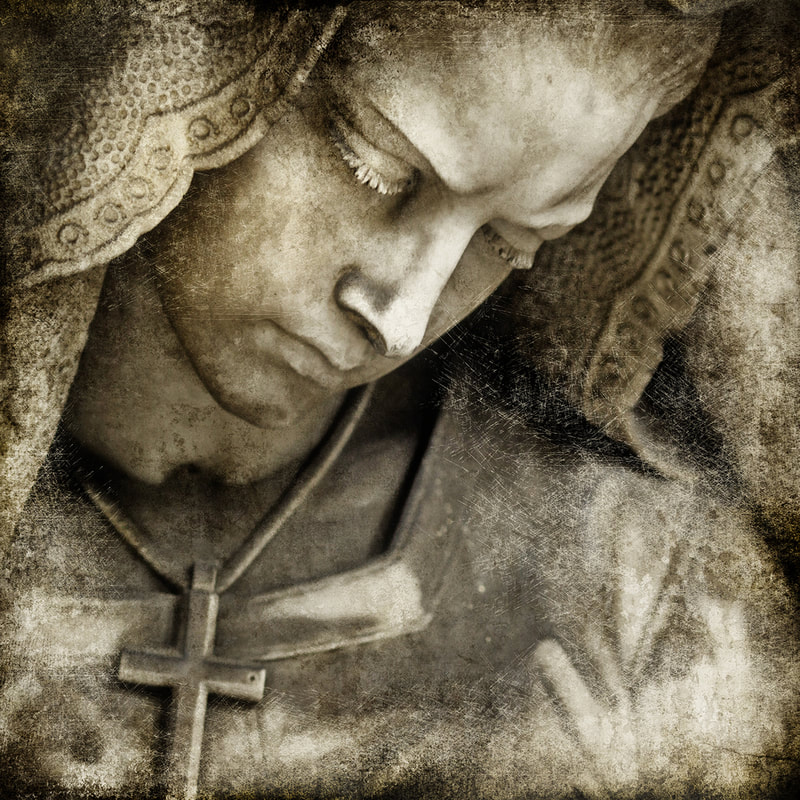
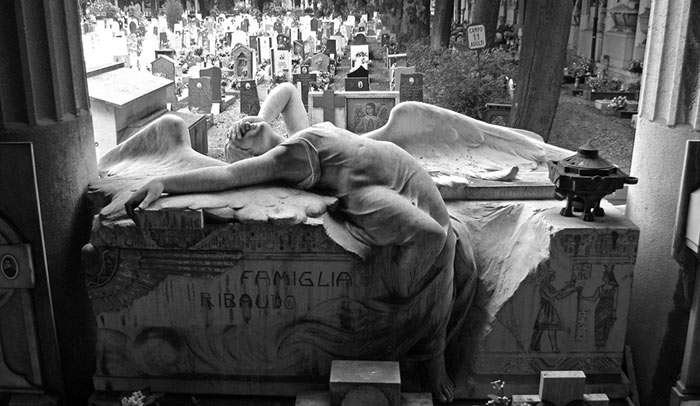
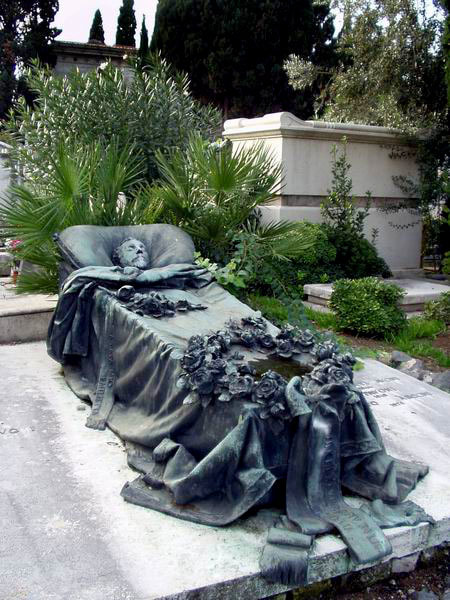
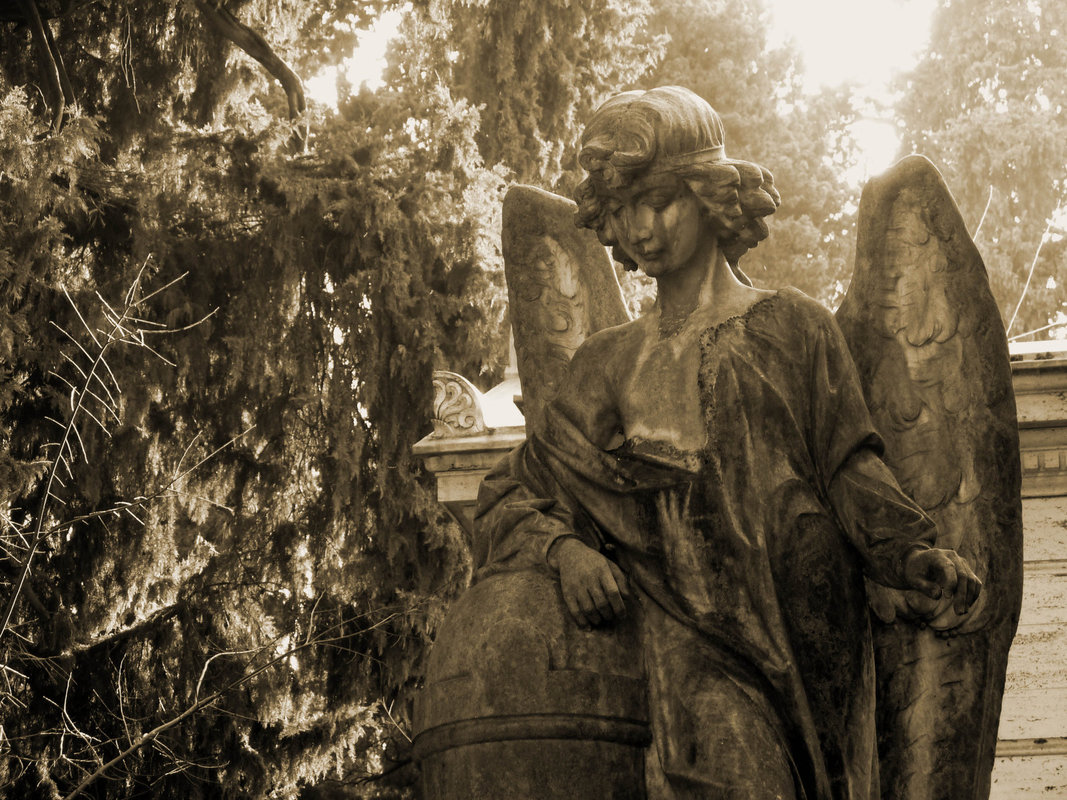
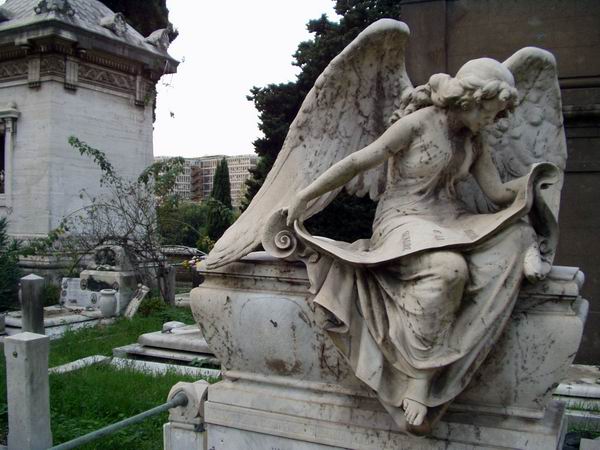
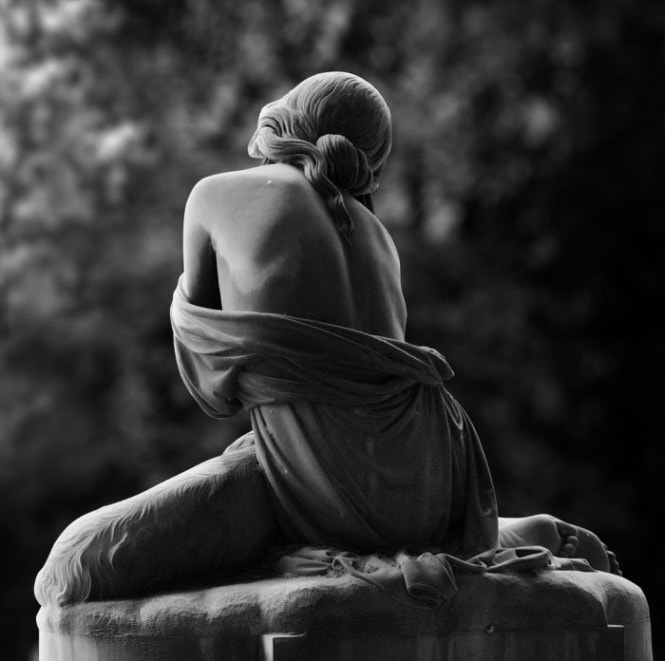
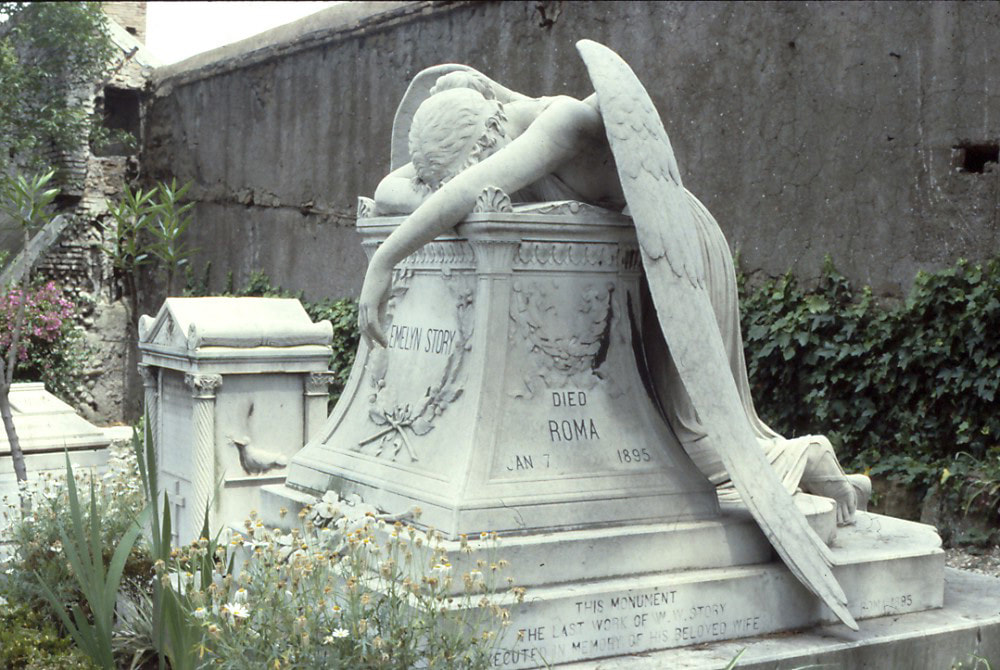
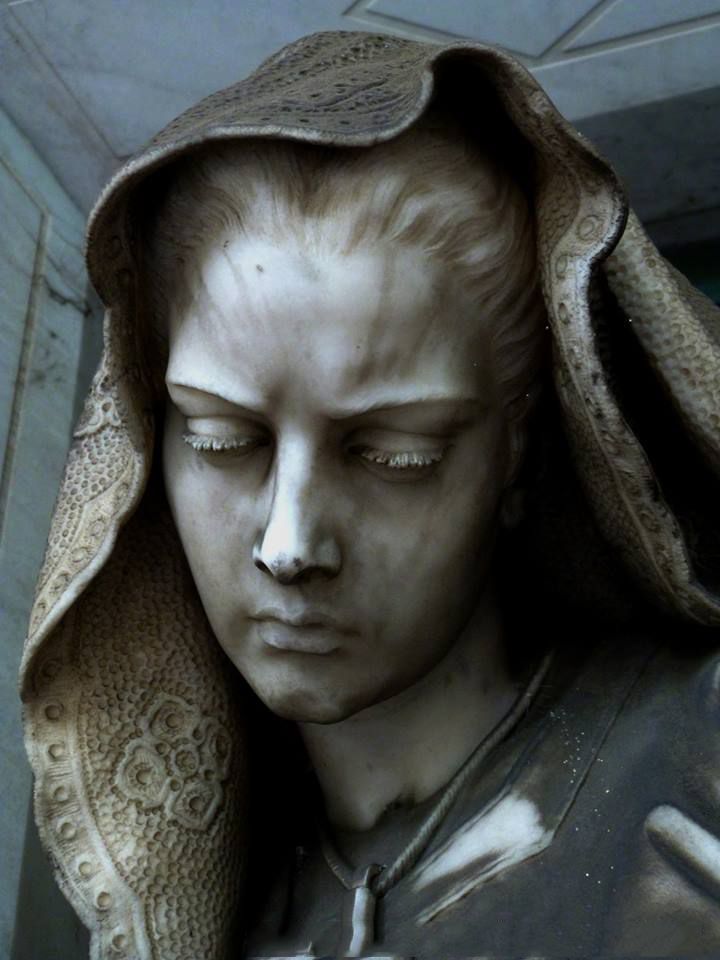
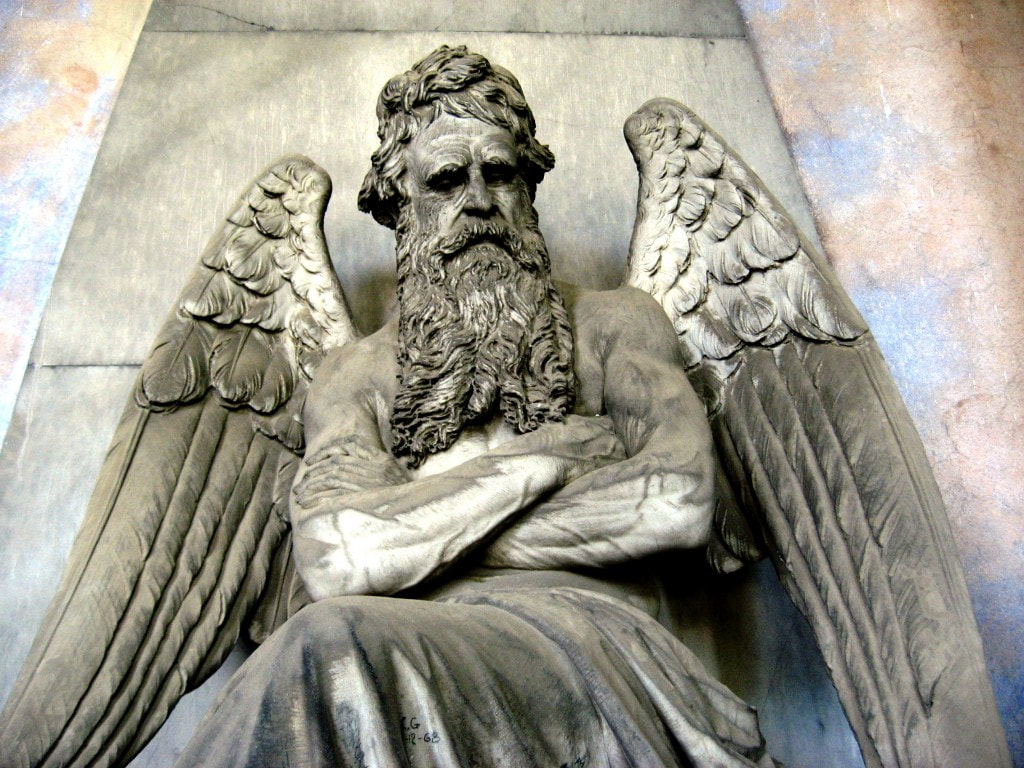
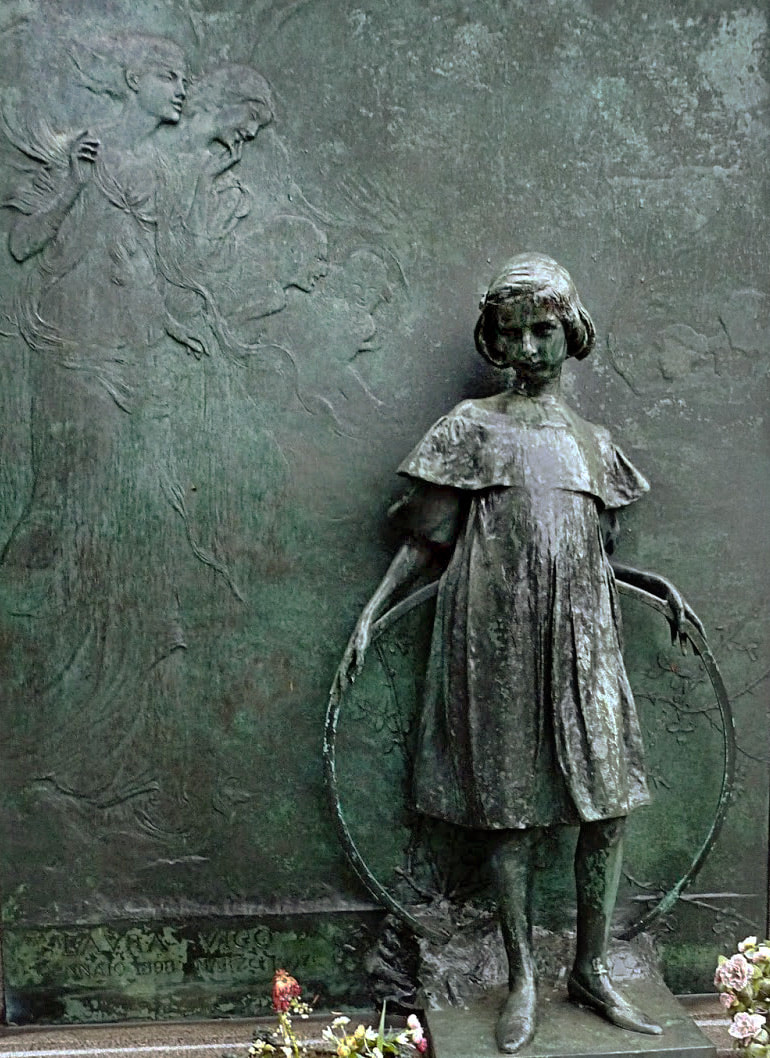
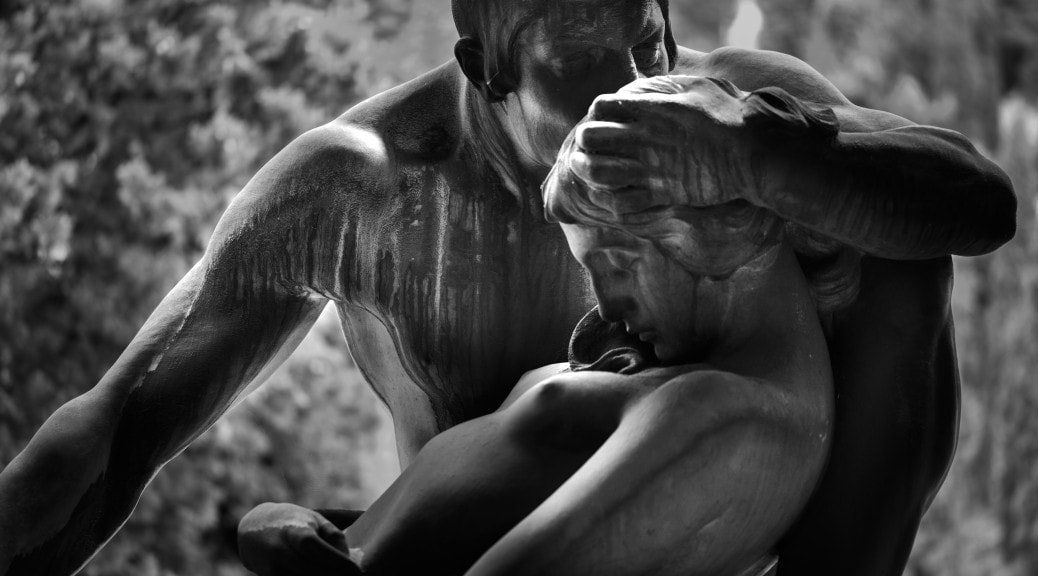
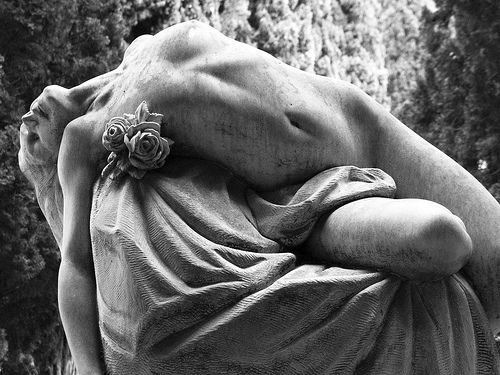
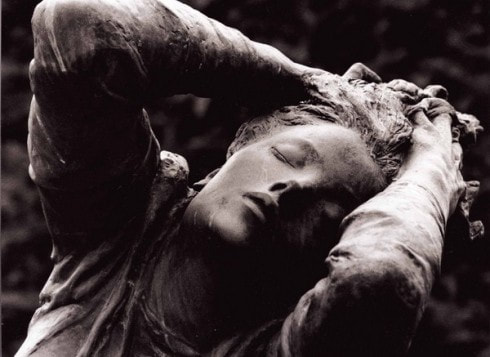
Enjoy the heat of the flames! --Jerry Finzi 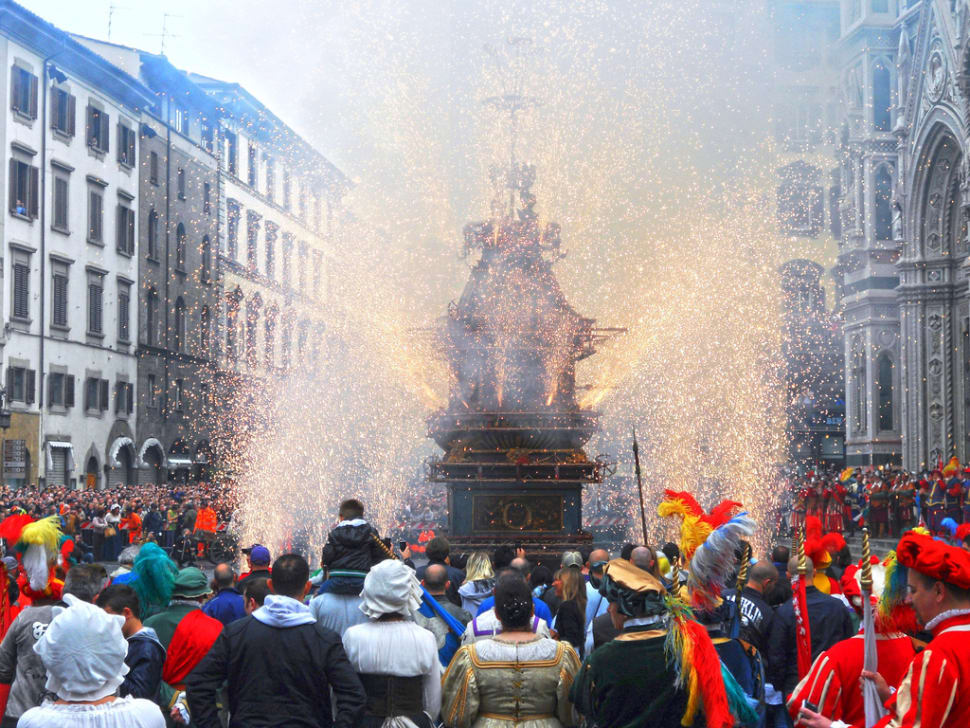 Explosion of the Cart in Florence 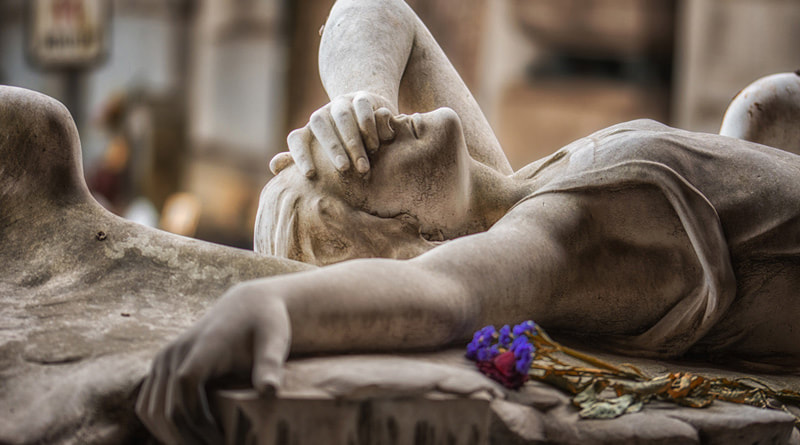 When I lived in Paris years ago, one of the most unexpected pleasures was when I visited the Père Lachaise Cemetery. Often, people regard this unusual site as a place of pilgrimage, to pay homage to the likes of Chopin, Edith Piaf, Oscar Wilde or even rock legend Jim Morrison (his grave littered with graffiti and drug paraphernalia was distasteful to me). But I went for a different reason... the art. Admittedly, wealthy families could possibly afford to commission a granite temple, travertine pyramid or marble sculptures to honor a lost beloved member--and truth be told, perhaps the effort is really a monument to perpetuate the myth of their family's importance for the ones still living and yet to come. In any case, I didn't visit to pay homage to any heroes of mine. I went for the art itself. In Italy, it's also possible to do the same as a number of cemeteries contain some amazing monumental art. 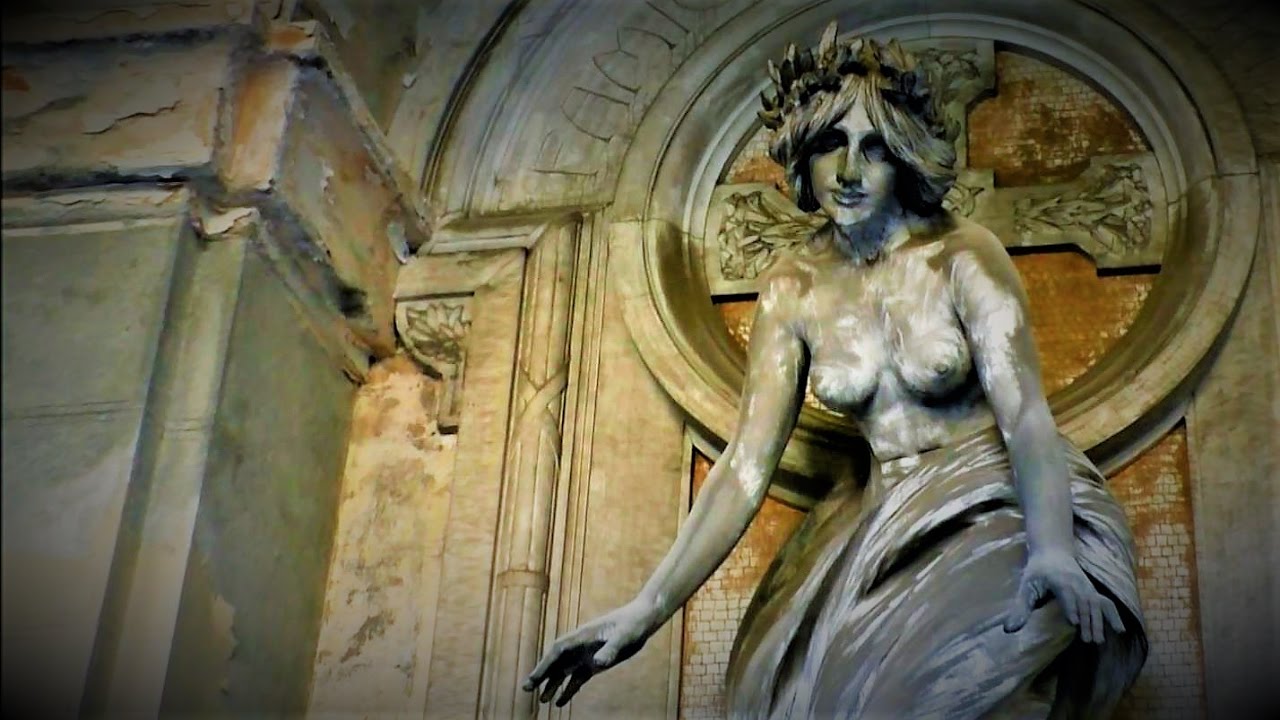 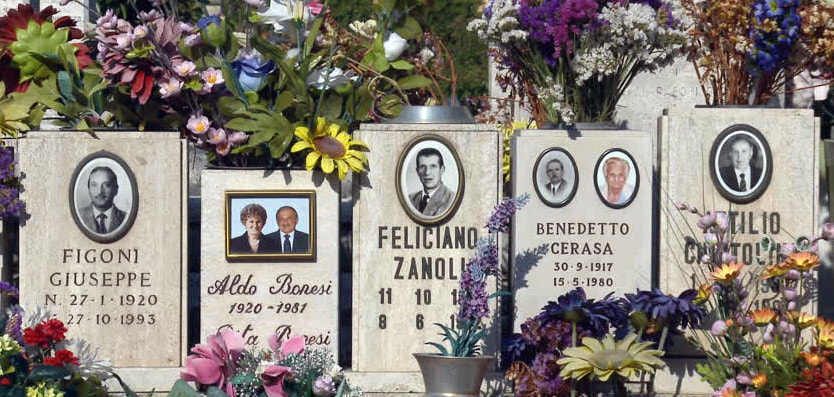 Photos of family members passed are lovingly cared for Photos of family members passed are lovingly cared for Most modern Italian cemeteries sit on the outskirts of their towns and consist of a mix of traditional graves and headstones and multi-level rows of vaults, a method used by the both the ancient Etruscans and early Christians. The vaults are simple affairs, sealed with a marble stone, names and dates with a small medallion containing a photo of the individual as they appeared in life. However, over the years, many wealthier families commissioned architects and artists to create chapels, tombs and sculptures resulting in many Italian cemeteries becoming open-air museums of funerary art, known as Cimiteri Monumentali (Monumental Cemeteries). I've put together a collection for you to enjoy... --Jerry Finzi 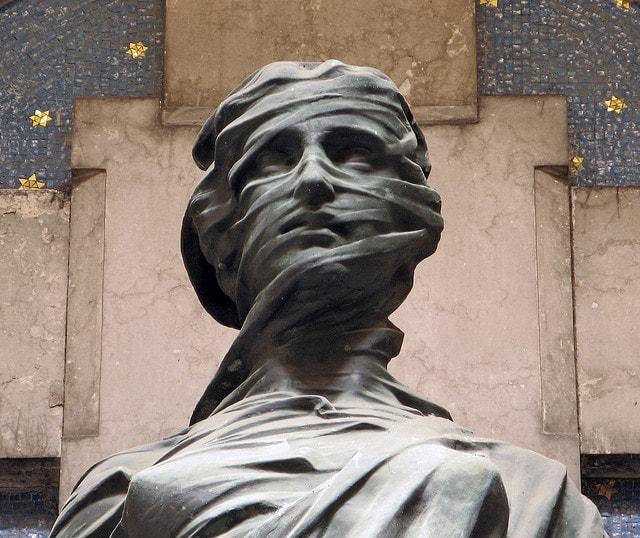 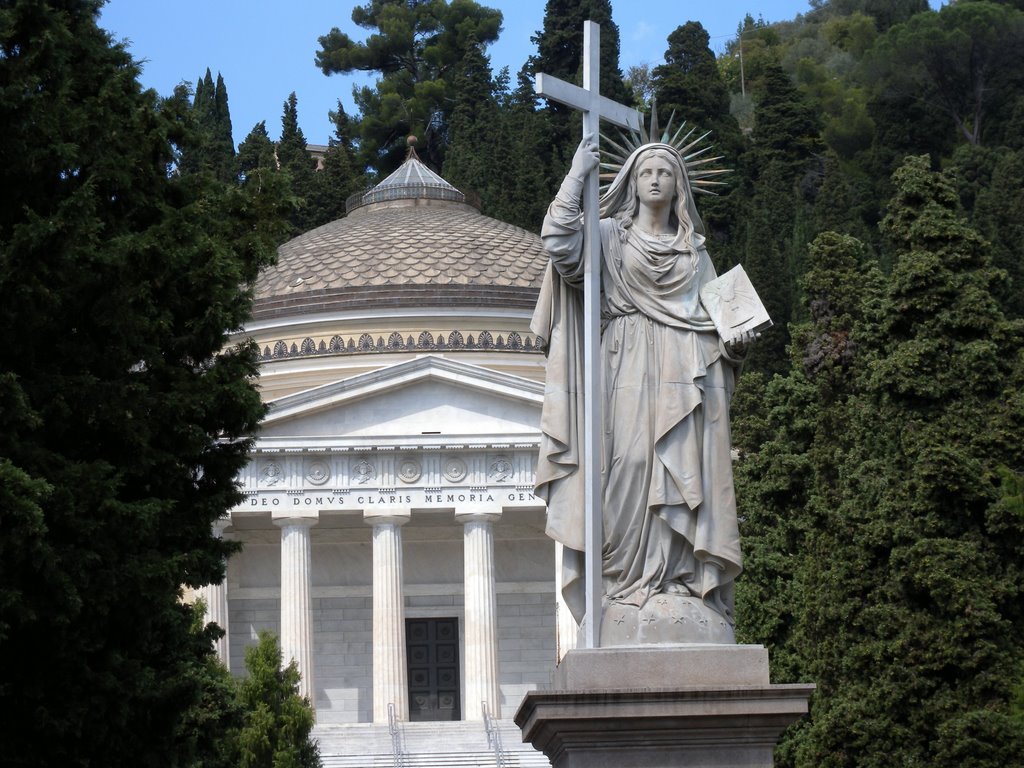 Cemeteries Worth Visiting Monumental Cemetery of Staglieno One of the largest cemeteries in Europe, the Cimitero Monumentale di Staglieno in Genoa covers nearly a square mile on the hilltop district known as Staglieno. It was opened in 1844 at a time when Genoa was home to affluent bourgeoisie businessmen, politicians and artists. To honor their accomplishments, realistic sculptures were commissioned for their tombs. This is without doubt, one of the most visited monumental cemeteries in Europe. 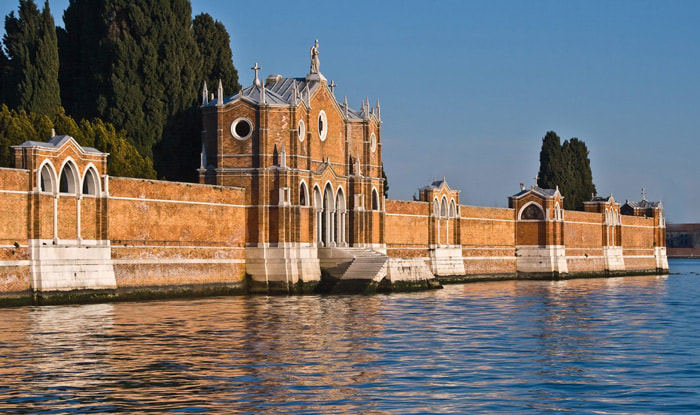 San Michele Cemetery, "Island of the Dead", Venice After the fall of the Venetian Republic in 1797, Napoleon prohibited any burials in town centers and in Venice, this meant that a new walled cemetery was commissioned on the island of San Michele, within reach of gondolas from the Venice waterfront. The island is landscaped with tall cypress trees, a 15th Century church and cloister. The shallow graves are occupied a dozen years and afterwards are exhumed with the bones interred into mausoleum niches or dumped into a communal ossuary. You'll find graves of 19th and 20th Century foreigners, including celebrities like Ezra Pound, Serge Diaghilev (whose grave normally is decorated with a ballet slipper), and Igor Stravinsky.  Cimitero Monumentale di Torino The Monumental Cemetery of Turin was commissioned in 1827 to replace the small and ancient cemetery of St. Peter in Chains. It contains numerous historical tombs and 6 miles of porticoes adorned with sculptures of artistic interest. 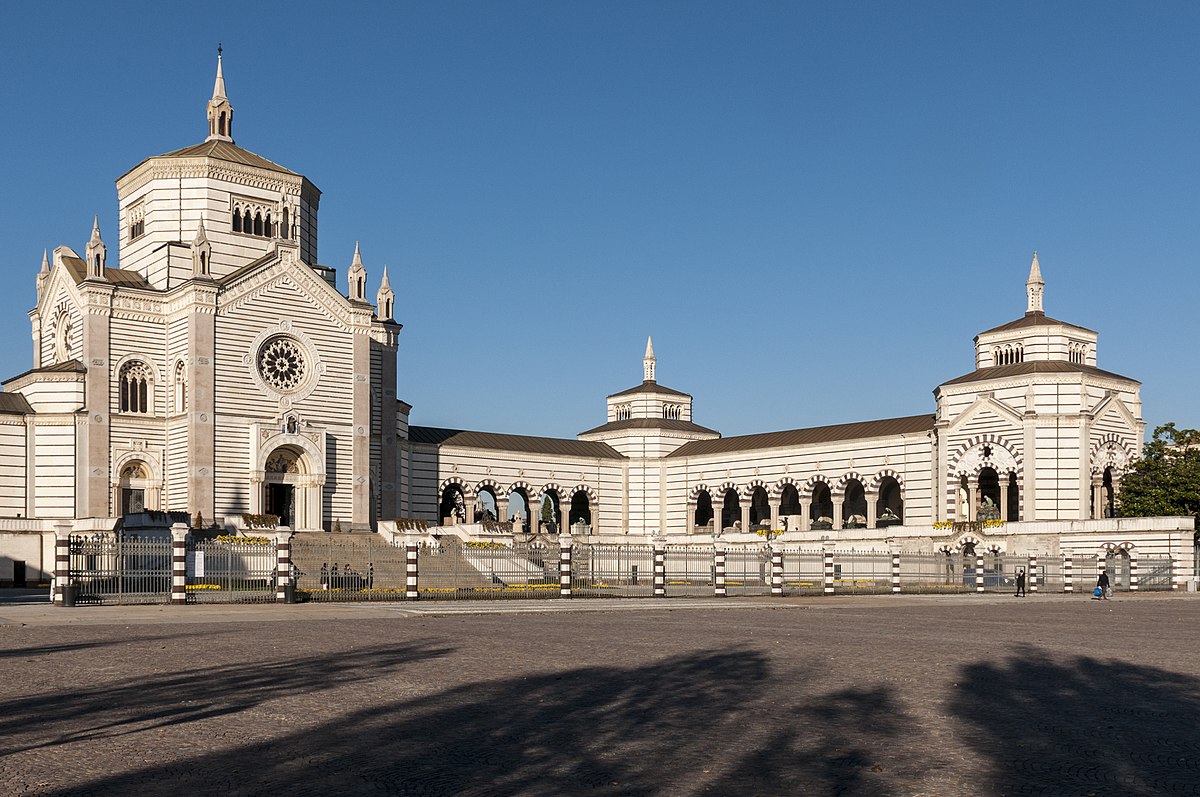 Cimitero Monumentale di Milano One of two large cemeteries in Milan (Cimitero Maggiore is the other), Milan Monumental Cemetery was designed by architect Carlo Maciachini and contains a multitude of sculptures by renowned artists: Giò Ponti, Arturo Martini, Lucio Fontana, Medardo Rosso, Giacomo Manzù, Floriano Bodini, and Giò Pomodoro. Visitors enter through an impressive Medieval style building of marble and stone that contains the tombs of the country's most honored citizens. Besides having mostly Catholic graves, there are also sections for Jews and other non-C Catholics. The cemetery contains the tombs of composers Corelli, Verdi and Toscanini. 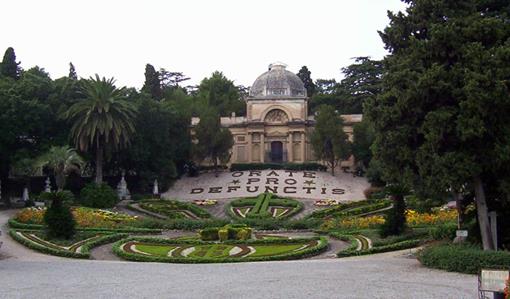 Cimitero Monumentale di Messina The Monumental Cemetery of Messina, in Sicily, is one the best for funerary art. In 1854, it was designed as a urban park and gardens as well as a cemetery. The cemetery is divided into the Jewish cemetery, the Catholic cemetery, and a monument to the victims of the First World War. The art in this cemetery is second only to Monumental Cemetery of Staglieno in Genoa. 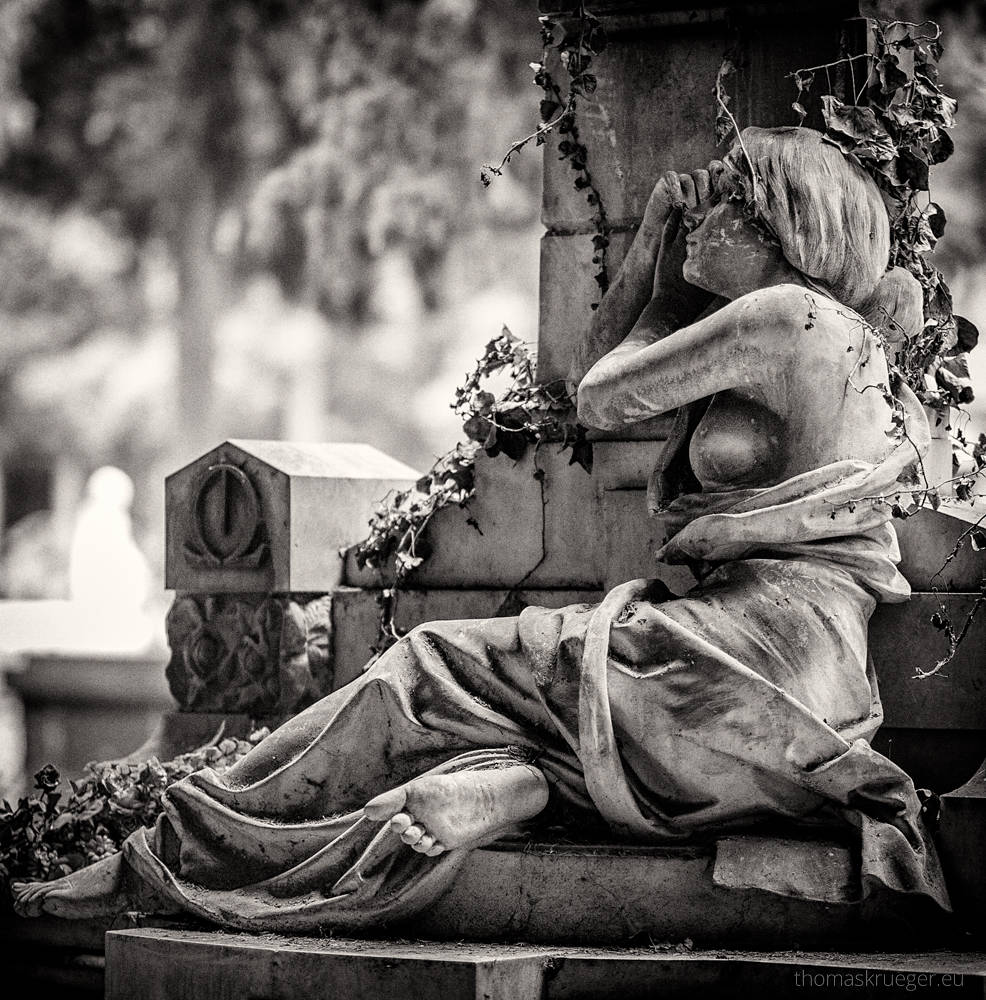 |
Categories
All
Archives
January 2024
|









 RSS Feed